Kirjojen hintavertailu. Mukana 12 414 204 kirjaa ja 12 kauppaa.
Kirjailija
George Du Maurier
Kirjat ja teokset yhdessä paikassa: 94 kirjaa, julkaisuja vuosilta 1994-2025, suosituimpien joukossa The frozen deep, and other tales. By: Wilkie Collins, illustrated By: George du Maurier and By: J. Mahony: George Louis Palmella Busson du Maurier (6. Vertaile teosten hintoja ja tarkista saatavuus suomalaisista kirjakaupoista.
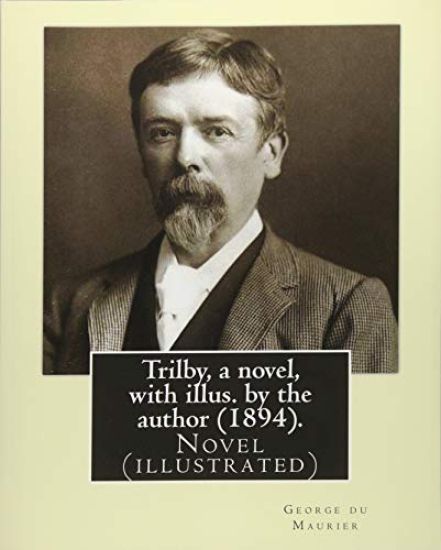
Trilby - A novel is an unchanged, high-quality reprint of the original edition of 1894. Hansebooks is editor of the literature on different topic areas such as research and science, travel and expeditions, cooking and nutrition, medicine, and other genres. As a publisher we focus on the preservation of historical literature. Many works of historical writers and scientists are available today as antiques only. Hansebooks newly publishes these books and contributes to the preservation of literature which has become rare and historical knowledge for the future.
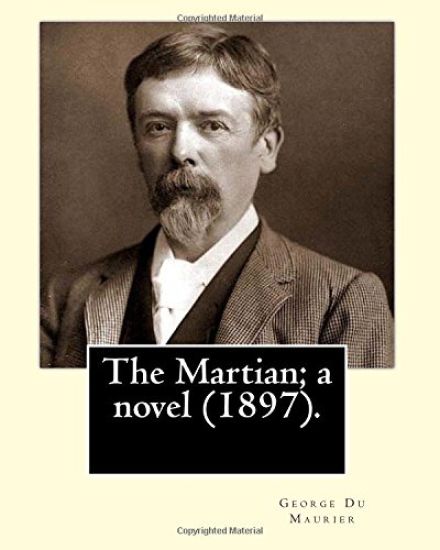
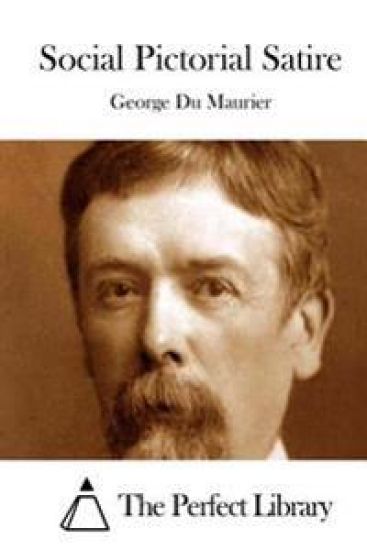
George Louis Palmella Busson du Maurier (6 March 1834 - 8 October 1896) was a Franco-British cartoonist and author, known for his cartoons in Punch and for his novel Trilby. He was the father of actor Sir Gerald du Maurier and grandfather of writers Angela du Maurier and Dame Daphne du Maurier. He was also the father of Sylvia Llewelyn Davies and grandfather of the five boys who inspired J.M. Barrie's Peter Pan. Early life: George du Maurier was born in Paris, the son of Louis-Mathurin du Maurier and Ellen Clarke, daughter of Regency courtesan Mary Anne Clarke. He was brought up to believe that his aristocratic grandparents fled France during the Revolution, leaving vast estates behind in France, to live in England as migr s. However, du Maurier's grandfather, Robert-Mathurin Busson, was actually a tradesman who left Paris in 1789 to avoid fraud charges, and later changed the family name to du Maurier. Du Maurier studied art in Paris, and moved to Antwerp, Belgium, where he lost vision in his left eye. He consulted an oculist in D sseldorf, Germany, where he met his future wife, Emma Wightwick. He followed her family to London, where he married Emma in 1863. The couple settled in Hampstead around 1877, first in Church Row and later at New Grove House.They had five children: Beatrix (known as Trixy), Guy, Sylvia, Marie Louise (known as May) and Gerald.
The Martian, by George du Maurier, published in 1898, largely autobiographical, novel that describes the lives of two bosom friends, Barty Josselin and Robert Maurice, starting from their school days in Paris in the 1850s. Written in long descriptive passages with very little dialogue and many digressions, the book had considerably less success in its time than its predecessor, the popular Trilby.Of a rather loose construction, its main points of interest lie for today's readers in lively descriptions of "la vie de boh me" and different parts of Paris through the second half of the 19th century, pages on Mechelen in Belgium and Whitby in the 1870s, and its superb illustrations. As in Trilby, we find the recurrent theme of antisemitism, but less prominently than in the earlier work. What is new in it is the use of Swedenborgianism. Du Maurier writes that, to the most sceptical he Swedenborg] has restored that absolute conviction of an indestructible germ of Immortality within us, born of remembrance made perfect and complete after dissolution: he alone has built the golden bridge in the middle of which science and faith can shake hands. (p. 385) In fact the "Martian" of the title is none other than an entity that undergoes successive reincarnations ad infinitum. This concept is linked to contemporary interest in eugenics. This theme is explored in the context of the life of Barty and his offspring in the second half of the novel, starting with the beginnings of his loss of eyesight and his consultation of a reputed ophthalmologist in D sseldorf, which is a genuine autobiographical piece of writing from du Maurier. It is implied that Barty's and his wife Leah's moral, intellectual and physical perfection will be passed on to evolve into even more perfect children to build a more perfect race of beings in the future And to whom but Barty Josselin do we owe it that our race is on an average already from four to six inches taller than it was thirty years ago, men and women alike; that strength and beauty are rapidly becoming the rule among us, and weakness and ugliness the exception?.............. George Louis Palmella Busson du Maurier (6 March 1834 - 8 October 1896) was a Franco-British cartoonist and author, known for his cartoons in Punch and for his novel Trilby. He was the father of actor Sir Gerald du Maurier and grandfather of writers Angela du Maurier and Dame Daphne du Maurier. He was also the father of Sylvia Llewelyn Davies and grandfather of the five boys who inspired J.M. Barrie's Peter Pan.
Trilby - A Novel is an unchanged, high-quality reprint of the original edition of 1894. Hansebooks is editor of the literature on different topic areas such as research and science, travel and expeditions, cooking and nutrition, medicine, and other genres. As a publisher we focus on the preservation of historical literature. Many works of historical writers and scientists are available today as antiques only. Hansebooks newly publishes these books and contributes to the preservation of literature which has become rare and historical knowledge for the future.
William Makepeace Thackeray ( 18 July 1811 - 24 December 1863) was an English novelist of the 19th century. He is famous for his satirical works, particularly Vanity Fair, a panoramic portrait of English society. Thackeray, an only child, was born in Calcutta, British India, where his father, Richmond Thackeray (1 September 1781 - 13 September 1815), was secretary to the Board of Revenue in the British East India Company. His mother, Anne Becher (1792-1864), was the second daughter of Harriet Becher and John Harman Becher, who was also a secretary (writer) for the East India Company.Richmond died in 1815, which caused Anne to send her son to England in 1816, while she remained in British India. The ship on which he travelled made a short stopover at St. Helena, where the imprisoned Napoleon was pointed out to him. Once in England he was educated at schools in Southampton and Chiswick, and then at Charterhouse School, where he became a close friend of John Leech. Thackeray disliked Charterhouse, and parodied it in his fiction as "Slaughterhouse". Nevertheless, Thackeray was honoured in the Charterhouse Chapel with a monument after his death. Illness in his last year there, during which he reportedly grew to his full height of six foot three, postponed his matriculation at Trinity College, Cambridge, until February 1829.Never too keen on academic studies, Thackeray left Cambridge in 1830, but some of his earliest published writing appeared in two university periodicals, The Snob and The Gownsman. Thackeray then travelled for some time on the continent, visiting Paris and Weimar, where he met Goethe. He returned to England and began to study law at the Middle Temple, but soon gave that up. On reaching the age of 21 he came into his inheritance from his father, but he squandered much of it on gambling and on funding two unsuccessful newspapers, The National Standard and The Constitutional, for which he had hoped to write. He also lost a good part of his fortune in the collapse of two Indian banks. Forced to consider a profession to support himself, he turned first to art, which he studied in Paris, but did not pursue it, except in later years as the illustrator of some of his own novels and other writings.Thackeray's years of semi-idleness ended after he married, on 20 August 1836, Isabella Gethin Shawe (1816-1893), second daughter of Isabella Creagh Shawe and Matthew Shawe, a colonel who had died after distinguished service, primarily in India. The Thackerays had three children, all girls: Anne Isabella (1837-1919), Jane (who died at eight months old) and Harriet Marian (1840-1875), who married Sir Leslie Stephen, editor, biographer and philosopher. Thackeray now began "writing for his life", as he put it, turning to journalism in an effort to support his young family. He primarily worked for Fraser's Magazine, a sharp-witted and sharp-tongued conservative publication for which he produced art criticism, short fictional sketches, and two longer fictional works, Catherine and The Luck of Barry Lyndon. Between 1837 and 1840 he also reviewed books for The Times. 4] He was also a regular contributor to The Morning Chronicle and The Foreign Quarterly Review. Later, through his connection to the illustrator John Leech, he began writing for the newly created magazine Punch, in which he published The Snob Papers, later collected as The Book of Snobs. This work popularised the modern meaning of the word "snob".Thackeray was a regular contributor to Punch between 1843 and 1854. George Louis Palmella Busson du Maurier (6 March 1834 - 8 October 1896) was a Franco-British cartoonist and author, known for his cartoons in Punch and for his novel Trilby. He was the father of actor Sir Gerald du Maurier and grandfather of writers Angela du Maurier and Dame Daphne du Maurier. He was also the father of Sylvia Llewelyn Davies and grandfather of the five boys who inspired J.M. Barrie's Peter Pan.