Kirjojen hintavertailu. Mukana 12 595 353 kirjaa ja 12 kauppaa.

Kirjailija

George E. Marcus

Kirjat ja teokset yhdessä paikassa: 17 kirjaa, julkaisuja vuosilta 1993-2020, suosituimpien joukossa Ocasião. Vertaile teosten hintoja ja tarkista saatavuus suomalaisista kirjakaupoista.

Mukana myös kirjoitusasut: George E. Marcus

17 kirjaa

Kirjojen julkaisuhaarukka 1993-2020.

Ethnography by Design

Ethnography by Design

Luke Cantarella; Christine Hegel; George E. Marcus

Routledge
2020
nidottu
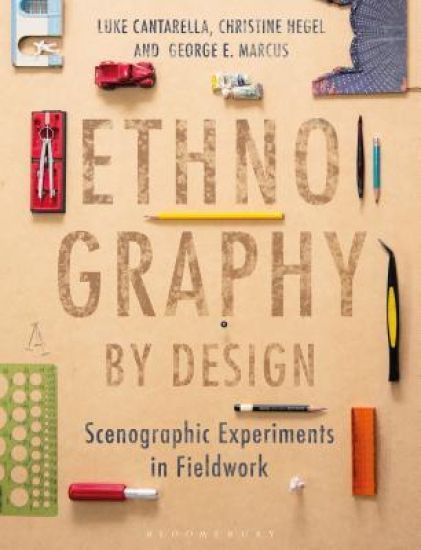
Ethnography by Design, unlike many investigations into how ethnography can be done, focuses on the benefits of sustained collaboration across projects to ethnographic enquiry, and the possibilities of experimental co-design as part of field research. The book translates specifically scenic design practices, which include processes like speculation, materialization, and iteration, and applies them to ethnographic inquiry, emphasizing both the value of design studio processes and "designed" field encounters. The authors make it clear that design studio practices allow ethnographers to ask and develop very different questions within their own and others' research and thus, design also offers a framework for shaping the conditions of encounter in ways that make anthropological suppositions tangible and visually apparent. Written by two anthropologists and a designer, and based on their experience of their collective endeavours during three projects, Luke Cantarella, Christine Hegel, and George E. Marcus examine their works as a way to continue a broader inquiry into what the practice of ethnography can be in the twenty-first century, and how any project distinctively moves beyond standard perspectives through its crafted modes of participation and engagement.
Ethnography by Design

Ethnography by Design

Luke Cantarella; Christine Hegel; George E. Marcus

Bloomsbury Academic
2019
sidottu
Ethnography by Design, unlike many investigations into how ethnography can be done, focuses on the benefits of sustained collaboration across projects to ethnographic enquiry, and the possibilities of experimental co-design as part of field research. The book translates specifically scenic design practices, which include processes like speculation, materialization, and iteration, and applies them to ethnographic inquiry, emphasizing both the value of design studio processes and "designed" field encounters. The authors make it clear that design studio practices allow ethnographers to ask and develop very different questions within their own and others' research and thus, design also offers a framework for shaping the conditions of encounter in ways that make anthropological suppositions tangible and visually apparent. Written by two anthropologists and a designer, and based on their experience of their collective endeavours during three projects, Luke Cantarella, Christine Hegel, and George E. Marcus examine their works as a way to continue a broader inquiry into what the practice of ethnography can be in the twenty-first century, and how any project distinctively moves beyond standard perspectives through its crafted modes of participation and engagement.
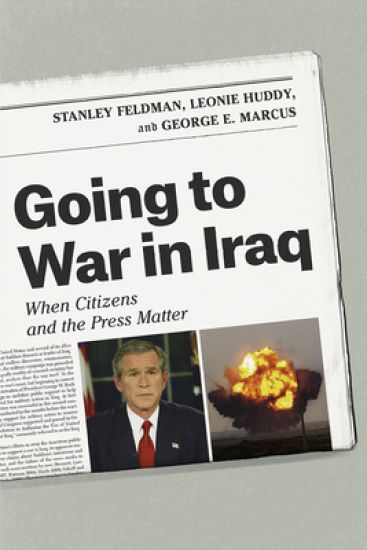
Going to War in Iraq

Going to War in Iraq

Stanley Feldman; Leonie Huddy; George E. Marcus

University of Chicago Press
2015
nidottu
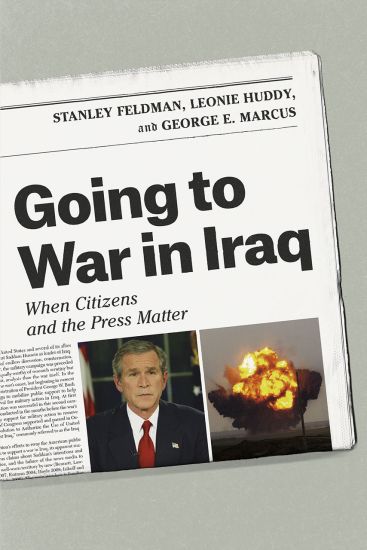
How was the Bush administration able to convince both Congress and the American public to support the plan to go to war against Iraq in spite of poorly supported claims about the danger Saddam Hussein posed? Conventional wisdom holds that, because neither party voiced strong opposition, the press in turn failed to adequately scrutinize the administration's arguments, and public opinion passively followed. Drawing on the most comprehensive survey of public reactions to the war, Stanley Feldman, Leonie Huddy, and George E. Marcus revisit this critical period and come back with a different story. Not only did the Bush administration's carefully orchestrated campaign fail to raise Republican support for the war, opposition by Democrats and political independents actually increased with exposure to the news. But how we get our news matters: People who read the newspaper were more likely to engage critically with what was coming out of Washington, especially when exposed to the sort of high-quality investigative journalism still being written at traditional newspapers-and in short supply across other forms of media. Making a case for the crucial role of a press that lives up to the best norms and practices of print journalism, the book lays bare what is at stake for the functioning of democracy-especially in times of crisis-as newspapers increasingly become an endangered species.
Going to War in Iraq

Going to War in Iraq

Stanley Feldman; Leonie Huddy; George E. Marcus

University of Chicago Press
2015
sidottu
How was the Bush administration able to convince both Congress and the American public to support the plan to go to war against Iraq in spite of poorly supported claims about the danger Saddam Hussein posed? Conventional wisdom holds that, because neither party voiced strong opposition, the press in turn failed to adequately scrutinize the administration's arguments, and public opinion passively followed. Drawing on the most comprehensive survey of public reactions to the war, Stanley Feldman, Leonie Huddy, and George E. Marcus revisit this critical period and come back with a different story. Not only did the Bush administration's carefully orchestrated campaign fail to raise Republican support for the war, opposition by Democrats and political independents actually increased with exposure to the news. But how we get our news matters: People who read the newspaper were more likely to engage critically with what was coming out of Washington, especially when exposed to the sort of high-quality investigative journalism still being written at traditional newspapers-and in short supply across other forms of media. Making a case for the crucial role of a press that lives up to the best norms and practices of print journalism, the book lays bare what is at stake for the functioning of democracy-especially in times of crisis-as newspapers increasingly become an endangered species.
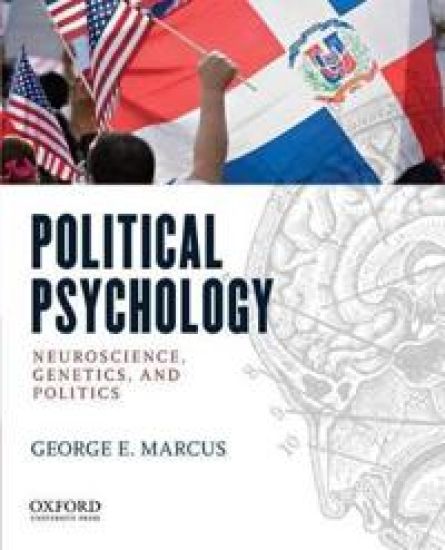
Doing Political Psychology

Doing Political Psychology

George E. Marcus

Oxford University Press Inc
2012
nidottu
Doing Political Psychology prepares for the understanding of and research in the coming political psychology. While political psychology is a very old discipline, its roots can be easily found in ancient Greek scholars such as Plato and Aristotle, and their inquiries into what forms of politics suit the human condition, the discipline of political psychology is increasingly being shaped by the newest sciences such as neuroscience and by genetics and biology. This text is designed to prepare the students to understand the ancient questions raised by our elders, from Ancient Greece through the Enlightenment and to today. And, to see how the newer approaches enable us to escape static disputes by using new tools, conceptual, theoretical, and methodological to seek new answers. The pedagogy is very much based on the premise that learning and doing are linked. Doing enables learning. Topics covered include: politics and the human condition; the methodologies of political psychology such as experiments, surveys and the like, emotion, rationality, personality, conflict, and context, among others.
Designs for an Anthropology of the Contemporary

Designs for an Anthropology of the Contemporary

Paul Rabinow; George E. Marcus; James D. Faubion; Tobias Rees

Duke University Press
2008
pokkari
In this compact volume two of anthropology’s most influential theorists, Paul Rabinow and George E. Marcus, engage in a series of conversations about the past, present, and future of anthropological knowledge, pedagogy, and practice. James D. Faubion joins in several exchanges to facilitate and elaborate the dialogue, and Tobias Rees moderates the discussions and contributes an introduction and an afterword to the volume. Most of the conversations are focused on contemporary challenges to how anthropology understands its subject and how ethnographic research projects are designed and carried out. Rabinow and Marcus reflect on what remains distinctly anthropological about the study of contemporary events and processes, and they contemplate productive new directions for the field. The two converge in Marcus’s emphasis on the need to redesign pedagogical practices for training anthropological researchers and in Rabinow’s proposal of collaborative initiatives in which ethnographic research designs could be analyzed, experimented with, and transformed.Both Rabinow and Marcus participated in the milestone collection Writing Culture: The Poetics and Politics of Ethnography. Published in 1986, Writing Culture catalyzed a reassessment of how ethnographers encountered, studied, and wrote about their subjects. In the opening conversations of Designs for an Anthropology of the Contemporary, Rabinow and Marcus take stock of anthropology’s recent past by discussing the intellectual scene in which Writing Culture intervened, the book’s contributions, and its conceptual limitations. Considering how the field has developed since the publication of that volume, they address topics including ethnography’s self-reflexive turn, scholars’ increased focus on questions of identity, the Public Culture project, science and technology studies, and the changing interests and goals of students. Designs for an Anthropology of the Contemporary allows readers to eavesdrop on lively conversations between anthropologists who have helped to shape their field’s recent past and are deeply invested in its future.
Designs for an Anthropology of the Contemporary

Designs for an Anthropology of the Contemporary

Paul Rabinow; George E. Marcus; James D. Faubion; Tobias Rees

Duke University Press
2008
sidottu
In this compact volume two of anthropology’s most influential theorists, Paul Rabinow and George E. Marcus, engage in a series of conversations about the past, present, and future of anthropological knowledge, pedagogy, and practice. James D. Faubion joins in several exchanges to facilitate and elaborate the dialogue, and Tobias Rees moderates the discussions and contributes an introduction and an afterword to the volume. Most of the conversations are focused on contemporary challenges to how anthropology understands its subject and how ethnographic research projects are designed and carried out. Rabinow and Marcus reflect on what remains distinctly anthropological about the study of contemporary events and processes, and they contemplate productive new directions for the field. The two converge in Marcus’s emphasis on the need to redesign pedagogical practices for training anthropological researchers and in Rabinow’s proposal of collaborative initiatives in which ethnographic research designs could be analyzed, experimented with, and transformed.Both Rabinow and Marcus participated in the milestone collection Writing Culture: The Poetics and Politics of Ethnography. Published in 1986, Writing Culture catalyzed a reassessment of how ethnographers encountered, studied, and wrote about their subjects. In the opening conversations of Designs for an Anthropology of the Contemporary, Rabinow and Marcus take stock of anthropology’s recent past by discussing the intellectual scene in which Writing Culture intervened, the book’s contributions, and its conceptual limitations. Considering how the field has developed since the publication of that volume, they address topics including ethnography’s self-reflexive turn, scholars’ increased focus on questions of identity, the Public Culture project, science and technology studies, and the changing interests and goals of students. Designs for an Anthropology of the Contemporary allows readers to eavesdrop on lively conversations between anthropologists who have helped to shape their field’s recent past and are deeply invested in its future.
Ocasião

Ocasião

George E. Marcus; Fernando Mascarenhas

AltaMira Press,U.S.
2005
nidottu
Distinguished anthropologist George Marcus and his co-author Fernando Mascarenhas engage in a new experiment in anthropological writing. Ocasião reveals the key relationship between anthropologist and subject through the letters and commentaries exchanged between Marcus and Mascarenhas, Marques of Fronteira and Alorna in Portugal. The authors discuss the persistence and survival of the contemporary Portuguese nobility, who serve as witnesses to important transitions in modern Portuguese history. The epistolary form is the medium of this innovative ethnography, and will stimulate a new critique of ethnographic genres, originating in the work of James Clifford and Marcus in Writing Culture. This new book will appeal to readers concerned with anthropological methods and fieldwork; the anthropology of elites, and a diverse European and American community of scholars interested in Portuguese culture.
The Sentimental Citizen

The Sentimental Citizen

George E. Marcus

Pennsylvania State University Press
2002
sidottu
This book challenges the conventional wisdom that improving democratic politics requires keeping emotion out of it. Marcus advances the provocative claim that the tradition in democratic theory of treating emotion and reason as hostile opposites is misguided and leads contemporary theorists to misdiagnose the current state of American democracy. Instead of viewing the presence of emotion in politics as a failure of rationality and therefore as a failure of citizenship, Marcus argues, democratic theorists need to understand that emotions are in fact a prerequisite for the exercise of reason and thus essential for rational democratic deliberation and political judgment. Attempts to purge emotion from public life not only are destined to fail, but ultimately would rob democracies of a key source of revitalization and change. Drawing on recent research in neuroscience, Marcus shows how emotion functions generally and what role it plays in politics. In contrast to the traditional view of emotion as a form of agitation associated with belief, neuroscience reveals it to be generated by brain systems that operate largely outside of awareness. Two of these systems, "disposition" and "surveillance," are especially important in enabling emotions to produce habits, which often serve a positive function in democratic societies. But anxiety, also a preconscious emotion, is crucial to democratic politics as well because it can inhibit or disable habits and thus clear a space for the conscious use of reason and deliberation. If we acknowledge how emotion facilitates reason and is "cooperatively entangled" with it, Marcus concludes, then we should recognize sentimental citizens as the only citizens really capable of exercising political judgment and of putting their decisions into action.
The Sentimental Citizen

The Sentimental Citizen

George E. Marcus

Pennsylvania State University Press
2002
pokkari
This book challenges the conventional wisdom that improving democratic politics requires keeping emotion out of it. Marcus advances the provocative claim that the tradition in democratic theory of treating emotion and reason as hostile opposites is misguided and leads contemporary theorists to misdiagnose the current state of American democracy. Instead of viewing the presence of emotion in politics as a failure of rationality and therefore as a failure of citizenship, Marcus argues, democratic theorists need to understand that emotions are in fact a prerequisite for the exercise of reason and thus essential for rational democratic deliberation and political judgment. Attempts to purge emotion from public life not only are destined to fail, but ultimately would rob democracies of a key source of revitalization and change. Drawing on recent research in neuroscience, Marcus shows how emotion functions generally and what role it plays in politics. In contrast to the traditional view of emotion as a form of agitation associated with belief, neuroscience reveals it to be generated by brain systems that operate largely outside of awareness. Two of these systems, "disposition" and "surveillance," are especially important in enabling emotions to produce habits, which often serve a positive function in democratic societies. But anxiety, also a preconscious emotion, is crucial to democratic politics as well because it can inhibit or disable habits and thus clear a space for the conscious use of reason and deliberation. If we acknowledge how emotion facilitates reason and is "cooperatively entangled" with it, Marcus concludes, then we should recognize sentimental citizens as the only citizens really capable of exercising political judgment and of putting their decisions into action.
Affective Intelligence and Political Judgment

Affective Intelligence and Political Judgment

George E. Marcus; W. Russell Neuman; Michael MacKuen

University of Chicago Press
2000
nidottu
Although the rational choice approach toward political behavior has been severely criticized, its adherents claim that competing models have failed to offer a more scientific model of political decisionmaking. This measured but provocative book offers precisely that: an alternative way of understanding political behavior based on cognitive research.The authors draw on research in neuroscience, physiology, and experimental psychology to conceptualize habit and reason as two mental states that interact in a delicate, highly functional balance controlled by emotion. Applying this approach to more than fifteen years of election results, they shed light on a wide range of political behavior, including party identification, symbolic politics, and negative campaigning.Remarkably accessible, Affective Intelligence and Political Judgment urges social scientists to move beyond the idealistic notion of the purely rational citizen to form a more complete, realistic model that includes the emotional side of human judgment.
Affective Intelligence and Political Judgment

Affective Intelligence and Political Judgment

George E. Marcus; W. Russell Neuman; Michael MacKuen

University of Chicago Press
2000
sidottu
Although the rational choice approach toward political behavior has been severely criticized, its adherents claim that competing models have failed to offer a more scientific model of political decisionmaking. This measured but provocative book offers precisely that: an alternative way of understanding political behavior based on cognitive research.The authors draw on research in neuroscience, physiology, and experimental psychology to conceptualize habit and reason as two mental states that interact in a delicate, highly functional balance controlled by emotion. Applying this approach to more than fifteen years of election results, they shed light on a wide range of political behavior, including party identification, symbolic politics, and negative campaigning.Remarkably accessible, Affective Intelligence and Political Judgment urges social scientists to move beyond the idealistic notion of the purely rational citizen to form a more complete, realistic model that includes the emotional side of human judgment.
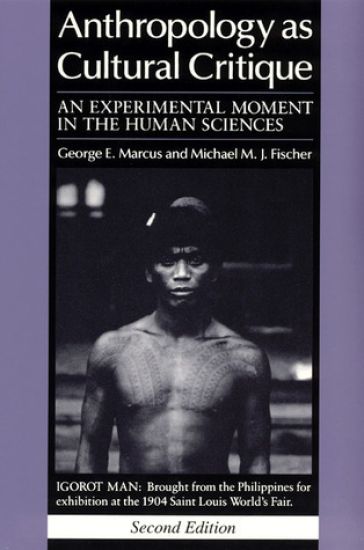
Anthropology as Cultural Critique

Anthropology as Cultural Critique

George E. Marcus; Michael M. J. Fischer

University of Chicago Press
1999
nidottu
Using cultural anthropology to analyze debates that reverberate throughout the human sciences, George E. Marcus and Michael M. J. Fischer look closely at cultural anthropology's past accomplishments, its current predicaments, its future direction, and the insights it has to offer other fields of study. The result is a provocative work that is important for scholars interested in a critical approach to social science, art, literature, and history, as well as anthropology. This second edition considers new challenges to the field which have arisen since the book's original publication.
Ethnography through Thick and Thin

Ethnography through Thick and Thin

George E. Marcus

Princeton University Press
1998
pokkari
In the 1980s, George Marcus spearheaded a major critique of cultural anthropology, expressed most clearly in the landmark book Writing Culture, which he coedited with James Clifford. Ethnography through Thick and Thin updates and advances that critique for the late 1990s. Marcus presents a series of penetrating and provocative essays on the changes that continue to sweep across anthropology. He examines, in particular, how the discipline's central practice of ethnography has been changed by "multi-sited" approaches to anthropology and how new research patterns are transforming anthropologists' careers. Marcus rejects the view, often expressed, that these changes are undermining anthropology. The combination of traditional ethnography with scholarly experimentation, he argues, will only make the discipline more lively and diverse. The book is divided into three main parts. In the first, Marcus shows how ethnographers' tradition of defining fieldwork in terms of peoples and places is now being challenged by the need to study culture by exploring connections, parallels, and contrasts among a variety of often seemingly incommensurate sites. The second part illustrates this emergent multi-sited condition of research by reflecting it in some of Marcus's own past research on Tongan elites and dynastic American fortunes. In the final section, which includes the previously unpublished essay "Sticking with Ethnography through Thick and Thin," Marcus examines the evolving professional culture of anthropology and the predicaments of its new scholars. He shows how students have increasingly been drawn to the field as much by such powerful interdisciplinary movements as feminism, postcolonial studies, and cultural studies as by anthropology's own traditions. He also considers the impact of demographic changes within the discipline--in particular the fact that anthropologists are no longer almost exclusively Euro-Americans studying non-Euro-Americans. These changes raise new issues about the identities of anthropologists in relation to those they study, and indeed, about what is to define standards of ethnographic scholarship. Filled with keen and highly illuminating observations, Ethnography through Thick and Thin will stimulate fresh debate about the past, present, and future of a discipline undergoing profound transformations.
With Malice toward Some

With Malice toward Some

George E. Marcus; John L. Sullivan; Elizabeth Theiss-Morse; Sandra L. Wood

Cambridge University Press
1995
sidottu
With Malice toward Some: How People Make Civil Liberties Judgments addresses an issue integral to democratic societies: how people faced with a complex variety of considerations decide whether or not to tolerate extremist groups. Relying on several survey-experiments, Marcus, Sullivan, Theiss-Morse, and Wood identify and compare the impact on decision making of contemporary information, long-standing predispositions, and enduring values and beliefs. Citizens react most strongly to information about a group’s violations of behavioral norms and information about the implications for democracy of the group’s actions. The authors conclude that democratic citizens should have a strong baseline of tolerance yet be attentive to and thoughtful about current information.
With Malice toward Some

With Malice toward Some

George E. Marcus; John L. Sullivan; Elizabeth Theiss-Morse; Sandra L. Wood

Cambridge University Press
1995
pokkari
With Malice toward Some: How People Make Civil Liberties Judgments addresses an issue integral to democratic societies: how people faced with a complex variety of considerations decide whether or not to tolerate extremist groups. Relying on several survey-experiments, Marcus, Sullivan, Theiss-Morse, and Wood identify and compare the impact on decision making of contemporary information, long-standing predispositions, and enduring values and beliefs. Citizens react most strongly to information about a group’s violations of behavioral norms and information about the implications for democracy of the group’s actions. The authors conclude that democratic citizens should have a strong baseline of tolerance yet be attentive to and thoughtful about current information.
Political Tolerance and American Democracy

Political Tolerance and American Democracy

John L. Sullivan; James Piereson; George E. Marcus

University of Chicago Press
1993
nidottu
This path-breaking book reconceptualizes our understanding of political tolerance as well as of its foundations. Previous studies, the authors contend, overemphasized the role of education in explaining the presence of tolerance, while giving insufficient weight to personality and ideological factors. With an innovative methodology for measuring levels of tolerance more accurately, the authors are able to explain why particular groups are targeted and why tolerance is an inherently political concept. Far from abating, the degree of intolerance in America today is probably as great as it ever was; it is the targets of intolerance that have changed.