Kirjojen hintavertailu. Mukana 12 326 970 kirjaa ja 12 kauppaa.
Kirjailija
George E. P. Box
Kirjat ja teokset yhdessä paikassa: 10 kirjaa, julkaisuja vuosilta 1992-2015, suosituimpien joukossa An Accidental Statistician. Vertaile teosten hintoja ja tarkista saatavuus suomalaisista kirjakaupoista.
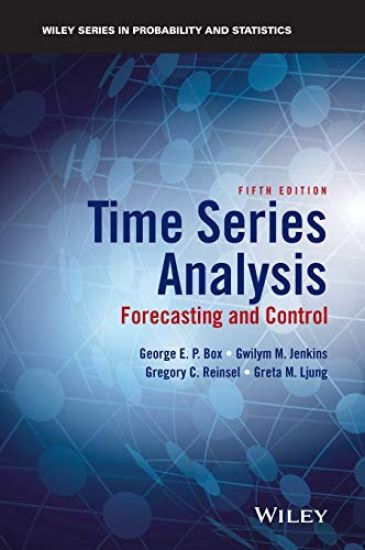
Praise for the Fourth Edition "The book follows faithfully the style of the original edition. The approach is heavily motivated by real-world time series, and by developing a complete approach to model building, estimation, forecasting and control."—Mathematical Reviews Bridging classical models and modern topics, the Fifth Edition of Time Series Analysis: Forecasting and Control maintains a balanced presentation of the tools for modeling and analyzing time series. Also describing the latest developments that have occurred in the field over the past decade through applications from areas such as business, finance, and engineering, the Fifth Edition continues to serve as one of the most influential and prominent works on the subject. Time Series Analysis: Forecasting and Control, Fifth Edition provides a clearly written exploration of the key methods for building, classifying, testing, and analyzing stochastic models for time series and describes their use in five important areas of application: forecasting; determining the transfer function of a system; modeling the effects of intervention events; developing multivariate dynamic models; and designing simple control schemes. Along with these classical uses, the new edition covers modern topics with new features that include: A redesigned chapter on multivariate time series analysis with an expanded treatment of Vector Autoregressive, or VAR models, along with a discussion of the analytical tools needed for modeling vector time seriesAn expanded chapter on special topics covering unit root testing, time-varying volatility models such as ARCH and GARCH, nonlinear time series models, and long memory modelsNumerous examples drawn from finance, economics, engineering, and other related fieldsThe use of the publicly available R software for graphical illustrations and numerical calculations along with scripts that demonstrate the use of R for model building and forecastingUpdates to literature references throughout and new end-of-chapter exercisesStreamlined chapter introductions and revisions that update and enhance the exposition Time Series Analysis: Forecasting and Control, Fifth Edition is a valuable real-world reference for researchers and practitioners in time series analysis, econometrics, finance, and related fields. The book is also an excellent textbook for beginning graduate-level courses in advanced statistics, mathematics, economics, finance, engineering, and physics.
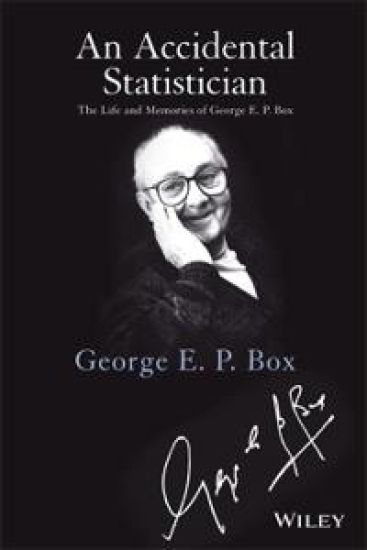
Celebrating the life of an admired pioneer in statistics In this captivating and inspiring memoir, world-renowned statistician George E. P. Box offers a firsthand account of his life and statistical work. Writing in an engaging, charming style, Dr. Box reveals the unlikely events that led him to a career in statistics, beginning with his job as a chemist conducting experiments for the British army during World War II. At this turning point in his life and career, Dr. Box taught himself the statistical methods necessary to analyze his own findings when there were no statisticians available to check his work. Throughout his autobiography, Dr. Box expertly weaves a personal and professional narrative to illustrate the effects his work had on his life and vice-versa. Interwoven between his research with time series analysis, experimental design, and the quality movement, Dr. Box recounts coming to the United States, his family life, and stories of the people who mean the most to him. This fascinating account balances the influence of both personal and professional relationships to demonstrate the extraordinary life of one of the greatest and most influential statisticians of our time. An Accidental Statistician also features: • Two forewords written by Dr. Box’s former colleagues and closest confidants • Personal insights from more than a dozen statisticians on how Dr. Box has influenced and continues to touch their careers and lives • Numerous, previously unpublished photos from the author’s personal collection An Accidental Statistician is a compelling read for statisticians in education or industry, mathematicians, engineers, and anyone interested in the life story of an influential intellectual who altered the world of modern statistics.
This set contains: Statistical Control by Monitoring and Adjustment, Second Edition (978-0-470-14832-7)Recent research has shown that monitoring techniques alone are inadequate for modern Statistical Process Control (SPC), and there exists a need for these techniques to be augmented by methods that indicate when occasional process adjustment is necessary. Statistical Control by Monitoring and Adjustment, Second Edition presents the relationship among these concepts and elementary ideas from Engineering Process Control (EPC), demonstrating how the powerful synergistic association between SPC and EPC can solve numerous problems that are frequently encountered in process monitoring and adjustment. The book begins with a discussion of SPC as it was originally conceived by Dr. Walter A. Shewhart and Dr. W. Edwards Deming. Subsequent chapters outline the basics of the new integration of SPC and EPC, which is not available in other related books. Thorough coverage of time series analysis for forecasting, process dynamics, and non-stationary models is also provided, and these sections have been carefully written so as to require only an elementary understanding of mathematics. Extensive graphical explanations and computational tables accompany the numerous examples that are provided throughout each chapter, and a helpful selection of problems and solutions further facilitates understanding. Statistical Control by Monitoring and Adjustment, Second Edition is an excellent book for courses on applied statistics and industrial engineering at the upper-undergraduate and graduate levels. It also serves as a valuable reference for statisticians and quality control practitioners working in industry. Statistics for Experimenters: Design, Innovation, and Discovery, Second Edition (978-0-471-71813-0) This fresh approach to statistics focuses on applications in the physical, engineering, biological, and social sciences. From the beginning its source of ideas is the scientific method itself and the need of the investigator to make his or her research as effective as possible through proper choice and conduct of experiments and appropriate analysis of data. After a problem is stated, appropriate statistical methods of design and analysis are discussed. And frequently, examples are presented for which standard mathematical assumptions are wrong, thus forcing the reader’s attention onto the essential precautions necessary in the conduct of the experiment to ensure valid conclusions. Statistical practitioners themselves, the authors provide scientists and engineers with a lucid introduction to the basic statistical methods needed for research.
Praise for the First Edition "This book . . . is a significant addition to the literature on statistical practice . . . should be of considerable interest to those interested in these topics."—International Journal of Forecasting Recent research has shown that monitoring techniques alone are inadequate for modern Statistical Process Control (SPC), and there exists a need for these techniques to be augmented by methods that indicate when occasional process adjustment is necessary. Statistical Control by Monitoring and Adjustment, Second Edition presents the relationship among these concepts and elementary ideas from Engineering Process Control (EPC), demonstrating how the powerful synergistic association between SPC and EPC can solve numerous problems that are frequently encountered in process monitoring and adjustment. The book begins with a discussion of SPC as it was originally conceived by Dr. Walter A. Shewhart and Dr. W. Edwards Deming. Subsequent chapters outline the basics of the new integration of SPC and EPC, which is not available in other related books. Thorough coverage of time series analysis for forecasting, process dynamics, and non-stationary models is also provided, and these sections have been carefully written so as to require only an elementary understanding of mathematics. Extensive graphical explanations and computational tables accompany the numerous examples that are provided throughout each chapter, and a helpful selection of problems and solutions further facilitates understanding. Statistical Control by Monitoring and Adjustment, Second Edition is an excellent book for courses on applied statistics and industrial engineering at the upper-undergraduate and graduate levels. It also serves as a valuable reference for statisticians and quality control practitioners working in industry.
The authority on building empirical models and the fitting of such surfaces to data—completely updated and revised Revising and updating a volume that represents the essential source on building empirical models, George Box and Norman Draper—renowned authorities in this field—continue to set the standard with the Second Edition of Response Surfaces, Mixtures, and Ridge Analyses, providing timely new techniques, new exercises, and expanded material. A comprehensive introduction to building empirical models, this book presents the general philosophy and computational details of a number of important topics, including factorial designs at two levels; fitting first and second-order models; adequacy of estimation and the use of transformation; and occurrence and elucidation of ridge systems. Substantially rewritten, the Second Edition reflects the emergence of ridge analysis of second-order response surfaces as a very practical tool that can be easily applied in a variety of circumstances. This unique, fully developed coverage of ridge analysis—a technique for exploring quadratic response surfaces including surfaces in the space of mixture ingredients and/or subject to linear restrictions—includes MINITAB® routines for performing the calculations for any number of dimensions. Many additional figures are included in the new edition, and new exercises (many based on data from published papers) offer insight into the methods used. The exercises and their solutions provide a variety of supplementary examples of response surface use, forming an extremely important component of the text. Response Surfaces, Mixtures, and Ridge Analyses, Second Edition presents material in a logical and understandable arrangement and includes six new chapters covering an up-to-date presentation of standard ridge analysis (without restrictions); design and analysis of mixtures experiments; ridge analysis methods when there are linear restrictions in the experimental space including the mixtures experiments case, with or without further linear restrictions; and canonical reduction of second-order response surfaces in the foregoing general case. Additional features in the new edition include: New exercises with worked answers added throughoutAn extensive revision of Chapter 5: Blocking and Fractionating 2k DesignsAdditional discussion on the projection of two-level designs into lower dimensional spaces This is an ideal reference for researchers as well as a primary text for Response Surface Methodology graduate-level courses and a supplementary text for Design of Experiments courses at the upper-undergraduate and beginning-graduate levels.
Masterworks in process improvement and quality technology-- by George Box and friends George Box has a unique ability to explain complex ideas simply and eloquently. This revised edition of his masterworks since 1982 clearly demonstrates the range of his wit and intellect. These fascinating readings represent the cornerstones in the theory and application of process improvement, product design, and process control. Readers will gain valuable insights into the fundamentals and philosophy of scientific method using statistics and how it can drive creativity and discovery. The book is divided into five key parts: * Part A, Some Thoughts on Quality Improvement, concerns the democratization of the scientific method and, in such papers as "When Murphy Speaks--Listen," advises managers to view operation of their processes as ongoing opportunities for improvement. * Part B, Design of Experiments for Process Improvement, illustrates the enormous advantages offered by experimental design in the pursuit of better products and processes. * Part C, Sequential Investigation and Discovery, shows how sequential assembly of designs allows the experimenter to match the difficulty of the problem with the effort needed to solve it. * Part D, Control, describes application of feedback control in the Statistical Process Control (SPC) environment. A simple graphical technique using Box-Jenkins charts is set forth to appropriately adjust processes to target. * Part E, Variance Reduction and Robustness, demonstrates how the existence of more than one source of variation may be used to achieve products robust to the environment in which they must function and emphasizes the importance of error transmission and data transformation in producing robust assemblies. A Foreword by Dr. J. Stuart Hunter allows readers to gain insight into the workings of a remarkable mind and explains how these ideas can greatly catalyze their efforts in process improvement.
A Classic adapted to modern times Rewritten and updated, this new edition of Statistics for Experimenters adopts the same approaches as the landmark First Edition by teaching with examples, readily understood graphics, and the appropriate use of computers. Catalyzing innovation, problem solving, and discovery, the Second Edition provides experimenters with the scientific and statistical tools needed to maximize the knowledge gained from research data, illustrating how these tools may best be utilized during all stages of the investigative process. The authors’ practical approach starts with a problem that needs to be solved and then examines the appropriate statistical methods of design and analysis. Providing even greater accessibility for its users, the Second Edition is thoroughly revised and updated to reflect the changes in techniques and technologies since the publication of the classic First Edition. Among the new topics included are: Graphical Analysis of VarianceComputer Analysis of Complex DesignsSimplification by transformationHands-on experimentation using Response Service MethodsFurther development of robust product and process design using split plot arrangements and minimization of error transmissionIntroduction to Process Control, Forecasting and Time SeriesIllustrations demonstrating how multi-response problems can be solved using the concepts of active and inert factor spaces and canonical spacesBayesian approaches to model selection and sequential experimentation An appendix featuring Quaquaversal quotes from a variety of sources including noted statisticians and scientists to famous philosophers is provided to illustrate key concepts and enliven the learning process. All the computations in the Second Edition can be done utilizing the statistical language R. Functions for displaying ANOVA and lamba plots, Bayesian screening, and model building are all included and R packages are available online. All theses topics can also be applied utilizing easy-to-use commercial software packages. Complete with applications covering the physical, engineering, biological, and social sciences, Statistics for Experimenters is designed for individuals who must use statistical approaches to conduct an experiment, but do not necessarily have formal training in statistics. Experimenters need only a basic understanding of mathematics to master all the statistical methods presented. This text is an essential reference for all researchers and is a highly recommended course book for undergraduate and graduate students.
The Wiley Classics Library consists of selected books that have become recognized classics in their respective fields. With these new unabridged and inexpensive editions, Wiley hopes to extend the life of these important works by making them available to future generations of mathematicians and scientists.Currently available in the Series:
The Wiley Classics Library consists of selected books that have become recognized classics in their respective fields. With these new unabridged and inexpensive editions, Wiley hopes to extend the life of these important works by making them available to future generations of mathematicians and scientists. Currently available in the Series: T. W. Anderson The Statistical Analysis of Time Series T. S. Arthanari & Yadolah Dodge Mathematical Programming in Statistics Emil Artin Geometric Algebra Norman T. J. Bailey The Elements of Stochastic Processes with Applications to the Natural Sciences Robert G. Bartle The Elements of Integration and Lebesgue Measure George E. P. Box & George C. Tiao Bayesian Inference in Statistical Analysis R. W. Carter Finite Groups of Lie Type: Conjugacy Classes and Complex Characters R. W. Carter Simple Groups of Lie Type William G. Cochran & Gertrude M. Cox Experimental Designs, Second Edition Richard Courant Differential and Integral Calculus, Volume I Richard Courant Differential and Integral Calculus, Volume II Richard Courant & D. Hilbert Methods of Mathematical Physics, Volume I Richard Courant & D. Hilbert Methods of Mathematical Physics, Volume II D. R. Cox Planning of Experiments Harold S. M. Coxeter Introduction to Geometry, Second Edition Charles W. Curtis & Irving Reiner Representation Theory of Finite Groups and Associative Algebras Charles W. Curtis & Irving Reiner Methods of Representation Theory with Applications to Finite Groups and Orders, Volume I Charles W. Curtis & Irving Reiner Methods of Representation Theory with Applications to Finite Groups and Orders, Volume II Bruno de Finetti Theory of Probability, Volume 1 Bruno de Finetti Theory of Probability, Volume 2 W. Edwards Deming Sample Design in Business Research Amos de Shalit & Herman Feshbach Theoretical Nuclear Physics, Volume 1Nuclear Structure J. L. Doob Stochastic Processes Nelson Dunford & Jacob T. Schwartz Linear Operators, Part One, General Theory Nelson Dunford & Jacob T. Schwartz Linear Operators, Part Two, Spectral TheorySelf Adjoint Operators in Hilbert Space Nelson Dunford & Jacob T. Schwartz Linear Operators, Part Three, Spectral Operators Herman Feshbach Theoretical Nuclear Physics: Nuclear Reactions Bernard Friedman Lectures on Applications-Oriented Mathematics Phillip Griffiths & Joseph Harris Principles of Algebraic Geometry Gerald J. Hahn & Samuel S. Shapiro Statistical Models in Engineering Morris H. Hansen, William N. Hurwitz & Willim G. Madow Sample Survey Methods and Theory, Volume IMethods and Applications Morris H. Hansen, William N. Hurwitz & William G. Madow Sample Survey Methods and Theory, Volume IITheory Peter Henrici Applied and Computational Complex Analysis, Volume 1Power SeriesIntegrationConformal MappingLocation of Zeros Peter Henrici Applied and Computational Complex Analysis, Volume 2Special FunctionsIntegral TransformsAsymptoticsContinued fractions Peter Henrici Applied and Computational Complex Analysis, Volume 3Discrete Fourier AnalysisCauchy IntegralsConstruction of Conformal MapsUnivalent Functions Peter Hilton & Yel-Chiang Wu A Course in Modern Algebra Harry Hochstadt Integral Equations Leslie Kish Survey Sampling Shoshichi Kobayashi & Katsumi Nomizu Foundations of Differential Geometry, Volume 1 Shoshichi Kobayashi & Katsumi Nomizu Foundations of Differential Geometry, Volume 2 Erwin O. Kreyszig Introductory Functional Analysis with Applications William H. Louisell Quantum Statistical Properties of Radiation Ali Hasan Nayfeh Introduction to Perturbation Techniques Ali Hasan Nayfeh & Dean T. Mook Nonlinear Oscillations Emanuel Parzen Modern Probability Theory and Its Applications P. M. Prenter Splines and Variational Methods Walter Rudin Fourier Analysis on Groups I. H. Segal Enzyme Kinetics: Behavior and Analysis of Rapid Equilibrium and Steady-State Enzyme Systems C. L. Siegel Topics in Complex Function Theory, Volume IElliptic Functions and Uniformization Theory C. L. Siegel Topics in Complex Function Theory, Volume IIAutomorphic and Abelian Integrals C. L. Siegel Topics in Complex Function Theory, Volume IIIAbelian Functions and Modular Functions of Several Variables J. J. Stoker Differential Geometry J. J. Stoker Water Waves: The Mathematical Theory with Applications J. J. Stoker Nonlinear Vibrations in Mechanical and Electrical Systems