Kirjojen hintavertailu. Mukana 12 657 676 kirjaa ja 12 kauppaa.
Kirjailija
George Eliot
Kirjat ja teokset yhdessä paikassa: 1 103 kirjaa, julkaisuja vuosilta 1863-2026, suosituimpien joukossa Frontline Drama 4. Vertaile teosten hintoja ja tarkista saatavuus suomalaisista kirjakaupoista.
Adam Bede, the first novel written by George Eliot (the pen name of Mary Ann Evans), was published in 1859. The story's plot follows four characters' rural lives in the fictional community of Hayslope-a rural, pastoral and close-knit community in 1799. The novel revolves around a love triangle between beautiful but self-absorbed Hetty Sorrel, Captain Arthur Donnithorne, the young squire who seduces her, Adam Bede, her unacknowledged suitor, and Dinah Morris, Hetty's cousin, a fervent, virtuous and beautiful Methodist lay preacher.
Adam Bede is a debut novel written by a famous English writer George Eliot. In no time after its publication it became popular and joined the list of the most famous works in the world literature. The main character is a carpenter: hardworking, talented master of his craft and a very kind person. A beautiful young woman Hetty Sorrel rejects his love, choosing a grandson of a local squire. Their secret dating leads to tragic consequences.
According to The Oxford Companion to English Literature (1967), "the plot is founded on a story told to George Eliot by her aunt Elizabeth Evans, a Methodist preacher, and the original of Dinah Morris of the novel, of a confession of child-murder, made to her by a girl in prison." The story's plot follows four characters' rural lives in the fictional community of Hayslope-a rural, pastoral and close-knit community in 1799. The novel revolves around a love "rectangle" among beautiful but self-absorbed Hetty Sorrel; Captain Arthur Donnithorne, the young squire who seduces her; Adam Bede, her unacknowledged suitor; and Dinah Morris, Hetty's cousin, a fervent, virtuous and beautiful Methodist lay preacher. Adam is a local carpenter much admired for his integrity and intelligence, in love with Hetty. She is attracted to Arthur, the local squire's charming grandson and heir, and falls in love with him. When Adam interrupts a tryst between them, Adam and Arthur fight. Arthur agrees to give up Hetty and leaves Hayslope to return to his militia. After he leaves, Hetty Sorrel agrees to marry Adam but shortly before their marriage, discovers she is pregnant. In desperation, she leaves in search of Arthur but she cannot find him. Unwilling to return to the village on account of the shame and ostracism she would have to endure, she delivers her baby with the assistance of a friendly woman she encounters. She subsequently abandons the infant in a field but not being able to bear the child's cries, she tries to retrieve the infant. However, she is too late, the infant having already died of exposure. Hetty is caught and tried for child murder. She is found guilty and sentenced to hang. Dinah enters the prison and pledges to stay with Hetty until the end. Her compassion brings about Hetty's contrite confession. When Arthur Donnithorne, on leave from the militia for his grandfather's funeral, hears of her impending execution, he races to the court and has the sentence commuted to transportation. Ultimately, Adam and Dinah, who gradually become aware of their mutual love, marry and live peacefully with his family.
Charlotte Brontë; Emily Brontë; Elizabeth Gaskell; Hesba Stretton; Adelaide Anne Procter; George Eliot; Mary Elizabeth Braddon; Amelia Edwards; Ellen Wood; Charlotte Riddell; Charlotte Perkins Gilman
I början av 1800-talet blev romanläsandet en populär sysselsättning. Nya tryckmetoder och bättre kommunikationer spred den nya underhållningsformen. Tekniska och vetenskapliga framsteg som järnvägar och elektricitet, tillsammans med spiritism och andra flugor, förändrade världen. Horace Walpole hade skrivit sin skräckroman Borgen i Otranto några årtionden tidigare, och 1818 kom Mary Shelleys Frankenstein. Sådana böcker blev början till en våg av gotisk skräck i framför allt Storbritannien mer eller mindre övernaturliga berättelser i miljöer med vittrande slott, åskväder, sönderslitna moln och månsken över upprörda hav, alltsammans befolkat av hålögda adelsmän och bleka jungfrur. Många av de som skrev gotisk skräck var kvinnor, och några av dem finns i den här samlingen. Inte bara deras noveller och romaner var förfärande och utmanande, utan kanske ännu mer deras sätt att leva: ogifta; boende ensamma; boende med gifta män; till och med boende med andra kvinnor! Novellerna i boken är skrivna mellan 1840- och 90-talen, av författare som systrarna Brontë, George Eliot och Charlotte Perkins Gilman, och förtjänar mycket väl att läsas än i dag.
The Clarendon edition of Adam Bede (1859) is the first critical edition of the work that established George Eliot's reputation. Its extensive textual apparatus lists manuscript and first edition variants from the copy-text, which is the corrected eighth edition of 1861 -- her last revision of the book. The introduction locates the genesis of the novel in Eliot's family history, her travels, and her reading of literature and biography, and describes the composition process, including her debate with the publisher John Blackwood about the suitability of the subject-matter for a family audience, as both author and publisher anticipated its appearing initially in Blackwood's Edinburgh Magazine. Using Blackwood's publication ledgers, it also establishes the details of the eleven complete or nearly complete resettings of the novel in Eliot's lifetime; and examines the author's revisions to a manuscript that is popularly, but erroneously, thought to have been little altered, giving detailed attention to the dialect in the context of more than 900 variants between manuscript and first edition.
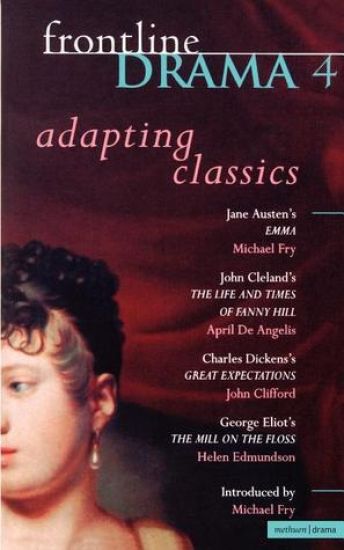
Four superlative stage adaptations by contemporary playwrights, giving bold new interpretations of classic novels This volume, relaunching the Frontline Intelligence series, contains stage adaptations by contemporary dramatists of well-known, well-loved classics. Included are Jane Austen's "Emma" by Michael Fry, John Cleland's "The Life and Times of Fanny Hill" by April De Angelis, Charles Dickens's "Great Expectations" by John Clifford and George Eliot's "The Mill on the Floss" by Helen Edmundson. The introduction by Michael Fry discusses the issue of adapting classics in context.
Mary Anne Evans (22 November 1819 - 22 December 1880; alternatively "Mary Ann" or "Marian"), known by her pen name George Eliot, was an English novelist, poet, journalist, translator, and one of the leading writers of the Victorian era. She authored seven novels, including Adam Bede (1859), The Mill on the Floss (1860), Silas Marner (1861), Middlemarch (1871-72), and Daniel Deronda (1876), most of which are set in provincial England and known for their realism and psychological insight.
Adam Bede, the first novel written by George Eliot (the pen name of Mary Ann Evans), was published in 1859. The story's plot follows four characters' rural lives in the fictional community of Hayslope-a rural, pastoral and close-knit community in 1799. The novel revolves around a love triangle between beautiful but self-absorbed Hetty Sorrel, Captain Arthur Donnithorne, the young squire who seduces her, Adam Bede, her unacknowledged suitor, and Dinah Morris, Hetty's cousin, a fervent, virtuous and beautiful Methodist lay preacher.
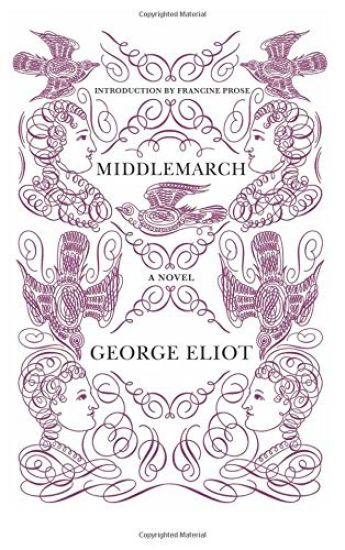
George Eliot's beloved classic novel--hailed by Virginia Woolf as "masterful"--follows the life, loves, foibles, and politics of the residents of a fictional English town set amid the social unrest of the Industrial Revolution. This beautifully designed Harper Perennial Deluxe Edition--with special cover effects and French flaps--includes an introduction by award-winning author Francine Prose.Dorothea Brooke married Edward Casaubon--a clergyman and scholar some years her senior--naively hoping their union would be a true meeting of the minds. Trapped in a lonely marriage to a tyrannical man, she finds companionship with Edward's cousin, but her overtures risk her spotless reputation and jeopardize her future.Young doctor Tertius Lydgate comes to Middlemarch full of progressive ideas, eager to volunteer his skill at the local hospital. Through his connections there he meets the mayor's beautiful daughter, Rosamond Vincy, and marries her, only to face financial ruin at the hands of her materialism and overwhelming vanity.Rosamond's brother, Fred, is destined for the Church to improve his family's class standing, but his childhood sweetheart, Mary Garth, refuses to marry him unless he pursues a more suitable career. Forced by fate into uncertain financial circumstances, Fred must question his choices and desires if he hopes to earn Mary's respect.God-fearing and esteemed, Nicholas Bulstrode is a good man and trustworthy banker--or so it appears until an old enemy comes to town, intent on revealing Bulstrode's shady past dealings. Terrified of being exposed as a hypocrite, he takes matters into his own hands, each desperate act spiraling him further into disgrace and corruption.A masterwork of fiction, Middlemarch traces these four lives in a plot that illuminates the social fabric of mid-nineteenth-century England. Looming above the landscape of Victorian literature, Eliot's beloved novel explores the perennial struggle between individual and society, integrity and temptation, and is as timely today as when it was first published.
George Eliot's final novel is an extraordinary, keen and yet tender examination of two very different lives. A beautiful young woman stands poised over the gambling tables in an expensive hotel. She is aware of, and resents, the gaze of an unusual young man, a stranger, who seems to judge her, and find her wanting. The encounter will change her life. The strange young man is Daniel Deronda, brought up with his own origins shrouded in mystery, searching for a compelling outlet for his singular talents and remarkable capacity for empathy. Deronda's destiny will change the lives of many.
Title: The complete poetical works of George Eliot. Family edition. Fully illustrated with new wood-engravings. With border by J. D. Woodward.Publisher: British Library, Historical Print EditionsThe British Library is the national library of the United Kingdom. It is one of the world's largest research libraries holding over 150 million items in all known languages and formats: books, journals, newspapers, sound recordings, patents, maps, stamps, prints and much more. Its collections include around 14 million books, along with substantial additional collections of manuscripts and historical items dating back as far as 300 BC.The FICTION & PROSE LITERATURE collection includes books from the British Library digitised by Microsoft. The collection provides readers with a perspective of the world from some of the 18th and 19th century's most talented writers. Written for a range of audiences, these works are a treasure for any curious reader looking to see the world through the eyes of ages past. Beyond the main body of works the collection also includes song-books, comedy, and works of satire. ++++The below data was compiled from various identification fields in the bibliographic record of this title. This data is provided as an additional tool in helping to insure edition identification: ++++ British Library Eliot, George; 1888. pp. 271: plates; port. 25 cm. 11612.h.1.
George Eliot's notebooks from the years 1872–77 contain memoranda of her reading while she was preparing for and writing Daniel Deronda, together with the 'Oriental Memoranda' and other notes she recorded in the year following the novel's publication. Above all, the notebooks reveal her acquisition of a wide range of learning about Judaism and provide insight into the creative process of integrating that learning into Daniel Deronda. One of these notebooks is published in this 1996 book; others are offered in new transcriptions. They are all presented in a form which demonstrates the intellectual coherence underlying the diversity of the memoranda: translations are provided for the notes in German, French, Italian, Greek, and Hebrew; explanatory notes are offered, and interpretative links are made to the novel; primary sources are traced and the chronology of Eliot's reading outlined.
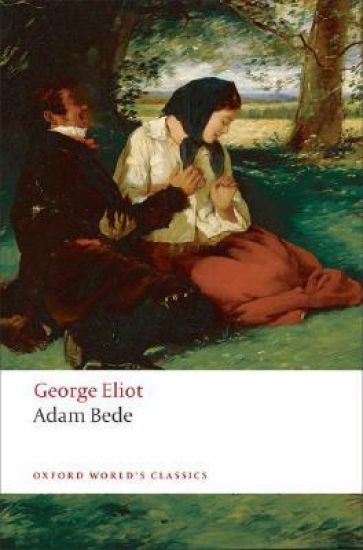
'Our deeds carry their terrible consequences...consequences that are hardly ever confined to ourselves.' Pretty Hetty Sorrel is loved by the village carpenter Adam Bede, but her head is turned by the attentions of the fickle young squire, Arthur Donnithorne. His dalliance with the dairymaid has unforeseen consequences that affect the lives of many in their small rural community. First published in 1859, Adam Bede carried its readers back sixty years to the lush countryside of Eliot's native Warwickshire, and a time of impending change for England and the wider world. Eliot's powerful portrayal of the interaction of ordinary people brought a new social realism to the novel, in which humour and tragedy co-exist, and fellow-feeling is the mainstay of human relationships. Faith, in the figure of Methodist preacher Dinah Morris, offers redemption to all who are willing to embrace it. This new edition is based on the definitive Clarendon edition and Eliot's corrected text of 1861. ABOUT THE SERIES: For over 100 years Oxford World's Classics has made available the widest range of literature from around the globe. Each affordable volume reflects Oxford's commitment to scholarship, providing the most accurate text plus a wealth of other valuable features, including expert introductions by leading authorities, helpful notes to clarify the text, up-to-date bibliographies for further study, and much more.
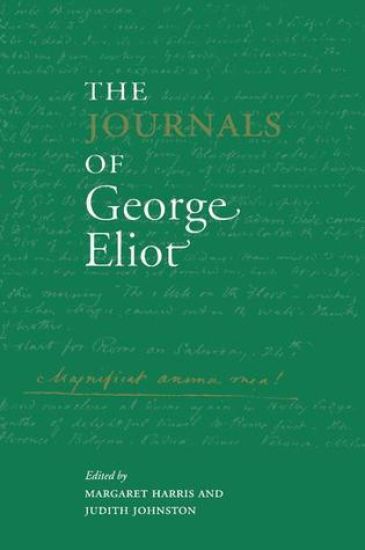
The Journals of George Eliot publishes for the first time the entire text of the surviving journals of the great Victorian novelist, and constitutes a new text by her - the closest she came to autobiography. The journals span her life from 1854, when she entered into a common-law union with George Henry Lewes, to her death in 1880, revealing the professional writer George Eliot as well as the remarkable woman Marian Evans. Many aspects of her writing life are illuminated, such as the separation of ‘George Eliot’ - and the account of her work’s public reception - from her ‘private’ self, at the time she began to write fiction. The journals present a George Eliot of many moods, not only the serious sybilline figure so admired in her later years. The edition’s extensive apparatus includes a chronology, introduction, headnotes to each diary, and an annotated index supplying valuable contextual and explanatory information.
The Journals of George Eliot publishes for the first time the entire text of the surviving journals of the great Victorian novelist, and constitutes a new text by her - the closest she came to autobiography. The journals span her life from 1854, when she entered into a common-law union with George Henry Lewes, to her death in 1880, revealing the professional writer George Eliot as well as the remarkable woman Marian Evans. Many aspects of her writing life are illuminated, such as the separation of ‘George Eliot’ - and the account of her work’s public reception - from her ‘private’ self, at the time she began to write fiction. The journals present a George Eliot of many moods, not only the serious sybilline figure so admired in her later years. The edition’s extensive apparatus includes a chronology, introduction, headnotes to each diary, and an annotated index supplying valuable contextual and explanatory information.
George Eliot's notebooks from the years 1872–77 contain memoranda of her reading while she was preparing for and writing Daniel Deronda, together with the 'Oriental Memoranda' and other notes she recorded in the year following the novel's publication. Above all, the notebooks reveal her acquisition of a wide range of learning about Judaism and provide insight into the creative process of integrating that learning into Daniel Deronda. One of these notebooks is published in this 1996 book; others are offered in new transcriptions. They are all presented in a form which demonstrates the intellectual coherence underlying the diversity of the memoranda: translations are provided for the notes in German, French, Italian, Greek, and Hebrew; explanatory notes are offered, and interpretative links are made to the novel; primary sources are traced and the chronology of Eliot's reading outlined.