

Kirjailija
George Eliot
Kirjat ja teokset yhdessä paikassa: 1 086 kirjaa, julkaisuja vuosilta 1863-2026, suosituimpien joukossa Frontline Drama 4. Vertaile teosten hintoja ja tarkista saatavuus suomalaisista kirjakaupoista.
1 086 kirjaa
Kirjojen julkaisuhaarukka 1863-2026.


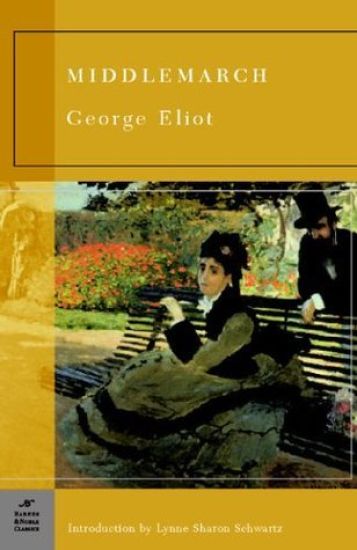
"Middlemarch," by George Eliot, is part of the "Barnes & Noble Classics"series, which offers quality editions at affordable prices to the student and the general reader, including new scholarship, thoughtful design, and pages of carefully crafted extras. Here are some of the remarkable features of "Barnes & Noble Classics" New introductions commissioned from today's top writers and scholars Biographies of the authors Chronologies of contemporary historical, biographical, and cultural events Footnotes and endnotes Selective discussions of imitations, parodies, poems, books, plays, paintings, operas, statuary, and films inspired by the work Comments by other famous authors Study questions to challenge the reader's viewpoints and expectations Bibliographies for further reading Indices & Glossaries, when appropriateAll editions are beautifully designed and are printed to superior specifications; some include illustrations of historical interest. "Barnes & Noble Classics "pulls together a constellation of influencesbiographical, historical, and literaryto enrich each reader's understanding of these enduring works.Often called the greatest nineteenth-century British novelist, George Eliot (the pen name of Mary Ann Evans) created in "Middlemarch" a vast panorama of life in a provincial Midlands town. At the story s center stands the intellectual and idealistic Dorothea Brookea character who in many ways resembles Eliot herself. But the very qualities that set Dorothea apart from the materialistic, mean-spirited society around her also lead her into a disastrous marriage with a man she mistakes for her soul mate. In a parallel story, young doctor Tertius Lydgate, who is equally idealistic, falls in love with the pretty but vain and superficial Rosamund Vincy, whom he marries to his ruin.Eliot surrounds her main figures with a gallery of characters drawn from every social class, from laborers and shopkeepers to the rising middle class to members of the wealthy, landed gentry. Together they form an extraordinarily rich and precisely detailed portrait of English provincial life in the 1830s. But Dorothea s and Lydgate s struggles to retain their moral integrity in the midst of temptation and tragedy remind us that their world is very much like our own. Strikingly modern in its painful ironies and psychological insight, "Middlemarch" was pivotal in the shaping of twentieth-century literary realism.Lynne Sharon Schwartz is the author of fourteen books of fiction, non-fiction, and poetry, including the novels "Disturbances in the Field, Leaving Brooklyn," and "In the Family Way," and the memoir "Ruined by Reading." Her poetry collection "In Solitary" and her translation of "A Place to Live: Selected Essays of Natalia Ginzburg" appeared in 2002."
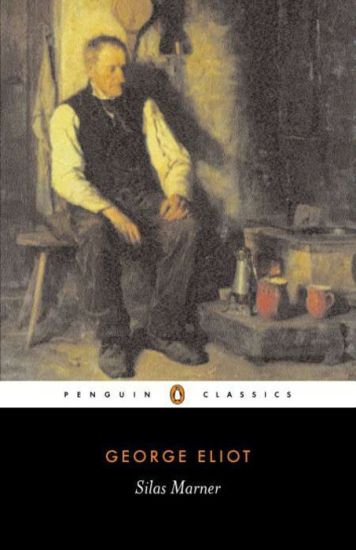
George Eliot's tale of a solitary miser gradually redeemed by the joy of fatherhood, Silas Marner is edited with an introduction and notes by David Carroll in Penguin Classics.Wrongly accused of theft and exiled from a religious community many years before, the embittered weaver Silas Marner lives alone in Raveloe, living only for work and his precious hoard of money. But when his money is stolen and an orphaned child finds her way into his house, Silas is given the chance to transform his life. His fate, and that of Eppie, the little girl he adopts, is entwined with Godfrey Cass, son of the village Squire, who, like Silas, is trapped by his past. Silas Marner, George Eliot's favourite of her novels, combines humour, rich symbolism and pointed social criticism to create an unsentimental but affectionate portrait of rural life.This text uses the Cabinet edition, revised by George Eliot in 1878. David Carroll's introduction is complemented by the original Penguin Classics edition introduction by Q.D. Leavis.Mary Ann Evans (1819-80) began her literary career as a translator, and later editor, of the Westminster Review. In 1857, she published Scenes of Clerical Life, the first of eight novels she would publish under the name of 'George Eliot', including The Mill on the Floss, Middlemarch, and Daniel Deronda.If you enjoyed Silas Marner, you might like Nathaniel Hawthorne's The Scarlet Letter, also available in Penguin Classics.'I think Silas Marner holds a higher place than any of the author's works. It is more nearly a masterpiece; it has more of that simple, rounded, consummate aspect ... which marks a classical work'Henry James
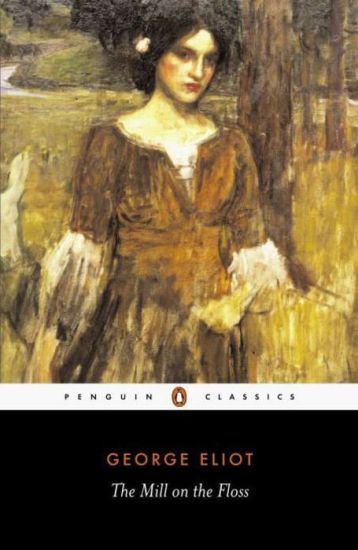
Drawing on George Eliot's own childhood experiences to craft an unforgettable story of first love, sibling rivalry and regret, The Mill on the Floss is edited with an introduction and notes by A.S. Byatt, author of Possession, in Penguin Classics.Brought up at Dorlcote Mill, Maggie Tulliver worships her brother Tom and is desperate to win the approval of her parents, but her passionate, wayward nature and her fierce intelligence bring her into constant conflict with her family. As she reaches adulthood, the clash between their expectations and her desires is painfully played out as she finds herself torn between her relationships with three very different men: her proud and stubborn brother; hunchbacked Tom Wakem, the son of her family's worst enemy; and the charismatic but dangerous Stephen Guest. With its poignant portrayal of sibling relationships, The Mill on the Floss is considered George Eliot's most autobiographical novel; it is also one of her most powerful and moving.In this edition, writer and critic A.S. Byatt, author of Possession, provides full explanatory notes and an introduction relating The Mill on the Floss to George Eliot's own life and times.Mary Ann Evans (1819-80) began her literary career as a translator, and later editor, of the Westminster Review. In 1857, she published Scenes of Clerical Life, the first of eight novels she would publish under the name of 'George Eliot', including The Mill on the Floss, Middlemarch, and Daniel Deronda.If you enjoyed The Mill on the Floss, you might like Thomas Hardy's Jude the Obscure, also available in Penguin Classics.
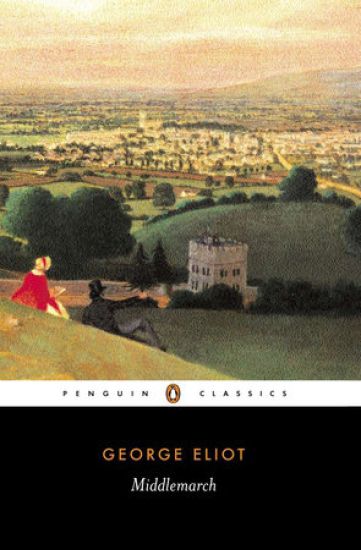
In nineteenth-century England, Dorthea Brooke's wishes to defy social conventions are inhibited by the strict nature of her surroundings.
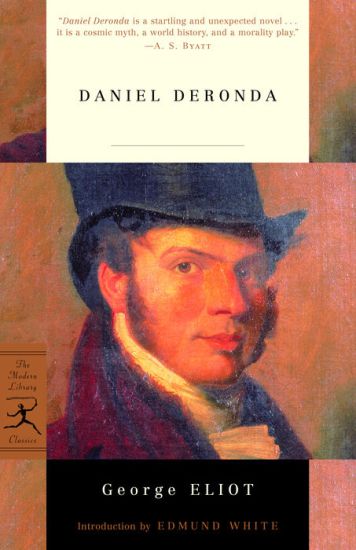
George Eliot's final novel and her most ambitious work, Daniel Deronda contrasts the moral laxity of the British aristocracy with the dedicated fervor of Jewish nationalists. Crushed by a loveless marriage to the cruel and arrogant Grandcourt, Gwendolen Harleth seeks salvation in the deeply spiritual and altruistic Daniel Deronda. But Deronda, profoundly affected by the discovery of his Jewish ancestry, is ultimately too committed to his own cultural awakening to save Gwendolen from despair. This Modern Library Paperback Classic is set from the 1878 Cabinet Edition.
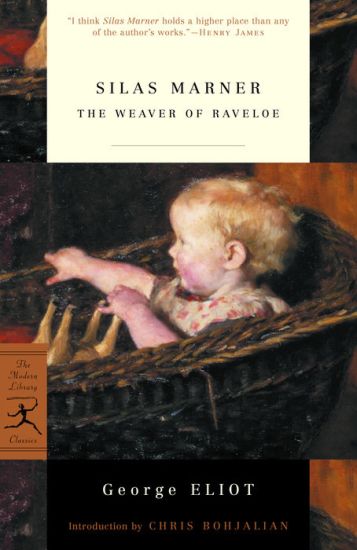
Eliot's penetrating portrayal of a miser who learns to love an orphaned and abandoned child, this novel is a cherished masterwork and a moving story of redemption by the one of the Victorian era's most accomplished novelists.
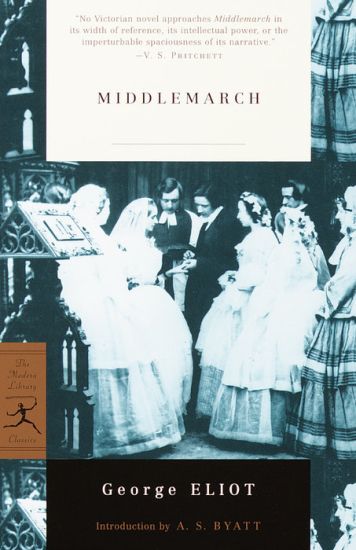
One of the most accomplished and prominent novels of the Victorian era, Middlemarch is an unsurpassed portrait of nineteenth-century English provincial life. Dorothea Brooke is a young woman of fervent ideals who yearns to effect social change yet faces resistance from the society she inhabits. In this epic in a small landscape, Eliot's large cast of precisely delineated characters and the rich tapestry of their stories result in a wise, compassionate, and astute vision of human nature. As Virginia Woolf declared, George Eliot "was one of the first English novelists to discover that men and women think as well as feel, and the discovery was of great artistic moment." "No Victorian novel approaches Middlemarch in its width of reference, its intellectual power, or the imperturbable spaciousness of its narrative."--V. S. Pritchett

George Eliot’s last novel, published in 1876, weaves together two stories, one about Gwendolen Harleth, the spoilt beauty who marries for money, the other concerning the mysterious hero of the title whose search for his true destiny leads him towards Zionism. All Eliot’s great themes – moral choice, the role of chance, the interaction of characters with their environment – are worked out with her incomparable power, and many readers have agreed with F. R. Leavis that the first section of the novel is the greatest achievement in English fiction.

Eliot's story of the reclusive miser who is transformed by a young girl is one of the most moving and memorable in Victorian literature. This adaptation captures the novel's thirty year sweep in a series of telling scenes, each displaying Eliot's gifts for humor, insight and simple beauty. The large cast can be trimmed to seven multiple roles and it is possible to keep costumes and props to a minimum.8 women, 15 men
Dorothea Brooke is a thoughtful and idealistic young woman determined to make a difference with her life. Enamored of a man whom she believes is setting this example, she unwittingly traps herself into a loveless marriage. Her parallel is Tertius Lydgate, a visionary young doctor from the city, whose passionate ambition to spread the new science of medicine is complicated by his love for the wrong woman. Featuring a panoply of complex, brilliantly drawn characters from every walk of life, George Eliot's masterpiece is a rich and teeming portrait of provincial life in Victorian England. Yet her characters' struggles to retain their moral integrity in the midst of temptation and tragedy are strikingly modern in their painful ironies. The incomparable psychological insight of Middlemarch was pivotal in the shaping of twentieth-century literary realism.

With an Introduction by Doreen Roberts, Rutherford College, University of Kent at Canterbury 'Examine your words well, and you will find that even when you have no motive to be false, it is a very hard thing to say the exact truth, even about your immediate feelings...' Adam Bede (1859), George Eliot's first full-length novel, marked the emergence of an artist to rank with Scott and Dickens. Set in the English Midlands of farmers and village craftsmen at the turn of the eighteenth century, the book relates a story of seduction issuing in 'the inward suffering which is the worst form of Nemesis'. But it is also a rich and pioneering record - drawing on intimate knowledge and affectionate memory - of a rural world that we have lost. The movement of the narration between social realism and reflection on its own processes, the exploration of motives, and the constant authorial presence all bespeak an art that strives to connect the fictional with the actual.
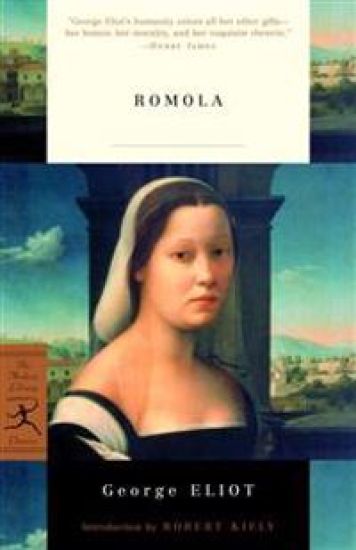
One of George Eliot's most ambitious and imaginative novels, Romola is set in Renaissance Florence during the turbulent years following the expulsion of the powerful Medici family during which the zealous religious reformer Savonarola rose to control the city. At its heart is Romola, the devoted daughter of a blind scholar, married to the clever but ultimately treacherous Tito whose duplicity in both love and politics threatens to destroy everything she values, and she must break away to find her own path in life. Described by Eliot as 'written with my best blood', the story of Romola's intellectual and spiritual awakening is a compelling portrayal of a Utopian heroine, played out against a turbulent historical backdrop.
With an Introduction and Notes by Dr Carole Jones, freelance writer and researcher. George Eliot's final novel, Daniel Deronda (1876), follows the intertwining lives of the beautiful but spoiled and selfish Gwendolene Harleth and the selfless yet alienated Daniel Deronda, as they search for personal and vocational fulfilment and sympathetic relationship. Set largely in the degenerate English aristocratic society of the 1860s, Daniel Deronda charts their search for meaningful lives against a background of imperialism, the oppression of women, and racial and religious prejudice. Gwendolen's attempts to escape a sadistic relationship and atone for past actions catalyse her friendship with Deronda, while his search for origins leads him, via Judaism, to a quest for moral growth. Eliot's radical dual narrative constantly challenges all solutions and ensures that the novel is as controversial now, as when it first appeared.
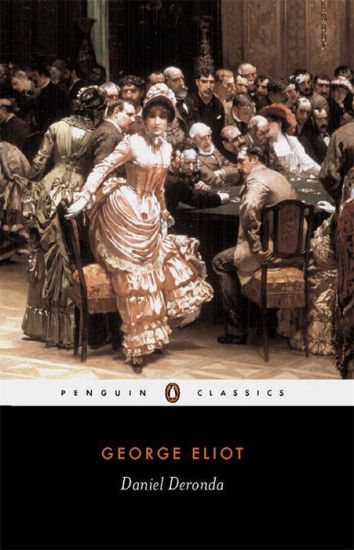
As Daniel Deronda opens, Gwendolen Harleth is poised at the roulette-table, prepared to throw away her family fortune. She is observed by Daniel Deronda, a young man groomed in the finest tradition of the English upper-classes. And while Gwendolen loses everything and becomes trapped in an oppressive marriage, Deronda's fortunes take a different turn. After a dramatic encounter with the young Jewish woman Mirah, he becomes involved in a search for her lost family and finds himself drawn into ever-deeper sympathies with Jewish aspirations and identity. 'I meant everything in the book to be related to everything else', wrote George Eliot of her last and most ambitious novel, and in weaving her plot strands together she created a bold and richly textured picture of British society and the Jewish experience within it.

Cambridge Literature is a series of literary texts edited for study by students aged 14–18 in English-speaking classrooms. It will include novels, poetry, short stories, essays, travel-writing and other non-fiction. The series will be extensive and open-ended and will provide school students with a range of edited texts taken from a wide geographical spread. It will feature writing in English from various genres and differing times. Silas Marner by George Eliot is edited by Mary Bousted of the University of York.
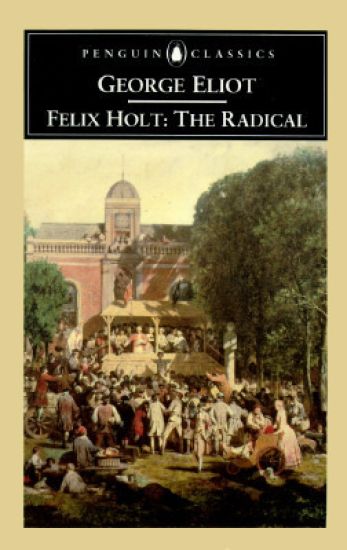
When the young nobleman Harold Transome returns to England from the colonies with a self-made fortune, he scandalizes the town of Treby Magna with his decision to stand for Parliament as a Radical. But after the idealistic Felix Holt also returns to the town, the difference between Harold's opportunistic values and Holt's profound beliefs becomes apparent. Forthright, brusque and driven by a firm desire to educate the working-class, Felix is at first viewed with suspicion by many, including the elegant but vain Esther Lyon, the daughter of the local clergyman. As she discovers, however, his blunt words conceal both passion and deep integrity. Soon the romantic and over-refined Esther finds herself overwhelmed by a heart-wrenching decision: whether to choose the wealthy Transome as a husband, or the impoverished but honest Felix Holt.