Kirjojen hintavertailu. Mukana 12 595 353 kirjaa ja 12 kauppaa.

Kirjailija

George Gilder

Kirjat ja teokset yhdessä paikassa: 14 kirjaa, julkaisuja vuosilta 1994-2024, suosituimpien joukossa Liberty or Lockdown. Vertaile teosten hintoja ja tarkista saatavuus suomalaisista kirjakaupoista.

14 kirjaa

Kirjojen julkaisuhaarukka 1994-2024.

Liberty or Lockdown

Liberty or Lockdown

George Gilder; Jeffrey Tucker

Brownstone Institute
2022
pokkari
The significance of the timing of the first edition book is obvious to anyone who has lived through our strange times: September 2020. That was six months following the lockdown of most of the world during which places where people might "congregate" were shut by governments. The reason was to avoid, mitigate, eliminate maybe, or otherwise diminish the disease impact of the virus that caused Covid. This was before the vaccine came out, before the Great Barrington Declaration, and before data on excess deaths the world over showed vast carnage from these policy decisions. The second edition appears two years later. The topic put me to work trying to understand the thinking, a process which took me back through the history of pandemics, the relationship between infectious disease and freedom, and the origin of lockdown ideology in 2005. The times during which it was written were beyond strange. People went full medieval in every way in which that term can be understood. There was public flogging in the form of masking and the abolition of fun, feudalistic segregation and disease shaming, the practical end of most medical care unless it was for Covid, the scapegoating of non-compliers, and a turn to other pre-modern forms. All of this became worse once the non-sterilizing vaccines appeared on the market that many if not most people were forced to accept or lose their jobs. Writing now September 2022, I cannot even imagine going through the pain of putting this research together again. I'm very pleased it was done then because now this book survives as a marker that there was dissent, if nothing else. This was a period of time - still is today - when vast numbers of people feel betrayed by technology, media, politicians, and even their one-time intellectual heroes. It is a time of grave destruction with still-broken supply chains, roaring inflation, mass cultural demoralization, labor market confusions, and terrible uncertainty about the future. Let us hope, too, that it is a period of rebuilding, however quietly it is taking place. Starting the Brownstone Institute is part of that for me. So many others have joined. Today we published articles from all over the world since so many around the world have shared in this suffering. Jeffrey Tucker

The Isreal Test

The Isreal Test

George Gilder; Dennis Prager

ENCOUNTER BOOKS,USA
2024
pokkari
"Gilder's originality, plus the sheer force of his enthusiasm for the extraordinary virtues of the beleaguered Jewish state, sweep away the prevailing vitriol and make for a book that is nothing less than thrilling to read."-Norman PodhoretzIn this timely and courageous book, George Gilder demonstrates that the widespread antagonism toward the state of Israel is based as is anti-Semitism itself on self-defeating envy and resentment of its superior accomplishments and moral leadership. Israel's stunning rise as a world capitalist and technological power, he argues, stems in part from the Jewish "culture of mind" and in part from Judaism itself, which encourages intellectual curiosity and rational analysis while providing a rigorous moral framework for entrepreneurial creativity. Israel's critics throughout the Middle East and in Western Europe all facing socialist decline have failed the "Israel Test" because they seek to destroy Israel's capitalist success rather than to emulate it.America's continued support for Western Civilization in the Middle East will define our future survival as a nation. "If Israel is destroyed," Gilder predicts, "capitalist Europe will likely die as well, and America, the epitome of productive and creative capitalism spurred by its own Jewish citizens, will be in grave moral and economic jeopardy."At a time when ignorant students and overtly anti-Semitic politicians champion Israel's murderous enemies and rush to abandon Israel, Gilder's clarity of vision makes The Israel Test required reading not only for college students, but also for policy-makers in Washington, and throughout the world.
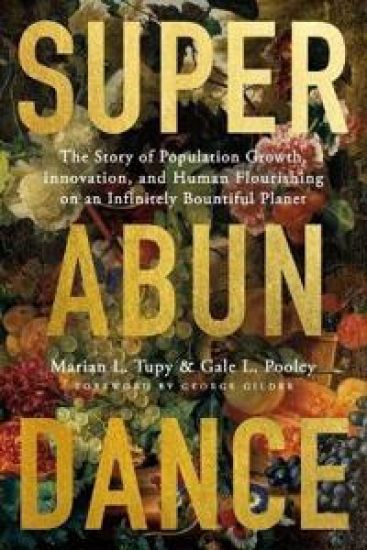
Superabundance

Superabundance

Marian L Tupy; Gale L Pooley; George Gilder

Cato Institute
2023
nidottu
"For centuries, the ivory towers of academia have echoed this sentiment of multitudinous ends and limited means. In this supremely contrarian book, Tupy and Pooley overturn the tables in the temple of conventional thinking. They deploy rigorous and original data and analysis to proclaim a gospel of abundance. Economics--and ultimately, politics--will be enduringly transformed." --George Gilder, author of Life after Google: The Fall of Big Data and the Rise of the Blockchain EconomyGenerations of people have been taught that population growth makes resources scarcer. In 2021, for example, one widely publicized report argued, "The world's rapidly growing population is consuming the planet's natural resources at an alarming rate . . . the world currently needs 1.6 Earths to satisfy the demand for natural resources . . . a figure that] could rise to 2 planets by 2030." But is that true?After analyzing the prices of hundreds of commodities, goods, and services spanning two centuries, Marian Tupy and Gale Pooley found that resources became more abundant as the population grew. That was especially true when they looked at "time prices," which represent the length of time that people must work to buy something.To their surprise, the authors also found that resource abundance increased faster than the population--a relationship that they call "superabundance." On average, every additional human being created more value than he or she consumed. This relationship between population growth and abundance is deeply counterintuitive, yet it is true.Why? More people produce more ideas, which lead to more inventions. People then test those inventions in the marketplace to separate the useful from the useless. At the end of that process of discovery, people are left with innovations that overcome shortages, spur economic growth, and raise standards of living.But large populations are not enough to sustain superabundance--just think of the poverty in China and India before their respective economic reforms. To innovate, people must be allowed to think, speak, publish, associate, and disagree. They must be allowed to save, invest, trade, and profit. In a word, they must be free.
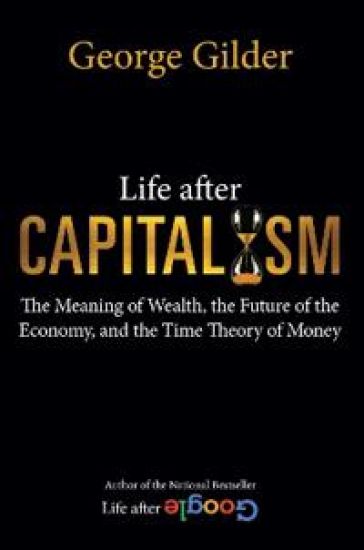
Life after Capitalism

Life after Capitalism

George Gilder

REGNERY PUBLISHING INC
2023
sidottu
Author of national bestseller Life After Google and generation-defining Wealth and Poverty, venture capitalist, futurist, and pioneering thinker extraordinaire George Gilder pinpoints how the clash of creativity with power at the heart of economic systems leads to global cognitive dissonance and argues that the creation of the novel taps capitalism's infinite promise and is humanity's only path of escape from stagnation and tyranny. Gilder once more rocks the archetypes of modern information theory and economics with a paradigm-shifting salvo of sheer brilliance.The capitalist era is over—get ready for life after capitalism.For more than two hundred years, capitalism spread wealth around the globe, bringing unprecedented prosperity and progress, liberating human potential. But something has gone terribly wrong in the world economy. Creativity and faith in the future—capitalism’s crucial ingredients—seem to have run out. The elites think they can maintain a nation’s wealth by printing money and investing it in favored industries. Their trust in bureaucratic experts, their cautionary paranoia, and their delusional belief that they can “control” everything from the spread of a virus to the weather, are sucking the life out of the economy. Ordinary people, their freedoms restricted, their prospects dim, are losing their faith in their institutions. Such misguided corporatism and pride, confusion and despair, are the result of a deep misunderstanding of capitalism itself. The bestselling futurist and venture capitalist George Gilder explains why economics is not an incentive system to be manipulated but an information system to be freed. Material resources are essentially as plentiful as the atoms of the universe. What drives economic growth in a free market is our limitless human ingenuity and creativity. Prophetic, inspiring, and paradigm-shifting, Life after Capitalism is a once-in- a-generation classic.
Superabundance

Superabundance

Marian L Tupy; Gale L Pooley; George Gilder

Cato Institute
2022
sidottu
Generations of people have been taught that population growth makes resources scarcer. In 2021, for example, one widely publicized report argued that "The world's rapidly growing population is consuming the planet's natural resources at an alarming rate . . . the world currently needs 1.6 Earths to satisfy the demand for natural resources ... a figure that] could rise to 2 planets by 2030." But is that true? After analyzing the prices of hundreds of commodities, goods, and services spanning two centuries, Marian Tupy and Gale Pooley found that resources became more abundant as the population grew. That was especially true when they looked at "time prices," which represent the length of time that people must work to buy something. To their surprise, the authors also found that resource abundance increased faster than the population--a relationship that they call superabundance. On average, every additional human being created more value than he or she consumed. This relationship between population growth and abundance is deeply counterintuitive, yet it is true. Why? More people produce more ideas, which lead to more inventions. People then test those inventions in the marketplace to separate the useful from the useless. At the end of that process of discovery, people are left with innovations that overcome shortages, spur economic growth, and raise standards of living. But large populations are not enough to sustain superabundance--just think of the poverty in China and India before their respective economic reforms. To innovate, people must be allowed to think, speak, publish, associate, and disagree. They must be allowed to save, invest, trade, and profit. In a word, they must be free.
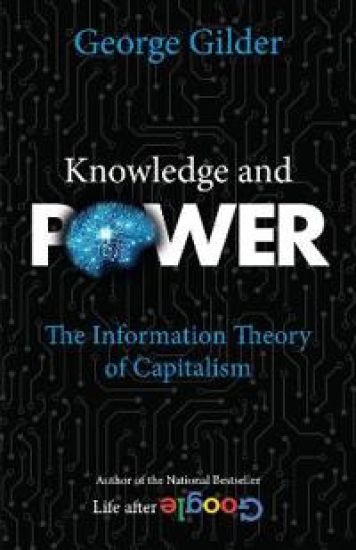
Knowledge and Power

Knowledge and Power

George Gilder

REGNERY PUBLISHING INC
2022
pokkari
Legendary economist, investor, tech philosopher, and public treasure George Gilder argues that a hard-driving culture of entrepreneurial ideas is now in conflict with a growing mindset of government regulation combined with a total surrender of the individual imagination. The winner of this battle may determine a new paradigm of economics and thought for the next century, whether we like it or not.Ronald Reagan’s most-quoted living author—George Gilder—is back with an all-new paradigm-shifting theory of capitalism that will upturn conventional wisdom. Gilder breaks away from the supply-side model of economics to present a new economic paradigm: the epic conflict between the knowledge of entrepreneurs on one side, and the blunt power of government on the other. The knowledge of entrepreneurs, and their freedom to share and use that knowledge, are the sparks that light up the economy and set its gears in motion. The power of government to regulate, stifle, manipulate, subsidize or suppress knowledge and ideas is the inertia that slows those gears down, or keeps them from turning at all. One of the twentieth century’s defining economic minds has returned with a new philosophy to carry us into the twenty-first. Knowledge and Power is a must-read for fiscal conservatives, business owners, CEOs, investors, and anyone interested in propelling America’s economy to future success.
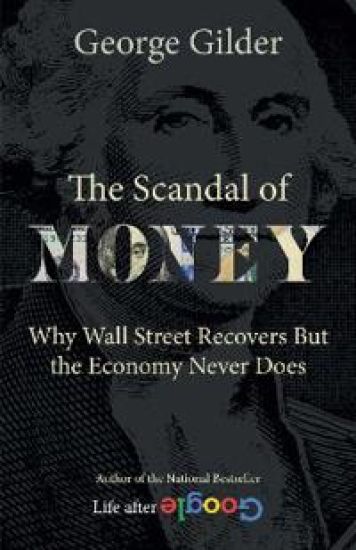
The Scandal of Money

The Scandal of Money

George Gilder

REGNERY PUBLISHING INC
2022
pokkari
"Why do we think governments know how to create money? They don't. George Gilder shows that money is time, and time is real. He is our best guide to our most fundamental economic problem." --Peter Thiel, founder of PayPal and Palantir Technologies"Thirty-five years ago, George Gilder wrote Wealth and Poverty, the bible of the Reagan Revolution. With The Scandal of Money he may have written the road map to the next big boom." --Arthur B. Laffer, coauthor of the New York Times bestseller An Inquiry into the Nature and Causes of the Wealth of States"Gilder pushes us to think about the government monopoly on money and makes a strong case against it. If you believe in economic freedom, you should read this book." --Senator Jim DeMint, president of The Heritage Foundation As famed economist and New York Times bestselling author George Gilder points out, “despite multi-billion dollar stimulus packages and near-zero interest rates, Wall Street recovers but the economy never does.” In his groundbreaking new book, The Scandal of Money, Gilder unveils a radical new explanation for our economic woes. Gilder also exposes the corruption of the Federal Reserve, Washington power-brokers, and Wall Street’s “too-big-to-fail” megabanks, detailing how a small cabal of elites have manipulated currencies and crises to stifle economic growth and crush the middle class. Gilder spares no one in his devastating attack on politicians’ economic policies. He claims that the Democrats will steer us to ruin – but points out that Republicans are also woefully misguided on how to salvage our economic future. With all major polls showing that voters rank the economy as one of the top three “most important problems” facing the nation, Gilder’s myth-busting, paradigm-shifting recipe for economic growth could not come at a more critical time. In The Scandal of Money, the reader will learn:Who is to blame for the economic crippling of AmericaHow the new titans of Wall Street value volatility over profitabilityWhy China is winning and we are losingWho the real 1% is and how they are crushing the middle classThe hidden dangers of a cashless societyWhat Republicans need to do to win the economic debate—and what the Democrats are doing to make things worse
Life After Google

Life After Google

George Gilder

REGNERY PUBLISHING INC
2022
pokkari
A FINANCIAL TIMES BOOK OF THE MONTH FROM THE WALL STREET JOURNAL: "Nothing Mr. Gilder says or writes is ever delivered at anything less than the fullest philosophical decibel... Mr. Gilder sounds less like a tech guru than a poet, and his words tumble out in a romantic cascade."“Google’s algorithms assume the world’s future is nothing more than the next moment in a random process. George Gilder shows how deep this assumption goes, what motivates people to make it, and why it’s wrong: the future depends on human action.” — Peter Thiel, founder of PayPal and Palantir Technologies and author of Zero to One: Notes on Startups, or How to Build the Future The Age of Google, built on big data and machine intelligence, has been an awesome era. But it’s coming to an end. In Life after Google, George Gilder—the peerless visionary of technology and culture—explains why Silicon Valley is suffering a nervous breakdown and what to expect as the post-Google age dawns. Google’s astonishing ability to “search and sort” attracts the entire world to its search engine and countless other goodies—videos, maps, email, calendars….And everything it offers is free, or so it seems. Instead of paying directly, users submit to advertising. The system of “aggregate and advertise” works—for a while—if you control an empire of data centers, but a market without prices strangles entrepreneurship and turns the Internet into a wasteland of ads. The crisis is not just economic. Even as advances in artificial intelligence induce delusions of omnipotence and transcendence, Silicon Valley has pretty much given up on security. The Internet firewalls supposedly protecting all those passwords and personal information have proved hopelessly permeable. The crisis cannot be solved within the current computer and network architecture. The future lies with the “cryptocosm”—the new architecture of the blockchain and its derivatives. Enabling cryptocurrencies such as bitcoin and ether, NEO and Hashgraph, it will provide the Internet a secure global payments system, ending the aggregate-and-advertise Age of Google. Silicon Valley, long dominated by a few giants, faces a “great unbundling,” which will disperse computer power and commerce and transform the economy and the Internet. Life after Google is almost here.
Gaming Ai

Gaming Ai

George Gilder

Discovery Institute
2020
nidottu
Pointing to the triumph of artificial intelligence over unaided humans in everything from games such as chess and Go to vital tasks such as protein folding and securities trading, many experts uphold the theory of a "singularity." This is the trigger point when human history ends and artificial intelligence prevails in an exponential cascade of self-replicating machines rocketing toward godlike supremacy in the universe. Gaming AI suggests that this belief is both dumb and self-defeating. Displaying a profound and crippling case of professional amnesia, the computer science establishment shows an ignorance of the most important findings of its own science, from Kurt G del's "incompleteness" to Alan Turing's "oracle" to Claude Shannon's "entropy." Dabbling in quantum machines, these believers in machine transcendence defy the deepest findings of quantum theory. Claiming to create minds, they are clinically "out of their minds." Despite the quasi-religious pretensions of techno-elites nobly saving the planet from their own devices, their faith in a techno-utopian singularity is a serious threat to real progress. An industry utterly dependent on human minds will not prosper by obsoleting both their customers and their creators. Gaming AI calls for a remedial immersion in the industry's own heroic history and an understanding of the actual science of their own human minds.
Life After Google

Life After Google

George Gilder

Regnery Publishing Inc
2018
sidottu
A FINANCIAL TIMES BOOK OF THE MONTH FROM THE WALL STREET JOURNAL: "Nothing Mr. Gilder says or writes is ever delivered at anything less than the fullest philosophical decibel... Mr. Gilder sounds less like a tech guru than a poet, and his words tumble out in a romantic cascade." “Google’s algorithms assume the world’s future is nothing more than the next moment in a random process. George Gilder shows how deep this assumption goes, what motivates people to make it, and why it’s wrong: the future depends on human action.” — Peter Thiel, founder of PayPal and Palantir Technologies and author of Zero to One: Notes on Startups, or How to Build the Future The Age of Google, built on big data and machine intelligence, has been an awesome era. But it’s coming to an end. In Life after Google, George Gilder—the peerless visionary of technology and culture—explains why Silicon Valley is suffering a nervous breakdown and what to expect as the post-Google age dawns. Google’s astonishing ability to “search and sort” attracts the entire world to its search engine and countless other goodies—videos, maps, email, calendars….And everything it offers is free, or so it seems. Instead of paying directly, users submit to advertising. The system of “aggregate and advertise” works—for a while—if you control an empire of data centers, but a market without prices strangles entrepreneurship and turns the Internet into a wasteland of ads. The crisis is not just economic. Even as advances in artificial intelligence induce delusions of omnipotence and transcendence, Silicon Valley has pretty much given up on security. The Internet firewalls supposedly protecting all those passwords and personal information have proved hopelessly permeable. The crisis cannot be solved within the current computer and network architecture. The future lies with the “cryptocosm”—the new architecture of the blockchain and its derivatives. Enabling cryptocurrencies such as bitcoin and ether, NEO and Hashgraph, it will provide the Internet a secure global payments system, ending the aggregate-and-advertise Age of Google. Silicon Valley, long dominated by a few giants, faces a “great unbundling,” which will disperse computer power and commerce and transform the economy and the Internet. Life after Google is almost here. For fans of "Wealth and Poverty," "Knowledge and Power," and "The Scandal of Money."
The Silicon Eye

The Silicon Eye

George Gilder

WW Norton Co
2006
nidottu
Thanks to the digital technology revolution, cameras are everywhere—PDAs, phones, anywhere you can put an imaging chip and a lens. Battling to usurp this two-billion-dollar market is a Silicon Valley company, Foveon, whose technology not only produces a superior image but also may become the eye in artificially intelligent machines. Behind Foveon are two legendary figures who made the personal computer possible: Carver Mead of Caltech, one of the founding fathers of information technology, and Federico Faggin, inventor of the CPU—the chip that runs every computer. George Gilder has covered the wizards of high tech for twenty-five years and has an insider's knowledge of Silicon Valley and the unpredictable mix of genius, drive, and luck that can turn a startup into a Fortune 500 company. The Silicon Eye is a rollicking narrative of some of the smartest—and most colorful—people on earth and their race to transform an entire industry.
Life After Television

Life After Television

George Gilder

WW Norton Co
1994
nidottu
In his visionary new book George Gilder brilliantly and persuasively outlines the sweeping new developments in computer and fiber optic technology that spell certain death to traditional television and telephony. In their places, he argues, will emerge a new paradigm in which people-to-people communications give way to links among computers to be found in every home and office. The rise of the telecomputer (or “teleputer”) will utterly transform the way we do business, educate our children, and spend our leisure time, and will imperil such large, centralized, top-down organizations as cable networks, phone companies, government bureaucracies, and multinational corporations.