Kirjojen hintavertailu. Mukana 12 595 353 kirjaa ja 12 kauppaa.

Kirjailija

George H. Quester

Kirjat ja teokset yhdessä paikassa: 13 kirjaa, julkaisuja vuosilta 1978-2020, suosituimpien joukossa Nuclear Pakistan and Nuclear India. Vertaile teosten hintoja ja tarkista saatavuus suomalaisista kirjakaupoista.

Mukana myös kirjoitusasut: George H Quester

13 kirjaa

Kirjojen julkaisuhaarukka 1978-2020.

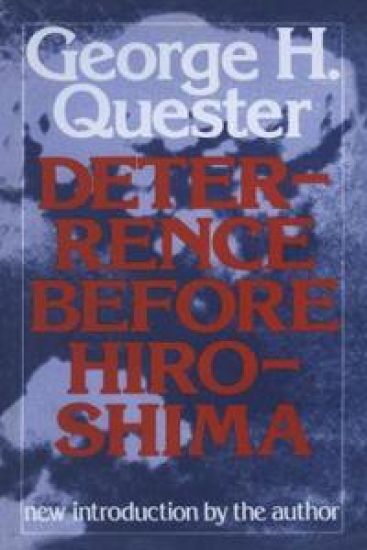
Deterrence Before Hiroshima

Deterrence Before Hiroshima

George H. Quester

Routledge
2020
nidottu
In this study, first published in 1966, Quester analyzes pre-nuclear age theories of deterrence to equip us with perspective and data by which current theories can be evaluated. Quester presents a forceful argument in support of the relevance of history to discussions of military strategy.
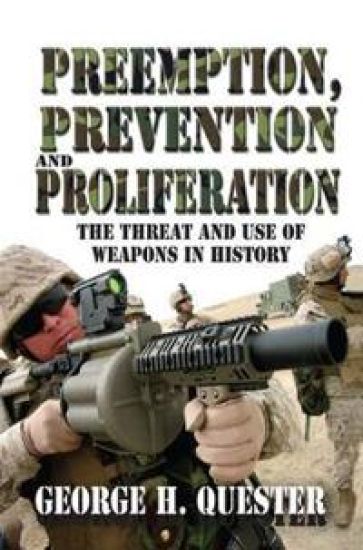
Preemption, Prevention and Proliferation

Preemption, Prevention and Proliferation

George H. Quester

Routledge
2017
nidottu
How do international systems deal with the threat and use of weapons of war? In this sophisticated yet accessible analysis, a leading strategic analyst takes readers deep into twentieth century history to answer this question. Weapons of mass destruction, and the counter threat of retaliation, have been central concerns in strategic decision- making in World War I, the legacy of World War II, and the Cold War era.Few people can traverse issues of global confl ict with more historical insight than George Quester. His writing is lucid, and his information either new or imperfectly understood in the past. Quester details the ways weapons of war have infl uenced the forging of policies in the twenty-fi rst century. He argues for the retention of appropriate weapons systems, but also for care in when they are used. Priorities exist, but they depend on whether a state is dealing with major powers or rogue states. And off ensive weapons may well become an option in response to non-state terrorist groups or for that matter state-sponsored terrorist acts.When aggression has already occurred, the world is less likely to regard military response as a violation of the peace. Quester cites Clausewitz's adage that the aggressor is always willing to exploit the world's preference for peace. The rise of the human rights movement adds more complexities to preemptive war and prevention, since the line between civilian and military casualties becomes increasingly blurred. The risks may be great, the choices are few--but the needs of military policy making remain high on the agenda. As a result, the concerns discussed here will be on the global political agenda for years to come.
Nuclear Zero?

Nuclear Zero?

George H. Quester

AldineTransaction
2015
sidottu
George H. Quester argues that the possibility of nuclear war continues to loom despite the reduction in stockpiles by the major powers. Supporters of total nuclear disarmament often dismiss pessimistic objections to the possibility of reaching nuclear zero as being hypothetical, but this book looks at real illustrations for this possibility, taken from the years that gave the world the Manhattan Project.Any advocate of total nuclear disarmament must deal with the challenge of "realist" analysts of international relations, those who worry that being at zero nuclear weapons, or even close to zero, would be unstable and dangerous. Mutual fears could be self-confirming, leading to cheating on disarmament, and even nuclear war. While such fears are often dismissed as theoretical or hypothetical, this book attempts to test them against the real-life experience of the last time we were at nuclear zero. The years from 1933 to 1945 saw many such self-confirming fears, leading to the Manhattan Project and the nuclear destruction of Hiroshima and Nagasaki.Optimism about the future cannot be ruled out totally, but the history of our experience with nuclear disarmament must be examined carefully to identify the crucial prerequisites for elimination of such weapons of mass destruction. This book is required reading for courses on arms control, defense policy, and international relations, or for readers looking for historical background on a critical global issue.
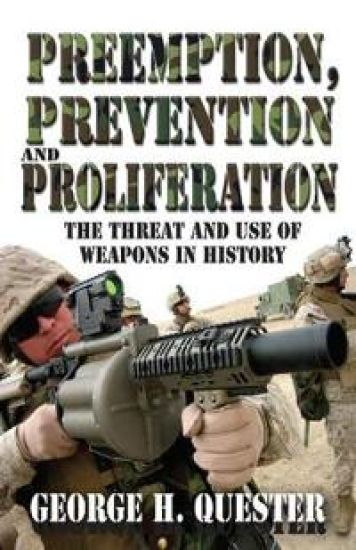
Preemption, Prevention and Proliferation

Preemption, Prevention and Proliferation

George H. Quester

AldineTransaction
2009
sidottu
How do international systems deal with the threat and use of weapons of war? In this sophisticated yet accessible analysis, a leading strategic analyst takes readers deep into twentieth century history to answer this question. Weapons of mass destruction, and the counter threat of retaliation, have been central concerns in strategic decision- making in World War I, the legacy of World War II, and the Cold War era.Few people can traverse issues of global confl ict with more historical insight than George Quester. His writing is lucid, and his information either new or imperfectly understood in the past. Quester details the ways weapons of war have infl uenced the forging of policies in the twenty-fi rst century. He argues for the retention of appropriate weapons systems, but also for care in when they are used. Priorities exist, but they depend on whether a state is dealing with major powers or rogue states. And off ensive weapons may well become an option in response to non-state terrorist groups or for that matter state-sponsored terrorist acts.When aggression has already occurred, the world is less likely to regard military response as a violation of the peace. Quester cites Clausewitz's adage that the aggressor is always willing to exploit the world's preference for peace. The rise of the human rights movement adds more complexities to preemptive war and prevention, since the line between civilian and military casualties becomes increasingly blurred. The risks may be great, the choices are few--but the needs of military policy making remain high on the agenda. As a result, the concerns discussed here will be on the global political agenda for years to come.
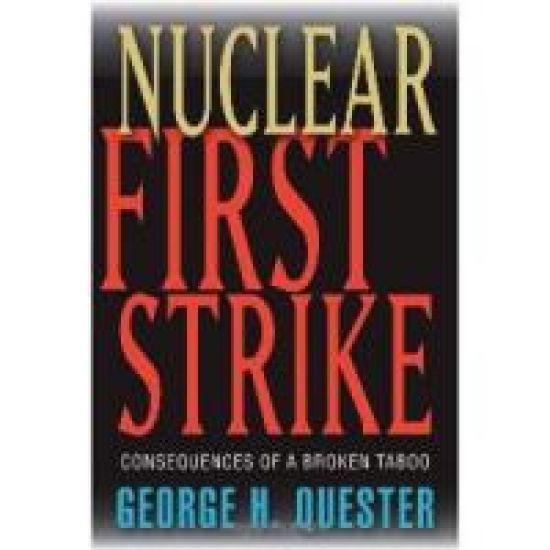
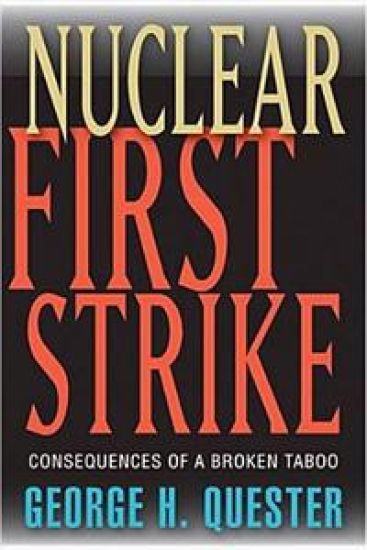
Nuclear First Strike

Nuclear First Strike

George H. Quester

Johns Hopkins University Press
2006
pokkari
This provocative and timely work examines various scenarios in which the deployment of nuclear weapons could occur, the probable consequences of such an escalation, the likely world reactions, and the plausible policy ramifications. Rather than projecting the physical damage that would result from nuclear attacks, George H. Quester offers an exploration of the political, psychological, and social aftermath of nuclear conflict. The prospect of nuclear attack-sixty years after atomic bombs destroyed Hiroshima and Nagasaki-is difficult to confront on many levels. We may avoid the discussion for emotional reasons, for fear of generating a self-confirming hypothesis, or simply because of the general "nuclear taboo." But there are also self-denying propositions to be harnessed here: if the world gives some advance thought to how nuclear weapons might be used again, such attacks may be headed off. If the world avoids nuclear weapons use until the year 2045, it will be able to celebrate one hundred years of nuclear concord. Quester suggests that this may be achieved through the careful consideration of possible nuclear deployment scenarios and their consequences. In this insightful analysis, he provides a starting point for informed and focused reflection and preparation.
Nuclear First Strike

Nuclear First Strike

George H. Quester

Johns Hopkins University Press
2006
sidottu
This provocative and timely work examines various scenarios in which the deployment of nuclear weapons could occur, the probable consequences of such an escalation, the likely world reactions, and the plausible policy ramifications. Rather than projecting the physical damage that would result from nuclear attacks, George H. Quester offers an exploration of the political, psychological, and social aftermath of nuclear conflict. The prospect of nuclear attack-sixty years after atomic bombs destroyed Hiroshima and Nagasaki-is difficult to confront on many levels. We may avoid the discussion for emotional reasons, for fear of generating a self-confirming hypothesis, or simply because of the general "nuclear taboo." But there are also self-denying propositions to be harnessed here: if the world gives some advance thought to how nuclear weapons might be used again, such attacks may be headed off. If the world avoids nuclear weapons use until the year 2045, it will be able to celebrate one hundred years of nuclear concord. Quester suggests that this may be achieved through the careful consideration of possible nuclear deployment scenarios and their consequences. In this insightful analysis, he provides a starting point for informed and focused reflection and preparation.
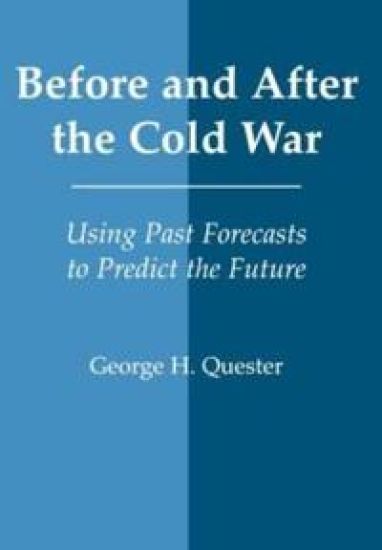
Before and After the Cold War

Before and After the Cold War

George H. Quester

Routledge
2002
nidottu
The end of the Cold War came as good news for most of the world. No one had predicted the collapse of Communist rule for several decades. This book looks at how political scientists failed to predict such a quick resolution and ways in which the world might develop post Cold War.
Before and After the Cold War

Before and After the Cold War

George H. Quester

Routledge
2002
sidottu
The end of the Cold War came as good news for most of the world. No one had predicted the collapse of Communist rule for several decades. This book looks at how political scientists failed to predict such a quick resolution and ways in which the world might develop post Cold War.
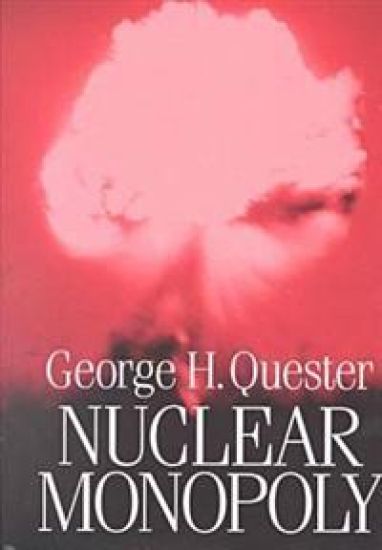
Nuclear Monopoly

Nuclear Monopoly

George H. Quester

Transaction Publishers
2000
sidottu
Throughout the decades of the Cold War, people all around the world lived in fear of thermonuclear war. To assuage that fear theorists of deterrence explained over and over again that both sides had to be able to retaliate with "mutual assured destruction," to keep nuclear weapons from being used. Yet this "basic fact" of nuclear deterrence begs the question: What deterred the United States from a preemptive strike before 1949 when Joseph Stalin's Soviet Union had not yet acquired nuclear weapons of its own? In Nuclear Monopoly George Quester sets forth the case for preventive war using rudimentary atomic weapons to avoid the possibility of a future war in which both sides would have used hydrogen bombs.Quester demonstrates that the notion of mutual assured destruction was rooted in the questionable assumption that assured destruction must be mutual and that the United States "of course" would never consider preventive war. He explores the logic of these assumptions against the historical circumstances of the years 1945-1949 and the thinking of influential personalities and decision-makers that determined U.S. nuclear policy. In 1945 the United States was able to inflict nuclear destruction and had no fear of retaliation. Arguably the United States could have used that advantage to extract major political concessions from the Soviet Union, including surrender, disarmament, and democratization. At the same time it might have prevented the proliferation and development of nuclear weapons. Against this view Quester analyzes a range of prevailing views from practical and procedural considerations. These range from the shortage of bombs and other resources, ineffectiveness of bombing, Soviet resistance, and the vulnerability of Western Europe, to larger questions of American morality: absence of a casus belli, civilian casualties, and concern about untrammeled arrogance of power.With dissolution of the Soviet Union and the proliferation of nuclear weapons among small powers and rogue states, the failure to head off Soviet nuclear capacity takes on greater historical weight. The options of the next century will never be what they were from 1945-1949, but this study of the military and strategic decision-making provides important insights for future conflicts. Nuclear Monopoly will be of interest to military historians, policymakers, and political scientists.
American Security in an Interdependent World

American Security in an Interdependent World

Zbigniew Brzezinski; Edward P. Haley; James R. Golden; George H. Quester; Robert A. Brand

University Press of America
1988
sidottu
This book reflects the Atlantic Council's long-time concern with interdependence and the problems and challenges it poses for the United States and for U.S. allies and friends. The book explores the new breadth and depth of interdependenceówhich has profoundly changed in both respects since World War II, particularly in the last few years. The fundamental premise is that, recognizing together the collective strength that interdependence provides, the nations of the West can do together what no single nation could hope to accomplish acting alone. Contents: include: U.S. Interests Around the World; NATO's Enduring Foundation; The Convention Imbalance in Europe and Alliance Economic Constraints; Strategic Stability and Arms Control; ANZUS and Pacific Basin Security; U.S.-Japanese Security Relations and the Future of Asia; The Interrelationship of Atlantic and Pacific Issues: Allied Security in an Interdependent World. Co-published with the Atlantic Council of the United States.
Deterrence Before Hiroshima

Deterrence Before Hiroshima

George H. Quester

Transaction Publishers
1986
sidottu
In this study, first published in 1966, Quester analyzes pre-nuclear age theories of deterrence to equip us with perspective and data by which current theories can be evaluated. Quester presents a forceful argument in support of the relevance of history to discussions of military strategy.