Kirjailija
George Hill
Kirjat ja teokset yhdessä paikassa: 55 kirjaa, julkaisuja vuosilta 2006-2026, suosituimpien joukossa Mental Uplifts. Vertaile teosten hintoja ja tarkista saatavuus suomalaisista kirjakaupoista.
55 kirjaa
Kirjojen julkaisuhaarukka 2006-2026.

"To all you die-hard, zombie apocalypse readers: if you loved George Hill's first book "Uprising USA", then you'll gush and fawn over the Ogre's newest installment in the "Uprising" series. With every bullet fired, with every explosion, with each Zed that loses its head, humanity comes closer to normalcy and restored dominance. But the ante is raised as the Ogre faces even mightier and darker forces than ever before. The zombies have a learning curve, and they are evolving, gathering newer and greater powers. And be prepared for surprises. In "Uprising UK", the Ogre faces not just the undead, but also the demonic powers that control and drive them to feed on human flesh. Come to England and fight with the Ogre...not just for the right to keep and bear arms...but for the right to survive "

The Ruins of Athens; Titania's Banquet, a Mask; And Other Poems.
George Hill
British Library, Historical Print Editions
2011
pokkari

Lectures In Divinity By The Late George Hill V2 (LARGE PRINT EDITION)
George Hill
KESSINGER PUBLISHING, LLC
2011
sidottu
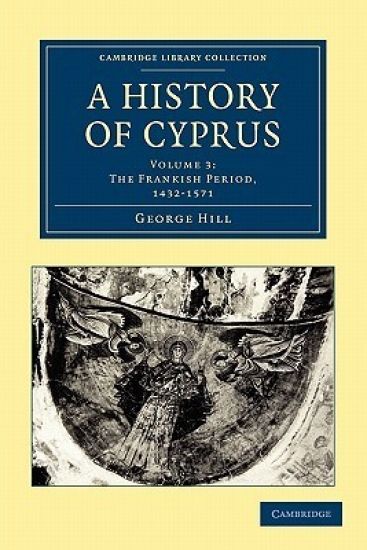
Sir George Francis Hill (1867–1948), was perhaps best known as a numismatist, although his scholarly interests and accomplishments included a range of time periods and subjects. A classicist by training, Hill built his career at the British Museum's department of coins and medals. In his forty-three years there he produced volumes on coins of antiquity; Greek history and art; coins, heraldry, and iconography of medieval and Renaissance Italy; and treasure troves. In 1931 Hill became the Museum's director and principal librarian, the first archaeologist to hold this post. His four-volume History of Cyprus (1940–52) ranged from Cyprus's earliest years to the twentieth century, and became the standard text on the subject. It is a valuable resource for scholars of the country, of antiquity and of the Mediterranean world. Volume 3, organized largely around monarchical reigns, concludes Hill's analysis of the Frankish period (1432–1571).

Sir George Francis Hill (1867–1948), was perhaps best known as a numismatist, although his scholarly interests and accomplishments included a range of time periods and subjects. A classicist by training, Hill built his career at the British Museum's department of coins and medals. In his forty-three years there he produced volumes on coins of antiquity; Greek history and art; coins, heraldry, and iconography of medieval and Renaissance Italy; and treasure troves. In 1931 Hill became the Museum's director and principal librarian, the first archaeologist to hold this post. His four-volume History of Cyprus (1940–52) ranged from Cyprus's earliest years to the twentieth century, and became the standard text on the subject. It is a valuable resource for scholars of the country, of antiquity and of the Mediterranean world. Volume 2 commences Hill's investigation of the Frankish period (1192–1432), which he continues in Volume 3.
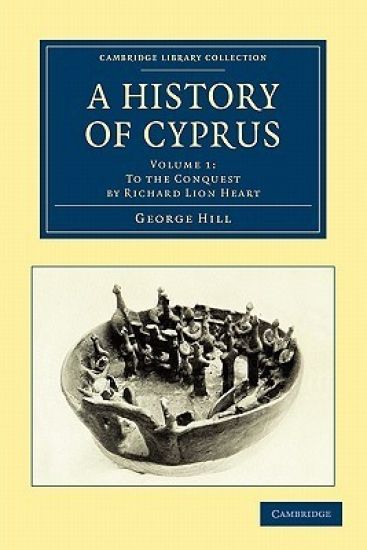
Sir George Francis Hill (1867–1948) was perhaps best known as a numismatist, although his scholarly interests and accomplishments included a range of time periods and subjects. A classicist by training, Hill built his career at the British Museum's department of coins and medals. In his forty-three years there he produced volumes on coins of antiquity; Greek history and art; coins, heraldry, and iconography of medieval and Renaissance Italy; and treasure troves. In 1931 Hill became the Museum's director and principal librarian, the first archaeologist to hold this post. His four-volume History of Cyprus (1940–1952) ranged from Cyprus' earliest years to the twentieth century, and became the standard text on the subject. It is a valuable resource for scholars of the country, of antiquity and of the Mediterranean world. Volume 1 describes the land of Cyprus before unravelling its history from the Stone Age to the Crusades.
Sir George Francis Hill (1867–1948), was perhaps best known as a numismatist, although his scholarly interests and accomplishments included a range of time periods and subjects. A classicist by training, Hill built his career at the British Museum's department of coins and medals. In his forty-three years there he produced volumes on coins of antiquity; Greek history and art; coins, heraldry, and iconography of medieval and Renaissance Italy; and treasure troves. In 1931 Hill became the Museum's director and principal librarian, the first archaeologist to hold this post. His four-volume History of Cyprus (1940–52) ranged from Cyprus's earliest years to the twentieth century, and became the standard text on the subject. It is a valuable resource for scholars of the country, of antiquity and of the Mediterranean world. Volume 4 (1571–1948) reviews Ottoman rule, and and evaluates the then contemporary British presence in Cyprus.

Instructions Afforded by the Present War, to the People of Great-Britain. a Sermon Preached at St. Andrew's, on Thursday the 18th of April 1793. by George Hill, ...
George Hill
Gale Ecco, Print Editions
2010
pokkari

Inauguration Of William H. Hornblower To The Professorship Of Sacred Rhetoric, Church Government And Pastoral Theology (1872)
George Hill
KESSINGER PUBLISHING, LLC
2010
sidottu

An Historical Account Of The MacDonnells Of Antrim
George Hill
KESSINGER PUBLISHING, LLC
2010
sidottu



Inauguration Of William H. Hornblower To The Professorship Of Sacred Rhetoric, Church Government And Pastoral Theology (1872)
George Hill
KESSINGER PUBLISHING, LLC
2009
nidottu