
Kirjailija
George Hobson
Kirjat ja teokset yhdessä paikassa: 14 kirjaa, julkaisuja vuosilta 2013-2024, suosituimpien joukossa Faces of Memory. Vertaile teosten hintoja ja tarkista saatavuus suomalaisista kirjakaupoista.
14 kirjaa
Kirjojen julkaisuhaarukka 2013-2024.

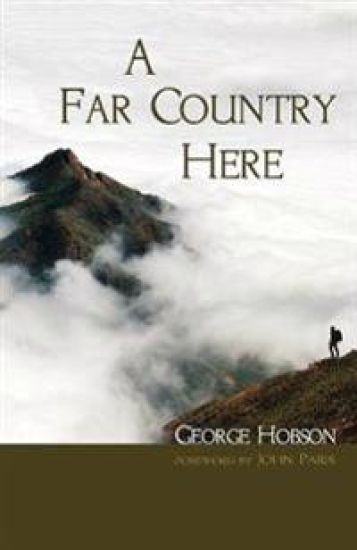
The six sections of this collection are like a sequence of musical variations on the theme of personal identity as it develops from childhood to death. The first section evokes the poet's experience of being lost, of his search for identity, and of his being found by God. Section II, in a kind of echo of Section I, celebrates the successive seasons of nature and functions as a metaphor for the movement through a life. Section III is a boisterous fugue on the high drama of clouds in the course of a day, from dawn to nightfall. Section IV, in a series of portraits of persons (and of a cat ), some dead, some living, intimates the mystery of friendship, love, and loss. Section V contains narratives, drawn from history and nature, that extend this mystery to the link human beings intuitively sense between this world and a ""world elsewhere."" In the final section, the poet's personal experience resurfaces as he contemplates, with wonder and gratitude, his course through the years from childhood to old age, even through death itself to the ""far country"" he has sensed and longed for all his life.
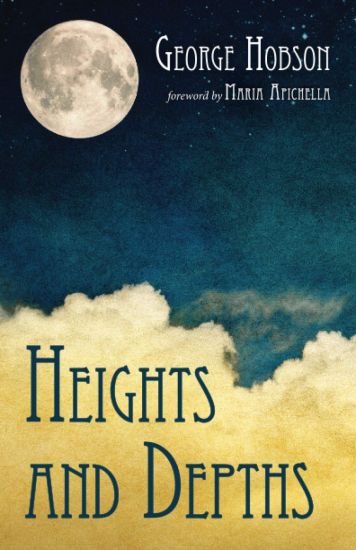
These poems make up the verbal equivalent of a synthetic cubist painting. Many facets of reality are on display as the poems move through depths and heights of human experience. The opening section presents a harsh evocation of the turbulence and violence in our world, yet with hints of hope. ""We are God's memories, / Preserved in his world, / Promised a future."" The second section is in a personal vein, exposing, not without humor, the poet's struggles to find full self-acceptance as he discovers himself inside God's love. Section three, in another register altogether, evokes the beauty of intensely observed aspects of the natural world, through which shines the mystery of physical reality. Section four, which includes a dramatic narrative account of a forest fire, moves in the realm of memory, its glories and its sorrows. The last section fleshes out, from a variety of angles, the hints of hope in section one, concluding with a startling (at moments comical) response to the wonder of the ""moon-egg"" that suddenly appears in the night sky from behind backlit clouds--and the poet asks, ""Who laid it?"" The imagery of these poems is original and vivid. We are carried on a truly exciting, unforgettable ride through a vast range of human experience.
These poems make up the verbal equivalent of a synthetic cubist painting. Many facets of reality are on display as the poems move through depths and heights of human experience. The opening section presents a harsh evocation of the turbulence and violence in our world, yet with hints of hope. ""We are God's memories, / Preserved in his world, / Promised a future."" The second section is in a personal vein, exposing, not without humor, the poet's struggles to find full self-acceptance as he discovers himself inside God's love. Section three, in another register altogether, evokes the beauty of intensely observed aspects of the natural world, through which shines the mystery of physical reality. Section four, which includes a dramatic narrative account of a forest fire, moves in the realm of memory, its glories and its sorrows. The last section fleshes out, from a variety of angles, the hints of hope in section one, concluding with a startling (at moments comical) response to the wonder of the ""moon-egg"" that suddenly appears in the night sky from behind backlit clouds--and the poet asks, ""Who laid it?"" The imagery of these poems is original and vivid. We are carried on a truly exciting, unforgettable ride through a vast range of human experience.
The thirty poems in this collection were written over many years and are not in chronological order. The dramatic movement of the poems can be analogously compared to a day in the country that opens with playful lyrics about nature and the passing seasons, then moves on, at noon, to an evocation of divine presence in time and space. Afternoon advances, and ominous rumbles are heard as dark clouds gather over a violent humanity. A prophetic warning is heard, accompanied by a sense of imminent danger. Then clouds explode and there follows, recounted in a long narrative poem, the terrifying storm of the Armenian genocide in the first quarter of the twentieth century. In the aftermath of this horror, as evening approaches, one senses the poet groping to recover meaning and hope. The day closes with an exhortation to receive grace, followed by a vivid picture-poem of the day's end, entitled ""Cloud-Drama at a Stormy Evening's Close.""
The question ""What is human nature?"" is in vogue today. Like everything else, this concept is being deconstructed in the context of the reigning ideology of individualistic materialism. Is there a fixed human nature, or is this simply a manipulatable social construct with no objective reference? This book says: ""Yes, there is: the imago Dei: man/woman created in the image of God."" Hobson argues that this text from Genesis 1:26-28 is a God-given anthropological revelation that establishes the relational bond of human beings with their Creator and also with his creation, for which the imago equips us to be responsible stewards. Many of Hobson's essays were delivered as talks in parishes. They explore from multiple angles the import of the imago Dei for theological and sacramental reflection, apologetics, aesthetics, art, and, at a hands-on practical level, for pastoral counseling and inner healing. His texts, one of which opens with a discussion of genocide, contain incisive critiques of the dark side of modernity alongside wide-ranging demonstrations of the pertinence of the imago Dei to the current debates about human dignity and rights. His book is a ringing call to the church to take the measure of the value of this anthropological revelation for its proclamation of the gospel.
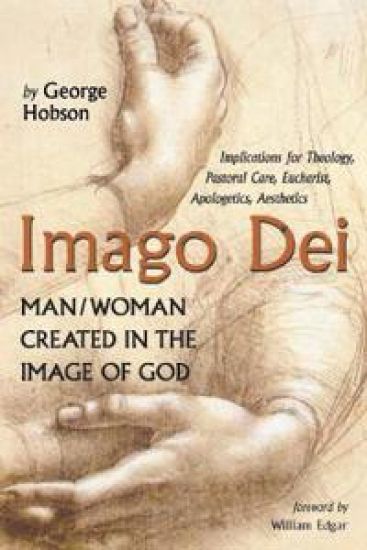
The question ""What is human nature?"" is in vogue today. Like everything else, this concept is being deconstructed in the context of the reigning ideology of individualistic materialism. Is there a fixed human nature, or is this simply a manipulatable social construct with no objective reference? This book says: ""Yes, there is: the imago Dei: man/woman created in the image of God."" Hobson argues that this text from Genesis 1:26-28 is a God-given anthropological revelation that establishes the relational bond of human beings with their Creator and also with his creation, for which the imago equips us to be responsible stewards. Many of Hobson's essays were delivered as talks in parishes. They explore from multiple angles the import of the imago Dei for theological and sacramental reflection, apologetics, aesthetics, art, and, at a hands-on practical level, for pastoral counseling and inner healing. His texts, one of which opens with a discussion of genocide, contain incisive critiques of the dark side of modernity alongside wide-ranging demonstrations of the pertinence of the imago Dei to the current debates about human dignity and rights. His book is a ringing call to the church to take the measure of the value of this anthropological revelation for its proclamation of the gospel.
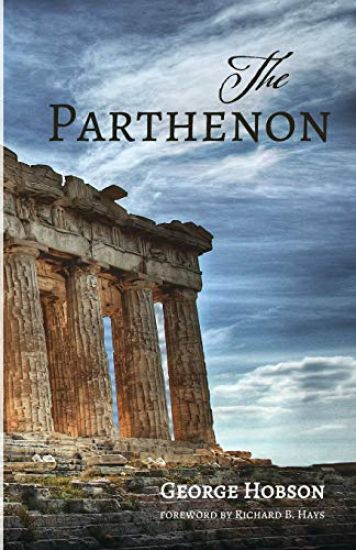
The twenty-seven poems in this collection were written over a period of many years. They vary greatly in style and length. The poems in the first two sections are lyrical. Natural beauty evokes wonder and tugs at memory. Creatures dance and sing. There is joy. The last poem in Part II, ""The Generations,"" shifts tone abruptly. There is conflict and loss. In the end, with the dolphins, beauty renews hope. ""The Generations"" is a bridge to the complex narrative poems and dramatic lyrics in Part III. Here the tragic is displayed, but also the divine power that redeems it. Part IV plunges into our modern abyss. The poems are an anguished cry from the heart of the fog enveloping our civilization. The long poem, ""The Fog,"" evokes the plight of lost and lonely individuals tending their private campfires in the night of the world, cut off from transcendence and marooned in the abstract unreality of the digital universe. Part V carries forward this momentum, referencing the genocidal violence of our age, but then moves from darkness and horror up into the light of revelation and peace.
The twenty-seven poems in this collection were written over a period of many years. They vary greatly in style and length. The poems in the first two sections are lyrical. Natural beauty evokes wonder and tugs at memory. Creatures dance and sing. There is joy. The last poem in Part II, ""The Generations,"" shifts tone abruptly. There is conflict and loss. In the end, with the dolphins, beauty renews hope. ""The Generations"" is a bridge to the complex narrative poems and dramatic lyrics in Part III. Here the tragic is displayed, but also the divine power that redeems it. Part IV plunges into our modern abyss. The poems are an anguished cry from the heart of the fog enveloping our civilization. The long poem, ""The Fog,"" evokes the plight of lost and lonely individuals tending their private campfires in the night of the world, cut off from transcendence and marooned in the abstract unreality of the digital universe. Part V carries forward this momentum, referencing the genocidal violence of our age, but then moves from darkness and horror up into the light of revelation and peace.
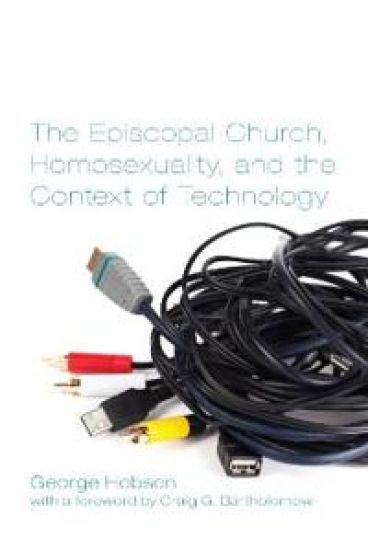
The Episcopal Church, Homosexuality, and the Context of Technology
George Hobson; Craig G. Bartholomew
Wipf Stock Publishers
2013
pokkari

The Episcopal Church, Homosexuality, and the Context of Technology
George Hobson; Craig G Bartholomew
Pickwick Publications
2013
sidottu