Kirjojen hintavertailu. Mukana 12 595 353 kirjaa ja 12 kauppaa.

Kirjailija

George Justice

Kirjat ja teokset yhdessä paikassa: 3 kirjaa, julkaisuja vuosilta 2019-2024, suosituimpien joukossa Cyberlibertarianism. Vertaile teosten hintoja ja tarkista saatavuus suomalaisista kirjakaupoista.

3 kirjaa

Kirjojen julkaisuhaarukka 2019-2024.

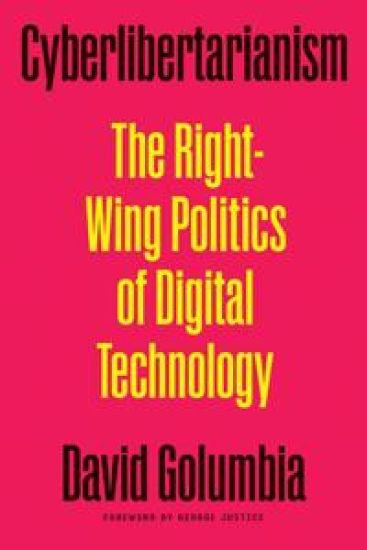
Cyberlibertarianism

Cyberlibertarianism

David Golumbia; George Justice

UNIVERSITY OF MINNESOTA PRESS
2024
sidottu
An urgent reckoning with digital technology’s fundamentally right-wing legal and economic underpinnings In a timely challenge to the potent political role of digital technology, Cyberlibertarianism argues that right-wing ideology was built into both the technical and social construction of the digital world from the start. Leveraging more than a decade of research, David Golumbia traces how digital evangelism has driven the worldwide shift toward the political right, concealing inequality, xenophobia, dishonesty, and massive corporate concentrations of wealth and power beneath the utopian presumption of digital technology as an inherent social good. Providing an incisive critique of the push for open access and open-source software and the legal battles over online censorship and net neutrality, Cyberlibertarianism details how the purportedly democratic internet has been employed as an organizing tool for terror and hate groups and political disinformation campaigns. As he unpacks our naively utopian conception of the digital world, Golumbia highlights technology’s role in the advancement of hyperindividualist and antigovernment agendas, demonstrating how Silicon Valley corporations and right-wing economists; antiestablishment figures such as Julian Assange, Elon Musk, Peter Thiel, Edward Snowden, and Mark Zuckerberg; and seemingly positive voices such as John Perry Barlow, Cory Doctorow, the Electronic Freedom Foundation, and Wikipedia all have worked to hamper regulation and weaken legal safeguards against exploitation. Drawing from a wide range of thought in digital theory, economics, law, and political philosophy as well as detailed research and Golumbia’s own experience as a software developer, Cyberlibertarianism serves as a clarion call to reevaluate the fraught politics of the internet. In the hope of providing a way of working toward a more genuinely democratic and egalitarian future for digital technology, this magisterial work insists that we must first understand the veiled dogmas from which it has been constructed. Retail e-book files for this title are screen-reader friendly.
Cyberlibertarianism

Cyberlibertarianism

David Golumbia; George Justice

UNIVERSITY OF MINNESOTA PRESS
2024
nidottu
An urgent reckoning with digital technology’s fundamentally right-wing legal and economic underpinnings In a timely challenge to the potent political role of digital technology, Cyberlibertarianism argues that right-wing ideology was built into both the technical and social construction of the digital world from the start. Leveraging more than a decade of research, David Golumbia traces how digital evangelism has driven the worldwide shift toward the political right, concealing inequality, xenophobia, dishonesty, and massive corporate concentrations of wealth and power beneath the utopian presumption of digital technology as an inherent social good. Providing an incisive critique of the push for open access and open-source software and the legal battles over online censorship and net neutrality, Cyberlibertarianism details how the purportedly democratic internet has been employed as an organizing tool for terror and hate groups and political disinformation campaigns. As he unpacks our naively utopian conception of the digital world, Golumbia highlights technology’s role in the advancement of hyperindividualist and antigovernment agendas, demonstrating how Silicon Valley corporations and right-wing economists; antiestablishment figures such as Julian Assange, Elon Musk, Peter Thiel, Edward Snowden, and Mark Zuckerberg; and seemingly positive voices such as John Perry Barlow, Cory Doctorow, the Electronic Freedom Foundation, and Wikipedia all have worked to hamper regulation and weaken legal safeguards against exploitation. Drawing from a wide range of thought in digital theory, economics, law, and political philosophy as well as detailed research and Golumbia’s own experience as a software developer, Cyberlibertarianism serves as a clarion call to reevaluate the fraught politics of the internet. In the hope of providing a way of working toward a more genuinely democratic and egalitarian future for digital technology, this magisterial work insists that we must first understand the veiled dogmas from which it has been constructed. Retail e-book files for this title are screen-reader friendly.

How to Be a Dean

How to Be a Dean

George Justice

Johns Hopkins University Press
2019
pokkari
The essential guide to the hardest job in higher ed.A deanship in higher education is an exciting but complex job combining technical administration and academic leadership. On one hand, the dean is an institutional leader, standing up for the faculty, staff, and students. On the other, the dean is a middle manager, managing personnel, curriculum, and budgets and trying to live up to the expectations of the governing board, president, and provost. But what is it really like to be a dean?In How to Be a Dean, George Justice illuminates both of these leadership roles, which interact and even conflict with each other while deans do their best to help faculty members and students. Providing tested advice, Justice takes readers from the job search through the daily work of the dean and, ultimately, to the larger questions of leadership, excellence, and integrity the role provokes. He also explores the roles of "different" deanships in the broader context of academic leadership.Based on the author's experience as a dean at two large research universities, How to Be a Dean is clear, engaging, and opinionated. Current deans will use this book to reflect on the work they do in productive ways. Faculty members considering administrative work will find in this book some idea about the day-to-day work required of their institutional leaders. And finally, readers who are simply curious about what deans do will find pointed analysis about what works and what doesn't.