Kirjojen hintavertailu. Mukana 12 657 676 kirjaa ja 12 kauppaa.

Kirjailija

George L. Parsenios

Kirjat ja teokset yhdessä paikassa: 2 kirjaa, julkaisuja vuosilta 2010-2014, suosituimpien joukossa Rhetoric and Drama in the Johannine Lawsuit Motif. Vertaile teosten hintoja ja tarkista saatavuus suomalaisista kirjakaupoista.

2 kirjaa

Kirjojen julkaisuhaarukka 2010-2014.

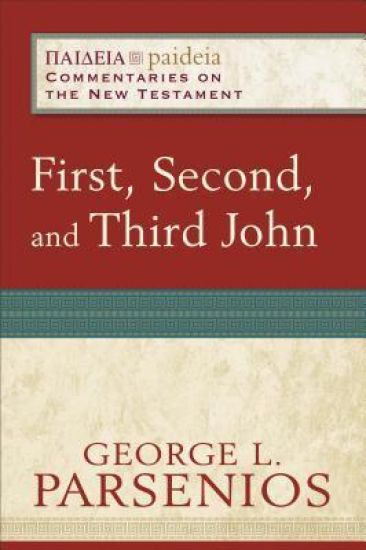
First, Second, and Third John

First, Second, and Third John

George L. Parsenios; Mikeal Parsons; Charles Talbert

Baker Academic, Div of Baker Publishing Group
2014
nidottu
In this addition to the well-received Paideia series, a respected New Testament scholar examines cultural context and theological meaning in First, Second, and Third John. Paideia commentaries explore how New Testament texts form Christian readers by attending to the ancient narrative and rhetorical strategies the text employs, showing how the text shapes theological convictions and moral habits, and making judicious use of maps, photos, and sidebars in a reader-friendly format.
Rhetoric and Drama in the Johannine Lawsuit Motif
George L. Parsenios explores the legal character of the Gospel of John in the light of classical literature, especially Greek drama. Johannine interpreters have explored with increasing interest both the legal quality and the dramatic quality of the Fourth Gospel, but often do not connect these two ways of reading John. Some interpreters even assume that the one approach excludes the other, and that John is either legal or dramatic, but not both. Legal rhetoric and tragic drama, however, were joined throughout antiquity in a complex pattern of mutual influence. To connect John to drama, therefore, is to connect John to legal rhetoric, and doing so helps to see even more clearly the pervasiveness of the legal motif in the Gospel of John. Tracing the legal character of "seeking" in Sophocles' Oedipus Rex, for example, sheds new light on the legal character of "seeking" in the Fourth Gospel, especially in the enigmatic comment of Jesus at John 8:50. New insights are also offered regarding the evidentiary character of the signs of Jesus, based on comparison with Aristotle's comments about signs and rhetorical evidence in both the Poetics and Rhetoric, as well as by comparison with plays by Aeschylus, Sophocles and Euripides. To call the signs of Jesus evidence, however, does not remove them from the dialectical tension inherent in Johannine theology. If the signs are evidence, they are evidence in a world in which the basis of forming judgments has been problematized by the appearance of the Word in the flesh.