Kirjojen hintavertailu. Mukana 12 595 353 kirjaa ja 12 kauppaa.

Kirjailija

George Lipsitz

Kirjat ja teokset yhdessä paikassa: 24 kirjaa, julkaisuja vuosilta 1994-2026, suosituimpien joukossa Puentes Sonoros (Sonic Bridges): Three Moments of Mexican Music Making in Los Angeles. Vertaile teosten hintoja ja tarkista saatavuus suomalaisista kirjakaupoista.

24 kirjaa

Kirjojen julkaisuhaarukka 1994-2026.

Ethnic Studies at the Crossroads

Ethnic Studies at the Crossroads

George Lipsitz

University of California Press
2026
pokkari
Reckoning with the current state of ethnic studies. Ethnic studies is more visible than ever. A project that once struggled at the margins of academic and public life has now achieved significant levels of prominence and impact, not without threat from well-funded political and legal campaigns against critical affirmative action, critical race theory, and diversity, equity, and inclusion policies. In this "moment of danger," George Lipsitz looks at the current state of the field. Outlining the painful contradictions faced within, Lipsitz delineates the ways in which ethnic studies produces opposition, experiences incorporation, and equips people to challenge, survive, and overcome oppression. He also looks at its potential in connecting those across the academy with broader community circles and discovering unexpected alliances and affinities. Critical yet optimistic, this book upholds the promising wider role of ethnic studies in social transformation.
Ethnic Studies at the Crossroads

Ethnic Studies at the Crossroads

George Lipsitz

University of California Press
2026
sidottu
Reckoning with the current state of ethnic studies. Ethnic studies is more visible than ever. A project that once struggled at the margins of academic and public life has now achieved significant levels of prominence and impact, not without threat from well-funded political and legal campaigns against critical affirmative action, critical race theory, and diversity, equity, and inclusion policies. In this "moment of danger," George Lipsitz looks at the current state of the field. Outlining the painful contradictions faced within, Lipsitz delineates the ways in which ethnic studies produces opposition, experiences incorporation, and equips people to challenge, survive, and overcome oppression. He also looks at its potential in connecting those across the academy with broader community circles and discovering unexpected alliances and affinities. Critical yet optimistic, this book upholds the promising wider role of ethnic studies in social transformation.
The Danger Zone Is Everywhere

The Danger Zone Is Everywhere

George Lipsitz; Robin D.G. Kelley

University of California Press
2024
pokkari
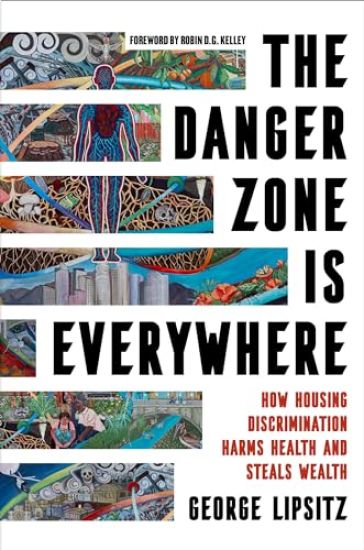
Compellingly argues that good health is as much social as it is biological, and that the racial health gap and the racial wealth gap are mutually constitutive. The Danger Zone Is Everywhere shows that housing insecurity and the poor health associated with it are central components of an unjust, destructive, and deadly racial order. Housing discrimination is a civil and economic injustice, but it is also a menace to public health. With this book, George Lipsitz reveals how the injuries of housing discrimination are augmented by racial bias in home appraisals and tax assessments, by the disparate racialized effects of policing, sentencing, and parole, and by the ways in which algorithms in insurance and other spheres associate race with risk. But The Danger Zone Is Everywhere also highlights new practices emerging in health care and the law, emphasizing how grassroots community mobilizations are creating an active and engaged public sphere constituency promoting new forms of legislation, litigation, and organization for social justice.
The Danger Zone Is Everywhere

The Danger Zone Is Everywhere

George Lipsitz; Robin D.G. Kelley

University of California Press
2024
sidottu
Compellingly argues that good health is as much social as it is biological, and that the racial health gap and the racial wealth gap are mutually constitutive. The Danger Zone Is Everywhere shows that housing insecurity and the poor health associated with it are central components of an unjust, destructive, and deadly racial order. Housing discrimination is a civil and economic injustice, but it is also a menace to public health. With this book, George Lipsitz reveals how the injuries of housing discrimination are augmented by racial bias in home appraisals and tax assessments, by the disparate racialized effects of policing, sentencing, and parole, and by the ways in which algorithms in insurance and other spheres associate race with risk. But The Danger Zone Is Everywhere also highlights new practices emerging in health care and the law, emphasizing how grassroots community mobilizations are creating an active and engaged public sphere constituency promoting new forms of legislation, litigation, and organization for social justice.
Insubordinate Spaces

Insubordinate Spaces

Barbara Tomlinson; George Lipsitz

Temple University Press,U.S.
2019
sidottu
Insubordinate spaces are places of possibility, products of acts of accompaniment and improvisation that deepen capacities for democratic social change. Barbara Tomlinson and George Lipsitz’s Insubordinate Spaces explores the challenges facing people committed to social justice in an era when social institutions have increasingly been reconfigured to conform to the imperatives of a market society.In their book, the authors argue that education, the arts, and activism are key terrains of political and ideological conflict. They explore and analyze exemplary projects responding to current social justice issues and crises, from the Idle No More movement launched by Indigenous people in Canada to the performance art of Chingo Bling, Fandango convenings, the installation art of Ramiro Gomez, and the mass protests proclaiming “Black Lives Matter" in Ferguson, MO. Tomlinson and Lipsitz draw on key concepts from struggles to advance ideas about reciprocal recognition and co-creation as components in the construction of new egalitarian and democratic social relations, practices, and institutions.
Insubordinate Spaces

Insubordinate Spaces

Barbara Tomlinson; George Lipsitz

Temple University Press,U.S.
2019
nidottu
Insubordinate spaces are places of possibility, products of acts of accompaniment and improvisation that deepen capacities for democratic social change. Barbara Tomlinson and George Lipsitz’s Insubordinate Spaces explores the challenges facing people committed to social justice in an era when social institutions have increasingly been reconfigured to conform to the imperatives of a market society.In their book, the authors argue that education, the arts, and activism are key terrains of political and ideological conflict. They explore and analyze exemplary projects responding to current social justice issues and crises, from the Idle No More movement launched by Indigenous people in Canada to the performance art of Chingo Bling, Fandango convenings, the installation art of Ramiro Gomez, and the mass protests proclaiming “Black Lives Matter" in Ferguson, MO. Tomlinson and Lipsitz draw on key concepts from struggles to advance ideas about reciprocal recognition and co-creation as components in the construction of new egalitarian and democratic social relations, practices, and institutions.
The Possessive Investment in Whiteness

The Possessive Investment in Whiteness

George Lipsitz

Temple University Press,U.S.
2018
nidottu
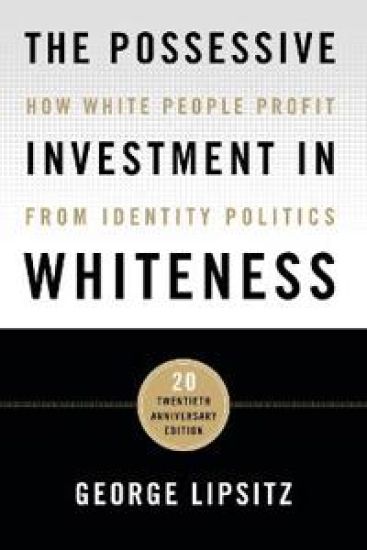
George Lipsitz’s classic book The Possessive Investment in Whiteness argues that public policy and private prejudice work together to create a possessive investment in whiteness that is responsible for the racialized hierarchies of our society. Whiteness has a cash value: it accounts for advantages that come to individuals through profits made from housing secured in discriminatory markets, through the unequal educational opportunities available to children of different races, through insider networks that channel employment opportunities to the friends and relatives of those who have profited most from past and present discrimination, and especially through intergenerational transfers of inherited wealth that pass on the spoils of discrimination to succeeding generations. White Americans are encouraged to invest in whiteness, to remain true to an identity that provides them with structured advantages.In this twentieth anniversary edition, Lipsitz provides a new introduction and updated statistics; as well as analyses of the enduring importance of Hurricane Katrina; the nature of anti-immigrant mobilizations; police assaults on Black women, the killings of Trayvon Martin, Michael Brown, and Freddie Gray; the legacy of Obama and the emergence of Trump; the Charleston Massacre and other hate crimes; and the ways in which white fear, white fragility, and white failure have become drivers of a new ethno-nationalism. As vital as it was upon its original publication, the twentieth anniversary edition of The Possessive Investment in Whiteness is an unflinching but necessary look at white supremacy.
The Possessive Investment in Whiteness

The Possessive Investment in Whiteness

George Lipsitz

Temple University Press,U.S.
2018
sidottu
George Lipsitz’s classic book The Possessive Investment in Whiteness argues that public policy and private prejudice work together to create a possessive investment in whiteness that is responsible for the racialized hierarchies of our society. Whiteness has a cash value: it accounts for advantages that come to individuals through profits made from housing secured in discriminatory markets, through the unequal educational opportunities available to children of different races, through insider networks that channel employment opportunities to the friends and relatives of those who have profited most from past and present discrimination, and especially through intergenerational transfers of inherited wealth that pass on the spoils of discrimination to succeeding generations. White Americans are encouraged to invest in whiteness, to remain true to an identity that provides them with structured advantages.In this twentieth anniversary edition, Lipsitz provides a new introduction and updated statistics; as well as analyses of the enduring importance of Hurricane Katrina; the nature of anti-immigrant mobilizations; police assaults on Black women, the killings of Trayvon Martin, Michael Brown, and Freddie Gray; the legacy of Obama and the emergence of Trump; the Charleston Massacre and other hate crimes; and the ways in which white fear, white fragility, and white failure have become drivers of a new ethno-nationalism. As vital as it was upon its original publication, the twentieth anniversary edition of The Possessive Investment in Whiteness is an unflinching but necessary look at white supremacy.
The Race Track

The Race Track

Kimberle Crenshaw; Luke Charles Harris; George Lipsitz

The New Press
2017
sidottu
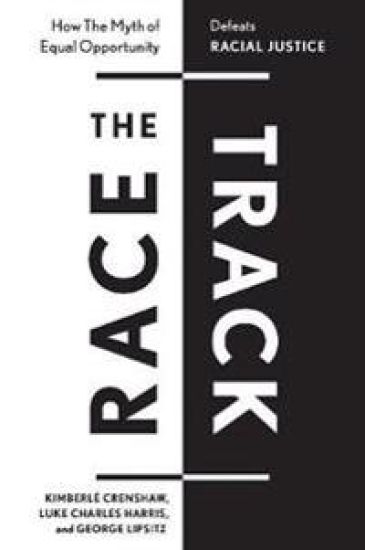
Despite the watershed election of Barack Obama and the claims that racial history ended that day, the painful reality of racism in America has been thrust into the headlines over the past year. The Race Track dispenses with the myth of post-racial America, explaining not only why race matters more than ever but also how we can fashion 21st-century solutions to combating racial injustice. The Race Track champions an intersectional path - pioneered by Kimberle Crenshaw - one that will appeal to people of all races who want to know how to speak the language of racial justice.
The Fierce Urgency of Now

The Fierce Urgency of Now

Daniel Fischlin; Ajay Heble; George Lipsitz

Duke University Press
2013
sidottu
The Fierce Urgency of Now links musical improvisation to struggles for social change, focusing on the connections between the improvisation associated with jazz and the dynamics of human rights struggles and discourses. The authors acknowledge that at first glance improvisation and rights seem to belong to incommensurable areas of human endeavor. Improvisation connotes practices that are spontaneous, personal, local, immediate, expressive, ephemeral, and even accidental, while rights refer to formal standards of acceptable human conduct, rules that are permanent, impersonal, universal, abstract, and inflexible. Yet the authors not only suggest that improvisation and rights can be connected; they insist that they must be connected. Improvisation is the creation and development of new, unexpected, and productive cocreative relations among people. It cultivates the capacity to discern elements of possibility, potential, hope, and promise where none are readily apparent. Improvisers work with the tools they have in the arenas that are open to them. Proceeding without a written score or script, they collaborate to envision and enact something new, to enrich their experience in the world by acting on it and changing it. By analyzing the dynamics of particular artistic improvisations, mostly by contemporary American jazz musicians, the authors reveal improvisation as a viable and urgently needed model for social change. In the process, they rethink politics, music, and the connections between them.
The Fierce Urgency of Now

The Fierce Urgency of Now

Daniel Fischlin; Ajay Heble; George Lipsitz

Duke University Press
2013
pokkari
The Fierce Urgency of Now links musical improvisation to struggles for social change, focusing on the connections between the improvisation associated with jazz and the dynamics of human rights struggles and discourses. The authors acknowledge that at first glance improvisation and rights seem to belong to incommensurable areas of human endeavor. Improvisation connotes practices that are spontaneous, personal, local, immediate, expressive, ephemeral, and even accidental, while rights refer to formal standards of acceptable human conduct, rules that are permanent, impersonal, universal, abstract, and inflexible. Yet the authors not only suggest that improvisation and rights can be connected; they insist that they must be connected. Improvisation is the creation and development of new, unexpected, and productive cocreative relations among people. It cultivates the capacity to discern elements of possibility, potential, hope, and promise where none are readily apparent. Improvisers work with the tools they have in the arenas that are open to them. Proceeding without a written score or script, they collaborate to envision and enact something new, to enrich their experience in the world by acting on it and changing it. By analyzing the dynamics of particular artistic improvisations, mostly by contemporary American jazz musicians, the authors reveal improvisation as a viable and urgently needed model for social change. In the process, they rethink politics, music, and the connections between them.
Midnight at the Barrelhouse

Midnight at the Barrelhouse

George Lipsitz

University of Minnesota Press
2013
nidottu
Considered by many to be the godfather of R&B, Johnny Otis—musician, producer, artist, entrepreneur, pastor, disc jockey, writer, and tireless fighter for racial equality—has had a remarkable life by any measure. In this first biography of Otis, George Lipsitz tells the largely unknown story of a towering figure in the history of African American music and culture who was, by his own description, "black by persuasion."Born to Greek immigrant parents in Vallejo, California, in 1921, Otis grew up in an integrated neighborhood and identified deeply with black music and culture from an early age. He moved to Los Angeles as a young man and submerged himself in the city's vibrant African American cultural life, centered on Central Avenue and its thriving music scene. Otis began his six-decade career in music playing drums in territory swing bands in the 1930s. He went on to lead his own band in the 1940s and open the Barrelhouse nightclub in Watts. His R&B band had seventeen Top 40 hits between 1950 and 1969, including "Willie and the Hand Jive." As a producer and A&R man, Otis discovered such legends as Etta James, Jackie Wilson, and Big Mama Thornton. Otis also wrote a column for the Sentinel, one of L.A.'s leading black newspapers, became pastor of his own interracial church, hosted popular radio and television shows that introduced millions to music by African American artists, and was lauded as businessman of the year in a 1951 cover story in Negro Achievements magazine. Throughout his career Otis's driving passion has been his fearless and unyielding opposition to racial injustice, whether protesting on the front lines, exposing racism and championing the accomplishments of black Americans, or promoting African American musicians.Midnight at the Barrelhouse is a chronicle of a life rich in both incident and inspiration, as well as an exploration of the complicated nature of race relations in twentieth-century America. Otis's total commitment to black culture and transcendence of racial boundaries, Lipsitz shows, teach important lessons about identity, race, and power while encapsulating the contradictions of racism in American society.
Footsteps in the Dark

Footsteps in the Dark

George Lipsitz

University of Minnesota Press
2007
nidottu
Most pop songs are short-lived. They appear suddenly and, if they catch on, seem to be everywhere at once before disappearing again into obscurity. Yet some songs resonate more deeply-often in ways that reflect broader historical and cultural changes. In Footsteps in the Dark, George Lipsitz illuminates these secret meanings, offering imaginative interpretations of a wide range of popular music genres from jazz to salsa to rock. Sweeping changes that only remotely register in official narratives, Lipsitz argues, can appear in vivid relief within popular music, especially when these changes occur outside mainstream white culture. Using a wealth of revealing examples, he discusses such topics as the emergence of an African American techno music subculture in Detroit as a contradictory case of digital capitalism and the prominence of banda, merengue, and salsa music in the 1990s as an expression of changing Mexican, Dominican, and Puerto Rican nationalisms. Approaching race and popular music from another direction, he analyzes the Ken Burns PBS series Jazz as a largely uncritical celebration of American nationalism that obscures the civil rights era’s challenge to racial inequality, and he takes on the infamous campaigns to censor hip-hop and the radical black voice in the early 1990s. Teeming with astute observations and brilliant insights about race and racism, deindustrialization, and urban renewal and their connections to music, Footsteps in the Dark puts forth an alternate history of post–cold war America and shows why in an era given to easy answers and clichÉd versions of history, pop songs matter more than ever. George Lipsitz is professor of black studies and sociology at the University of California, Santa Barbara. Among his many books are Life in the Struggle, Dangerous Crossroads, and American Studies in a Moment of Danger (Minnesota, 2001).
Youthscapes

Youthscapes

George Lipsitz

University of Pennsylvania Press
2004
pokkari
Young people, it seems, are both everywhere and nowhere. The media are crowded with images of youth as deviant or fashionable, personifying a society's anxieties and hopes about its own transformation. However, theories of globalization, nationalism, and citizenship tend to focus on adult actors. Youthscapes sets youth at the heart of globalization by exploring the meanings young people have created for themselves through their engagements with popular cultures, national ideologies, and global markets. The term "youthscapes" places local youth practices within the context of ongoing shifts in national and global forces. Using this framework, the book revitalizes discussions about youth cultures and social movements, while simultaneously reflecting on the uses of youth as an academic and political category. Tracing young people's movements across physical and imagined spaces, the authors examine various cases of young people as they participate in social relations; use and invent technology; earn, spend, need, and despise money; comprise target markets while producing their own original media; and create their own understandings of citizenship. The essays examine young Thai women working in the transnational beauty industry, former child soldiers in Sierra Leone, Latino youth using graphic art in political organizing, a Sri Lankan refugee's fan relationship with Jackie Chan, and Somali high school students in the United States and Canada. Drawing on methodologies and frameworks from multiple fields, such as anthropology, sociology, and film studies, the volume is useful to those studying and teaching issues of youth culture, popular culture, globalization, social movements, education, and media. By focusing on the intersection between globalization studies and youth culture, the authors offer a vital contribution to the development of a new, interdisciplinary approach to youth culture studies.
American Studies in a Moment of Danger

American Studies in a Moment of Danger

George Lipsitz

University of Minnesota Press
2001
nidottu
A forthright look at the future of the discipline in the wake of immense social changes.What becomes of "national knowledge" in our age of globalization? If dramatic changes in technology, commerce, and social relations are undermining familiar connections between culture and place, what happens to legacies of learning that put the nation at the center of the study of history, culture, language, politics, and geography? In short, what remains of American Studies? At a critical moment, this book offers a richly textured historical perspective on where our notions of national knowledge-and our sense of American Studies-have come from and where they may lead in a future of new ideas about culture and community.The America that seems to be disappearing before our very eyes is, George Lipsitz argues, actually the cumulative creation of yesterday’s struggles over identity, culture, and power. With examples from statistics and history, poster designs and music lyrics, Lipsitz shows how American Studies has been shaped by the social movements of the 1930s, 1960s, and 1980s. His analysis reveals the sedimented history of social movement contestation contained in contemporary popular music, visual art, and cinema.Finally, Lipsitz identifies the ways in which the globalization of commerce and culture are producing radically new understandings of politics, performance, consumption, knowledge, and nostalgia; the changing realities present not so much a danger as a clear challenge to a still-evolving American Studies-a challenge that this book helps us to confront wisely, flexibly, and effectively. Critical American Studies SeriesAnnouncing a new seriesCritical American Studies George Lipsitz, series editorThis series examines recent trends in American Studies that address fundamental questions about history, culture, social structure, race, gender, sexuality, and citizenship. It examines the forces-including mass migration, global economy, the seeming weaknesses of the nation-state, and ongoing ethnic antagonisms-that compel the field to reexamine the role of culture in producing individual and collective identities.