Kirjojen hintavertailu. Mukana 12 390 323 kirjaa ja 12 kauppaa.

Kirjailija

George Melnyk

Kirjat ja teokset yhdessä paikassa: 11 kirjaa, julkaisuja vuosilta 1985-2024, suosituimpien joukossa Film and the City. Vertaile teosten hintoja ja tarkista saatavuus suomalaisista kirjakaupoista.

11 kirjaa

Kirjojen julkaisuhaarukka 1985-2024.

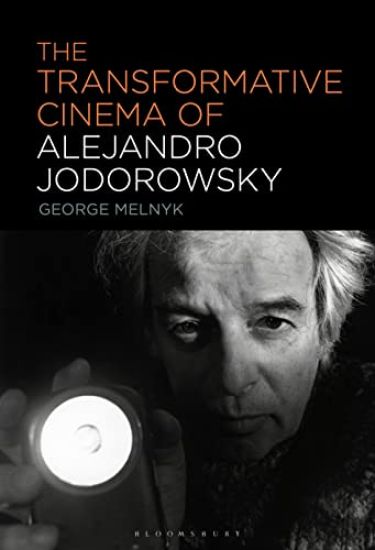
The Transformative Cinema of Alejandro Jodorowsky

The Transformative Cinema of Alejandro Jodorowsky

George Melnyk

BLOOMSBURY PUBLISHING PLC
2024
nidottu
Alejandro Jodorowsky is a theatre director, writer of graphic novels and comics, novelist, poet, and an expert in the Tarot. He is also an auteur filmmaker who garnered attention with his breakthrough film El Topo in 1970. He has been called a “cult” filmmaker, whose films are surreal, hallucinatory, and provocative.The Transformative Cinema of Alejandro Jodorowsky explores the ways in which Jodorowsky's films are transformative in a psychologically therapeutic way. It also examines his signature style, which includes the symbolic meaning of various colors in which he clothes his actors, the use of his own family members in the films, and his casting of himself in leading roles. This total involvement of himself and his family in his auteur films led to his psycho-therapeutic theories and practices: metagenealogy and psychomagic. This book is the only the second book in the English language in print that deals with all of Jodorowsky’s films, beginning with his earliest mime film in 1957 and ending with his 2019 film on psychomagic. It also connects his work as a writer and therapist to his films, which themselves attempt to obliterate the line between fantasy and reality.
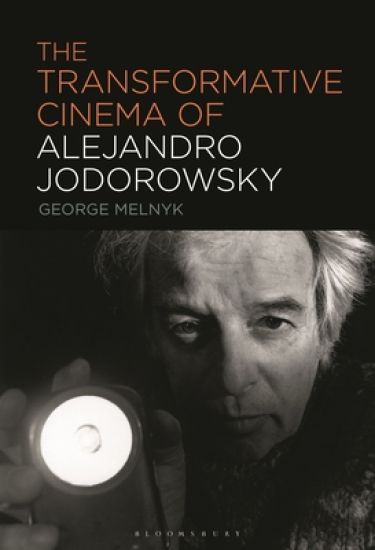
The Transformative Cinema of Alejandro Jodorowsky

The Transformative Cinema of Alejandro Jodorowsky

George Melnyk

BLOOMSBURY PUBLISHING PLC
2023
sidottu
Alejandro Jodorowsky is a theatre director, writer of graphic novels and comics, novelist, poet, and an expert in the Tarot. He is also an auteur filmmaker who garnered attention with his breakthrough film El Topo in 1970. He has been called a “cult” filmmaker, whose films are surreal, hallucinatory, and provocative.The Transformative Cinema of Alejandro Jodorowsky explores the ways in which Jodorowsky's films are transformative in a psychologically therapeutic way. It also examines his signature style, which includes the symbolic meaning of various colors in which he clothes his actors, the use of his own family members in the films, and his casting of himself in leading roles. This total involvement of himself and his family in his auteur films led to his psycho-therapeutic theories and practices: metagenealogy and psychomagic. This book is the only the second book in the English language in print that deals with all of Jodorowsky’s films, beginning with his earliest mime film in 1957 and ending with his 2019 film on psychomagic. It also connects his work as a writer and therapist to his films, which themselves attempt to obliterate the line between fantasy and reality.

Breaking Words: Literary Confessions

Breaking Words: Literary Confessions

George Melnyk

BAYEUX ARTS, INC.
2021
sidottu
Breaking Words: Literary Confessions provides a lively discussion of the impact of books on an author's identity. George Melnyk is an Alberta writer, who has published in various genres--essays, poetry, Alberta literature, and Canadian cinema. Why he came to be identified by certain communities of readers with one specific book and not any of his others is a mystery to be solved. He offers an engaged description of how reviews, cultural trends, and funding for writers impacts creativity. Nor is he afraid to provide the nitty-gritty of the financial results from his writing. This is the first ever literary memoir by an Alberta writer. It offers insights into the complex nature of the literary arts when practiced in western Canada.
Film and the City

Film and the City

George Melnyk

AU Press
2014
pokkari
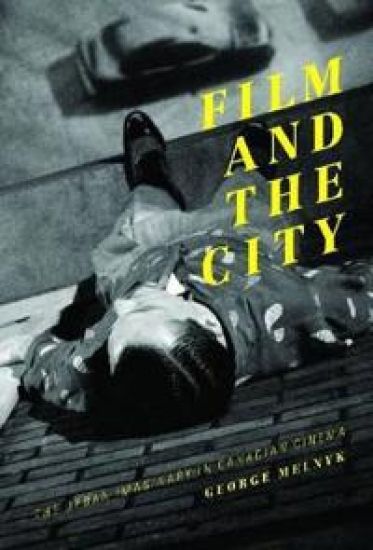
For many years, Canadian cinema was dominated by the documentarytradition of the National Film Board, which tended to promote what filmscholar Jim Leach has called the "nationalist-realistproject"—films that privileged Canada's naturallandscape and sought to conjure a unified sense of Canadian identityfrom images of empty, untrammelled wilderness and bucolic farmlands.Over the past several decades, however, the hegemony of thisfundamentally colonial, Anglo-centric vision has been challenged byfrancophone and First Nations perspectives and by the growth of cities,where most Canadians now reside, as economic and technological centres.In opposition to the mythic "Canada" shaped through thelens of rural nostalgia, Canadian urban identity asserts itself aspolyphonic, diverse, constructed through multiple discourses andmediums, as an ongoing negotiation rather than a monolithicorientation. Taking the urban as setting and subject, filmmakers areideally poised to capture this multiplicity, creating their own,idiosyncratic portraits of the Canadian urban landscape and of thepeople who inhabit it. Examining fourteen Canadian films produced from the late 1980sonward, including Denys Arcand's Jésus de Montréal(1989), Mina Shum's Double Happiness (1994), and GuyMaddin's My Winnipeg (2007), Film and the Cityis the first comprehensive study of Canadian film and"urbanity"—the totality of urban culture and life asrefracted through the filmmaker's prism. Drawing on insights fromboth film and urban studies and building upon issues of identityformation long debated in Canadian studies, Melnyk considers howfilmmakers interpret and employ the spatiality, visuality, and oralityof urban space and how audiences read the films that result. In thisway, Film and the City argues that Canadian narrative film ofthe postmodern period has contributed to the articulation of a new,multifaceted understanding of national identity.
One Hundred Years of Canadian Cinema

One Hundred Years of Canadian Cinema

George Melnyk

University of Toronto Press
2004
pokkari
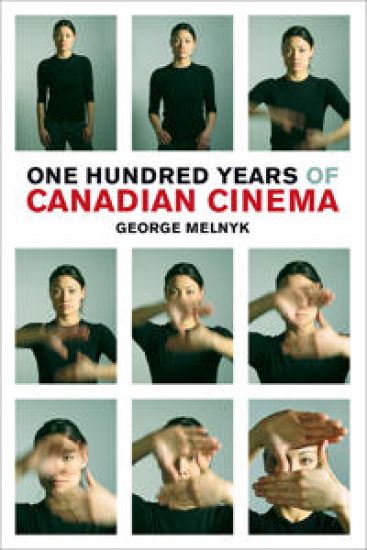
With its beginnings rooted in the languages and cultures of the French and English, Canadian cinema has, over time, become more representative, reflecting the interests and aspirations of Canada's many diverse communities and identities. In One Hundred Years of Canadian Cinema, George Melnyk offers a twenty-first-century perspective on a fascinating film tradition, the distinctness of which has attracted the attention of the global cinematic community. Melnyk's historical survey is comprehensive in its cinematic scope. He examines the achievement of dramatic, documentary, and experimental filmmaking from the earliest days until the present, giving due attention to the cinemas of Quebec and to the cultural, political, and theoretical trends that have shaped contemporary film in Canada. Following an interpretive approach, Melnyk explores the beginnings of a national cinema in the silent era at the end of the nineteenth century; the dynamics of the industry in the 1920s, which provide a model for the industry's overall development; the rise of the NFB; the birth of a successful feature-film industry in Quebec in the forties; the tax-shelter era of the seventies; Canada's achievements in animation; and the important contributions of key feature films and their directors in articulating insights into the cultural grammars found in Canadian society throughout the past century. Drawing on the insights of scholars, critics, and filmmakers to provide a coherent appraisal of the state of the film industry and Canada's cinematic art as it enters its second century, Melnyk weaves the history of English and French Canada together in an attempt to understand the achievements and, ultimately, the failures of a 'national cinema'. From Neighbours to Crash, Pour la suite du monde to Atanarjuat, and Goin' Down the Road to Maelström, Melnyk argues passionately that Canadian cinema has never been a singular entity, but has continued to speak in the languages and in the voices of Canada's diverse population. It is only through an ongoing and deepening exploration of diversity in Canadian film that its survival and evolution can be ensured.
One Hundred Years of Canadian Cinema

One Hundred Years of Canadian Cinema

George Melnyk

University of Toronto Press
2004
sidottu
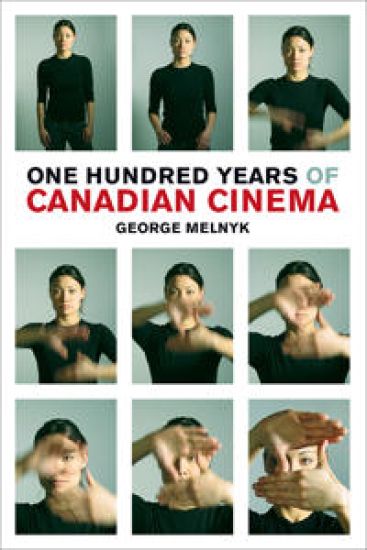
With its beginnings rooted in the languages and cultures of the French and English, Canadian cinema has, over time, become more representative, reflecting the interests and aspirations of Canada's many diverse communities and identities. In One Hundred Years of Canadian Cinema, George Melnyk offers a twenty-first-century perspective on a fascinating film tradition, the distinctness of which has attracted the attention of the global cinematic community. Melnyk's historical survey is comprehensive in its cinematic scope. He examines the achievement of dramatic, documentary, and experimental filmmaking from the earliest days until the present, giving due attention to the cinemas of Quebec and to the cultural, political, and theoretical trends that have shaped contemporary film in Canada. Following an interpretive approach, Melnyk explores the beginnings of a national cinema in the silent era at the end of the nineteenth century; the dynamics of the industry in the 1920s, which provide a model for the industry's overall development; the rise of the NFB; the birth of a successful feature-film industry in Quebec in the forties; the tax-shelter era of the seventies; Canada's achievements in animation; and the important contributions of key feature films and their directors in articulating insights into the cultural grammars found in Canadian society throughout the past century. Drawing on the insights of scholars, critics, and filmmakers to provide a coherent appraisal of the state of the film industry and Canada's cinematic art as it enters its second century, Melnyk weaves the history of English and French Canada together in an attempt to understand the achievements and, ultimately, the failures of a 'national cinema'. From Neighbours to Crash, Pour la suite du monde to Atanarjuat, and Goin' Down the Road to Maelström, Melnyk argues passionately that Canadian cinema has never been a singular entity, but has continued to speak in the languages and in the voices of Canada's diverse population. It is only through an ongoing and deepening exploration of diversity in Canadian film that its survival and evolution can be ensured.
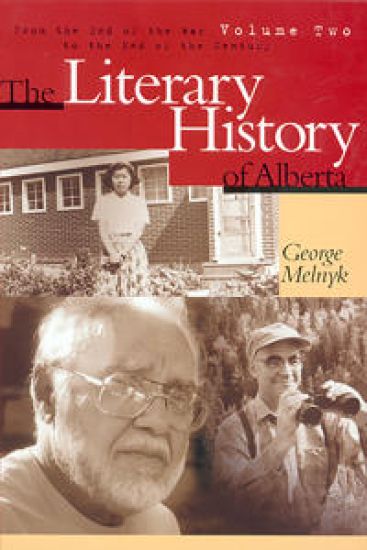
The Literary History of Alberta Volume Two

The Literary History of Alberta Volume Two

George Melnyk

University of Alberta Press
1999
nidottu
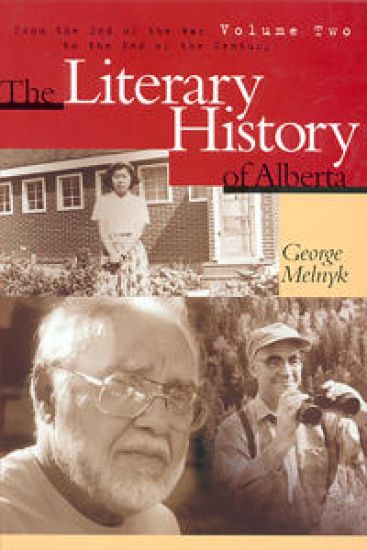
In this, the companion to the landmark volume The Literary History of Alberta, Volume One: From Writing-on-Stone to World War Two, George Melnyk examines Alberta literature in the second half of the twentieth century. At last, Melnyk argues, Alberta writers have found their voice--and their accomplishments have been remarkable. The contradictory landscape, the stereotypes of the Indian, the Mountie, and the Cowboy, and the language of the Other, speaking from the margins--these elements all left their impressions on the consciousness of early Alberta. But writers in the last few decades have turned this inheritance to their advantage, to create compelling stories about this place and its people. Today, Melnyk discovers, Alberta writers can appreciate not only this achievement, but also its essential source: the symbolic communication of Writing-on-Stone. The Literary History of Alberta, Volume Two extends the study of Alberta's cultural history to the present day. It is a vital text for anyone interested in Alberta's vibrant literary culture.
The Literary History of Alberta Volume Two

The Literary History of Alberta Volume Two

George Melnyk

University of Alberta Press
1999
sidottu
In this, the companion to the landmark volume The Literary History of Alberta, Volume One: From Writing-on-Stone to WorldWar Two, George Melnyk examines Alberta literature in the second half of the twentieth century. At last, Melnyk argues, Alberta writers have found their voice--and their accomplishments have been remarkable. The contradictory landscape, the stereotypes of the Indian, the Mountie, and the Cowboy, and the language of the Other, speaking from the margins--these elements all left their impressions on the consciousness of early Alberta. But writers in the last few decades have turned this inheritance to their advantage, to create compelling stories about this place and its people. Today, Melnyk discovers, Alberta writers can appreciate not only this achievement, but also its essential source: the symbolic communication of Writing-on-Stone. The Literary History of Alberta, Volume Two extends the study of Alberta's cultural history to the present day. It is a vital text for anyone interested in Alberta's vibrant literary culture.
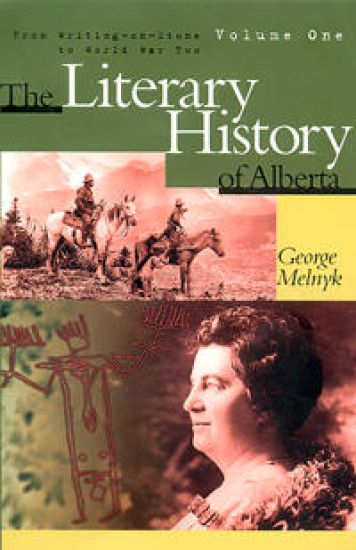
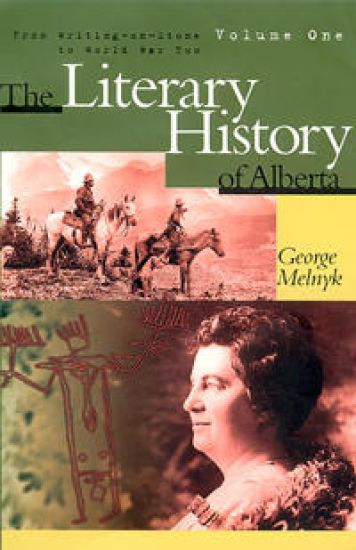
The Literary History of Alberta Volume One

The Literary History of Alberta Volume One

George Melnyk

University of Alberta Press
1998
sidottu
Alberta's contradictory landscape has fired the imaginative energies of writers for centuries. The sweep of the plains, the thrust of the Rockies, and the long roll of the woodlands have left vivid impressions on all of Alberta's writers--both those who passed through Alberta in search of other horizons and those who made it their home. The Literary History of Alberta surveys writing in and about Alberta from prehistory to the middle of the twentieth century. It includes profiles of dozens of writers (from the earnestly intended to the truly gifted) and their texts (from the commercial to the arcane). It reminds us of long-forgotten names and faces, figures who quietly--or not so quietly--wrote the books that underpin Alberta's thriving literary culture today. Melnyk also discusses the institutions that have shaped Alberta's literary culture. The Literary History of Alberta is an essential text for any reader interested in the cultural history of western Canada, and a landmark achievement in Alberta's continuing literary history.