

Kirjailija
George P. Fletcher
Kirjat ja teokset yhdessä paikassa: 15 kirjaa, julkaisuja vuosilta 1990-2022, suosituimpien joukossa Die Kollektive Schuld. Vertaile teosten hintoja ja tarkista saatavuus suomalaisista kirjakaupoista.
Mukana myös kirjoitusasut: George P Fletcher
15 kirjaa
Kirjojen julkaisuhaarukka 1990-2022.


Advanced Introduction to Landmark Criminal Cases
George P. Fletcher
Edward Elgar Publishing Ltd
2021
nidottu
Elgar Advanced Introductions are stimulating and thoughtful introductions to major fields in the social sciences, business and law, expertly written by the world’s leading scholars. Designed to be accessible yet rigorous, they offer concise and lucid surveys of the substantive and policy issues associated with discrete subject areas. This engaging and accessible book focuses on high-profile criminal trials and examines the strategy of the lawyers, the reasons for conviction or acquittal, as well as the social importance of these famous cases. Key features include: An in-depth examination of cases that are described only superficially in the mediaComparative analysis of headline crimes and the evolving issues of crime, punishment and justiceDetailed exploration of 11 landmark criminal cases including the trials of Amanda Knox, Mike Tyson and O.J. Simpson. The Advanced Introduction to Landmark Criminal Cases will be a key resource for students and scholars of criminal law and justice. It will also make an interesting read for lawyers and those interested in the famous trials of the last century.

Advanced Introduction to Landmark Criminal Cases
George P. Fletcher
Edward Elgar Publishing Ltd
2021
sidottu
Elgar Advanced Introductions are stimulating and thoughtful introductions to major fields in the social sciences, business and law, expertly written by the world’s leading scholars. Designed to be accessible yet rigorous, they offer concise and lucid surveys of the substantive and policy issues associated with discrete subject areas. This engaging and accessible book focuses on high-profile criminal trials and examines the strategy of the lawyers, the reasons for conviction or acquittal, as well as the social importance of these famous cases. Key features include: An in-depth examination of cases that are described only superficially in the mediaComparative analysis of headline crimes and the evolving issues of crime, punishment and justiceDetailed exploration of 11 landmark criminal cases including the trials of Amanda Knox, Mike Tyson and O.J. Simpson. The Advanced Introduction to Landmark Criminal Cases will be a key resource for students and scholars of criminal law and justice. It will also make an interesting read for lawyers and those interested in the famous trials of the last century.
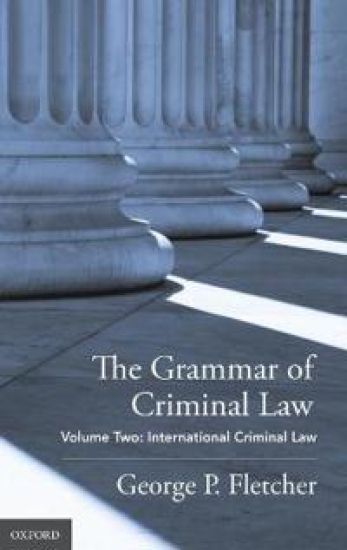
To understand the international legal order in the field of criminal law, we need to ask three elementary questions. What is international law? What is criminal law? And what happens to these two fields when they are joined together? Volume Two of The Grammar of Criminal Law sets out to answer these questions through a series of twelve dichotomies - such as law vs. justice, intention vs. negligence, and causation vs. background events - that invite the reader to better understand the jurisprudential foundations of international criminal law. The book will appeal to anyone interested in the future of international cooperation in a time of national retrenchment, and will be of interest to students, scholars, and policymakers around the world.

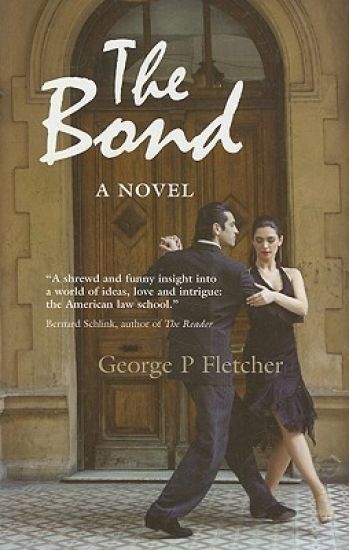
Adam Gross, philosopher-cum-lawyer, teaches at an Ivy League law school in New York. Good looking, cultivated, bohemian, he was once considered the rising star of his faculty, but that was a decade ago, and times have changed. Doing the job he always wanted, shaping eager, young, minds, showing them what it takes to be a lawyer, Adam has to face the truth that his style is no longer what the students pay for; and his Dean is getting worried about the rising number of complaints. It doesn't help that he is about to start sleeping with the Dean's wife...Faced with a struggle for survival, sandwiched between headstrong students and colleagues eager to see him cut down to size, Adam knows no other course than to keep teaching law as he believes it must be taught - as a global, complex and multi-faceted phenomenon in which American law is just one part of the picture. In a world in which the old certainties have been swept away, in which torture happens on our doorstep, and inequalities multiply, more than ever Adam wants his students to understand that they hold the key to a better, more just, future. This novel by acclaimed Columbia Professor of Law, George Fletcher, is at one and the same time a tale of university life and a fascinating journey into the philosophical world of law. By turns provocative, challenging, shocking and amusing, THE BOND will change forever the way law students (and their teachers) think about the law. "A shrewd and funny insight into a world of ideas, love and intrigue: the American law school" Bernard Schlink, author of The Reader. "This novel provides a unique insight into the workings of the legal mind and the inner life of law schools." Bruce Ackerman, Sterling Professor of Law and Political Science, Yale University See the detailed website for this book: http://fletcher-thebond.com/?cat=4.

Advancing a bold theory of the relevance of tort law in the fight against human rights abuses, celebrated US law professor George Fletcher here challenges the community of international lawyers to think again about how they can use the Alien Tort Statute. Beginning with an historical analysis Fletcher shows how tort and criminal law originally evolved to deal with similar problems, how tort came to be seen as primarily concerned with negligence and how the Alien Tort Statute has helped establish the importance of tort law in international cases. In a series of cases starting with Filartiga and culminating most recently in Sosa, Fletcher shows how torture cases led to the reawakening of the Alien Tort Statute, changing US law and giving legal practitioners a tool with which to assist victims of torture and other extreme human rights abuses. This leads to an examination of Agent Orange and the possible commission of war crimes in the course of its utilisation, and the theory of liability for aiding and abetting the US military and other military forces when they commit war crimes. The book concludes by looking at the cutting-edge cases in this area, particularly those involving liability for funding terrorism, and the remedies available, particularly the potential offered by the compensation chamber in the International Criminal Court.

Die Jacob Burckhardt-Gesprache auf Castelen haben zum Ziel, wichtige Themen der europaischen Kultur durch hervorragende Personlichkeiten darlegen zu lassen. Der Name Jacob Burckhardts soll dabei die thematische Grundausrichtung anzeigen. Die Veranstaltungen finden dreimal jahrlich auf dem Landgut Castelen in Augst (Augusta Raurica) bei Basel statt. Die Jacob Burckhardt-Gesprache auf Castelen wurden im Rahmen der Romer-Stiftung Dr. Rene Clavel begrundet von Dr. iur. Dr. phil. h.c. Jakob Frey-Clavel.
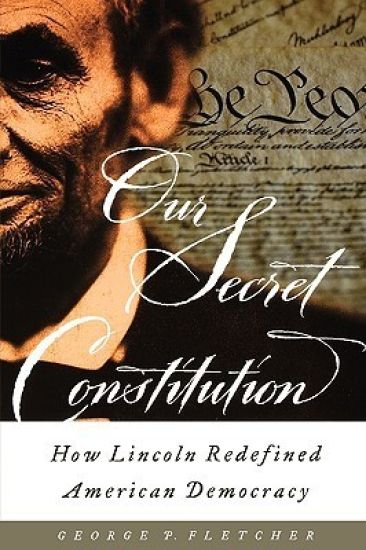
Americans hate and distrust their government. At the same time, Americans love and trust their government. These contradictory attitudes are resolved by Fletcher's novel interpretation of constitutional history. He argues that we have two constitutions-still living side by side-one that caters to freedom and fear, the other that satisfied our needs for security and social justice. The first constitution came into force in 1789. It stresses freedom, voluntary association, and republican elitism. The second constitution begins with the Gettysburg Address and emphasizes equality, organic nationhood, and popular democracy. These radical differences between our two constitutions explain our ambivalence and self-contradictory attitudes toward government. With September 11 the second constitution-which Fletcher calls the Secret Constitution-has become ascendant. When America is under threat, the nation cultivates its solidarity. It overcomes its fear and looks to government for protection and the pursuit of social justice. Lincoln's messages of a strong government and a nation that must "long endure" have never been more relevant to American politics. "Fletcher's argument has intriguing implications beyond the sweeping subject of this profoundly thought-provoking book."-The Denver Post

America is at war with terrorism. Terrorists must be brought to justice. We hear these phrases together so often that we rarely pause to reflect on the dramatic differences between the demands of war and the demands of justice, differences so deep that the pursuit of one often comes at the expense of the other. In this book, one of the country's most important legal thinkers brings much-needed clarity to the still unfolding debates about how to pursue war and justice in the age of terrorism. George Fletcher also draws on his rare ability to combine insights from history, philosophy, literature, and law to place these debates in a rich cultural context. He seeks to explain why Americans--for so many years cynical about war--have recently found war so appealing. He finds the answer in a revival of Romanticism, a growing desire in the post-Vietnam era to identify with grand causes and to put nations at the center of ideas about glory and guilt. Fletcher opens with unsettling questions about the nature of terrorism, war, and justice, showing how dangerously slippery the concepts can be. He argues that those sympathetic to war are heirs to the ideals of Byron, Fichte, and other Romantics in their belief that nations--not just individuals--must uphold honor and be held accountable for crimes. Fletcher writes that ideas about collective glory and guilt are far more plausible and widespread than liberal individualists typically recognize. But as he traces the implications of the Romantic mindset for debates about war crimes, treason, military tribunals, and genocide, he also shows that losing oneself in a grand cause can all too easily lead to moral catastrophe. A work of extraordinary intellectual power and relevance, the book will change how we think not only about world events, but about the conflicting individualist and collective impulses that tear at all of us.

This is a reprint of a book first published by Little, Brown in 1978. George Fletcher is working on a new edition which will be published by OUP in three volumes, the first of which is scheduled to appear in January 2001. Rethinking Criminal Law is still perhaps the most influential and often cited theoretical work on American criminal law. This reprint will keep this classic work available until the new edition can be published.
This is a brief introduction to the major issues in legal philosophy, intended for use as a secondary text in law schools, and in graduate and undergraduate courses in philosophy of law, jurisprudence and legal issues.
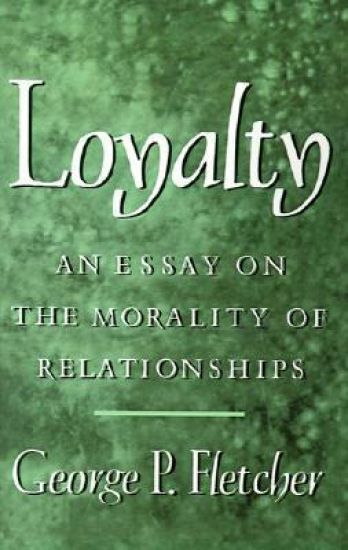
This book is an important contribution to the public debate on morality, politics, and the law, and is unique in its exploration of loyalty and its role in our personal and national identity.
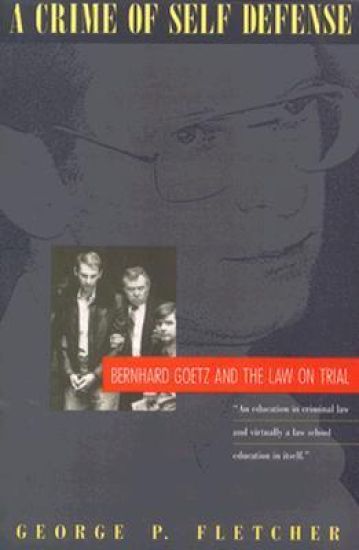
A Crime of Self-Defense: Bernhard Goetz and the Law on Trial
George P. Fletcher
University of Chicago Press
1990
nidottu
The popular press dubbed him "the subway vigilante" Bernhard Goetz, who on December 22, 1984, shot four black youths on a New York subway train when one of them asked for five dollars. Goetz claimed to have fired in self-defense, out of fear that the young men were about to rob him.