Kirjojen hintavertailu. Mukana 12 595 353 kirjaa ja 12 kauppaa.

Kirjailija

George P. Shultz

Kirjat ja teokset yhdessä paikassa: 8 kirjaa, julkaisuja vuosilta 1998-2020, suosituimpien joukossa Mr. Ambassador. Vertaile teosten hintoja ja tarkista saatavuus suomalaisista kirjakaupoista.

8 kirjaa

Kirjojen julkaisuhaarukka 1998-2020.

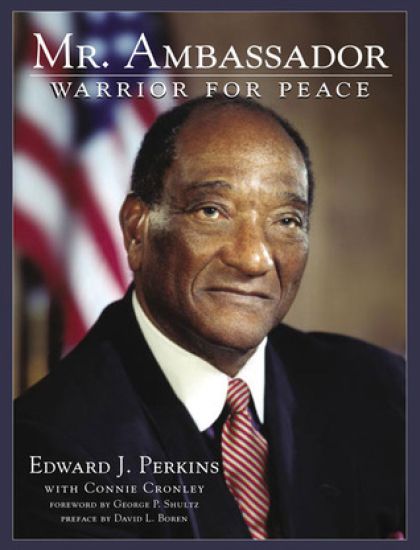
Mr. Ambassador

Mr. Ambassador

Edward J. Perkins; Connie Cronley; George P. Shultz

University of Oklahoma Press
2009
nidottu
""Apartheid South Africa was on fire around me.""So begins the memoir of Career Foreign Service Officer Edward J. Perkins, the first black United States ambassador to South Africa. In 1986, President Ronald Reagan gave him the unparalleled assignment: dismantle apartheid without violence.As he fulfilled that assignment, Perkins was scourged by the American press, despised by the Afrikaner government, hissed at by white South African citizens, and initially boycotted by black South African revolutionaries, including Archbishop Desmond Tutu. His advice to President-elect George H. W. Bush helped modify American policy and hasten the release of Nelson Mandela and others from prison.Perkins's up-by-your-bootstraps life took him from a cotton farm in segregated Louisiana to the white elite Foreign Service, where he became the first black officer to ascend to the top position of director general.This is the story of how one man turned the page of history.
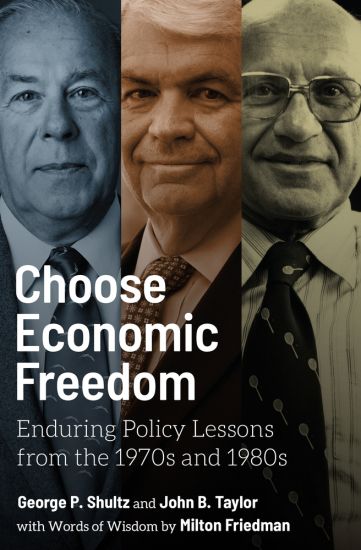
Choose Economic Freedom

Choose Economic Freedom

George P. Shultz; John B. Taylor

Hoover Institution Press,U.S.
2020
sidottu
What are the keys to good economic policy? George P. Shultz and John B. Taylor draw from their several decades of experience at the forefront of national economic policy making to show how market fundamentals beat politically popular government interventions—be they from Democrats or Republicans—as a recipe for success. Choose Economic Freedom reconstructs debates from the 1960s and 1970s about the use of wage and price controls as tools of policy, showing how brilliant economists can hold diametrically opposed views about the wisdom of using government intervention to spur the economy. Speeches and documents from the era include a recently unearthed memo from Arthur Burns, Federal Reserve chair, in 1971, in which he argues in favor of controls. Under Burns's guidance and in the face of stubborn inflation, Nixon introduced wage and price guidelines and freezes. But over the long run, these became a drag on the economy and ultimately failed. It wasn't until the Reagan administration that these controls were reversed, resulting in a vibrant economy. The words of iconic economist Milton Friedman—whose "free to choose" ethos inspired the free-market revolution of the Reagan era—along with lessons Shultz and Taylor learned from the front lines, demonstrate that tried-and-true economic policy works.
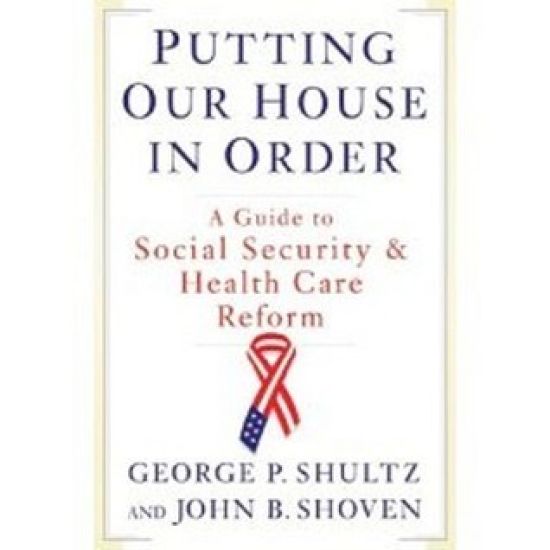
Putting Our House in Order

Putting Our House in Order

John B. Shoven; George P. Shultz

WW Norton Co
2008
sidottu
Of all the issues swirling around the 2008 election, the staggering projected costs for the upkeep of America's largest entitlement programs—Social Security, Medicare, and Medicaid—loom with gathering intensity. Government revenues alone cannot solve the problem, but a solution must be found. In this book George P. Shultz and John B. Shoven take a practical—and optimistic—look at the issues at hand, offering an agenda for reform that will make these essential programs solvent. Drawing on a trove of original research, they take stock of the current situation, consider plans on offer from major thinkers in the field, and chart a course toward a system that provides income for the elderly and universal access to health care in ways that are fiscally sound. This book is a must-read for anyone looking to make an informed decision about the country's future.
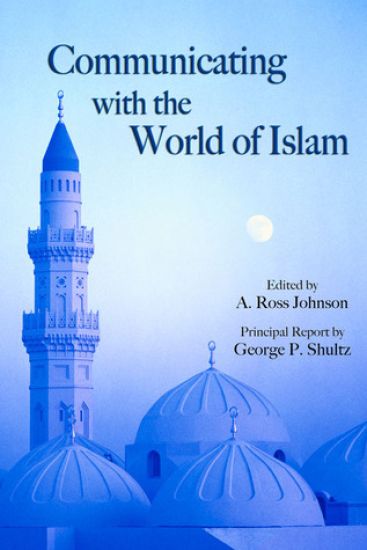
Communicating with the World of Islam

Communicating with the World of Islam

George P. Shultz

Hoover Institution Press,U.S.
2008
nidottu
Western broadcasts had a remarkable impact in the USSR and Eastern Europe during the cold war reaching both mass audiences and key elites. The effectiveness of these broadcasts was clearly attested to by the massive resources the communist regimes spent in trying to counter them. Communicating with the World of Islam draws from the lessons learned in the cold war broadcasting experience to suggest the best ways of organizing U.S. efforts to communicate with Islamic people around the globe. Drawn from discussions at the seminar "Communicating with the Islamic World," sponsored by the Annenberg Foundation Trust at Sunnylands, this report examines the impact of the Voice of America, Radio Liberty, the BBC, Radio Free Europe, and other broadcasting tools had and suggests how the United States can use these instruments today to counter extremism effectively, promote democracy, and improve understanding of the United States in the Islamic world. It details current broadcasting efforts into Islamic countries and the Muslim communities of Europe and explains each of the critical factors necessary to influence the world of Islam in a positive direction, such as stressing women's content programming, maintaining pressure on the rulers of Qatar over the content and programming of Al Jazeera, and keeping news content candid, tailored to local audiences, and unsparingly accurate.
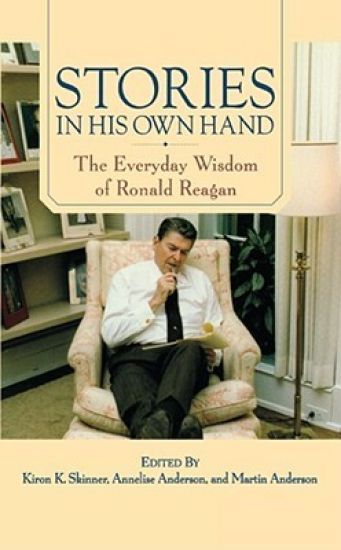
Stories in His Own Hand

Stories in His Own Hand

George P. Shultz

The Free Press
2007
pokkari
Ronald Reagan loved to tell stories. Sometimes he used them to break the ice, or to prove a point, but very often he used them to inspire, to uplift, and to remind his listeners of what matters most in life. Recently, in the archives of the Reagan Library, researcher Kiron Skinner unearthed a trove of handwritten Reagan manuscripts from the late 1970s, over 650 in all, which included some priceless examples of Reagan's storytelling abilities. Stories in His Own Hand reproduces the best of these deeply personal anecdotes.Skinner, along with longtime Reagan aides and scholars Annelise and Martin Anderson, has carefully documented the extent of Reagan's manuscripts, which originated as radio transcripts. Earlier, in the bestselling Reagan, In His Own Hand, the editors compiled a broad range of Reagan's policy-oriented essays from this collection, showing an astonishing breadth of vision concerning nearly every issue he would face as president. Here they reveal a different Ronald Reagan: not the political but the personal man, not the executive but the teacher.Here is Reagan on men and women, life and death, family and friends. Here is a man who loved to tell a story to make us all stop, listen, and think about what it means to be human.
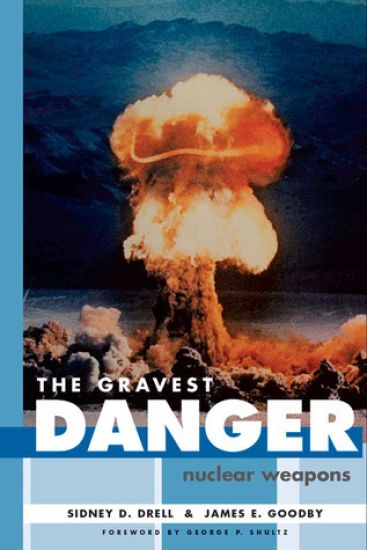
The Gravest Danger

The Gravest Danger

Sidney D. Drell; James E. Goodby; George P. Shultz

Hoover Institution Press,U.S.
2003
nidottu
The mortal danger of nuclear weapons is unique in its terrifying potential for devastation on an unprecedented and unimaginable scale. In this book, Sidney D. Drell and James E. Goodby—each with more than twenty years' experience in national security issues both in public and private capacities—review the main policy issues surrounding nonproliferation of nuclear weapons. They address the specific actions that the community of nations—with American leadership—should take to confront and turn back the nuclear danger that imperils humanity. The nuclear genie, say the authors, cannot be put back in the bottle. Our most urgent task as a nation today is to successfully manage, contain, and reduce the grave danger of nuclear weapons—whether in the hands of adversaries or friendly states. This book hopes to stimulate active public dialogue on this important subject.
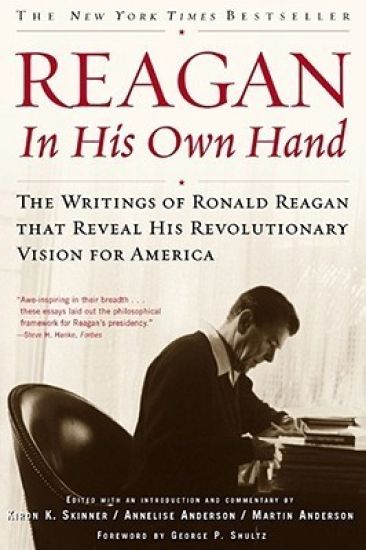
Reagan, In His Own Hand

Reagan, In His Own Hand

George P. Shultz

The Free Press
2002
pokkari
During the eight years that Ronald Reagan served as president of the United States, a period of sustained economic prosperity and increased American power on the world stage, many of his advisers claimed authorship of the ideas that comprised 'the Reagan revolution.' The press, in turn, lent credence to the idea that President Reagan was merely a skilled communicator of those ideas, the consummate actor, not the director or producer. Few people realised that Reagan had left a paper trail of original writings that make clear he was the intellectual powerhouse behind his administration's landmark policies. Hidden in archives for more than twenty years, Reagan's pre-presidential writings reveal an active mind wrestling with the problems of a sluggish economy, social pathologies, welfare, reform and the Cold War struggle with the Soviet Union. Selected and annotated by three leading scholars, two of whom were among Reagan's principal domestic-policy advisers, these writings unlock the puzzle of the man so many historians have tried to comprehend, with so little success. A publishing landmark, REAGAN, IN HIS OWN HAND will redefine the way we think about American history of the past quarter-century, and about the fortieth American president.
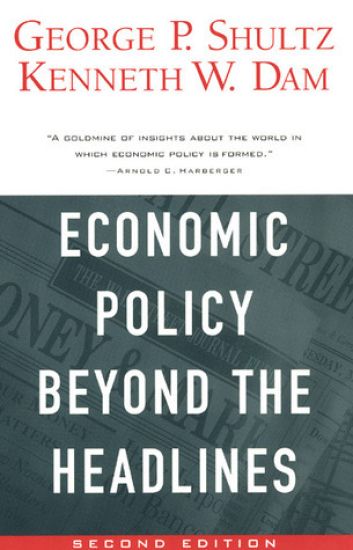
Economic Policy Beyond the Headlines

Economic Policy Beyond the Headlines

George P. Shultz; Kenneth W. Dam

University of Chicago Press
1998
nidottu
Drawing from their experience as government insiders, George P. Shultz and Kenneth W. Dam show how economic policy is shaped at the highest levels of government. They reveal the interconnections between economic, social, and international policy, covering issues such as the advocacy system and the role of the individual in shaping policy. A new chapter, 'A Changed World,' explores the various influences of our increasingly global economy on economic strategy. With rare candor, authority and breadth of vision, Shultz and Dam have produced a brilliant introduction to economic policy, its principles, and practice. "A model of brevity and lucidity ...[Economic Policy Beyond the Headlines] incorporates a unique and rewarding blend of economic reasoning with a high level of political awareness ...enriched by the wide personal experience in government of the authors."--Albert T. Sommers, Across the Board "[Shultz and Dam] help foreign readers to understand why the world looks so different from Washington...This book should provide the model."--The Economist "A wise and valuable book showing great insight into the realities of economic policy making."--Henry A. Kissinger