Kirjojen hintavertailu. Mukana 12 595 353 kirjaa ja 12 kauppaa.
Kirjailija
George Pratt
Kirjat ja teokset yhdessä paikassa: 16 kirjaa, julkaisuja vuosilta 1996-2025, suosituimpien joukossa A Performer's Guide to Music of the Baroque Period. Vertaile teosten hintoja ja tarkista saatavuus suomalaisista kirjakaupoista.
This stimulating guide will help students and their teachers to achieve stylish performances of music of the Baroque period. Individual chapters from leading experts focus on historical background, notation and interpretation, and sources and editions, presenting the latest thinking on performance in a clear, helpful and practical way. There are also dedicated chapters of specialist advice for keyboard, string and wind players, and singers, plus a recommended playlist of illustrative, authoritative recordings. Fully illustrated throughout with many music examples, facsimiles and pictures, this is a valuable resource for students of the Baroque period which will also add to the knowledge and understanding of amateur and professional musicians.
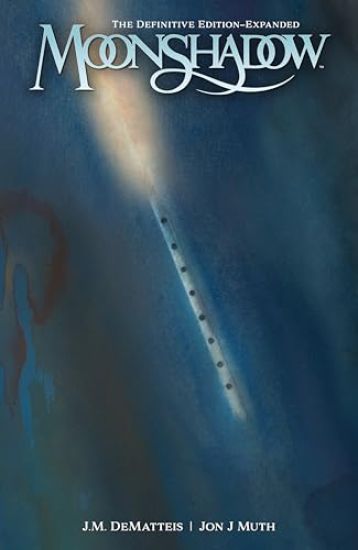
A romantic, unreliable narrator leads us through his interplanetary coming-of-age story. Known as America's first fully painted graphic novel, the poetic, philosophical, and Kirby & Eisner Award-nominated Moonshadow receives a new softcover treatment. Enhanced with a new painted cover by Jon J Muth and an expanded bonus section featuring concept art, early notes from the creative team, and script pages from writer J.M. DeMatteis, this influential, timeless "fairy tale for adults" also includes the Farewell Moonshadow illustrated novella. With gorgeous watercolor artwork by Jon J Muth and contributions from Kent Williams, Kevin Nowlan, and others
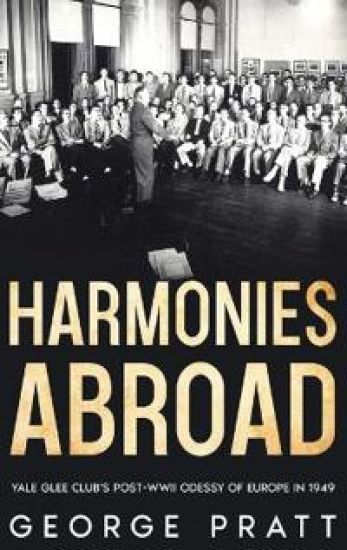
In the summer of 1949 the Yale Glee Club took its first post-World War II tour abroad. The Club consisted of 65 young men, nearly all undergraduate students at Yale University. Some were combat veterans of WW II; others were recent high school graduates. All were devoted singers. The tour was planned for four weeks through Scandinavia, followed by two weeks in Germany, hosted by the U.S. Government as a good-will offering to the German people. In those two weeks the Glee Club gave fifteen concerts at different universities in Germany. They met with German students and shared views about the state of the world.The tour is described by one of the Glee Club members, drawing on his recollections of those events in considerable detail, considering that he was recalling them from over sixty-five years earlier. Interestingly, the tour came at the start of the Cold War with Russia, for just before the group got to Germany, Russia closed off Berlin from all commercial traffic, trying to starve out the western occupants of Berlin. The U.S. and other western powers responded by establishing a 24/7 airlift of supplies. The Glee Club's visit came in the middle of and was affected by those events. The book provides a glimpse of a world recovering from the ravages of a mighty war, as seen by a 21-year-old who at the time had no experience in traveling.
Methods Of Constitutional Reform: With Reasons Why No Constitutional Convention Should Be Called By The General Assembly has been considered by academicians and scholars of great significance and value to literature. This forms a part of the knowledge base for future generations. So that the book is never forgotten we have represented this book in a print format as the same form as it was originally first published. Hence any marks or annotations seen are left intentionally to preserve its true nature.
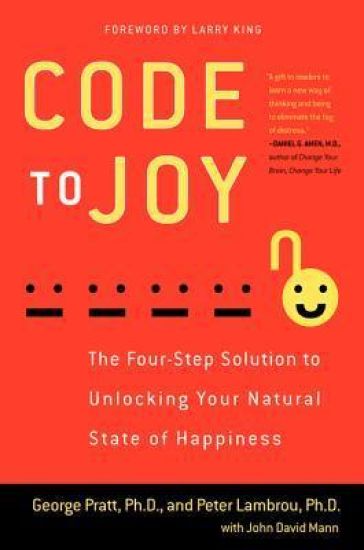
Larry King wrote the foreword. Beneath the surface-undiagnosed, untreated, and often unspoken-there is a pervasive cloud of unease affecting virtually everyone. According to Drs. George Pratt and Peter Lambrou, this fog of distress is the result of events in our past that have left psychological impressions. They're the reason so many people feel unloved, guilty, ashamed, fearful, and unsafe. It's the basis of addictions, sleeplessness, bad habits, conflict and unsatisfying relationships. It is why so many can't seem to be able get out of their own way. These impressions are so deeply embedded in our psyche that often we're not consciously aware of them. The revolutionary four-step solution helps readers identify the negative blocking beliefs and defuse them in a matter of minutes. The four-step process forms the heart of "Code to Joy". Identify: Identify the underlying negative beliefs at the root of our distress, and locate the events in our past that may have triggered them. Clear: Rebalance the body's energy system to prepare it for the reorganization to follow-a sort of clearing the decks in anticipation for repatterning. Repattern: Release those long-standing blocking beliefs and encode a new set of positive beliefs in their place. Anchor: Create a stable foundation so that the effects of the first three steps will be deeply felt and long lasting. Through this proven approach, "Code to Joy" helps eliminate the fears, anxieties, and buried emotional debris that prevent us from living life to the fullest, and, more importantly, helps us rediscover our innate happiness.
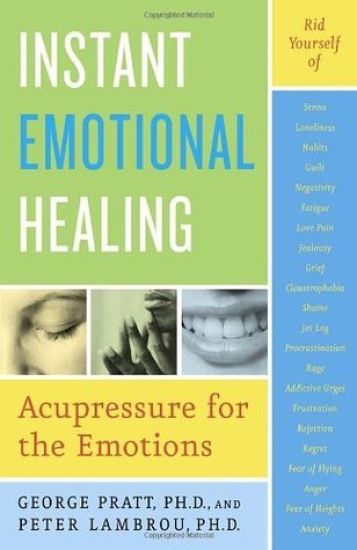
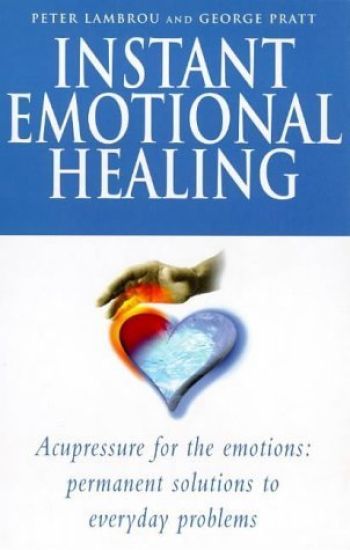
Does your fear of flying make travel with friends and family impossible? Are you having trouble coping with the loss of a loved one or forgiving yourself for a mistake you made long ago? For the millions of people who suffer from phobias, anxieties, or distressing emotions such as anger, guilt, and grief, the breakthrough science of Thought Field Therapy--an easy-to-use practice often referred to as "acupressure for the emotions"--can make a remarkable difference. In this groundbreaking book, psychologists Peter Lambrou and George Pratt make their highly successful techniques available to everyone through simple exercises that anyone can use to treat everyday emotional roadblocks with immediate and permanent results. A blend of Western psychotherapy and Chinese medicine, Thought Field Therapy (or TFT) uses the body's meridian energy systems to treat emotional issues that can take years to unravel through traditional, talk-based therapy. A combination of breathing and relaxation exercises, affirmations, and tapping on specific pressure points on the body, TFT can instantly eliminate problems such as a fear of flying or public speaking, addictive urges, or painful emotions such as embarrassment or regret. Used on thousands of people with a 95 percent success rate, the step-by-step methods in Instant Emotional Healing now allow you to master this amazingly simple, astonishingly effective practice for yourself--and open the door to a lifetime of emotional control and well-being.
Shows you how to give yourself instant relief from negative emotions. Drawing on a combination of the meridian systems of Eastern acupuncture and Western cognitive ideas, the author offers step-by-step instructions on how to use key pressure points on your body, breathing techniques and focused thought to overcome negative feelings.
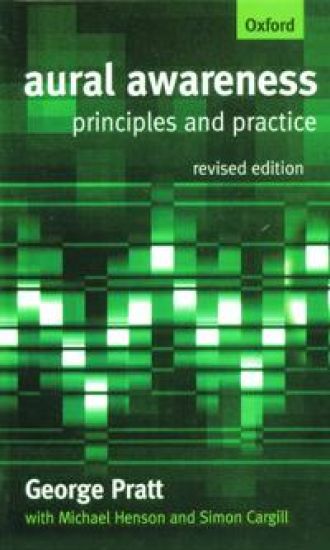
Traditional aural training is heavily biased towards the perception and identification of pitch and rhythm. But George Pratt argues in this book that in these days of CDs and cassette recorders much of this area of the subject can best be worked on alone. He demonstrates how, by tailoring tasks to individual needs, every student can make some encouraging progess in these aspects of music. But this also makes time available for developing the perception of other musical elements just as significant yet often neglected because of their more abstract and qualitative nature—elements such as timbre, texture and density; compass, range, and tessitura; dynamics and articulation; ordering music in structures and placing it in space. The chapters on these areas break new ground. They demonstrate how these `elements', once perceived and analysed, are incorporated into the skills which musicians need—to notate sound quality accurately, to read or `image' the implications of notation beyond though including pitch and rhythm; to play and sing by ear; to improvise and to memorize, not only 'right notes' but the subtle qualities and nuances which bind them into coherent music. This book was first published by Open University Press, and at that stage was primarily addressed to groups of music students and their teachers, in universities, colleges, conservatoires, and sixth forms. But, by a happy accident of timing, George Pratt was then invited to be a member of the National Curriculum Music Working Group, and many of the ideas here, in particular the identification and codification of musical 'elements', were fed into their thinking. The present book has been substantially revised to take account of what are now the statutory requirements of the National Curriculum in Music. Much of the material in it is either already accessible for pupils in the earlier years at school or is easily adapted by imaginative teachers. In addition, every section leads towards open-ended `do-it-yourself' exercises and experiments which can be used by individuals. This follows the pattern established in Professor Pratt's The Dynamics of Harmony: Principles and Practice (OUP, 1996), and is designed to encourage open-ended exploration generated by musicians's individual needs and enthusiasms. This freedom to adapt exercises includes using them in any musical context. Timbre is as important to a rock group as to a classical orchestra playing on period instruments; performing by ear and from memory are as essential for handing down the un-notated music of some non-Western traditions as for a concert soloist; everyone who owns a CD can enhance their enjoyment of it by recognising the artistry and technical skills which have created it. So the book encourages self-reliance and the confidence to begin to discover for oneself music of any age, of any culture.
Traditional aural training is heavily biased towards the perception and identification of pitch and rhythm. But George Pratt argues in this book that in these days of CDs and cassette recorders much of this area of the subject can best be worked on alone. He demonstrates how, by tailoring tasks to individual needs, every student can make some encouraging progess in these aspects of music. But this also makes time available for developing the perception of other musical elements just as significant yet often neglected because of their more abstract and qualitative nature—elements such as timbre, texture and density; compass, range, and tessitura; dynamics and articulation; ordering music in structures and placing it in space. The chapters on these areas break new ground. They demonstrate how these `elements', once perceived and analysed, are incorporated into the skills which musicians need—to notate sound quality accurately, to read or `image' the implications of notation beyond though including pitch and rhythm; to play and sing by ear; to improvise and to memorize, not only 'right notes' but the subtle qualities and nuances which bind them into coherent music. This book was first published by Open University Press, and at that stage was primarily addressed to groups of music students and their teachers, in universities, colleges, conservatoires, and sixth forms. But, by a happy accident of timing, George Pratt was then invited to be a member of the National Curriculum Music Working Group, and many of the ideas here, in particular the identification and codification of musical 'elements', were fed into their thinking. The present book has been substantially revised to take account of what are now the statutory requirements of the National Curriculum in Music. Much of the material in it is either already accessible for pupils in the earlier years at school or is easily adapted by imaginative teachers. In addition, every section leads towards open-ended `do-it-yourself' exercises and experiments which can be used by individuals. This follows the pattern established in Professor Pratt's The Dynamics of Harmony: Principles and Practice (OUP, 1996), and is designed to encourage open-ended exploration generated by musicians's individual needs and enthusiasms. This freedom to adapt exercises includes using them in any musical context. Timbre is as important to a rock group as to a classical orchestra playing on period instruments; performing by ear and from memory are as essential for handing down the un-notated music of some non-Western traditions as for a concert soloist; everyone who owns a CD can enhance their enjoyment of it by recognising the artistry and technical skills which have created it. So the book encourages self-reliance and the confidence to begin to discover for oneself music of any age, of any culture.
This is a readable and imaginative book presenting, with infectious enthusiasm, a sensible simplification of the main processes of classical harmony in the Bach-Schubert period. George Pratt's explanations of concepts such as 'real' and 'substitute' chords. of false distinctions between 'major' and 'minor' and of the simple basis of seemingly complex chromatic harmony enables readers to grasp the principles of harmonic progression, and to see most progressions as aform of 'dominant-powered' movement.He focuses his study on Bach chorales, Mozart piano sonatas, and a Schubert song cycle, thereby providing depth, variety and a realistic sense of a context of 'real music' to his explanations and to the exercises. But he also offers the reader an immediate invitation to apply the same principles to an immense range of musical literature from Monteverdi to Scott Joplin.