Kirjojen hintavertailu. Mukana 12 595 353 kirjaa ja 12 kauppaa.

Kirjailija

George Slusser

Kirjat ja teokset yhdessä paikassa: 4 kirjaa, julkaisuja vuosilta 2014-2023, suosituimpien joukossa Science Fiction. Vertaile teosten hintoja ja tarkista saatavuus suomalaisista kirjakaupoista.

4 kirjaa

Kirjojen julkaisuhaarukka 2014-2023.

Science Fiction

Science Fiction

George Slusser; N. Katherine Hayles; Gregory Benford

BLOOMSBURY PUBLISHING PLC
2023
nidottu
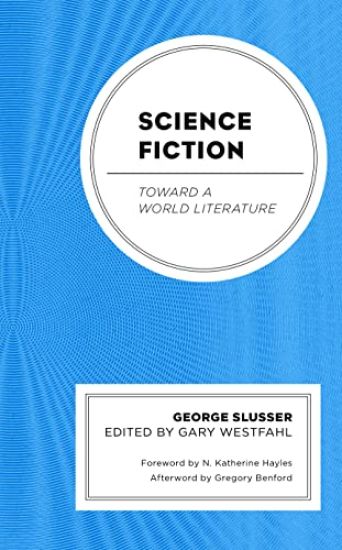
In what N. Katherine Hayles describes as "this enormously ambitious posthumous volume," renowned scholar George Slusser offers a definitive version of the argument about the history of science fiction that he developed throughout his career: that several important ideas and texts, routinely overlooked in other critical studies, made significant contributions to the creation of modern science fiction as it developed into a truly global literature. He explores how key thinkers like René Descartes, Benjamin Constant, Thomas DeQuincey, Guy du Maupassant, J.D. Bernal, and Ralph Waldo Emerson influenced and are reflected in twentieth-century science fiction stories from the United States, Great Britain, France, Germany, Poland, and Russia. The conclusion begins with Slusser’s overview of global science fiction in the twenty-first century and discusses recent developments in countries like China, Romania, and Israel. Hayles’s foreword provides a useful summation of the book’s contents, while science fiction writer Gregory Benford contributes an afterword providing a personal perspective on the life and thoughts of his longtime friend. The book was edited by Slusser’s former colleague Gary Westfahl, a distinguished scholar in his own right.
Science Fiction

Science Fiction

George Slusser; N. Katherine Hayles; Gregory Benford

BLOOMSBURY PUBLISHING PLC
2022
sidottu
In what N. Katherine Hayles describes as "this enormously ambitious posthumous volume," renowned scholar George Slusser offers a definitive version of the argument about the history of science fiction that he developed throughout his career: that several important ideas and texts, routinely overlooked in other critical studies, made significant contributions to the creation of modern science fiction as it developed into a truly global literature. He explores how key thinkers like René Descartes, Benjamin Constant, Thomas DeQuincey, Guy du Maupassant, J.D. Bernal, and Ralph Waldo Emerson influenced and are reflected in twentieth-century science fiction stories from the United States, Great Britain, France, Germany, Poland, and Russia. The conclusion begins with Slusser’s overview of global science fiction in the twenty-first century and discusses recent developments in countries like China, Romania, and Israel. Hayles’s foreword provides a useful summation of the book’s contents, while science fiction writer Gregory Benford contributes an afterword providing a personal perspective on the life and thoughts of his longtime friend. The book was edited by Slusser’s former colleague Gary Westfahl, a distinguished scholar in his own right.
Gregory Benford

Gregory Benford

George Slusser

University of Illinois Press
2014
nidottu
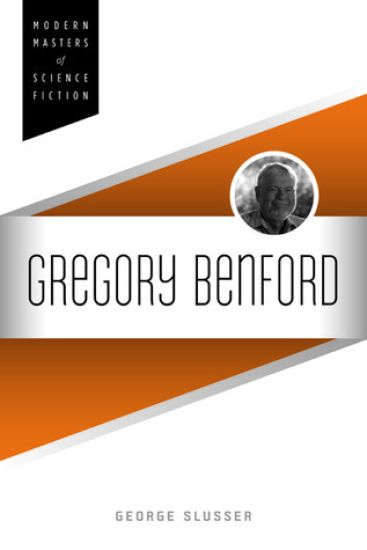
Gregory Benford is perhaps best known as the author of Benford's law of controversy: "Passion is inversely proportional to the amount of real information available." That maxim is a quotation from Timescape, Benford's Nebula and Campbell Award-winning 1980 novel, which established his work as an exemplar of "hard science fiction," dedicated to working out the consequences of modern science rather than substituting pseudoscience for fantasy. Like many other current science fiction writers, Benford has tackled the major genres: space travel, time travel, technology running amok, prolonged longevity, searing apocalyptic cosmic events, and alien life, which he theorizes to be more likely viral than intelligent. An astrophysicist by training and profession, Benford has published more than twenty novels, over one hundred short stories, some fifty essays, and myriad articles that display both his scientific rigor as well as a recognition of literary traditions.In this study, George Slusser explores the extraordinary, seemingly inexhaustible display of creative energy in Gregory Benford's life and work. Presenting Benford's ideas on science and the writing of science fiction, the volume addresses the writer's literary production and his place in contemporary science fiction. By identifying direct sources and making parallels with other works and writers, Slusser reveals the vast scope of Benford's knowledge, both of literature and of the major scientific and philosophical issues of our time. Slusser also discusses Benford's numerous scientific articles and nonfiction books and includes a new interview with Benford.
Gregory Benford

Gregory Benford

George Slusser

University of Illinois Press
2014
sidottu
Gregory Benford is perhaps best known as the author of Benford's law of controversy: "Passion is inversely proportional to the amount of real information available." That maxim is a quotation from Timescape, Benford's Nebula and Campbell Award-winning 1980 novel, which established his work as an exemplar of "hard science fiction," dedicated to working out the consequences of modern science rather than substituting pseudoscience for fantasy. Like many other current science fiction writers, Benford has tackled the major genres: space travel, time travel, technology running amok, prolonged longevity, searing apocalyptic cosmic events, and alien life, which he theorizes to be more likely viral than intelligent. An astrophysicist by training and profession, Benford has published more than twenty novels, over one hundred short stories, some fifty essays, and myriad articles that display both his scientific rigor as well as a recognition of literary traditions.In this study, George Slusser explores the extraordinary, seemingly inexhaustible display of creative energy in Gregory Benford's life and work. Presenting Benford's ideas on science and the writing of science fiction, the volume addresses the writer's literary production and his place in contemporary science fiction. By identifying direct sources and making parallels with other works and writers, Slusser reveals the vast scope of Benford's knowledge, both of literature and of the major scientific and philosophical issues of our time. Slusser also discusses Benford's numerous scientific articles and nonfiction books and includes a new interview with Benford.