Kirjojen hintavertailu. Mukana 12 087 640 kirjaa ja 12 kauppaa.

Kirjailija

George Steiner

Kirjat ja teokset yhdessä paikassa: 30 kirjaa, julkaisuja vuosilta 1973-2025, suosituimpien joukossa Martin Heidegger. Vertaile teosten hintoja ja tarkista saatavuus suomalaisista kirjakaupoista.

30 kirjaa

Kirjojen julkaisuhaarukka 1973-2025.

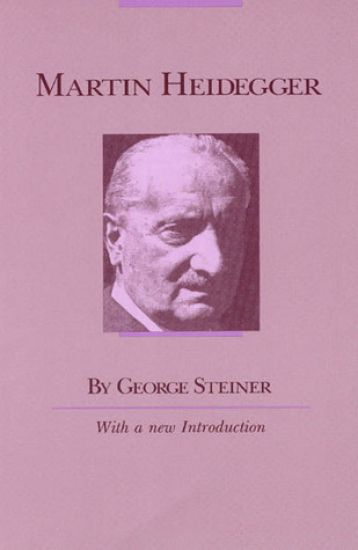
Martin Heidegger

Martin Heidegger

George Steiner

University of Chicago Press
1991
nidottu
With characteristic lucidity and style, Steiner makes Heidegger's immensely difficult body of work accessible to the general reader. In a new introduction, Steiner addresses language and philosophy and the rise of Nazism. "It would be hard to imagine a better introduction to the work of philosopher Martin Heidegger."—George Kateb, The New Republic
Darling, Yours Always: The WWII Letters of Peggy and George Steiner, Volume I, 2nd edition
The first volume of Peggy and George Steiner's wartime letters written from 1941-1943. This second edition includes updated information about George's stateside service thanks to the discovery of George's wartime portfolio of documents, including a copy of his military records, by one of his grandsons.
de la Bible a Kafka

de la Bible a Kafka

George Steiner

Les Belles Lettres
2022
nidottu
Les livres indispensables nous accablent avec plus de force encore que la mort de l'aime. Ce qu'ils ont en commun, ce qui rattache les rares exemples profanes au canonique, c'est bel et bien leur statut de textes sacres, de convocation et d'assignation a l'humanite. Ils nous appellent et nous mobilisent. Le premier coup sur le crane nous oblige a garder les yeux ouverts. L'Iliade et l'Odyssee, la Bible, Peguy, Kafka, Husserl, Kierkegaard... George Steiner nous donne a lire ici quelques-uns de ces textes indispensables ou notre culture contemporaine croise la tradition. C'est notre patrimoine qu'il nous transmet par ces lectures. Peut-etre pour faire de nous de veritables heritiers.
The Poetry of Thought

The Poetry of Thought

George Steiner

New Directions Publishing Corporation
2014
nidottu
With his hallmark discernment, George Steiner presents in The Poetry of Thought his magnum opus, staking out his claim for the essential oneness of great thought and great style. Steiner spans the entire history of Western philosophy as it entwines with literature, finding that, as Sartre stated, in all philosophy there is "a hidden literary prose."
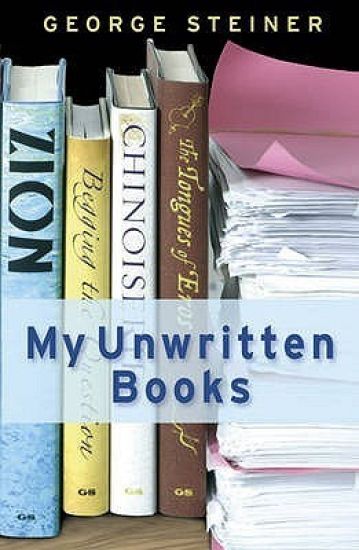
My Unwritten Books

My Unwritten Books

George Steiner

New Directions Publishing Corporation
2014
pokkari
Steiner did not write the books because intimacies and indiscretions were too threatening. Because the topic brought too much pain. Because its emotional or intellectual challenge proved beyond his capacities.The actual themes range widely and defy conventional taboos: the torment of the gifted when they live among the very great; the experience of sex in different languages; Zionism; a more intense love for animals than for human beings; the costly privilege of exile; a theology of emptiness.
Warum Denken traurig macht

Warum Denken traurig macht

George Steiner

SUHRKAMP VERLAG
2012
pokkari
Einen brillanten Essay, eine Variation in zehn Sätzen über Glanz und Elend des Denkens legt George Steiner hier vor. Was geschieht in unserem Geist, wenn wir zu grübeln beginnen? Ist es möglich, "gradlinig" zu denken? Und ist es ein Grund zur Verzweiflung, daß man selbst in Momenten größter Intimität die Gedanken des Geliebten nicht erfassen kann?
The Poetry of Thought

The Poetry of Thought

George Steiner

New Directions Publishing Corporation
2012
sidottu
With his hallmark forceful discernment, George Steiner presents in The Poetry of Thought his magnum opus: an examination of more than two millennia of Western culture, staking out his claim for the essential oneness of great thought and great style. Sweeping yet precise, moving from essential detail to bracing illustration, Steiner spans the entire history of philosophy in the West as it entwines with literature, finding that, as Sartre stated, in all philosophy there is a hidden literary prose. The poetic genius of abstract thought, Steiner believes, is lit, is made audible. Argument, even analytic, has its drumbeat. It is made ode. What voices the closing movements of Hegel s Phenomenology better than Edith Piaf s non de non, a twofold negation which Hegel would have prized? This essay is an attempt to listen more closely.
Business, Government, and Society: A Managerial Perspective

Business, Government, and Society: A Managerial Perspective

John Steiner; George Steiner

McGraw Hill Higher Education
2011
sidottu
Business, Government, and Society, by Steiner and Steiner, tells the story of how forces in business, government and society shape our world. While current events move rapidly over the surface of the subject matter, the underlying principles and relationships at its core lie undisturbed. This popular textbook is equipped with new chapter opening stories and cases that reflect current concerns in a changing environment. The thorough blend of history and today’s events help students understand the entire context of forces at work in business, government, and society. A new emphasis on management issues and processes allows students to apply the principles they learn to real world situations.
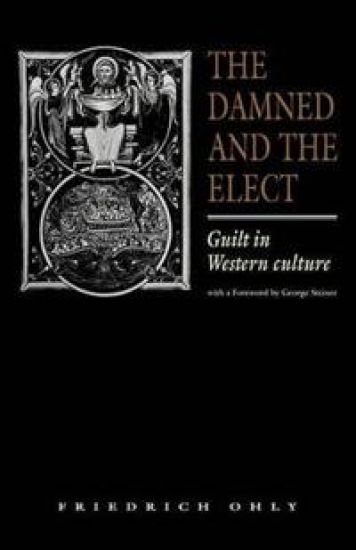
The Damned and the Elect

The Damned and the Elect

Friedrich Ohly; George Steiner

Cambridge University Press
2010
pokkari
The stark theological polarities of damnation and salvation have haunted representations of guilt in Western culture for thousands of years. Friedrich Ohly's classic study The Damned and the Elect, first published in English in 1992, offers a comparative cultural history of figures such as Oedipus, Judas and Faust, from antiquity, through the Middle Ages, into modern times. Looking at the works of writers such as Sophocles, Dante, Marlowe, Bunyan, Goethe, and Thomas Mann (and illustrating his ideas with reference to representation in the visual arts), Ohly's wide-ranging arguments weave deftly across different cultures and periods to illuminate one of the most salient themes in Western literature.
My Unwritten Books

My Unwritten Books

George Steiner

Weidenfeld Nicolson
2009
pokkari
George Steiner, the eminent professor of English at Cambridge and Geneva universities, has outlined seven books he has never written, but has always wanted to write, in seven sections.In this fiercely original and audacious work, George Steiner tells of seven books which he did not write. Because intimacies and indiscretions were too threatening. Because the topic brought too much pain. Because its emotional or intellectual challenge proved beyond his capacities.The actual themes range widely and defy conventional taboos: the torment of the gifted when they live among, when they confront, the very great; the experience of sex in different languages; a love for animals greater than for human beings; the costly privilege of exile; a theology of emptiness.Yet a unifying perception underlies this diversity. The best we have or can produce is only the tip of the iceberg. Behind every good book, as in a lit shadow, lies the book which remained unwritten, the one that would have failed better.
Reykjavik 1972

Reykjavik 1972

Harry Golombek; George Steiner

Hardinge Simpole Publishing
2007
pokkari
The world chess championship between Boris Spassky and Bobby Fischer at Reykjavik in 1972 was the most widely publicised and eagerly analysed beforehand of any chess match to date. It seized the attention of the world's press and media in general in unprecedented fashion and inspired more books and column inches than any chess contest before or since. Hardinge Simpole now commemorate this stellar chess clash by reprinting the eye witness accounts by Grandmaster Emeritus Harry Golombek OBE and Professor George Steiner. Grandmaster Golombek analyses the moves while Professor Steiner searches for the meaning behind the circus. To top it all, Arthur Koestler, one of the keenest intellects of the 20th century, adds an introduction to complete a remarkable tour de force of intellectual exegesis of a great turning point in world chess.
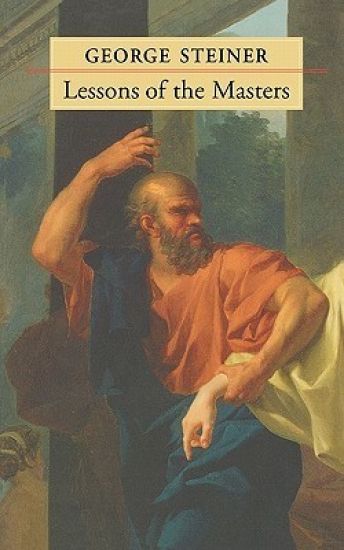
Lessons of the Masters

Lessons of the Masters

George Steiner

Harvard University Press
2005
nidottu
When we talk about education today, we tend to avoid the rhetoric of "mastery," with its erotic and inegalitarian overtones. But the charged personal encounter between master and disciple is precisely what interests George Steiner in this book, a sustained reflection on the infinitely complex and subtle interplay of power, trust, and passions in the most profound sorts of pedagogy. Based on Steiner's Norton Lectures on the art and lore of teaching, Lessons of the Masters evokes a host of exemplary figures, including Socrates and Plato, Jesus and his disciples, Virgil and Dante, Heloise and Abelard, Tycho Brahe and Johann Kepler, the Baal Shem Tov, Confucian and Buddhist sages, Edmund Husserl and Martin Heidegger, Nadia Boulanger, and Knute Rockne.Pivotal in the unfolding of Western culture are Socrates and Jesus, charismatic masters who left no written teachings, founded no schools. In the efforts of their disciples, in the passion narratives inspired by their deaths, Steiner sees the beginnings of the inward vocabulary, the encoded recognitions of much of our moral, philosophical, and theological idiom. He goes on to consider a diverse array of traditions and disciplines, recurring throughout to three underlying themes: the master's power to exploit his student's dependence and vulnerability; the complementary threat of subversion and betrayal of the mentor by his pupil; and the reciprocal exchange of trust and love, of learning and instruction between master and disciple. Forcefully written, passionately argued, Lessons of the Masters is itself a masterly testament to the high vocation and perilous risks undertaken by true teacher and learner alike.
Grammars of Creation

Grammars of Creation

George Steiner

Yale University Press
2002
nidottu
"We have no more beginnings," George Steiner begins in this, his most radical book to date. A far-reaching exploration of the idea of creation in Western thought, literature, religion, and history, this volume can fairly be called a magnum opus. He reflects on the different ways we have of talking about beginnings, on the "core-tiredness" that pervades our end-of-the-millennium spirit, and on the changing grammar of our discussions about the end of Western art and culture. With his well-known elegance of style and intellectual range, Steiner probes deeply into the driving forces of the human spirit and our perception of Western civilization's lengthening afternoon shadows. Roaming across topics as diverse as the Hebrew Bible, the history of science and mathematics, the ontology of Heidegger, and the poetry of Paul Celan, Steiner examines how the twentieth century has placed in doubt the rationale and credibility of a future tense-the existence of hope. Acknowledging that technology and science may have replaced art and literature as the driving forces in our culture, Steiner warns that this has not happened without a significant loss. The forces of technology and science alone fail to illuminate inevitable human questions regarding value, faith, and meaning. And yet it is difficult to believe that the story out of Genesis has ended, Steiner observes, and he concludes this masterful volume of reflections with an eloquent evocation of the endlessness of beginnings.