Kirjojen hintavertailu. Mukana 12 390 323 kirjaa ja 12 kauppaa.

Kirjailija

George Steinmetz

Kirjat ja teokset yhdessä paikassa: 8 kirjaa, julkaisuja vuosilta 2007-2025, suosituimpien joukossa Human Planet. Vertaile teosten hintoja ja tarkista saatavuus suomalaisista kirjakaupoista.

8 kirjaa

Kirjojen julkaisuhaarukka 2007-2025.

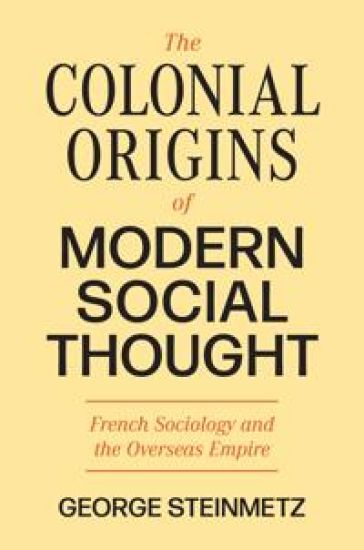
The Colonial Origins of Modern Social Thought

The Colonial Origins of Modern Social Thought

George Steinmetz

PRINCETON UNIVERSITY PRESS
2025
pokkari
A new history of French social thought that connects postwar sociology to colonialism and empireIn this provocative and original retelling of the history of French social thought, George Steinmetz places the history and development of modern French sociology in the context of the French empire after World War II. Connecting the rise of all the social sciences with efforts by France and other imperial powers to consolidate control over their crisis-ridden colonies, Steinmetz argues that colonial research represented a crucial core of the renascent academic discipline of sociology, especially between the late 1930s and the 1960s. Sociologists, who became favored partners of colonial governments, were asked to apply their expertise to such “social problems” as detribalization, urbanization, poverty, and labor migration. This colonial orientation permeated all the major subfields of sociological research, Steinmetz contends, and is at the center of the work of four influential scholars: Raymond Aron, Jacques Berque, Georges Balandier, and Pierre Bourdieu.In retelling this history, Steinmetz develops and deploys a new methodological approach that combines attention to broadly contextual factors, dynamics within the intellectual development of the social sciences and sociology in particular, and close readings of sociological texts. He moves gradually toward the postwar sociologists of colonialism and their writings, beginning with the most macroscopic contexts, which included the postwar “reoccupation” of the French empire and the turn to developmentalist policies and the resulting demand for new forms of social scientific expertise. After exploring the colonial engagement of researchers in sociology and neighboring fields before and after 1945, he turns to detailed examinations of the work of Aron, who created a sociology of empires; Berque, the leading historical sociologist of North Africa; Balandier, the founder of French Africanist sociology; and Bourdieu, whose renowned theoretical concepts were forged in war-torn, late-colonial Algeria.

The Colonial Origins of Modern Social Thought

The Colonial Origins of Modern Social Thought

George Steinmetz

PRINCETON UNIVERSITY PRESS
2023
sidottu
A new history of French social thought that connects postwar sociology to colonialism and empireIn this provocative and original retelling of the history of French social thought, George Steinmetz places the history and development of modern French sociology in the context of the French empire after World War II. Connecting the rise of all the social sciences with efforts by France and other imperial powers to consolidate control over their crisis-ridden colonies, Steinmetz argues that colonial research represented a crucial core of the renascent academic discipline of sociology, especially between the late 1930s and the 1960s. Sociologists, who became favored partners of colonial governments, were asked to apply their expertise to such “social problems” as detribalization, urbanization, poverty, and labor migration. This colonial orientation permeated all the major subfields of sociological research, Steinmetz contends, and is at the center of the work of four influential scholars: Raymond Aron, Jacques Berque, Georges Balandier, and Pierre Bourdieu.In retelling this history, Steinmetz develops and deploys a new methodological approach that combines attention to broadly contextual factors, dynamics within the intellectual development of the social sciences and sociology in particular, and close readings of sociological texts. He moves gradually toward the postwar sociologists of colonialism and their writings, beginning with the most macroscopic contexts, which included the postwar “reoccupation” of the French empire and the turn to developmentalist policies and the resulting demand for new forms of social scientific expertise. After exploring the colonial engagement of researchers in sociology and neighboring fields before and after 1945, he turns to detailed examinations of the work of Aron, who created a sociology of empires; Berque, the leading historical sociologist of North Africa; Balandier, the founder of French Africanist sociology; and Bourdieu, whose renowned theoretical concepts were forged in war-torn, late-colonial Algeria.

The Human Planet

The Human Planet

George Steinmetz; Andrew Revkin

Abrams
2020
sidottu
A dynamic aerial exploration of our changing planet, published on the 50th anniversary of Earth Day The Human Planet is a sweeping visual chronicle of the Earth today from a photographer who has circled the globe to report on such urgent issues as climate change, sustainable agriculture, and the ever-expanding human footprint. George Steinmetz is at home on every continent, documenting both untrammeled nature and the human project that relentlessly redesigns the planet in its quest to build shelter, grow food, generate energy, and create beauty through art and architecture. In his images, accompanied by authoritative text by renowned science writer Andrew Revkin, we are encountering the dramatic and perplexing new face of our ancient home.
National Geographic Greatest Landscapes

National Geographic Greatest Landscapes

George Steinmetz

National Geographic Society
2016
sidottu
From one majestic nature landscape to the next, this is an iconic collection of National Geographic's photography of the world's most beautiful locations. With vast deserts in twilights, snow-capped mountain ranges at the brink of dawn, a forest in the height of autumn colours, these indelible images will magnify the beauty, emotion and depth that can be captured in the split second of a camera conduit to the world around them.
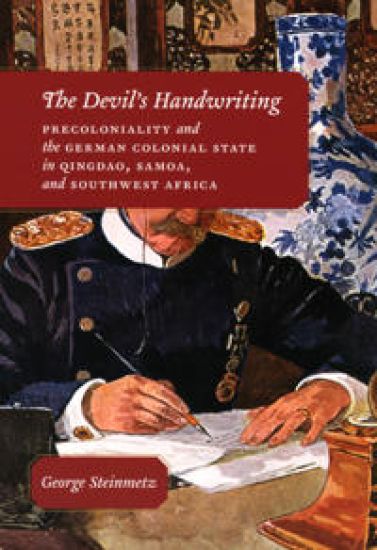
The Devil's Handwriting

The Devil's Handwriting

George Steinmetz

University of Chicago Press
2007
nidottu
Germany's overseas colonial empire was relatively short-lived, lasting from 1884 to 1918. During this period, dramatically different policies were enacted in the colonies: in Southwest Africa, German troops carried out a brutal slaughter of the Herero people; in Samoa, authorities pursued a paternalistic defense of native culture; in Qingdao, China, policy veered between harsh racism and cultural exchange. Why did the same colonizing power act in such differing ways? In "The Devil's Handwriting", George Steinmetz tackles this question through a brilliant cross-cultural analysis of German colonialism, leading to a new conceptualization of the colonial state and postcolonial theory. Steinmetz uncovers the roots of colonial behavior in precolonial European ethnographies, where the Hereros were portrayed as cruel and inhuman, the Samoans were idealized as "noble savages," and depictions of Chinese culture were mixed. The effects of status competition among colonial officials, colonizers' identification with their subjects, and the different strategies of cooperation and resistance offered by the colonized are also scrutinized in this deeply nuanced and ambitious comparative history.