Kirjojen hintavertailu. Mukana 12 657 676 kirjaa ja 12 kauppaa.

Kirjailija

George Szirtes

Kirjat ja teokset yhdessä paikassa: 23 kirjaa, julkaisuja vuosilta 2000-2026, suosituimpien joukossa Hinterland. Vertaile teosten hintoja ja tarkista saatavuus suomalaisista kirjakaupoista.

23 kirjaa

Kirjojen julkaisuhaarukka 2000-2026.

Hinterland

Hinterland

George Szirtes; Helen Szirtes; Anna Lachkaya; Dani Redd; Megan Holland; Steve Cushman; Andrew Menard

UEA Publishing Project
2019
pokkari
In Hinterland Issue 3 we publish, with huge pleasure, the pieces that won the Hinterland Prize 2019: Anna Lachkaya’s beautifully evoked account of immigrant girlhood, Megan Holland’s story of grief and becoming, and Dani Redd’s other-worldly roam across a remote Scandinavian island. Inside a stunning cover, created exclusively for Hinterland by artist Rebecca Pymar, is an outstanding line-up of new creative non-fiction plus all our great regular features, including the award-winning poet George Szirtes in conversation with his daughter Helen Szirtes.
The Song of the Cosmos

The Song of the Cosmos

Attila Jozsef; George Szirtes

Shearsman Books
2026
nidottu
These translations by Piette and Lehoczky form a five-year long project with an ambition to translate a significant selection of the poems of the modernist, socialist, working-class Hungarian poet, Attila Jozsef (1905-1937), one of the most celebrated and loved poets of the 20th century in Hungary. He lived a poverty-stricken, passionate and unstable life as a wanderer, a bohemian, a poet, a thinker, a non-conformist, a hobo and a lover until his untimely death by suicide, struck by a train, in Balatonszarszo on Lake Balaton, aged only 32. His poetry is surrealist, existentialist, Villonesque, tough-minded, quasi anarchist, deeply drenched in Hungarian folklore and the folk song, passionate, lyrical, elegiac, marked by his solitary wandering, his keen observation of the lives of the people, by his psychoanalytically inflected gaze into the unconscious, into the mind and body of lovers, his philosophical focus on dialectic and social injustice. The lyrics, free verse and formal, in an astonishing number of experimental forms, range from the metaphysical to the memoir, have filiations to French medieval, post-symbolist and surrealist poetry, fuse Nietzsche, Marx, Hegel and Freud in daring raids on the inarticulate, sing with haunting vernacular and ancient beauty and rise to extraordinary heights and flights of the imagination, yet are always grounded in the real, in the concrete particulars of the metropolis, the dark streets of the underclasses of this world. This bilingual volume presents a chronological selection of Attila Jozsef's poetry, featuring both English translations and the original Hungarian texts from Bela Stoll's 2005 edition. It provides crucial context for readers. With introductions by George Szirtes, Gyoergy Tverdota, and Aranka Kemeny, the collection aims to recreate 'The Song of the Cosmos', an unpublished collection Jozsef envisioned in the early 1920s. What does the song of the cosmos refer to? Who sings to whom and about what? 'Cosmos' here isn't the physical universe but rather the soul expanded to cosmic proportions, a 'universe imbued with a political subject'. In the sonnet cycle, Jozsef thus wanted to sing the song of the cosmic soul, as a lyrical outpouring of the cosmos and as a song of the human species, channelling cosmic forces and singing as global collective, as global consciousness, a planetary cosmos speaking about and for itself. The volume incorporates a faithful and playful reconstruction of the original graphic design, conceived by Jozsef's artist friend Gyoergy Bekeffi in the 1920s. Miklos Ferencz executed the reconstruction of the original book design specifically for this edition. The final section of the book includes ekphrastic 'guest poems' by George Szirtes, Istvan Voeroes, Adam Piette and Agnes Lehoczky, each creating an imaginary account exploring different possibilities and scenarios of what ifs each playing on one of Jozsef's final poem 'There, I've found my home at last...'. What if Attila Jozsef had not met his own tragic end in December 1937, Balatonszarszo? I generate my brand of love feet they stand on strange planets from all the gods I take my leave my heart is steadfast & alive here I in my light white shirt (from 'light white shirt', 1937)
Diaphanous

Diaphanous

Alvin Pang; George Szirtes

Recent Work Press
2023
pokkari
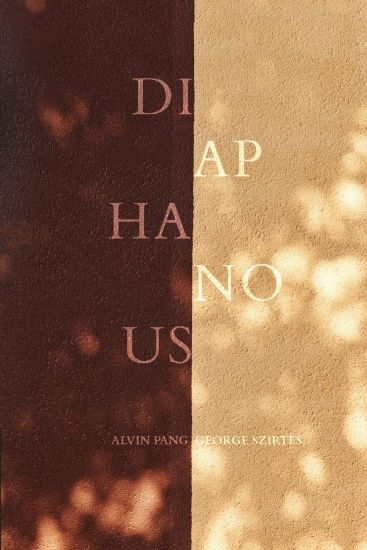
For over a decade, international poets Alvin Pang (Singapore) and George Szirtes (UK) have met time and again-as friends and fellow wordsmiths on page and stage-until the Covid-19 pandemic struck. Confined to different sides of the globe, they began to write poems back and forth in response to one another. Reflecting on the circumstances in which we find ourselves living, the two poets dance in language through questions of life and time, with the world teetering from Covid through Black Lives Matters and Brexit to the Ukraine conflict.
Inventing Joy

Inventing Joy

George Szirtes

Eyewear Publishing
2022
nidottu
This short collection of poems considers that necessity and the obstacles in its way: exile, distance, haunting, identity, despair, killing… the list goes on.
Like a Black Bird

Like a Black Bird

George Szirtes

The Chinese University Press
2021
nidottu
This pocket-sized paperback is one of the twenty-four titles published for 2017 Hong Kong International Poetry Nights. The theme of IPHHK2017 is “Ancient Enmity”. IPNHK is one of the most influential international poetry events in Asia. From 22–26 November 2017, over 20 invited poets from various countries will be in Hong Kong to read their works based on the theme “Ancient Enmity.” Included in the anthology and box set, these unique works are presented with Chinese and English translations in bilingual or trilingual formats.
Fresh Out of the Sky

Fresh Out of the Sky

George Szirtes

Bloodaxe Books Ltd
2021
nidottu
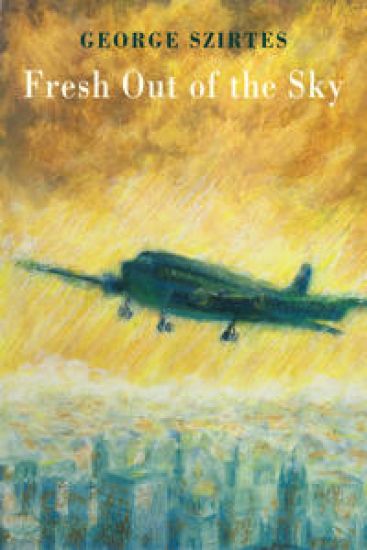
Fresh Out of the Sky is a book of songs, dreams, laments, narratives and comedies intertwined with passages about major life changes involving country, identity and belonging. It is about perpetually standing at the edge of change, anticipating it, reflecting on it and dreaming about it. The title sequence of the book returns to the terza rima theme of memory, following sequences in his earlier books, such as those about early Budapest childhood explored in Reel, and about growing to adulthood in England in An English Apocalypse. Here the theme is arrival in England as a child in 1956. These are wound around poems set in the aftermath of war, upheaval, and life in contemporary England as tracked by a series of dreamlike reports from the Covid bunkers we have been inhabiting. Covid poems run through the collection like a thread holding the book – and indeed the condition of England – together. The thread embraces the second part of The Yellow Room, a continuing poem of impossible questions about residual Jewishness experienced as a dialogue with the poet’s late father, as well as a bestiary of transformations woven through Guillaume Apollinaire and Graham Sutherland. The book ends on occasions of consolation, delight and joy in the midst of darkness and uncertainty.
Secrets & Lives

Secrets & Lives

George Szirtes

Egg Box Publishing
2020
nidottu
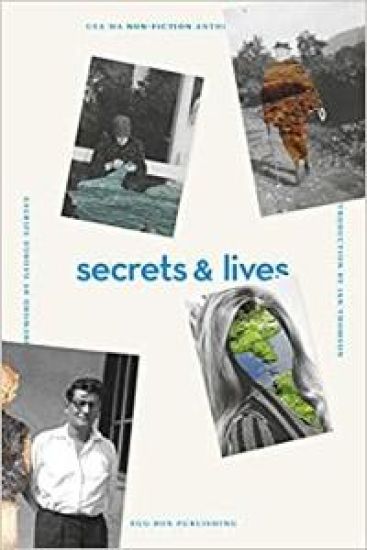
Secrets and Lives offers thirteen strikingly diverse explorations of memory - its dangers and its possibilites. Its subjects range from a kidnapped woman trapped on the Isle of Skye in the 18th century to a young man in Mumbai dealing with the death of his parents. Its settings range from Vietnam and Australia to Essex, Sussex and Norfolk, its sources from folk songs and old diaries to television and Twitter. And the secrets it reveals demonstrate the endless capacity of creative nonfiction to illuminate our world in all its aspects, familiar and unfamiliar.
The Photographer at Sixteen

The Photographer at Sixteen

George Szirtes

MacLehose Press
2020
pokkari
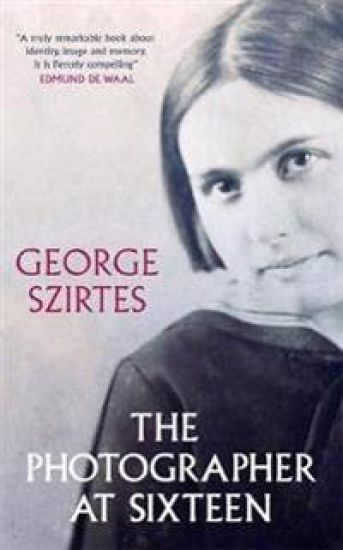
A poet's memoir of his mother that flows backwards through time, through a tumultuous period of European history - a tender and yet unsparing autobiographical journey.**A RADIO 4 BOOK OF THE WEEK**"A truly remarkable book . . . fiercely compelling" EDMUND DE WAAL*WINNER OF THE JAMES TAIT BLACK MEMORIAL PRIZE* *SHORTLISTED FOR THE JEWISH WINGATE PRIZE*"I've read no memoir that moved me more" MIRANDA SEYMOUR"The writing is always scrupulous . . . [a] compelling memoir" BLAKE MORRISON"Beautifully written and utterly compelling" Sunday Times"An original, probingly thoughtful memoir" EVA HOFFMANNIn July 1975, Magda Szirtes died in the ambulance on the way to hospital after she had tried to take her own life. She was fifty-one years old. The Photographer at Sixteen spools into the past, through her exile in England, her flight with her husband and two young boys from Hungary in 1956 and her time in two concentration camps, her girlhood as an ambitious photographer, and the unknowable fate of her vanished family in Transylvania. The woman who emerges - with all her contradictions - is utterly captivating. What were the terrors and obsessions that drove her? The Photographer at Sixteen reveals a life from the depths of its final days to the comparable safety of its childhood. It is a book born of curiosity, of guilt and of love.
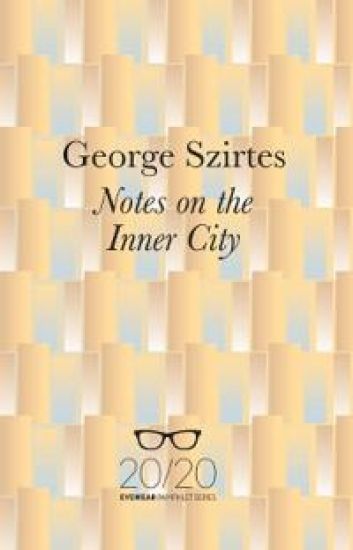
Notes on the Inner City

Notes on the Inner City

George Szirtes

Eyewear Publishing
2017
nidottu
Here is an intriguing and absorbing collection of poems by one of the key poets now writing. Assured yet balanced by a fresh, continued questioning of our histories, current lives, and cultures, this is a brilliantly entertaining, thought-provoking collection sure to delight all readers, and writers.
Mapping the Delta

Mapping the Delta

George Szirtes

Bloodaxe Books Ltd
2016
nidottu
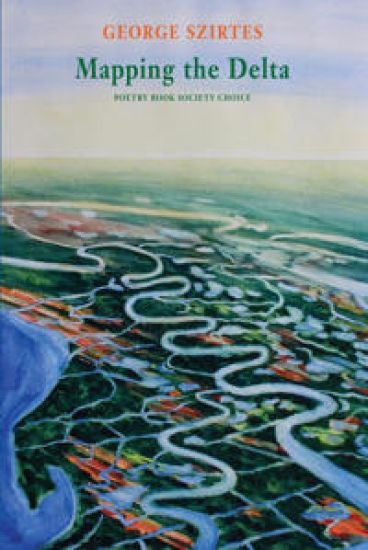
The Delta is a densely populated place. Whole countries inhabit it, exercising their powers and authority, presenting their offers of complicity and compliance. Individuals move through the night and come upon themselves in its mirrors. Dreamers and fantasists repopulate its hidden corners: Rimbaud, Bruno Schultz, William Blake, Arthur Schnitzler and the physicist Dennis Gabor lay claim to their own visions of it. Animals gaze at their human companions who gaze back. They try to puzzle each other out, looking to climb into each other's eyes. They court each other, desire their own species, are captivated both by each other's and their own beauty. Life goes on its desultory way, finding itself between creeks and cracks. And occasionally the world does crack open. Planes crash, boats sink, weather changes, floodwaters rise, people vanish on journeys. Anxiety remains: disaster zones persist into old age and death, and into the life, death and resurrection of language itself. At the core of the book is The Yellow Room, a sequence of mirror poems contemplating the Jewishness of the poet's father. The room constricts and glows.The poem breaks up across the page at intervals then reassembles into its mirrors. Many of the poems are formal haiku sequences. They are new parts of a personal Delta. Others are in rhymed and broken stanzas. The Delta has to survive - if it survives at all - on its broken patterns. Poetry Book Society Choice.
Bad Machine

Bad Machine

George Szirtes

Bloodaxe Books Ltd
2013
nidottu
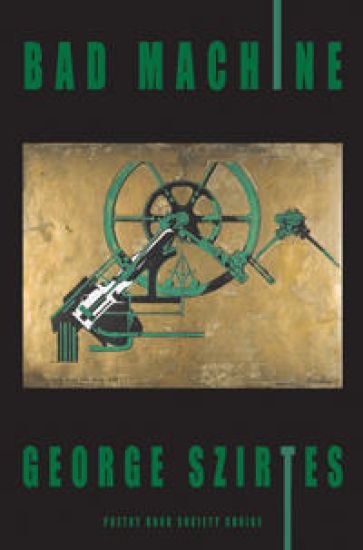
The body is the 'bad machine' of George Szirtes' latest book of poems. The sudden death of his elderly father and of his younger friend, the poet Michael Murphy, remind him how machines - sources of energy and delight in their prime - go so easily wrong; and that change in the body is a signal for moving on. But language too is a body. Here, politics, assimilation, desire, creatureliness and the pleasure and loss of the body, mingle in various attenuated forms such as lexicon, canzone, acrostics, mirror poems, postcards, and a series of 'minimenta' after Anselm Kiefer whose love of history as rubble and monument haunts this collection. George Szirtes is one of our most inventive - and constantly reinventing - poets, and Bad Machine shows him developing new themes and new ways of writing in poems which stretch the possibilities of form and question language and its mastery. Poetry Book Society Choice, shortlisted for the T.S. Eliot Prize.
Leopard V: An Island of Sound

Leopard V: An Island of Sound

George Szirtes

The Harvill Press
2011
pokkari
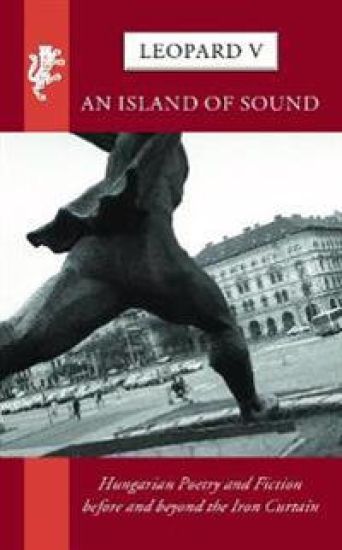
Published to coincide with the Hungarian Year of Culture (2003-4), this new volume in Harvill's celebrated Leopard series of anthologies comprises a selection of Hungarian prose and poetry from the second half of the twentieth century. Hungarian literature can be characterised as the literature of anxiety. Throughout the 1900s, as Europe's political and social fortunes changed, Hungary's writers reflected on those changes, absorbing and distilling them in work of documentary, poetic or comically grotesque power. This anthology of fiction and poetry begins by setting out some of the major landmarks from the end of the Second World War, then concentrates on the period before, during and after the key date of 1989, when Central Europe was transformed once again. The volume traces that history of change from Marai's wartime diaries, into the Stalinist period with the one-minute novels of Istvan Orkeny, past the paradoxical post-modernist humanism of Peter Esterhazy, and through the haunted waste-tracts of Laszlo Krasznahorkai. On the way, it gathers together the monumental, the mystical, the garrulous and the inward-driven poetries of Janos Pilinszky, Sando Weores, Agnes Nemes Nagy, Gyorgy Petri, Otto Orban and Zsuzsa Rakovszky and many younger writers. This extraordinary journey takes us up to Hungary's return to the European fold, as it moves from the psycho-geographic East towards the longed-for, lost, centre. It celebrates the anxiety, agitation, crying and whispering of the Hungarian literary imagination, posing the question that hangs above the door of the European Community: What is Europe? How do we live in it? And how do we respond to its darkness and its light?
Ten Poets: UEA Poetry 2010

Ten Poets: UEA Poetry 2010

George Szirtes

Egg Box Publishing
2010
nidottu
The world-renowned UEA Creative Writing MA presents its annual selection of new young poets. Founded in 1992, students and tutors on the course have included Owen Sheers, Kathy Simmonds, Denise Riley, Andrew Motion, Ben Borek, Lavinia Greenlaw, George Szirtes, Matthew Hollis, Adam Foulds, Hugo Williams, Daniel Kane and Anthony Thwaite."This group of poets have come from all over the world to work together at UEA. The interaction of such different voices has helped each to become more distinctive, more its own."Lavinia Greenlaw"No house-style, no ready-mades, simply original thinking, original writing from an exciting set of individual voices."George Szirtes
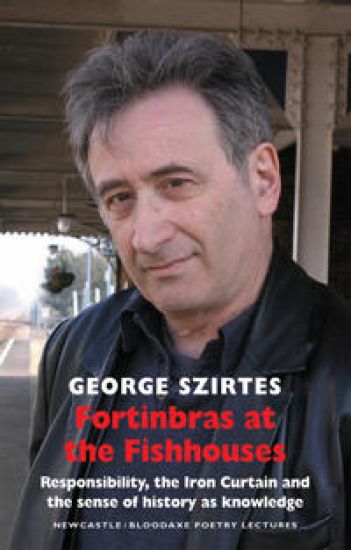
Fortinbras at the Fishhouses

Fortinbras at the Fishhouses

George Szirtes

Bloodaxe Books Ltd
2010
nidottu
In this innovative series of public lectures at Newcastle University, leading contemporary poets speak about the craft and practice of poetry to audiences drawn from both the city and the university. The lectures are then published in book form by Bloodaxe, giving readers everywhere the opportunity to learn what the poets themselves think about their own subject. George Szirtes' three lectures form an arc on the nature of historical knowledge in the poem. 'Our knowledge' says Elizabeth Bishop in 'At the Fishhouses', 'is historical, flowing and flown.' The sea in her poem is so cold it burns hand and tongue, a parodox explored in his first lecture, 'Cold dark deep and absolutely clear: poetic knowledge as uncertainty'. Beginning with this understanding of knowledge, his second lecture, 'Life is Elsewhere: knowing in opposition', shifts to notions of historical responsibility, especially as perceived by poets in the West at the time of the Cold War. Szirtes considers questions of betrayal and fidelity and the role of irony and quietism. In his third lecture, 'Flowing and flown: in the world of superfluous knowledge', Szirtes seeks exemplars and connections in works by George Seferis, Derek Mahon and poets of Eastern Europe from the period immediately before 1989 as well as briefly afterwards, to enquire into the nature of repression, returning to Bishop's story 'In the Village' for its conclusion, where 'The hammer echoes with the icy black sea. Cold, dark deep and absolutely clear' ending with Bishop's affirming cry: 'Oh beautiful sound, strike again!'
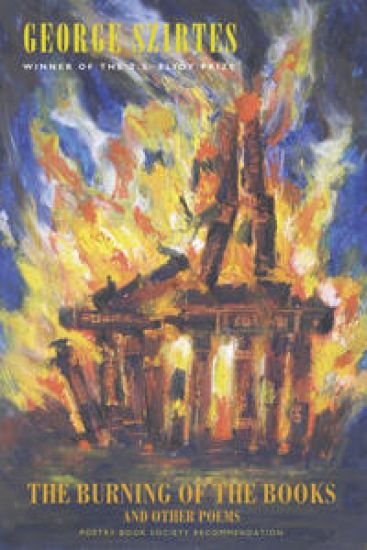
The Burning of the Books and Other Poems

The Burning of the Books and Other Poems

George Szirtes

Bloodaxe Books Ltd
2009
nidottu
The title-poem of George Szirtes' "The Burning of the Books and Other Poems" is the core of this collection of narrative sequences by a writer who came to Britain as a child refugee after the Hungarian Uprising. Book burning is associated with the Nazis' burning of what they considered to be subversive books in 1933, but the practice has a long history, right down to our own day. In this particular case the burning refers to the library of Kien, the scholar, in Elias Canetti's novel "Auto Da Fé". The poems follow and expand from the events of Canetti's book in a variety of forms not previously used by Szirtes. Two further sequences are concerned with history and documentary, one about the discovery of small snippets of film recording the liberation of Penig concentration camp where Szirtes' mother was imprisoned, and another of songs concerning war and documentary photography. There are also prose poems, monologues, a series of canzoni, a group of poems exploring the origins of love in childhood, and another based on the mythical travels of Sir John Mandeville about the Hungarian Uprising of 1956. The book, as a whole, constitutes an exploration of the range and flexibility of a voice attuned to the patterns of history and the way such patterns transform our sense of the present. Poetry Book Society Recommendation, shortlisted for the T.S. Eliot Prize.
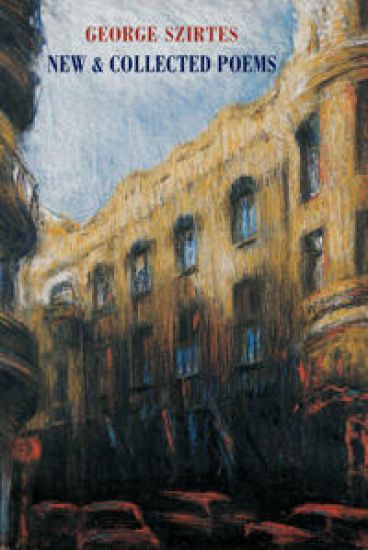
New & Collected Poems

New & Collected Poems

George Szirtes

Bloodaxe Books Ltd
2008
nidottu
George Szirtes came to Britain as an eight-year-old refugee after the Hungarian Uprising in 1956. Educated in England, he trained as a painter, and has always written in English. This comprehensive retrospective of his work covers poetry from over a dozen collections written over four decades, with a substantial gathering of new poems. It is published on his 60th birthday at the same time as the first critical study of his work, "Reading George Szirtes" by John Sears. Haunted by his family's knowledge and experience of war, occupation and the Holocaust, as well as by loss, danger and exile, all of Szirtes' poetry covers universal themes: love, desire and illusion; loyalty and betrayal; history, art and memory; and, humanity and truth. Throughout his work there is a conflict between two states of mind, the possibility of happiness and apprehension of disaster. These are played out especially in his celebrated long poems and extended sequences, "The Photographer in Winter", "Metro", "The Courtyards", "An English Apocalypse" and "Reel", all included here.