Kirjojen hintavertailu. Mukana 12 390 323 kirjaa ja 12 kauppaa.
Kirjailija
George Weigel
Kirjat ja teokset yhdessä paikassa: 35 kirjaa, julkaisuja vuosilta 1989-2025, suosituimpien joukossa The Cross and the Flag. Vertaile teosten hintoja ja tarkista saatavuus suomalaisista kirjakaupoista.
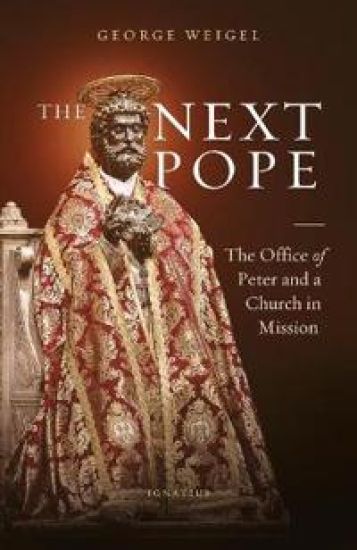
What is papal diplomacy and what role does it play on the larger geopolitical stage? Why does it matter what popes say to a global audience? "As John Tanyi points out, papal diplomacy has followed a trajectory all its own over the years. In today’s globalized world, the Holy See stands out as an important communicator with a widely respected moral voice. It is often said that 'When the Pope speaks, the world listens.' What sets the diplomatic voices of the Holy Father and his envoys apart from all others is that they speak and act for the good of humanity––not just for the sovereign entity they represent, and not just for Catholics. As a former foreign minister of the Holy See, Cardinal Jean Louis Tauran, once described the mission of papal diplomats: 'Our duty is to promote and defend not only the freedom and rights of Catholic communities around the world, but also to promote certain principles without which there is no civilization.'" The particular example of Pope John Paul II is a groundbreaking example of the critical nature of ecclesiastical diplomacy and why popes as diplomats are playing at a greater level than other statesmen. As George Weigel notes, popes must combat all the problems of the world, but also importantly what he calls the 'tyranny of the possible'––that is, in all things compromise and complacency will play a part. It is the position occupied by one man, the heir of St. Peter, to know when to defy the entirety of global politics (and sometimes what seems like common sense) to say 'yes' and 'no' definitively in light of unchanging truths.
A leading Catholic intellectual explains why the teachings of the Second Vatican Council are essential to the Church's future—and the world'sThe Second Vatican Council (1962–1965) was the most important Catholic event in the past five hundred years. Yet sixty years after its opening on October 11, 1962, its meaning remains sharply contested and its promise unfulfilled.In To Sanctify the World, George Weigel explains the necessity of Vatican II and explores the continuing relevance of its teaching in a world seeking a deeper experience of freedom than personal willfulness. The Council’s texts are also a critical resource for the Catholic Church as it lives out its original, Christ-centered evangelical purpose.Written with insight and verve, To Sanctify the World recovers the true meaning of Vatican II as the template for a Catholicism that can propose a path toward genuine human dignity and social solidarity.
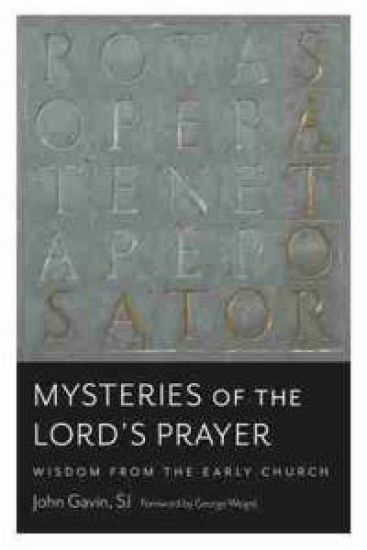
The Lord’s Prayer contains mysteries generally overlooked by most Christians. For the Fathers of the Church, such mysteries or “difficulties”—many of which continue to puzzle modern scholars—marked divinely inspired points for prayer and reflection. Saints Cyprian of Carthage, Augustine of Hippo, Peter Chrysologus, Maximus the Confessor and others grappled with the hidden meanings behind these questions and the fruits of their efforts can inspire contemporary readers.In Mysteries of the Lord’s Prayer John Gavin, SJ explores eight mysteries of the Lord’s prayer in light of the early Church’s wisdom: How can human beings call God “Father”? Where is God the Father? How can God grow in holiness? Was there ever a time when God did not rule? Are there limitations to God’s will? Why should we seek bread? Can we make a deal with God? Does God tempt us? Without ignoring the insights of contemporary exegesis, this volume demonstrates that the responses of the Fathers to these questions have continuing relevance. Not only did they understand the issues surrounding linguistic, textual, and theological difficulties, but they also grasped the nuances of Christ’s words as illuminated by the scriptures as a whole. They provide an interpretation that challenges the mind and transforms the heart.Mysteries of the Lord's Prayer offers the general reader, as well as scholars, a chance to rediscover a prayer that unites Christians throughout the world. It also includes appendices to aid those who wish to explore the Fathers’ writings on their own for a deeper encounter with the wisdom of the early Church.
Fr. Maurice Ashley Agbaw-Ebai, a native of Cameroon, has written a fresh, exciting new study of the lifelong engagement of Josef Ratzinger, later Pope Benedict XVI, with the German Enlightenment and its contemporary manifestations and heirs. Contemporary European disdain for organized religion and the rise in secularism on that continent has deep roots in the German Enlightenment. To understand contemporary Europe, one must return to this crucial epoch in its history, to those who shaped the European mind of this era, and to a study of the ideas they espoused and propagated. These ideas, for good or for ill, have taken hold in other parts of the modern world, being incarnated in many minds and institutions in contemporary society and threatening to enthrone a disfigured rationality without faith or a sense of Transcendence. Ratzinger’s extraordinary and sympathetic understanding of the sources of contemporary secularism equipped him to appreciate the gains of the Enlightenment, while still being a fierce critic of the losses humanity has suffered when reason falsely excludes faith. Fr. Agbaw-Ebai’s account reveals Ratzinger, in relation to his various interlocutors, to be the truly “enlightened” one because he demonstrates a truly balanced understanding of the human mind. To be truly rational one must be able to hold to faith and reason both, reason informed by faith in Jesus Christ. A particular merit of this book is Agbaw-Ebai’s presentation of Ratzinger’s treatment of the German Enlightenment’s greatest contributors: Kant, Nietzche, Hegel and Habermas, among others. In the postscript George Weigel characterizes what this study accomplishes in the larger framework of scholarship. “[Ratzinger’s] position remains too often misunderstood, and sometimes deliberately misinterpreted, throughout the whole Church. And to misunderstand, or misinterpret, Ratzinger is to misunderstand or misinterpret both the modern history of theology and the Second Vatican Council.” Agbaw-Ebai masterfully positions Ratzinger correctly in the history of ideas, and exhibits why Ratzinger will be remembered as one of its main players. Pure rationalists and true believers are equally indebted to him.
The world is full of interesting people, and it has been George Weigel's good fortune to have known many such personalities in a variety of fields: politics, religion, the arts and sciences, journalism, the academy, entertainment, and sports. In this collection of reminiscences and elegies, the best-selling author of the definitive biography of Pope Saint John Paul II remembers these men and women from inside the convictions that formed them. Whether he is sketching the lives of Nobel Prize-winning scientists, major league baseball managers, princes of the Church, television personalities, or history-making political leaders, Weigel tries to understand, and help readers understand, the deep truths of the human condition illuminated by each of these not-forgotten lives. Written with verve, insight, and an appreciation for the consequential lives that have touched his own, Not Forgotten fills out the autobiographical portrait that George Weigel began painting in Lessons in Hope: My Unexpected Life with Saint John Paul II, while offering a backstage view of some of the men and women who have shaped the turbulent history of our times. The 60 intriguing lives that he writes about are a wide diversity of unique characters and personalities, including Albert Einstein, William F. Buckley, Flannery O'Connor, Franz J gerst tter, John Paul II, Jackie Robinson, Charles Krauthammer, Sophie Scholl, Henry Hyde, James Schall, S.J., Dietrich Von Hildebrand, Charles Colson, Fr Richard J. Neuhaus and many more.
INTERNATIONAL BESTSELLER"A remarkable book. Weigel's biography is likely to remain the standard one-volume reference on John Paul II for many years to come." -- Pittsburg Post-Gazette?"Fascinating. . . sheds light on the history of the twentieth century for everyone." --New York Times Book ReviewThe definitive biography of Pope John Paul II that explores how influential he was on the world stage and in some of the most historic events of the twentieth century that can still be felt todayWitness to Hope is the authoritative biography of one of the singular figures--some might argue the singular figure--of our time. With unprecedented cooperation from John Paul II and the people who knew and worked with him throughout his life, George Weigel offers a groundbreaking portrait of the Pope as a man, a thinker, and a leader whose religious convictions defined a new approach to world politics--and changed the course of history. As even his critics concede, John Paul II occupied a unique place on the world stage and put down intellectual markers that no one could ignore or avoid as humanity entered a new millennium fraught with possibility and danger.The Pope was a man of prodigious energy who played a crucial, yet insufficiently explored, role in some of the most momentous events of our time, including the collapse of European communism, the quest for peace in the Middle East, and the democratic transformation of Latin America. With an updated preface, this edition of Witness to Hope explains how this "man from a far country" did all of that, and much more--and what both his accomplishments and the unfinished business of his pontificate mean for the future of the Church and the world.
In The Irony of Modern Catholic History, acclaimed Catholic scholar George Weigel offers a bold reinterpretation of the Church's history since the nineteenth century, completely overturning conventional wisdom about the relationship between Catholicism and modernity. For much of the nineteenth century, both secular and Catholic leaders assumed that the Church and the modern world were locked in a battle to the death. The triumph of secular modernity-democracy, liberalism, mass education, religious freedom-would finish the Church as a consequential player in world history, and it would lead inevitably lead to the death of religious conviction. But today the Catholic Church is far more vital, and far more consequential, than it was 150 years ago, when Pope Pius IX retreated into the Vatican, forced to surrender the Italian lands the popes had ruled for centuries. And even in today's modern world, secularism is the exception, not the rule.In The Irony of Modern Catholic History, Weigel reveals how the encounter with modernity, rather than killing Catholicism, ultimately made the Church more coherent and less defensive. While previous histories of Catholicism posit modernity as the sole protagonist and Catholicism as a reactive force, Weigel asserts that Catholicism was a protagonist in this drama in its own right. He introduces readers to a remarkable cast of churchmen, intellectuals, and public figures whose actions drive both Catholicism and modernity forward - from the revolutionary Pope Leo XIII (1878-1903) to the still-disputed work of the Second Vatican Council to the close collaboration of Pope John Paul II and Pope Benedict XVI. Weigel highlights two great ironies: the first is that modernity has led Catholicism to rediscover its own evangelical or missionary essence. And the second is that Catholicism, long derided as the antithesis of the modern project, has developed intellectual tools that can help rescue modernity from deconstructing itself into an incoherence today. A richly rendered, deeply learned, and powerfully argued account of two centuries of profound change in the Church and the world, The Irony of Modern Catholic History ultimately reveals how Catholicism offers the twenty-first century truths-about the inherent dignity and value of every human being, about our moral obligations and responsibilities-essential for our survival and flourishing.
A powerful new interpretation of Catholicism's dramatic encounter with modernity, by one of America's leading intellectualsThroughout much of the nineteenth century, both secular and Catholic leaders assumed that the Church and the modern world were locked in a battle to the death. The triumph of modernity would not only finish the Church as a consequential player in world history; it would also lead to the death of religious conviction. But today, the Catholic Church is far more vital and consequential than it was 150 years ago. Ironically, in confronting modernity, the Catholic Church rediscovered its evangelical essence. In the process, Catholicism developed intellectual tools capable of rescuing the imperiled modern project. A richly rendered, deeply learned, and powerfully argued account of two centuries of profound change in the church and the world, The Irony of Modern Catholic History reveals how Catholicism offers twenty-first century essential truths for our survival and flourishing.
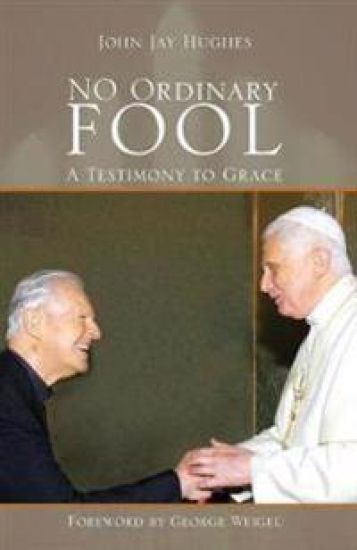
Why does a gifted boy from a privileged Establishment background decide, at the age of twelve, to spend his life as a priest? And what moves him, after six happy years in the Anglican priesthood, to enter the alien world of Roman Catholicism?In a gripping narrative full of humor and self-directed irony, John Jay Hughes tells of the loss of his mother at age six, entry into the Catholic Church at the cost of estrangement from his beloved Anglican priest-father, his lifelong search for God in prayer, and his joy in priesthood, 'all I ever wanted from age twelve.'
On the 500th anniversary of the Reformation, this issue of Plough Quarterly explores the reformation the church needs today. This year’s five-hundredth anniversary of the Reformation comes just as Christianity is undergoing what may prove to be its biggest recalibration since the fourth century. Christendom, the system in which Christianity shaped Western laws and society as the majority religion, has been shaky since the Enlightenment. Now it’s in its death throes, felled by secularization, consumerism, and the sexual revolution. For better or worse, Christians must learn to be a minority. There’s no better time than now to recall Karl Barth’s dictum: the church must always be reformed. What is the re-formed church we need now? In this issue, George Weigel and Eberhard Arnold call the church to turn back to its sources and to seek renewal in the example of the first Christians, for whom Christianity was not just a Sunday religion or a private affair. It meant belonging to the fellowship of disciples, whose way of life was countercultural to that of the surrounding pagan society, as Rowan Williams points out. Today, Christians of all traditions are realizing that we are again called, in the words of Rabbi Lord Jonathan Sacks, to form a creative minority. Pastors Jin Kim and Claudio Oliver explore how to practice communal Christianity in different contexts, and Andreas Knapp and Cécile Massie document the vibrancy of the persecuted church in Syria and Turkey. Editor Peter Mommsen explores the legacy and triumph of the Radical Reformation. Also in this issue: Reviews of Ben Sasse’s The Vanishing American Adult, Alan Kreider’s The Patient Ferment of the Early Church, Tobias Jones’s A Place of Refuge, and Andrzej Franaszek’s Milosz Poetry by Mary M. Brown Insights from early church leaders Ignatius, Hermas, and Polycarp An excerpt from Renegade, Plough’s graphic novel on Martin Luther’s life Art and photography by Daniel Bonnell, Jason Landsel, Randall M. Hasson, Rachel Wright, Arthur Brouthers, Andrea Grosso Ciponte, Olivia Clifton-Bligh, Malcolm Coils, Cécile Massie, Jader Gneiting, and Dean Mitchell Plough Quarterly features stories, ideas, and culture for people eager to put their faith into action. Each issue brings you in-depth articles, interviews, poetry, book reviews, and art to help you put Jesus’ message into practice and find common cause with others.
A preeminent authority on the Catholic Church and papal biographer describes what he learned from chronicling the life of Pope John Paul IIIn Lessons in Hope, George Weigel tells the story of his unique friendship with St. John Paul II. As Weigel learns the pope "from inside," he also offers a firsthand account of the tumult of post-Vatican II Catholicism and the Cold War's endgame, introducing readers to the heroes who brought down European communism. Later, he shows us the aging pope grappling with the post-9/11 world order and teaching new lessons in dignity through his own suffering.A deeply humane portrait of an eminent scholar learning a saint, Lessons in Hope is essential reading for anyone seeking a fuller understanding of a world-changing pope.
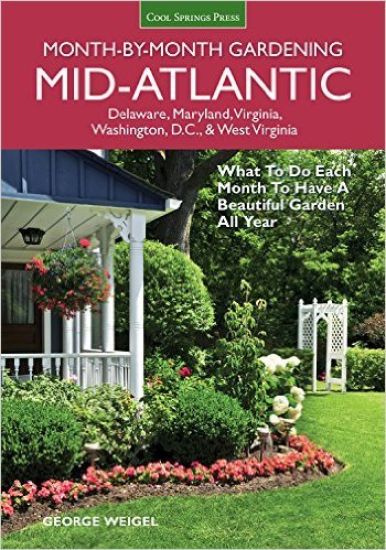
The only guide with month-by-month advice about caring for your Mid-Atlantic garden. If you liked Mid-Altantic Getting Started Garden Guide, Mid-Atlantic Month-by-Month Gardening should be the next addition to your bookcase! This is the perfect book for beginning to intermediate gardeners and home landscapers living in the Mid-Atlantic (including the states of Virginia, West Virginia, New Jersey, Delaware, Maryland, and Washington, DC). Mid-Atlantic Month-by-Month Gardening gives you the when-to and how-to for growing, caring for, and maintaining your garden and all types of plants. All of the information you need is given in a chronological, straightforward way. From January to December, each month has specific advice on what should be done in your garden. Step-by-step photographs give you the confidence to make your garden as unique as your Mid-Atlantic home. Author George Weigel is a garden writer, designer, and speaker, a Pennsylvania Certified Horticulturist, and--as his balding, plant-killing brother likes to put it-a "Certified Gardening Wacko." He is your guide to the garden, with specific when-to and how-to content to give Mid-Atlantic gardeners the tools to be successful.
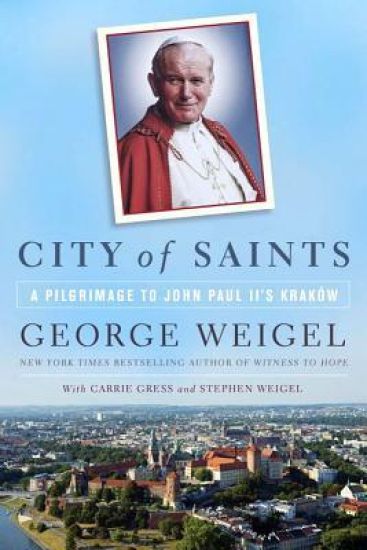
"Karol Wojtyla, Pope John Paul II, was a man whose life was the expression of a richly textured and multidimensional soul. The many layers of that soul took on their first, mature form in Krak w." - George Weigel In this beautifully illustrated spiritual travelogue, New York Times bestselling author George Weigel leads readers through the historic streets of Krak w, Poland, introducing one of the world's great cities through the life of one of the most influential Catholic leaders of all time. "To follow Karol Wojtyla through Krak w is to follow an itinerary of sanctity while learning the story of a city." Weigel writes. "Thus, in what follows, the story of Karol Wojtyla, St. John Paul II, and the story of Krak w are interwoven in a chronological pilgrimage through the life of a saint that reveals, at the same time, the dramatic history and majestic culture of a city where a boy grew into a man, priest, a bishop--and an apostle to the world." With stunning photographs by Stephen Weigel and notes on the city's remarkable fabric by Carrie Gress, City of Saints offers an in-depth look at a man and a city that made an indelible impression on the life and thought of the Catholic Church and the 21st century world.
In this remarkable exploration of the Catholic world, prominent Catholic author and papal biographer George Weigel offers a luminous collection of letters to young Catholics, not-so-young Catholics, and curious souls who wonder what it means to be Catholic today. Weigel takes readers on an epistolary tour of Catholic landmarks,from Chartres Cathedral to St. Mary's Church in Greenville, South Carolina from the Holy Sepulcher in Jerusalem to G.K. Chesterton's favourite pub in Oxford and from the grave of a modern martyr in Warsaw to the Sistine Chapel. Weaving together insights from history, literature, theology, and music, Weigel illuminates the beliefs that give Catholicism its distinctive texture and explores the theological importance of grace, prayer, vocation, sin and forgiveness, suffering, and,most importantly,love. Revised and updated with five new tour stops," Letters to a Young Catholic will inspire not only the young generation of Catholics whose World Youth Day celebrations have launched an era of renewal for the Church, but also the faithful, the doubtful, and the searchers of every age.
The book that puts Pennsylvania's most knowledgeable gardener at your beck and call. Split down the middle by the Appalachian Mountains, Pennsylvania experiences a wide range of extreme weather on each side of the divide, with humid summers in Harrisburg and record-breaking snowfalls in McKean County-- but there's one thing every Pennsylvanian experiences: rain, and plenty of it. The state's well-hydrated landscape hosts a vast selection of beautiful native plants, from the gorgeous multi-season serviceberry to the stunning and underused Joe-Pye weed. In Pennsylvania Getting Started Garden Guide, locally beloved Patriot-News garden columnist George Weigel teaches you how to plant and care for more than 150 of different species of natural Pennsylvanian agriculture. Elegantly photographed, full-color pages impart Weigel's decades of experience gardening in this state. The flowers, shrubs, vines, trees, and groundcovers within - organized alphabetically by type and common name - are each showcased with a reference image, a name pronunciation guide, and detailed information such as: full-grown plant size, when to plant, tips for bringing your transplants to healthy maturity, and even recommendations for the best companion species. This comprehensive, easily understandable reference guide is complete with at-a-glance icons for quick plant info, color-coded USDA zone maps, and - of course - the charming writing style of Pennsylvania's most endearing and trustworthy garden writer. So even if you don't love the weather all the time, with Pennsylvania Getting Started Garden Guide, you'll be able to choose plants that do.
The Catholic Church is on the threshold of a bold new era in its history. As the curtain comes down on the Church of the 16th-century Counter-Reformation, it rises on the Evangelical Catholicism of the third millennium: a way of being Catholic that will send the faithful into mission territory every day,a territory increasingly defined by spiritual boredom and aggressive secularism. In Evangelical Catholicism , Catholic theologian George Weigel proposes a program of faith-based reform that confronts these challenges head on. An urgent call to arms, Evangelical Catholicism reminds Catholics of the evangelical vocation into which they were baptized and of the joy and courage that comes from living on this side of the Resurrection.
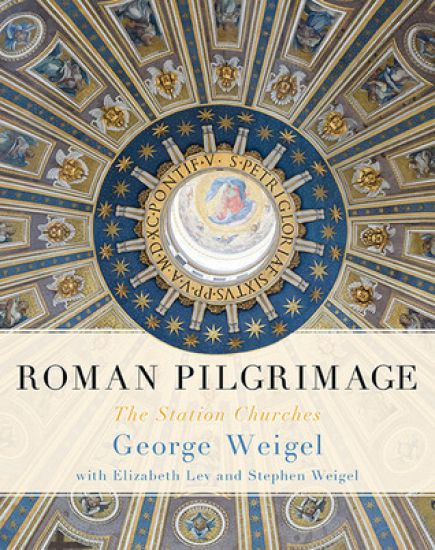
The annual Lenten pilgrimage to dozens of Rome's most striking churches is a sacred tradition dating back almost two millennia, to the earliest days of Christianity. Along this historic spiritual pathway, today's pilgrims confront the mysteries of the Christian faith through a program of biblical and early Christian readings amplified by some of the greatest art and architecture of western civilization.In Roman Pilgrimage , bestselling theologian and papal biographer George Weigel, art historian Elizabeth Lev, and photographer Stephen Weigel lead readers through this unique religious and aesthetic journey with magnificent photographs and revealing commentaries on the pilgrimage's liturgies, art, and architecture. Through reflections on each day's readings about faith and doubt, heroism and weakness, self-examination and conversion, sin and grace, Rome's familiar sites take on a new resonance. And along that same historical path, typically unexplored treasures,artifacts of ancient history and hidden artistic wonders,appear in their original luster, revealing new dimensions of one of the world's most intriguing and multi-layered cities.A compelling guide to the Eternal City, the Lenten Season, and the itinerary of conversion that is Christian life throughout the year, Roman Pilgrimage reminds readers that the imitation of Christ through faith, hope, and love is the template of all true discipleship, as the exquisite beauty of the Roman station churches invites reflection on the deepest truths of Christianity.
""As March gave way to April in the spring of 2005 and the world kept vigil outside the apostolic palace in Rome, the pontificate of Pope John Paul II, then drawing to a poignant end, was already being described as one of the most consequential in two millennia of Christian history."" With these words, world-renowned author and NBC Vatican analyst George Weigel begins his long-awaited sequel to the international bestseller "Witness to Hope: The Biography of Pope John Paul II. "More than ten years in the making, "The End and the Beginning: Pope John Paul II--The Victory of Freedom, the Last Years, the Legacy" tells the dramatic story of the Pope's battle with communism in light of new and recently disclosed information and brings to a close Weigel's landmark portrait of a man who not only left an indelible mark on the Catholic Church, but also changed the course of world history. When he was elected pope in the fall of 1978, few people had ever heard of the charismatic Karol Wojty3a. But in a very short time he would ignite a revolution of conscience in his native Poland that would ultimately lead to the collapse of European communism and death of the Soviet Union. What even fewer people knew was that the KGB, the Polish Secret Police, and the East German Stasi had been waging a dangerous, decades-long war against Wojty3a and the Vatican itself. Weigel, with unprecedented access to many Soviet-era documents, chronicles John Paul's struggle against the dark forces of communism. Moreover, Weigel recounts the tumultuous last years of John Paul's life as he dealt with a crippling illness as well as the "new world disorder" and revelations about corruption within the Catholic Church. Weigel's thought-provoking biography of John Paul II concludes with a probing and passionate assessment of a man who lived his life as a witness to hope in service to the Christian ideals he embraced. "From the Hardcover edition."