Kirjojen hintavertailu. Mukana 12 532 410 kirjaa ja 12 kauppaa.

Kirjailija

George Woodcock

Kirjat ja teokset yhdessä paikassa: 29 kirjaa, julkaisuja vuosilta 1977-2025, suosituimpien joukossa Malcolm Lowry. Vertaile teosten hintoja ja tarkista saatavuus suomalaisista kirjakaupoista.

29 kirjaa

Kirjojen julkaisuhaarukka 1977-2025.

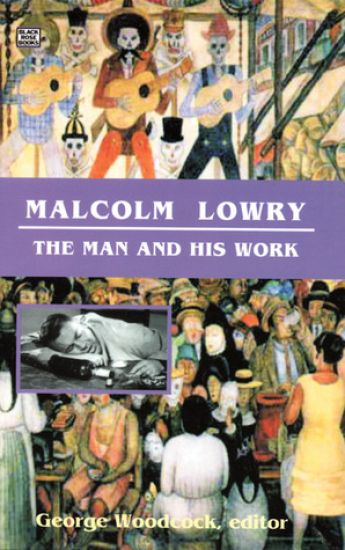
Malcolm Lowry

Malcolm Lowry

George Woodcock

Black Rose Books
2010
sidottu
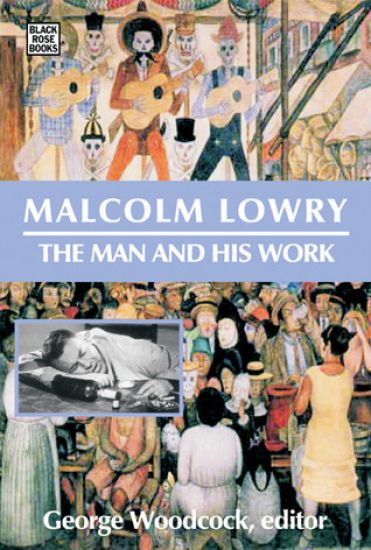
With compassion and honesty, George Woodcock presents Malcolm Lowry: the man and his works. The portrait that emerges depicts a series of complex and destructive relationships that lead to an existential exploration of alienation, exile, and identity and to what many critics regard as some of the finest writing to come out of the twentieth century.This compelling collection of essays provides considerable insight into the challenges Lowry set for himself--as an artist and as a man. The first section of the book, "The Works," considers all of Lowry's fiction and the evolution of his style as he struggled to find the form appropriate to a new approach to reality. The influences that shaped his world and gave form to his work are considered in the second section, "The Man and the Sources." From Lowry's love of jazz and the cinema, to the books he read, Woodcock follows Lowry's life: a life marked by violent alcoholism, two unstable marriages, and stints in jails and mental institutions as he drifted to and from London, Paris, New York, and Mexico. Contributors include: Robert B. Heilman, Anthony R. Kilgallin, George Woodcock, Geoffrey Durrant, David Benham, Matthew Corrigan, Conrad Aiken, Hilda Thomas, Downif Kirk, W.H. New, Perle Epstein, William McConnell, and Maurice J. Carey.George Woodcock (1912-1995)--award-winning poet, author, and essayist and widely known as a literary journalist and historian--published more than ninety titles on history, biography, philosophy, poetry, and literary criticism.
Malcolm Lowry

Malcolm Lowry

George Woodcock

Black Rose Books
2024
pokkari
With compassion and honesty, George Woodcock presents Malcolm Lowry: the man and his works. The portrait that emerges depicts a series of complex and destructive relationships that lead to an existential exploration of alienation, exile, and identity and to what many critics regard as some of the finest writing to come out of the twentieth century.This compelling collection of essays provides considerable insight into the challenges Lowry set for himself--as an artist and as a man. The first section of the book, "The Works," considers all of Lowry's fiction and the evolution of his style as he struggled to find the form appropriate to a new approach to reality. The influences that shaped his world and gave form to his work are considered in the second section, "The Man and the Sources." From Lowry's love of jazz and the cinema, to the books he read, Woodcock follows Lowry's life: a life marked by violent alcoholism, two unstable marriages, and stints in jails and mental institutions as he drifted to and from London, Paris, New York, and Mexico. Contributors include: Robert B. Heilman, Anthony R. Kilgallin, George Woodcock, Geoffrey Durrant, David Benham, Matthew Corrigan, Conrad Aiken, Hilda Thomas, Downif Kirk, W.H. New, Perle Epstein, William McConnell, and Maurice J. Carey.George Woodcock (1912-1995)--award-winning poet, author, and essayist and widely known as a literary journalist and historian--published more than ninety titles on history, biography, philosophy, poetry, and literary criticism.
Anarchism: A History of Libertarian Ideas and Movements

Anarchism: A History of Libertarian Ideas and Movements

George Woodcock

Literary Licensing, LLC
2011
sidottu
Anarchism: A History Of Libertarian Ideas And Movements is a comprehensive book written by George Woodcock that explores the origins, development, and impact of anarchism as a political philosophy and social movement. The book provides a detailed overview of the key figures, ideas, and events that have shaped anarchism from its origins in the 19th century to the present day.The book covers a wide range of topics related to anarchism, including the different schools of thought within the movement, the role of anarchism in various social and political movements, and the debates and controversies that have surrounded anarchism throughout its history. The book also examines the ways in which anarchism has influenced other political and social movements, such as feminism, environmentalism, and anti-globalization.Throughout the book, Woodcock provides a balanced and nuanced perspective on anarchism, acknowledging both its strengths and weaknesses as a political philosophy and social movement. He also explores the various challenges that anarchism has faced over the years, including repression by the state, internal divisions and conflicts, and the difficulty of putting anarchist ideas into practice.Overall, Anarchism: A History Of Libertarian Ideas And Movements is an engaging and informative book that offers a comprehensive overview of anarchism as a political philosophy and social movement. It is an essential read for anyone interested in the history of radical politics and the ongoing struggle for social justice and liberation.This scarce antiquarian book is a facsimile reprint of the old original and may contain some imperfections such as library marks and notations. Because we believe this work is culturally important, we have made it available as part of our commitment for protecting, preserving, and promoting the world's literature in affordable, high quality, modern editions, that are true to their original work.
Pierre-Joseph Proudhon (Routledge Revivals)
Pierre Joseph Proudhon (1809-1865) is one of the most important French social theoreticians of the nineteenth century. George Woodcock's book, first published in 1956, was the first full-scale biography of Proudhon in the English language.Proudhon's influence on the French Socialist movement was immense and he played a great part in the First International and Paris Commune, in French syndicalism and in contemporary movements for currency reform. Proudhon's significance also reaches forward into the contemporary era, when his massive distrust of the state and his teaching of the need for world federation took on a new importance in a world threatened by the explosive rivalries of giant nationalistic states.
Pierre-Joseph Proudhon (Routledge Revivals)
Pierre Joseph Proudhon (1809-1865) is one of the most important French social theoreticians of the nineteenth century. George Woodcock's book, first published in 1956, was the first full-scale biography of Proudhon in the English language.Proudhon's influence on the French Socialist movement was immense and he played a great part in the First International and Paris Commune, in French syndicalism and in contemporary movements for currency reform. Proudhon's significance also reaches forward into the contemporary era, when his massive distrust of the state and his teaching of the need for world federation took on a new importance in a world threatened by the explosive rivalries of giant nationalistic states.
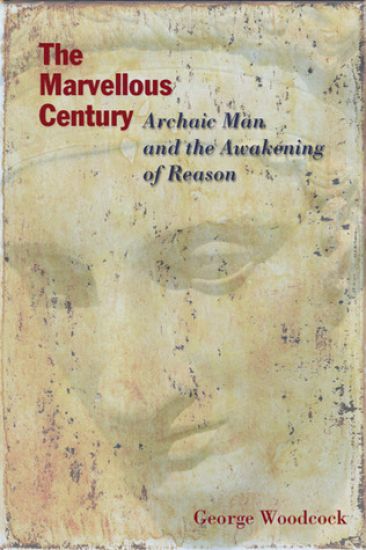
The Marvellous Century – Archaic Man and the Awakening of Reason
"The Marvellous Century," filled with characters, events, romance and intrigue, explores the literature, the philosophy, the politics and the sciences of the sixth century BC. It documents the writing of the Upanishads, pursues the thought of the Greek astronomer and philosopher Thales, traces the emergence of atomic theories in India, monitors the economics of the central Asia silk trade, reflects upon the great religions--Christianity, Islam, Zoroastrianism and Modern Judaism--and discusses how, and why, so much that was vital to our civilization came into being during this era.George Woodcock (1912-1995)--poet, author, essayist and widely known as a literary journalist and historian--published more than 90 titles on history, biography, philosophy, poetry and literary criticism.
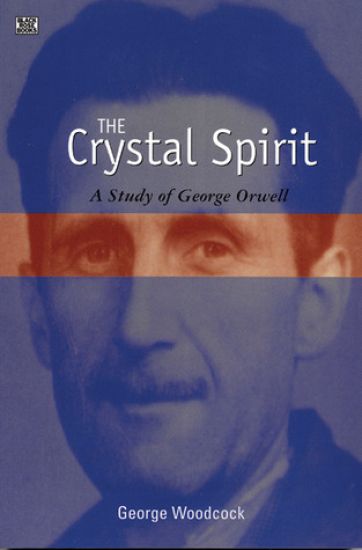
The Crystal Spirit

The Crystal Spirit

George Woodcock

Black Rose Books
2005
nidottu
"The Crystal Spirit is a revealing look at the great writer and political thinker George Orwell, whose visionary work gave us the great anti-utopias of twentieth-century literature. A close friend and colleague during the last decade of that remarkable writer's life, Woodcock was uniquely qualified to delve into the complex personal history of the man. Interwoven with Woodcock's own memories, the letters Orwell wrote to him and the published and unpublished recollections of other people who knew him, all against the political and literary background of Orwell's work, this groundbreaking intellectual biography is a general critique that brilliantly traces the evolution of an original writer in his most productive years. First published in 1966, it was awarded Canada's highest literary prize, the Governor General's Award for Literary Merit.
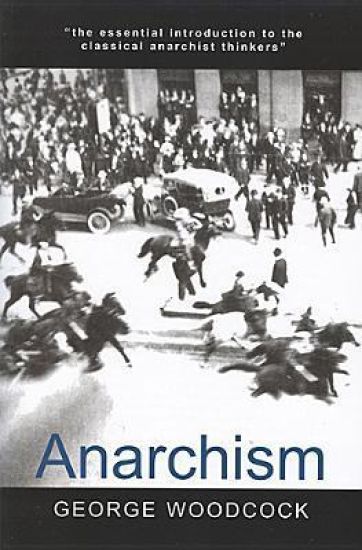
Anarchism

Anarchism

George Woodcock

Broadview Press Ltd
2004
pokkari
To what degree can anarchism be an effective organized movement? Is it realistic to think of anarchist ideas ever forming the basis for social life itself? These questions are widely being asked again today in response to the forces of economic globalization. The framework for such discussions was perhaps given its most memorable shape, however, in George Woodcock's classic study of anarchism—now widely recognized as the most significant twentieth-century overview of the subject. Woodcock surveys all of the major figures that shaped anarchist thought, from Godwin and Proudhon to Bakunin, Goldman, and Kropotkin, and looks as well at the long-term prospects for anarchism and anarchist thought. In Woodcock's view "pure" anarchism—characterized by "the loose and flexible affinity group which needs no formal organization"—was incompatible with mass movements that require stable organizations, that are forced to make compromises in the face of changing circumstances, and that need to maintain the allegiance of a wide range of supporters. Yet Woodcock continued to cherish anarchist ideals; as he said in a 1990 interview, "I think anarchism and its teachings of decentralization, of the coordination of rural and industrial societies, and of mutual aid as the foundation of any viable society, have lessons that in the present are especially applicable to industrial societies." This classic work of intellectual history and political theory (first published in the 1960s, revised in 1986) is now available exclusively from UTP Higher Education.
Gabriel Dumont

Gabriel Dumont

George Woodcock

Broadview Press Ltd
2003
pokkari
The struggle of the Métis of the Saskatchewan River against the government of Canada culminated in the Riel Rebellion of 1885—an event of central importance in shaping almost all of the key polarities of Canadian history. If Riel provided the intellectual inspiration for the Rebellion, it was Gabriel Dumont who provided its strategy, and arguably its soul. Dumont, a leading figure in the Métis society of hunters along the South Saskatchewan, had been president of the short-lived local government, and became "Adjutant General of the Métis people" when a Provisional Government was declared in 1885. After the defeat of the Rebellion by the Canadian militia Dumont lived for several years in the United States, and was for some time a performer in Buffalo Bill's Wild West Show. In his last years he returned to his old home near Batoche (site of the final defeat of the Métis forces in 1885), where he died in 1906. George Woodcock's biography of Dumont displays the author's remarkable gift for evocative narration and description. In the wake of its 1975 publication Canadians had a new reference point in the way they thought of the Riel Rebellion; alongside the spirituality and impulsiveness of Riel was the calm commitment of Dumont, whose intuitive feel for the land and for the moods of his people have now become part of the Canadian historical imagination. For this re-issue of Woodcock's classic biography noted historian J.R. Miller has written a substantial introduction setting Gabriel Dumont in the context of Canadian history as we now understand it, in the context of Canadian historiography, and in the context of Woodcock's other work. As Miller convincingly argues, the biography is richly deserving of a lasting place in Canada's historical literature.
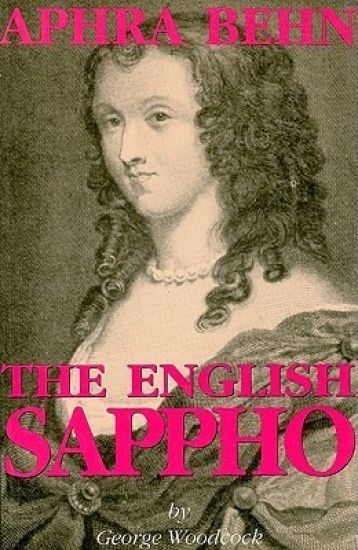
Aphra Behn

Aphra Behn

George Woodcock

Black Rose Books
1996
nidottu
"All women together ought to let flowers fall on the tomb of Aphra Behn, for it was she who earned them the right to speak their minds."--Virginia Woolf "A valuable introduction to this remarkable woman who was a pioneer feminist, free spirit, liberated woman and professional writer during the Restoration."--"Ottawa Citizen"
Power to Us All

Power to Us All

George Woodcock

Harbour Publishing
1992
pokkari
In his introduction to this provocative collection of essays, George Woodcock describes his response to a recent question about national unity. "I remarked impatiently that what interested me was not the achievement of 'national unity, but the accomplishment of creative anti-national disunity."Woodcock argues that if Canadians are angry about their alienation from the political decision-making process, it is because, in Canada, "geography has conspired with history to develop a whole series of local traditions that gain by their mingling, yet must retain their separateness for their mingling to be meaningful."The eight essays in this collection reveal how Canada's political practices betray its true life as a society. They argue for Native self-government, municipal autonomy, and consider the enormous importance of transportation and communications to a true participatory democracy. The book concludes with an inspiring essay on how basic changes in our approach to our society can be achieved.
Peter Kropotkin – From Prince to Rebel

Peter Kropotkin – From Prince to Rebel

George Woodcock

Black Rose Books
1990
nidottu
Anarchism - the concept of a society without authority, of a civil order without any form of constitution or government - has fascinated people almost as long as we have possessed the power of speculative thought. In the general history of anarchism, the name of Peter Kropotkin dominates.Born in 1842 into an ancient military family of Russian princes, Kropotkin was selected as a child for the elite Corps of Pages by Tsar Nicholas I himself. Shortly before his death in 1921, he had moved so far from his aristocratic beginnings and attained such stature as a libertarian leader that he could write with impunity to Lenin, "Vladimir Ilyich, your concrete actions are completely unworthy of the ideas you pretend to hold."Woodcock and Avakumovic's biography, From Prince to Rebel, details the life that flowed between these two points in time. It surveys and analyses the most significant aspects of Kropotkin's life and thought: his formative years in Russia, 1842-1876, and the origins of his anarchist thinking (military service in eastern Siberia, the influence of the works of Proudhon and Bakunin, his role in the Chaikovsky Circle); his years as an migr in western Europe, 1876-1917, and the ripening of his political though (editor ofLe Revolte, his views on Marxist socialism); and his last years in the Soviet Union, 1917-1921, the revolution and civil war, and his meeting and correspondence with Lenin.For more details, visit: http: //blackrosebooks.net/products/view/Peter+Kropotkin%3A+From+Prince+to+Rebel/28352
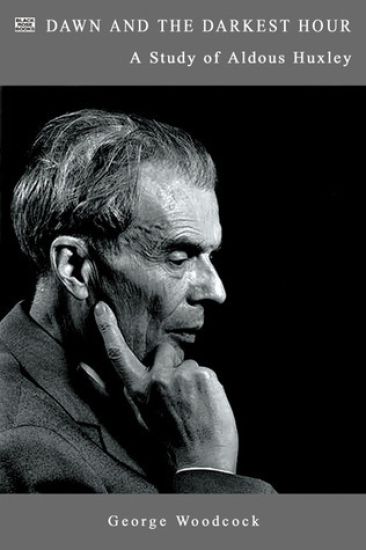
Dawn and the Darkest Hour

Dawn and the Darkest Hour

George Woodcock

Black Rose Books
2025
sidottu
In "Dawn and the Darkest Hour," poet and author George Woodcock explores the famously complex life and career of Aldous Huxley. A brilliant and satirical novelist of ideas; a popular journalist and essayist on scientific and political subjects; a prophet of the future ("Brave New World"); a pioneer of psychedelic experimentation ("The Doors of Perception"), Huxley was a man plagued by excessive intellectual curiosity and a withdrawn melancholic nature. In the dramatic range of his characters and the encyclopedic quality of his thought, Huxley expressed some of the most interesting and disturbing commentary about the condition of human beings and their relationship to society. As Woodcock traced the progress of Huxley's works, he recognized attempts to bring about a synthesis of knowledge "that would give total meaning to existence." In this striking and encompassing critical biography, Woodcock persuasively asks us to reconsider Huxley's works as the stages of "a spiritual pilgrimage," as he demonstrates that Huxley's entire remarkable "oeuvre" must be taken as a whole, as a unified "movement out of darkness toward light." It is a fascinating journey that provides a window into Huxley's life and character, that shows an intellectual continually striving for knowledge--intuitive, scientific and otherwise--and as such, is certain to renew interest in one of the most the most important and influential minds of the twentieth century. George Woodcock (1912 1995)--award-winning poet, author, essayist and widely known as a literary journalist and historian--published more than 90 titles on history, biography, philosophy, poetry and literary criticism.