Kirjojen hintavertailu. Mukana 12 390 323 kirjaa ja 12 kauppaa.
Kirjailija
George Yancey
Kirjat ja teokset yhdessä paikassa: 22 kirjaa, julkaisuja vuosilta 2003-2026, suosituimpien joukossa Identity Politics in the United States. Vertaile teosten hintoja ja tarkista saatavuus suomalaisista kirjakaupoista.
This book examines the development of identity politics and its ramifications across American political and social culture. The author provides an important foundational narrative and undertakes qualitative content analysis of primary sources in antiracism and conservative Christian activism in demonstrating the broad scope of the reach of identity politics in American political culture. Exploring identity politics as expressed by progressive conservative groups yields important empirical insight into how identity politics has become a predominant political tool that transcends particular partisan social structures. The author argues that Identity politics can be quite effective in securing short-term victories, given the passion that such politics can bring. However, since identity politics has a strong propensity to recreate marginalizing structures, it may not be effective in making sustainable changes to support a larger political and social community. A better long-term direction, in the author’s view, is moving from an identity political framework towards a political framework that includes the interests of groups across the social and political spectrum. Identity Politics in the United States is essential for students and instructors in sociology, social theory, political science, American studies, cultural studies as well as some general/popular readership.
This book examines the development of identity politics and its ramifications across American political and social culture. The author provides an important foundational narrative and undertakes qualitative content analysis of primary sources in antiracism and conservative Christian activism in demonstrating the broad scope of the reach of identity politics in American political culture. Exploring identity politics as expressed by progressive conservative groups yields important empirical insight into how identity politics has become a predominant political tool that transcends particular partisan social structures. The author argues that Identity politics can be quite effective in securing short-term victories, given the passion that such politics can bring. However, since identity politics has a strong propensity to recreate marginalizing structures, it may not be effective in making sustainable changes to support a larger political and social community. A better long-term direction, in the author’s view, is moving from an identity political framework towards a political framework that includes the interests of groups across the social and political spectrum. Identity Politics in the United States is essential for students and instructors in sociology, social theory, political science, American studies, cultural studies as well as some general/popular readership.
In the summer of 2020 when protests were mobilizing for social justice, the term “antiracist” started getting more traction. It demanded a more active civic orientation and a commitment to uprooting racism from institutions. In Who Is Antiracist? George Yancey and Hayoung David Oh use this flashpoint moment to ask, what are the characteristics of those who support antiracism? Who is most likely to be swayed toward this set of commitments, who is not, and how do they understand each other?Who Is Antiracist? provides a systematic approach to understanding the motivations and intentions of racial progressives as well as the impact of political ideology on antiracism. The authors discuss the theoretical origins of contemporary antiracism and review key works of antiracism to piece together the characteristics that define it. They also create the Antiracism Attitude Scale to explore the demographic makeup and social views of those who support the type of antiracism popularized in the United States. Acknowledging that antiracism faces powerful challenges in fully obtaining the goals articulated by its proponents, Who Is Antiracist? enlightens us about the continuing racial conflict in our society and warns against the risk of antiracism becoming just a proxy for ordinary party politics.
In the summer of 2020 when protests were mobilizing for social justice, the term “antiracist” started getting more traction. It demanded a more active civic orientation and a commitment to uprooting racism from institutions. In Who Is Antiracist? George Yancey and Hayoung David Oh use this flashpoint moment to ask, what are the characteristics of those who support antiracism? Who is most likely to be swayed toward this set of commitments, who is not, and how do they understand each other?Who Is Antiracist? provides a systematic approach to understanding the motivations and intentions of racial progressives as well as the impact of political ideology on antiracism. The authors discuss the theoretical origins of contemporary antiracism and review key works of antiracism to piece together the characteristics that define it. They also create the Antiracism Attitude Scale to explore the demographic makeup and social views of those who support the type of antiracism popularized in the United States. Acknowledging that antiracism faces powerful challenges in fully obtaining the goals articulated by its proponents, Who Is Antiracist? enlightens us about the continuing racial conflict in our society and warns against the risk of antiracism becoming just a proxy for ordinary party politics.
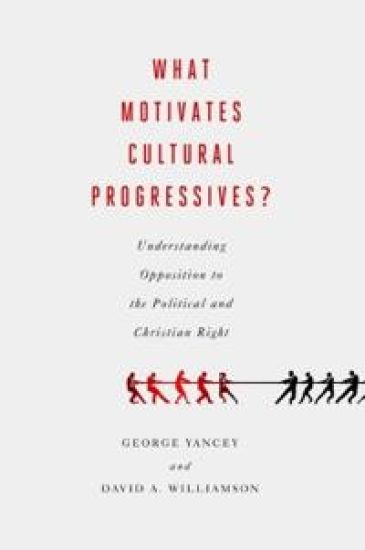
Public activism has grown significantly during the 21st century as a cornerstone of the democratic process. But activism, regardless of its ideological roots, is often interpreted through the lens of the culture wars-pitting social movements with opposing ideals against one another. For too long, as George Yancey and David Williamson argue, progressive activists, one side of these culture wars, have been seldom studied and virtually never critiqued in public conversation.Yancey and Williamson describe and analyze the multifaceted cultural progressive movement and its place within the larger American society. What they uncover is a collective identity informed by staunch opposition to cultural conservatives-both political and religious-that is motivated by the progressive activist's preference for absolute rationality. Further, Yancey and Williamson argue that, despite great resistance to conservatives purportedly nonrational appeals, progressive activists are found to use irrational techniques when seeking to establish their movement and position their cause as socially legitimate.In the contemporary heated political climate the often-surprising and likely controversial findings of What Motivates Cultural Progressives? will prove essential, thought-provoking reading for understanding the growing concern over the influence of activism.
Irreconcilable differences drive the division between progressive and conservative Christians—is there a divorce coming? Much attention has been paid to political polarization in America, but far less to the growing schism between progressive and conservative Christians. In this groundbreaking new book, George Yancey and Ashlee Quosigk offer the provocative contention that progressive and conservative Christianities have diverged so much in their core values that they ought to be thought of as two separate religions. The authors draw on both quantitative data and interviews to uncover how progressive and conservative Christians determine with whom they align themselves religiously, and how they distinguish themselves from each other. They find that progressive Christians emphasize political agreement relating to social justice issues as they determine who is part of their in-group, and focus less on theological agreement. Among conservative Christians, on the other hand, the major concern is whether one agrees with them on core theological points. Progressive and conservative Christians thus use entirely different factors in determining their social identity and moral values. In a time when religion and politics have never seemed so intertwined, One Faith No Longer offers a timely and compelling reframing of an age-old conflict.
Irreconcilable differences drive the division between progressive and conservative Christians—is there a divorce coming? Much attention has been paid to political polarization in America, but far less to the growing schism between progressive and conservative Christians. In this groundbreaking new book, George Yancey and Ashlee Quosigk offer the provocative contention that progressive and conservative Christianities have diverged so much in their core values that they ought to be thought of as two separate religions. The authors draw on both quantitative data and interviews to uncover how progressive and conservative Christians determine with whom they align themselves religiously, and how they distinguish themselves from each other. They find that progressive Christians emphasize political agreement relating to social justice issues as they determine who is part of their in-group, and focus less on theological agreement. Among conservative Christians, on the other hand, the major concern is whether one agrees with them on core theological points. Progressive and conservative Christians thus use entirely different factors in determining their social identity and moral values. In a time when religion and politics have never seemed so intertwined, One Faith No Longer offers a timely and compelling reframing of an age-old conflict.
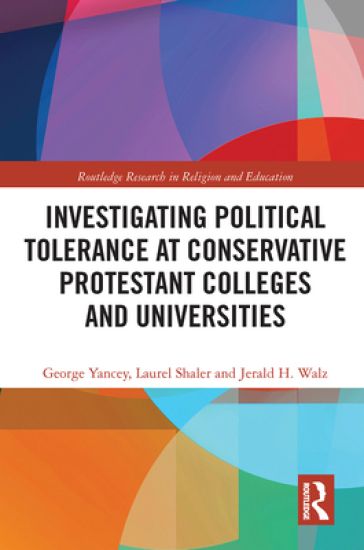
This book aims to investigate the level of political tolerance at conservative Protestant colleges and universities. Through innovative and methodologically sophisticated techniques, the authors test the political openness of these institutions as a proxy for their willingness to accept opinions that fall outside of those held by their religious community. The purpose of this study is to determine if there is an insular environment at conservative Protestant institutions beyond religious obligations, or if these institutions are only restrictive as it concerns those theological commitments. Drawing from five distinct sets of data, the authors demonstrate that conservative Protestant institutions of higher education exhibit more political diversity and political tolerance than other institutions of higher education, including elite ‘Research 1’ institutions.
This book aims to investigate the level of political tolerance at conservative Protestant colleges and universities. Through innovative and methodologically sophisticated techniques, the authors test the political openness of these institutions as a proxy for their willingness to accept opinions that fall outside of those held by their religious community. The purpose of this study is to determine if there is an insular environment at conservative Protestant institutions beyond religious obligations, or if these institutions are only restrictive as it concerns those theological commitments. Drawing from five distinct sets of data, the authors demonstrate that conservative Protestant institutions of higher education exhibit more political diversity and political tolerance than other institutions of higher education, including elite ‘Research 1’ institutions.
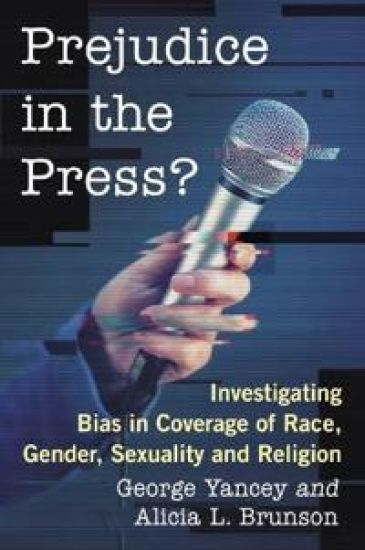
Charges of "fake news" tend to be politically motivated whether made by Republicans or Democrats. Yet the potential for media bias is real and deserves an honest assessment. Using an audit technique--providing journalists with similar scenarios but altering key details--the authors evaluate whether reporters and editors write different narratives depending on the characteristics of the principle issues in the story. The results indicate that race, gender, sexuality and religion have little effect on whether a story will be covered, but do color the story that is written. Data suggest that news personnel may be operating in ways that promote progressive political leanings. The results of this study are important for journalists seeking to move closer to objective standards of reporting.
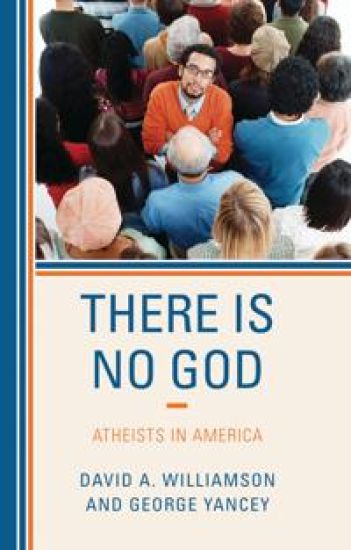
There Is No God: Atheists in America answers several questions pertaining to how the atheist population has grown from relatively small numbers to have a disproportionately large impact on important issues of our day, such as the separation of church and state, abortion, gay marriage, and public school curricula. Williamson and Yancey answer the common questions surrounding atheism. Just how common is the dismissal and derision of religion expressed by atheists? How are we to understand the world view of atheists and their motivations in political action and public discourse? Finally, is there any hope for rapprochement in the relationship of atheism and theism? In There Is No God, the authors begin with a brief history of atheism to set the stage for a better understanding of contemporary American atheism. They then explore how the relationship between religious and atheistic ideologies has evolved as each attempted to discredit the other in different ways at different times and under very different social and political circumstances. Although atheists are a relatively small minority, atheists appear to be growing in number and in their willingness to be identified as atheists and to voice their non-belief. As those voices of atheism increase it is essential that we understand how and why those who are defined by such a simple term as “non-believers in the existence of God” should have such social and political influence. The authors successfully answer the broader question of the apparent polarization of the religious and non-religious dimensions of American society.
Right-wing authoritarianism has emerged as a social psychological theory to explain conservative political and religious movements. Such authoritarianism is said to be rooted in the willingness of individuals to support authority figures who seek to restrict civil and human rights. George Yancey investigates the effectiveness of right-wing authoritarianism and the social phenomenon it represents. He analyzes how authoritarians on both the right and the left sides of the sociopolitical spectrum dehumanize their opponents.Yancey details earlier research on the phenomena of right-wing authoritarianism, asking whether its characteristics are inherently linked to religious and political conservatives. He presents his Christian dehumanization scale, and shows that those high in right-wing authoritarianism differ from those high in Christian dehumanization in one key aspect: they did not support authoritarian measures against conservative Christians.Yancey argues that authoritarianism is a tool of a larger phenomenon of dehumanization. He notes that dehumanization is sometimes used by conservatives who wish to use authoritarian measures against political radicals. Dehumanization is also used by progressives who would like to use authoritarian measures against conservative Christians. Yancey paints a bold picture with troubling implications about our understanding of society; he also considers the possible public policy dimensions of his work.
Conservative and liberal commentators alike have long argued that social bias exists in American higher education. Yet those arguments have largely lacked much supporting evidence. In this first systematic attempt to substantiate social bias in higher education, George Yancey embarks on a quantitative and qualitative analysis of the social biases and attitudes of faculties in American universities - surveying professors in disciplines from political science to experimental biology and then examining the blogs of 42 sociology professors. In so doing, Yancey finds that politically - and, even more so, religiously - conservative academics are at a distinct disadvantage in our institutions of learning, threatening the free exchange of ideas to which our institutions aspire and leaving many scientific inquiries unexplored.
So Many Christians, So Few Lions is a provocative look at anti-Christian sentiments in America. Drawing on both quantitative and qualitative research, authors George Yancey and David A. Williamson show that even though (or perhaps because) Christianity is the dominant religion in the United States, bias against Christians also exists—particularly against conservative Christians—and that this bias is worth understanding. The book does not attempt to show the prevalence of anti-Christian sentiments—called Christianophobia—but rather to document it, to dig into where and how it exists, to explore who harbors these attitudes, and to examine how this bias plays itself out in everyday life. Excerpts from the authors’ interviews highlight the fear and hatred that some people harbor towards Christians, especially the Christian right, and the ways these people exhibit elements of bigotry, prejudice, and dehumanization. The authors argue that understanding anti-Christian bias is important for understanding some social dynamics in America, and they offer practical suggestions to help reduce religious intolerance of all kinds.
Right-wing authoritarianism has emerged as a social psychological theory to explain conservative political and religious movements. Such authoritarianism is said to be rooted in the willingness of individuals to support authority figures who seek to restrict civil and human rights. George Yancey investigates the effectiveness of right-wing authoritarianism and the social phenomenon it represents. He analyzes how authoritarians on both the right and the left sides of the sociopolitical spectrum dehumanize their opponents.
There Is No God: Atheists in America answers several questions pertaining to how the atheist population has grown from relatively small numbers to have a disproportionately large impact on important issues of our day, such as the separation of church and state, abortion, gay marriage, and public school curricula. Williamson and Yancey answer the common questions surrounding atheism. Just how common is the dismissal and derision of religion expressed by atheists? How are we to understand the world view of atheists and their motivations in political action and public discourse? Finally, is there any hope for rapprochement in the relationship of atheism and theism? In There Is No God, the authors begin with a brief history of atheism to set the stage for a better understanding of contemporary American atheism. They then explore how the relationship between religious and atheistic ideologies has evolved as each attempted to discredit the other in different ways at different times and under very different social and political circumstances. Although atheists are a relatively small minority, atheists appear to be growing in number and in their willingness to be identified as atheists and to voice their non-belief. As those voices of atheism increase it is essential that we understand how and why those who are defined by such a simple term as “non-believers in the existence of God” should have such social and political influence. The authors successfully answer the broader question of the apparent polarization of the religious and non-religious dimensions of American society.
Public activism has grown significantly during the 21st century as a cornerstone of the democratic process. But activism, regardless of its ideological roots, is often interpreted through the lens of the culture wars-pitting social movements with opposing ideals against one another. For too long, as George Yancey and David Williamson argue, progressive activists, one side of these culture wars, have been seldom studied and virtually never critiqued in public conversation.Yancey and Williamson describe and analyze the multifaceted cultural progressive movement and its place within the larger American society. What they uncover is a collective identity informed by staunch opposition to cultural conservatives-both political and religious-that is motivated by the progressive activist's preference for absolute rationality. Further, Yancey and Williamson argue that, despite great resistance to conservatives purportedly nonrational appeals, progressive activists are found to use irrational techniques when seeking to establish their movement and position their cause as socially legitimate.In the contemporary heated political climate the often-surprising and likely controversial findings of What Motivates Cultural Progressives? will prove essential, thought-provoking reading for understanding the growing concern over the influence of activism.
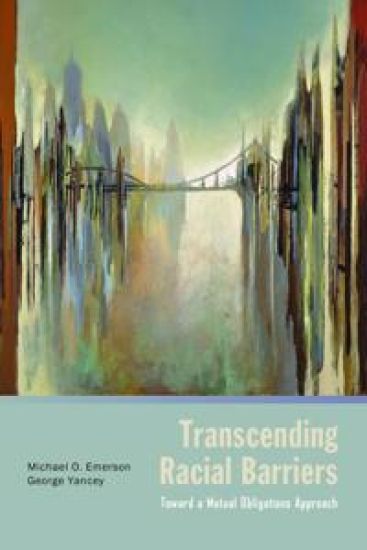
Despite some progress over the past few decades against racial inequalities and race relations, American society continues to produce racial attitudes and institutional discrimination that reinforce the racial divide. Activists and scholars have long argued over the best way to end racial division and solutions tend to fall into two main categories: those who argue that whites bear more responsibility for ending racial inequality through reparations and affirmative action, and those who argue that the responsibility ultimately resides with non-whites who support colorblindness and conformity to mainstream values and culture. To show why these solutions won't work, Emerson and Yancey first offer a historical overview of racism in American society. They document the move from white supremacy to institutional racism, and then briefly look at modern efforts to overcome the racialized nature of our society. The authors argue that both progressive and conservative approaches have failed, as they continually fall victim to forces of ethnocentrism and group interest. Through ethnocentrism, it is unlikely that whites or people of color are willing to consider the needs and concerns of other racial groups. This leads to actions shaped by a desire to promote group interests whereby majority group members promote philosophies that support a racial status quo that works to their advantage, while minority groups encourage any proactive remedy for racial justice. And both groups pursue these interests regardless of the outcome for others, making it impossible to find solutions that work for everyone. Emerson and Yancey then move on to explore group interest in more depth and possible ways to account for the perspectives of both majority and minority group members. They look to multiracial congregations, multiracial families, the military, and sports teams-all situations in which group interests have been overcome before. In each context they find the development of a core set of values that binds together different racial groups along with the flexibility to express racially-based cultural uniqueness that does not conflict with this "critical core." These elements form the basis of their mutual obligations approach which calls for a careful definition of the racial problem, the identification of a critical core, recognition of cultural differences, and solutions that take account of the concerns of other racial groups. Though Transcending Racial Barriers offers a balanced approach towards dealing with racial alienation, it is a bold step forward in the debate about what sort of public policies can overcome the ethnocentrism inherent in so much of the racism we suffer from.
Despite some progress over the past few decades against racial inequalities and race relations, American society continues to produce racial attitudes and institutional discrimination that reinforce the racial divide. Activists and scholars have long argued over the best way to end racial division and solutions tend to fall into two main categories: those who argue that whites bear more responsibility for ending racial inequality through reparations and affirmative action, and those who argue that the responsibility ultimately resides with non-whites who support colorblindness and conformity to mainstream values and culture. To show why these solutions won't work, Emerson and Yancey first offer a historical overview of racism in American society. They document the move from white supremacy to institutional racism, and then briefly look at modern efforts to overcome the racialized nature of our society. The authors argue that both progressive and conservative approaches have failed, as they continually fall victim to forces of ethnocentrism and group interest. Through ethnocentrism, it is unlikely that whites or people of color are willing to consider the needs and concerns of other racial groups. This leads to actions shaped by a desire to promote group interests whereby majority group members promote philosophies that support a racial status quo that works to their advantage, while minority groups encourage any proactive remedy for racial justice. And both groups pursue these interests regardless of the outcome for others, making it impossible to find solutions that work for everyone. Emerson and Yancey then move on to explore group interest in more depth and possible ways to account for the perspectives of both majority and minority group members. They look to multiracial congregations, multiracial families, the military, and sports teams-all situations in which group interests have been overcome before. In each context they find the development of a core set of values that binds together different racial groups along with the flexibility to express racially-based cultural uniqueness that does not conflict with this "critical core." These elements form the basis of their mutual obligations approach which calls for a careful definition of the racial problem, the identification of a critical core, recognition of cultural differences, and solutions that take account of the concerns of other racial groups. Though Transcending Racial Barriers offers a balanced approach towards dealing with racial alienation, it is a bold step forward in the debate about what sort of public policies can overcome the ethnocentrism inherent in so much of the racism we suffer from.
Christians have struggled with racial issues for centuries, and often inadvertently contribute to the problem. Many proposed solutions have been helpful, but these only take us so far. Adding to this complex situation is the reality that Christians of different races see the issues differently. Sociologist George Yancey surveys a range of approaches to racial healing that Christians have used and offers a new model for moving forward. The first part of the book analyzes four secular models regarding race used by Christians (colorblindness, Anglo-conformity, multiculturalism and white responsibility) and shows how each has its own advantages and limitations. Part two offers a new "mutual responsibility" model, which acknowledges that both majority and minority cultures have their own challenges, tendencies, and sins to repent of, and that people of different races approach racial reconciliation and justice in differing but complementary ways. Yancey's vision offers hope that people of all races can walk together on a shared path--not as adversaries, but as partners.