Kirjojen hintavertailu. Mukana 12 657 676 kirjaa ja 12 kauppaa.

Kirjailija

George Yancy

Kirjat ja teokset yhdessä paikassa: 23 kirjaa, julkaisuja vuosilta 2005-2026, suosituimpien joukossa Until Our Lungs Give Out. Vertaile teosten hintoja ja tarkista saatavuus suomalaisista kirjakaupoista.

23 kirjaa

Kirjojen julkaisuhaarukka 2005-2026.

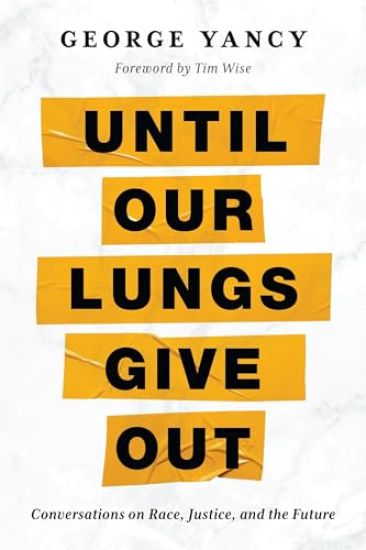
Until Our Lungs Give Out

Until Our Lungs Give Out

George Yancy; Tim Wise

BLOOMSBURY PUBLISHING PLC
2026
nidottu
A 2023 Library Journal Best Social Sciences Title From Library Journal's Starred Review: "All readers stand to learn something from this compelling book." Award-winning author, scholar, and social visionary George Yancy brings together the greatest minds of our time to speak truth to power and welcome everyone into a conversation about the pursuit of justice, equality, and peace. This interwoven collection of searingly honest interviews with leading intellectuals includes conversations with Noam Chomsky, Judith Butler, Cornel West, Robin D. G. Kelley, and Peter McLaren. Each conversation bears witness to the weighty moment in which it was first conducted and presented by Truthout and Tikkun magazines while pointing to ramifications, future hurdles, and practical optimism for moving forward. Learning how to speak about such topics as white supremacy and global whiteness, xenophobia, anti-BIPOC racism, fear of critical race theory, and the importance of Black feminist and trans perspectives, readers will be better able to join future conversations with their peers, those in power, and those who need to be empowered to change the status quo.
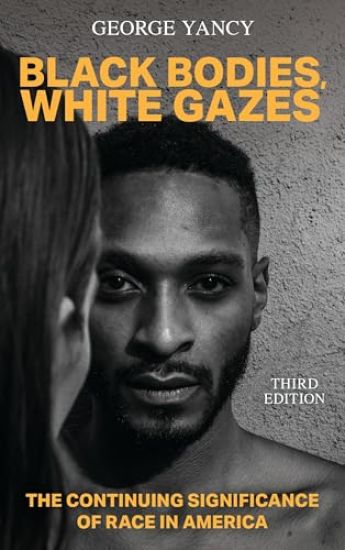
Black Bodies, White Gazes

Black Bodies, White Gazes

George Yancy

BLOOMSBURY PUBLISHING PLC
2025
sidottu
George Yancy’s third edition of Black Bodies, White Gazes applies a clear and dynamic phenomenological framework of race to the history and most recent headlines in social justice and race relations. Including coverage of police murders and brutality against Black Americans and the rise of white nationalism, this is a timeless introduction to the philosophy of race.The third edition features new chapter introductions and discussion questions from philosopher Taine Duncan; a new chapter giving critical phenomenological attention to contemporary anti-Black violence against individuals such as George Floyd, Ahmaud Arbery, Sonya Massey, and Kayla Moore; and a new coda featuring the author's interview with photographer Daniel C. Blight.
Black Bodies, White Gazes

Black Bodies, White Gazes

George Yancy

BLOOMSBURY PUBLISHING PLC
2025
nidottu
George Yancy’s third edition of Black Bodies, White Gazes applies a clear and dynamic phenomenological framework of race to the history and most recent headlines in social justice and race relations. Including coverage of police murders and brutality against Black Americans and the rise of white nationalism, this is a timeless introduction to the philosophy of race.The third edition features new chapter introductions and discussion questions from philosopher Taine Duncan; a new chapter giving critical phenomenological attention to contemporary anti-Black violence against individuals such as George Floyd, Ahmaud Arbery, Sonya Massey, and Kayla Moore; and a new coda featuring the author's interview with photographer Daniel C. Blight.
Breaking the Silence

Breaking the Silence

George Yancy

ROWMAN LITTLEFIELD
2024
sidottu
George Yancy is no stranger to controversy. In his infamous New York Times article “Dear White America” and the ensuing book, Backlash, he called on white Americans to acknowledge and confront the ways in which they have benefited from white privilege. In this book, Yancy turns the lens on himself to consider the many ways in which he has benefited from and helped to perpetuate sexism. From childhood and adolescence when boys learn to regard girls as objects of prey to the expectation of objectifying women’s bodies as a defining part of manhood, men who profess shock at sexual assault and harassment silently contribute to a culture that perpetuates violence against women. Combining his own experience with a wide ranging review of contemporary thought, Yancy’s incisive book calls on all men to acknowledge their male privilege and raise their voices against sexism.
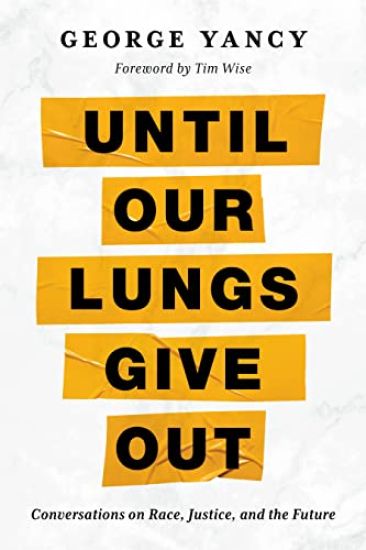
Until Our Lungs Give Out

Until Our Lungs Give Out

George Yancy; Tim Wise

BLOOMSBURY PUBLISHING PLC
2023
sidottu
Award-winning author, scholar, and social visionary George Yancy brings together the greatest minds of our time to speak truth to power and welcome everyone into a conversation about the pursuit of justice, equality, and peace.This interwoven collection of searingly honest interviews with leading intellectuals includes conversations with Noam Chomsky, Judith Butler, Cornel West, Robin D. G. Kelley, and Peter McLaren. Each conversation bears witness to the weighty moment in which it was first conducted and presented by Truthout and Tikkun magazines while pointing to ramifications, future hurdles, and practical optimism for moving forward. Learning how to speak about such topics as white supremacy and global whiteness, xenophobia, anti-BIPOC racism, fear of critical race theory, and the importance of Black feminist and trans perspectives, readers will be better able to join future conversations with their peers, those in power, and those who need to be empowered to change the status quo.
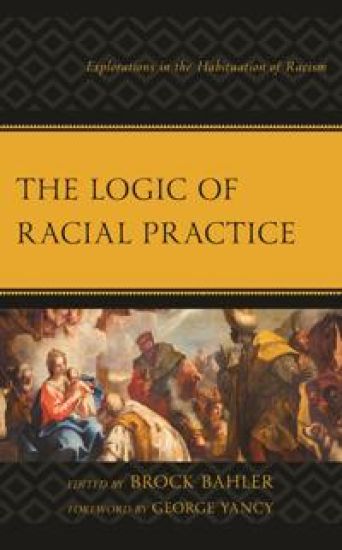
The Logic of Racial Practice

The Logic of Racial Practice

George Yancy

BLOOMSBURY PUBLISHING PLC
2023
nidottu
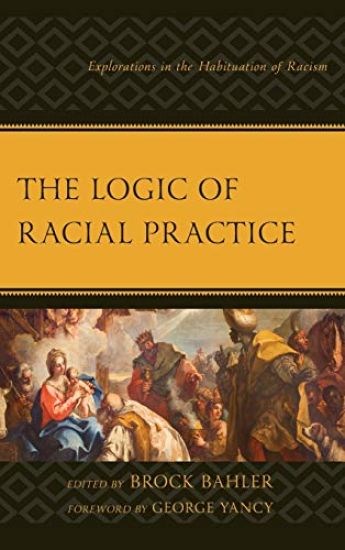
The title of this collection, The Logic of Racial Practice, pays homage to the work of Pierre Bourdieu, who coined the term habitus to name the pretheoretical, embodied dispositions that orient our social interactions and meaningfully frame our lived experience. The language of habit uniquely accounts for not only how we are unreflectively conditioned by our social environments but also how we responsibly choose to enact our habits and can change them. Hence, this collection of essays edited by Brock Bahler explores how white supremacy produces a racialized modality by which we live as embodied beings, arguing that race—and racism—is performative, habituated, and enacted. We do not regularly have to “think” about race, since race is a praxis, producing embodied habits that have become sedimented into our ways of being-in-the-world, and that instill within us racialized (and racist) dispositions, postures, and bodily comportments that inform how we interact with others. The construction of race produces a particular bodily formation in which we are shaped to viscerally perceive through a racialized lens images, words, activities, and events without any self-reflective conceptualization, and which we perpetuate throughout our day-to-day choices. The contributors argue that eradicating racism in our society requires unlearning these racialized habitus and cultivating new anti-racist habits.
The Logic of Racial Practice

The Logic of Racial Practice

George Yancy

Lexington Books
2021
sidottu
The title of this collection, The Logic of Racial Practice, pays homage to the work of Pierre Bourdieu, who coined the term habitus to name the pretheoretical, embodied dispositions that orient our social interactions and meaningfully frame our lived experience. The language of habit uniquely accounts for not only how we are unreflectively conditioned by our social environments but also how we responsibly choose to enact our habits and can change them. Hence, this collection of essays edited by Brock Bahler explores how white supremacy produces a racialized modality by which we live as embodied beings, arguing that race—and racism—is performative, habituated, and enacted. We do not regularly have to “think” about race, since race is a praxis, producing embodied habits that have become sedimented into our ways of being-in-the-world, and that instill within us racialized (and racist) dispositions, postures, and bodily comportments that inform how we interact with others. The construction of race produces a particular bodily formation in which we are shaped to viscerally perceive through a racialized lens images, words, activities, and events without any self-reflective conceptualization, and which we perpetuate throughout our day-to-day choices. The contributors argue that eradicating racism in our society requires unlearning these racialized habitus and cultivating new anti-racist habits.
Across Black Spaces

Across Black Spaces

George Yancy

Rowman Littlefield
2020
sidottu
Across Black Spaces gathers a diverse array of essays and interviews by American philosopher George Yancy. Within this multidisciplinary framework are a series of public intellectual essays that drew international media acclaim for their spotlight on vicious racial tensions in American academia and society at large.
Across Black Spaces

Across Black Spaces

George Yancy

Rowman Littlefield
2020
nidottu
Across Black Spaces gathers a diverse array of essays and interviews by American philosopher George Yancy. Within this multidisciplinary framework are a series of public intellectual essays that drew international media acclaim for their spotlight on vicious racial tensions in American academia and society at large.
Richard J. Bernstein and the Expansion of American Philosophy
Thinking The Plural: Richard J. Bernstein and the Expansion of American Philosophy is a text devoted to highlighting, scrutinizing, and deploying Bernstein’s philosophical research as it has intersected and impacted American and European philosophy. Collecting essays written explicitly for the volume from former students of Bernstein’s, the book shows the breadth and scope of his work while expanding key insights into new contexts and testing his work against thinkers outside the canon of his own scholarship. In light of urgent contemporary ethical and political problems, the papers collected here show the continuing relevance of Bernstein’s lifelong focus on democracy, dialogue, pragmatism, fallibilism, and pluralism. Bernstein has always contested the supposed Analytic/Continental divide, insisting on the pluralism of philosophical discourses and styles that contribute to genuine debate and save philosophy from stale academicism. This book enacts Bernstein’s pluralistic spirit by crossing traditions and generating new avenues for ongoing research. A central argument of the book is that thinkers of different backgrounds, using diverse, and even clashing methodologies, contribute to the understanding of a given problem, issue, or theme. This argument lies at the heart of Bernstein’s published works and is central to the fallibilistic pragmatism of his pedagogy. This book therefore does not rest on a single answer to a question or a univocal theme, but shows the differentiation of Bernstein’s scholarship through the extension of pluralism into territory Bernstein himself did not enter. The chapters, individually and collectively, demonstrate the force of Bernstein’s pluralism beyond mere commentary on his works. This book will be of interest to many people: 1) scholars, students and others in American philosophy who have worked on or with Richard J. Bernstein or in the tradition of American Pragmatism widely construed, 2) those interested in the intersections between American and European philosophy or between the Analytic and Continental traditions, 3) professional philosophers, philosophy students, and public intellectuals concerned with the application of theory to contemporary ethical and political problems, and 4) those interested in an introduction to the key concepts animating Bernstein’s work and their relationship to the history of philosophy.
The Fire Now

The Fire Now

Christina Sharpe; George Yancy

Zed Books Ltd
2018
nidottu
Not so long ago, many spoke of a ‘post-racial’ era, claiming that advances made by people of colour showed that racial divisions were becoming a thing of the past. But the hollowness of such claims has been exposed by the rise of Trump and Brexit, both of which have revealed deep seated white resentment, and have been attended by a resurgence in hate crime and overt racial hatred on both sides of the Atlantic.At a time when progress towards equality is not only stalling, but being actively reversed, how should anti-racist scholars respond? This collection carries on James Baldwin’s legacy of bearing witness to racial violence in its many forms. Its authors address how we got to this particular moment, arguing that it can only be truly understood by placing it within the wider historical and structural contexts that normalise racism and white supremacy. Its chapters engage with a wide range of contemporary issues and debates, from the whiteness of the recent women’s marches, to anti-racist education, to the question of Black resistance and intersectionality. Mapping out the problems we face, and the solutions we need, the book considers how anti-racist scholarship and activism can overcome the setbacks posed by the resurgence of white supremacy.
The Fire Now

The Fire Now

Christina Sharpe; George Yancy

Zed Books Ltd
2018
sidottu
Not so long ago, many spoke of a ‘post-racial’ era, claiming that advances made by people of colour showed that racial divisions were becoming a thing of the past. But the hollowness of such claims has been exposed by the rise of Trump and Brexit, both of which have revealed deep seated white resentment, and have been attended by a resurgence in hate crime and overt racial hatred on both sides of the Atlantic.At a time when progress towards equality is not only stalling, but being actively reversed, how should anti-racist scholars respond? This collection carries on James Baldwin’s legacy of bearing witness to racial violence in its many forms. Its authors address how we got to this particular moment, arguing that it can only be truly understood by placing it within the wider historical and structural contexts that normalise racism and white supremacy. Its chapters engage with a wide range of contemporary issues and debates, from the whiteness of the recent women’s marches, to anti-racist education, to the question of Black resistance and intersectionality. Mapping out the problems we face, and the solutions we need, the book considers how anti-racist scholarship and activism can overcome the setbacks posed by the resurgence of white supremacy.
American Nightmare

American Nightmare

Henry A. Giroux; George Yancy

City Lights Books
2018
pokkari
A far-ranging critique of the rise of authoritarianism and white nationalism in the US and the consequences for democracy.In this searing critique of the Trump presidency and the rise of authoritarianism in the U.S., Henry Giroux asks, How have we arrived here, and what can be done? In a discussion of events that ranges from the Administration's ongoing attempts to repeal Obamacare and its anti-immigration policies and travel bans, to the normalization of a culture of cruelty and the "weaponization of ignorance," Giroux details the urgency of our current crisis.Giroux explores the political dystopias-those of recent history and those depicted in some of the classics of Western literature-that result when authoritarian forces outmaneuver accountability. He argues that only through increased civic investment in multicultural democracy, education, and resistance can we hope to push back the ominous convergence of white nationalism and elite economic interests.Praise for American Nightmare:"In this current era of corporate media misdirection and misinformation . . . Henry Giroux is one of the few great political voices of today, with powerful insight into the truth. Dr. Giroux is defiantly explaining, against the grain, what's REALLY going on right now, and doing so quite undeniably. Simply put, the ideas he brings forth are a beacon that need to be seen and heard and understood in order for the world to progress."-Julian Casablancas, lead vocalist for The Strokes"In frightening times like these, what is desperately needed is an informed and wise voice that speaks clearly and with conviction about the situation we are in, and what can be done. Henry Giroux is one of the great public intellectuals of our times, and American Nightmare is exactly the book for people grappling with how to understand the Trump era and how to proceed. This is precisely the book that needs to be shared with friends and acquaintances. It will provoke hard thinking, bring clarity, and stimulate much needed conversation and action."-Robert W. McChesney, co-author of People Get Ready: The Fight Against a Jobless Economy and a Citizenless Democracy"We have no greater chronicler of these dystopian times. Giroux's critique cuts to the crux of today's authoritarian crisis, yet his voice remains of one hope that the people may collectively regain control. Even while living though systemic efforts to privatize hope, Giroux's critique enacts the sort of shared resistance that can effectively challenge authoritarianism. American Nightmare demonstrates how we can resist the normalization of hate, authoritarianism and alienation in Trump's America. He shows us that not only are we not alone, but we are among a majority who oppose the cruelties of American social policies."-David H. Price, author of Cold War Anthropology: The CIA and the Growth of Dual Use Anthropology"At a moment when the news cycle presents the dangers of Trumpian authoritarianism through disjointed and discrete hottakes, Giroux's wide-reaching analysis accounts for our current American nightmare with necessary historical context, and in so doing creates an aperture for resistance more meaningful than a hashtag."-Natasha Lennard, contributing writer for The Intercept, co-editor of Violence: Humans in Dark Times"In this passionately argued volume, Henry Giroux, long known for his critical commentaries on the de-democratization of the U.S.A., on its rising inequ(al)ity and neoliberal excesses, reflects very thoughtfully on the specter of Trump's America: on its violence, cruelty, and incivility, its burgeoning authoritarianism, its inexorable edging toward a Grave Neo World: in short, a rising specter that demands to be countered at all cost if the U.S. is to be rescued from itself."-John Comaroff, Professor of African and African American Studies and of Anthropology, Harvard University
Backlash

Backlash

George Yancy; Cornel West

Rowman Littlefield
2018
sidottu
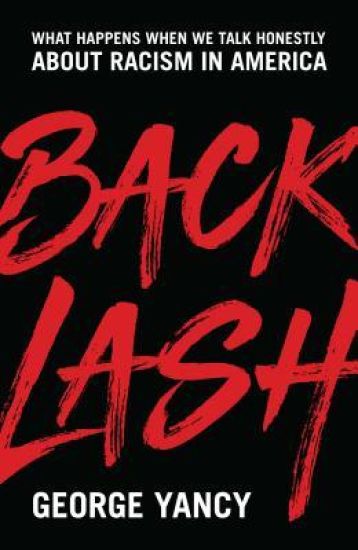
When George Yancy penned a New York Times op-ed entitled “Dear White America” asking white Americans to confront the ways that they benefit from racism, he knew his article would be controversial. But he was unprepared for the flood of vitriol in response. The resulting blowback played out in the national media, with critics attacking Yancy in every form possible—including death threats—and supporters rallying to his side. Despite the rhetoric of a “post-race” America, Yancy quickly discovered that racism is still alive, crude, and vicious in its expression. In Backlash, Yancy expands upon the original article and chronicles the ensuing controversy as he seeks to understand what it was about the op-ed that created so much rage among so many white readers. He challenges white Americans to rise above the vitriol and to develop a new empathy for the African American experience.
On Race

On Race

George Yancy

Oxford University Press Inc
2017
sidottu
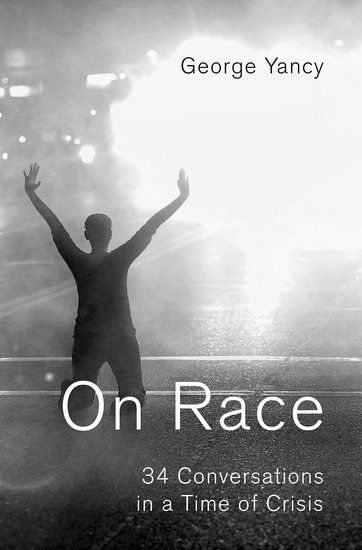
With the recent barrage of racially motivated killings, violent encounters between blacks and whites, and hate crimes in the wake of the 2016 election that foreground historic problems posed by systemic racism, including disenfranchisement and mass incarceration, it would be easy to despair that Dr. Martin Luther King Jr.'s dream has turned into a nightmare. Many Americans struggle for equal treatment, facing hate speech, brutality, and a national spirit of hopelessness; their reality is hardly "post-racial". The need for clarity surrounding the significance of race and racism in the United States is more pressing than ever. This collection of interviews on race, some originally conducted for The New York Times philosophy blog, The Stone, provides rich context and insight into the nature, challenges, and deepest questions surrounding this fraught and thorny topic. In interviews with such major thinkers as bell hooks, Judith Butler, Cornel West, Kwame Anthony Appiah, Peter Singer, and Noam Chomsky, Yancy probes the historical origins, social constructions, and lived reality of race along political and economic lines. He interrogates fully race's insidious expressions, its transcendence of Black/white binaries, and its link to neo-liberalism, its epistemological and ethical implications, and ultimately, its future.
Richard J. Bernstein and the Expansion of American Philosophy
Thinking The Plural: Richard J. Bernstein and the Expansion of American Philosophy is a text devoted to highlighting, scrutinizing, and deploying Bernstein’s philosophical research as it has intersected and impacted American and European philosophy. Collecting essays written explicitly for the volume from former students of Bernstein’s, the book shows the breadth and scope of his work while expanding key insights into new contexts and testing his work against thinkers outside the canon of his own scholarship. In light of urgent contemporary ethical and political problems, the papers collected here show the continuing relevance of Bernstein’s lifelong focus on democracy, dialogue, pragmatism, fallibilism, and pluralism. Bernstein has always contested the supposed Analytic/Continental divide, insisting on the pluralism of philosophical discourses and styles that contribute to genuine debate and save philosophy from stale academicism. This book enacts Bernstein’s pluralistic spirit by crossing traditions and generating new avenues for ongoing research. A central argument of the book is that thinkers of different backgrounds, using diverse, and even clashing methodologies, contribute to the understanding of a given problem, issue, or theme. This argument lies at the heart of Bernstein’s published works and is central to the fallibilistic pragmatism of his pedagogy. This book therefore does not rest on a single answer to a question or a univocal theme, but shows the differentiation of Bernstein’s scholarship through the extension of pluralism into territory Bernstein himself did not enter. The chapters, individually and collectively, demonstrate the force of Bernstein’s pluralism beyond mere commentary on his works. This book will be of interest to many people: 1) scholars, students and others in American philosophy who have worked on or with Richard J. Bernstein or in the tradition of American Pragmatism widely construed, 2) those interested in the intersections between American and European philosophy or between the Analytic and Continental traditions, 3) professional philosophers, philosophy students, and public intellectuals concerned with the application of theory to contemporary ethical and political problems, and 4) those interested in an introduction to the key concepts animating Bernstein’s work and their relationship to the history of philosophy.
Black Bodies, White Gazes

Black Bodies, White Gazes

George Yancy; Linda Martín Alcoff

Rowman Littlefield
2016
nidottu
Following the deaths of Trayvon Martin and other black youths in recent years, students on campuses across America have joined professors and activists in calling for justice and increased awareness that Black Lives Matter. In this second edition of his trenchant and provocative book, George Yancy offers students the theoretical framework they crave for understanding the violence perpetrated against the Black body. Drawing from the lives of Ossie Davis, Frantz Fanon, Malcolm X, and W. E. B. Du Bois, as well as his own experience, and fully updated to account for what has transpired since the rise of the Black Lives Matter movement, Yancy provides an invaluable resource for students and teachers of courses in African American Studies, African American History, Philosophy of Race, and anyone else who wishes to examine what it means to be Black in America.
Black Bodies, White Gazes

Black Bodies, White Gazes

George Yancy; Linda Martín Alcoff

Rowman Littlefield
2016
sidottu
Following the deaths of Trayvon Martin and other black youths in recent years, students on campuses across America have joined professors and activists in calling for justice and increased awareness that Black Lives Matter. In this second edition of his trenchant and provocative book, George Yancy offers students the theoretical framework they crave for understanding the violence perpetrated against the Black body. Drawing from the lives of Ossie Davis, Frantz Fanon, Malcolm X, and W. E. B. Du Bois, as well as his own experience, and fully updated to account for what has transpired since the rise of the Black Lives Matter movement, Yancy provides an invaluable resource for students and teachers of courses in African American Studies, African American History, Philosophy of Race, and anyone else who wishes to examine what it means to be Black in America.