Kirjojen hintavertailu. Mukana 12 290 406 kirjaa ja 12 kauppaa.

Kirjailija

Georges Bataille

Kirjat ja teokset yhdessä paikassa: 66 kirjaa, julkaisuja vuosilta 1985-2025, suosituimpien joukossa Louis XXX. Vertaile teosten hintoja ja tarkista saatavuus suomalaisista kirjakaupoista.

66 kirjaa

Kirjojen julkaisuhaarukka 1985-2025.

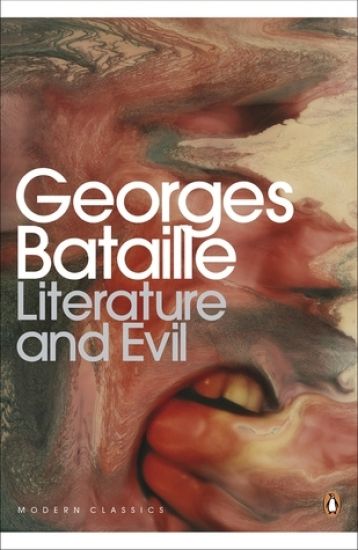
Literature and Evil

Literature and Evil

Georges Bataille

Penguin Classics
2012
pokkari
'Literature is not innocent,' stated Georges Bataille in this extraordinary 1957 collection of essays, arguing that only by acknowledging its complicity with the knowledge of evil can literature communicate fully and intensely. These literary profiles of eight authors and their work, including Emily Brontë's Wuthering Heights, Baudelaire's Les Fleurs du Mal and the writings of Sade, Kafka and Sartre, explore subjects such as violence, eroticism, childhood, myth and transgression, in a work of rich allusion and powerful argument.
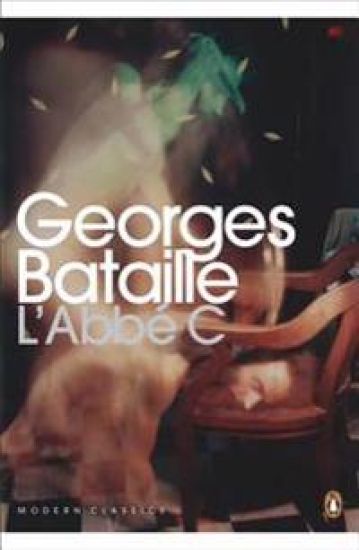
L'Abbé C

L'Abbé C

Georges Bataille

Penguin Classics
2012
pokkari
L'Abbé C is a shocking, unnerving narrative about the intense and terrifying relationship between twin brothers. Charles is a modern libertine, dedicated to vice and depravity, while Robert is a priest so devout that he is nicknamed 'l'Abbé'. When the sexually wild Eponine intrudes upon their suffocating relationship, anguish, delirium, and death ensue. Charged with sensuality and a heightened, dreamlike atmosphere, this novel portrays the darkest and most profound aspects of human experience.
Die Literatur und das Böse

Die Literatur und das Böse

Georges Bataille

Matthes Seitz Verlag
2011
sidottu
Literatur ist für Bataille einer der Wege zu einer unmöglichen Erfahrung zu gelangen. Das Überschreiten von Grenzen, das von der Gesellschaft als ?böse? bezeichnete Brechen von Gesetzen ist das Gesetz einer freien Literatur, einer Literatur, die mehr ist als Zeitvertreib und Konsum. Baudelaire, Sade, Blake oder Kafka sind die Leitfiguren Batailles. In ihrem Werk sieht er das verwirklicht, was er von der Literatur erwartet: ?Die authentische Literatur ist prometheisch. Der wahre Schriftsteller wagt zu tun, was den fundamentalen Gesetzen der aktiven Gesellschaft widersteht.? Im Überschreiten der Gesetze entzündet sich der Blitz der Erkenntnis. Doch genau darin wird die Literatur schuldig, böse.
Death and Sensuality: A Study of Eroticism and the Taboo

Death and Sensuality: A Study of Eroticism and the Taboo

Georges Bataille

Literary Licensing, LLC
2011
sidottu
Death and Sensuality: A Study of Eroticism and the Taboo is a philosophical exploration of the relationship between sex and death, written by the French author Georges Bataille. In this book, Bataille argues that eroticism is intimately tied to taboo and transgression, and that the experience of pleasure is often linked to the fear of death. He explores the ways in which eroticism can be both liberating and destructive, and how it can challenge traditional moral and social norms. Bataille draws on a range of sources, from anthropology and psychoanalysis to literature and art, to offer a provocative and insightful analysis of the human experience of desire and mortality. This book is a seminal work in the field of erotic philosophy and remains a challenging and thought-provoking read for anyone interested in the intersections of sex, death, and taboo.This scarce antiquarian book is a facsimile reprint of the old original and may contain some imperfections such as library marks and notations. Because we believe this work is culturally important, we have made it available as part of our commitment for protecting, preserving, and promoting the world's literature in affordable, high quality, modern editions, that are true to their original work.
Guilty

Guilty

Georges Bataille

State University of New York Press
2011
pokkari
A searing personal record of spiritual and communal crisis, wherein the death of god announces the beginning of friendship.Guilty is a searing personal record of spiritual and communal crisis, wherein the death of god announces the beginning of friendship. It takes the form of a diary, recording the earliest days of World War Two and the Nazi occupation of France, but this is no ordinary day book: it records the author's journey through a war-torn world without transcendence. Bataille's spiritual journey is also an intellectual one, a trip with Hegel, Kierkegaard, Blake, Baudelaire, and Nietzsche as his companions. And it is a school of the flesh wherein eroticism and mysticism are fused in a passionate search for pure immanence. Georges Bataille said of his work: "I teach the art of turning horror into delight." This new translation of Guilty is the first to include the full text from Bataille's Oeuvres Complètes. The text includes Bataille's notes and drafts, which permit the reader to trace the development of the book from diary to draft to published text, as well as annotations of Bataille's source materials. An extensive and incisive introductory essay by Stuart Kendall situates the work historically, biographically, and philosophically. Guilty is Bataille's most demanding, intricate, and multi-layered work, but it is also his most personal and moving one.
The Cradle of Humanity

The Cradle of Humanity

Georges Bataille

Zone Books
2009
pokkari
A radically interdisciplinary inquiry into the origins of human consciousness, community, and potential.The Cradle of Humanity: Prehistoric Art and Culture collects essays and lectures by Georges Bataille spanning 30 years of research in anthropology, comparative religion, aesthetics, and philosophy. These were neither idle nor idyllic years; the discovery of Lascaux in 1940 coincides with the bloodiest war in history-with new machines of death, Auschwitz, and Hiroshima. Bataille's reflections on the possible origins of humanity coincide with the intensified threat of its possible extinction. For Bataille, prehistory is universal history; it is the history of a human community prior to its fall into separation, into nations and races. The art of prehistory offers the earliest traces of nascent yet fully human consciousness-of consciousness not yet fully separated from natural flora and fauna, or from the energetic forces of the universe. A play of identities, the art of prehistory is the art of a consciousness struggling against itself, of a human spirit struggling against brute animal physicality. Prehistory is the cradle of humanity, the birth of tragedy. Bataille reaches beyond disciplinary specializations to imagine a moment when thought was universal. Bataille's work provides a model for interdisciplinary inquiry in our own day, a universal imagination and thought for our own potential community. The Cradle of Humanity: Prehistoric Art and Culture speaks to philosophers and historians of thought, to anthropologists interested in the history of their discipline and in new methodologies, to theologians and religious comparatists interested in the origins and nature of man's encounter with the sacred, and to art historians and aestheticians grappling with the place of prehistory in the canons of art.
Correspondence – Georges Bataille and Michel Leiris

Correspondence – Georges Bataille and Michel Leiris

Georges Bataille; Michel Leiris; Liz Heron

Seagull Books London Ltd
2008
sidottu
In the autumn of 1924, two young men met in Paris for the first time. Georges Bataille was just 27 and had recently started working at the Bibliotheque nationale. Michel Leiris, 23, was beginning his studies in ethnology. They discussed the idea of founding a movement which would displace Dada and of launching a magazine based in a brothel. Instead, within a few months, they both became members of the surrealist group. But their adherence to surrealism would not last long. In 1930 they were signatories to the infamous tract against Breton, the 'Machiavelli of Montmartre', as Leiris put it. But their own friendship would endure for more than thirty years and their correspondence, assembled here for the first time, would continue until the death of Bataille in 1962.As these letters show, their intellectual affinities were extensive and although they followed different trajectories - Leiris spending more and more time in Africa as an ethnologist, whilst Bataille remained in Paris developing the ideas on the sacred, sacrifice and eroticism for which he is best known - they continued to have a profound influence on each other. Including a number of short essays by each of them on aspects of the other's work, and excerpts on Bataille from Leiris' diaries, this collection of their correspondence throws new light on two of surrealism's most radical dissidents.
Henker und Opfer

Henker und Opfer

Georges Bataille

Matthes Seitz Verlag
2008
nidottu
Die hier versammelten Essays kreisen u.a. um die Frage nach der Möglichkeit von Literatur über den Holocaust und um die Nützlichkeit von Literatur überhaupt. ?Wir können nicht menschlich sein, ohne in uns die Fähigkeit zum Schmerz, auch die zur Gemeinheit wahrgenommen zu haben. Aber wir sind nicht nur die möglichen Opfer der Henker: Die Henker sind unseresgleichen. Wir müssen uns auch noch fragen: Gibt es nichts in unserem Wesen, das so viel Entsetzliches unmöglich macht? Und wir müssen uns wohl die Antwort geben: tatsächlich, es gibt nichts. Tausend Hindernisse stellen sich in uns dem entgegen ... Trotzdem ist dies nicht unmöglich. Wir sind also nicht bloß zum Schmerz, sondern auch zur Raserei des Folterns fähig.?
Erotismen

Erotismen

Georges Bataille

Pax
2007
nidottu
Erotismen forstås som en bekreftelse av livet inn i døden. For bokas forfatter kjennetegnes den moderne verden av at den har fortrengt den sakrale sfæren. Det eneste uttrykk overskridelsen kan få i en profan verden, er gjennom poesiens språk. Med noter.
Nietzsche und der Wille zur Chance

Nietzsche und der Wille zur Chance

Georges Bataille

Matthes Seitz Verlag
2005
sidottu
"Mit Nietzsche und der Wille zur Chance liegt das philosophische Hauptwerk Georges Batailles, die Atheologischen Summe, erstmals vollständig auf Deutsch vor. Nach dem 1. Band, Die innere Erfahrung, und dem 2. Band, Die Freundschaft setzt sich Georges Bataille im 3. Band seiner Atheologischen Summe mit dem Denken Nietzsches auseinander. Im Unterschied zur wissenschaftlichen Leseart Nietzsches, kühl und distanziert, wagt es Bataille, Nietzsche aufzunehmen und Konsequenzen aus ihm zu ziehen. Er schreibt: Nietzsche schrieb mit seinem Blut: wer ihn kritisiert, oder besser, ihn erprobt, kann es nur, indem er auch seinerseits blutet. So schafft Bataille einen neuen Raum für das Nachdenken nicht existentialistisch, sondern existentiell. Von Nietzsche ausgehend geht er über ihn hinaus, und fesselt den Leser mit Fragen, die Wunden aufreißen. Im Zentrum steht die Frage nach der Möglichkeit von Spiritualität als anthropologisches Grundbedürfnis jenseits aller Religionen. Bataille bleibt Metaphysiker, verweist aber auf eine umgekehrte Transzendenz, eine Transzendenz, die nicht ins Jenseits, sondern mitten ins Irdische hinein führt. Literarisch bricht Bataille in diesem erstmals 1945 erschienen Buch die klassische Form, um, Foucault zufolge, auszudrücken, was vor ihm noch niemandem auszudrücken gelungen ist. So wechseln sich Fragmente und Aphorismen mit längeren zusammenhängenden und argumentativ aufgebauten Texten ab."
Unfinished System of Nonknowledge

Unfinished System of Nonknowledge

Georges Bataille

University of Minnesota Press
2004
nidottu
A deft reconstruction of what Georges Bataille envisioned as a continuation of his work La Somme Athéologique, this volume brings together the writings of one of the foremost French thinkers of the twentieth century on the central topic of his oeuvre. Gathering Bataille's most intimate writings, these essays, aphorisms, notes, and lectures on nonknowledge, sovereignty, and sacrifice clarify and extend Bataille's radical theology, his philosophy of history, and his ecstatic method of meditation. Following Bataille's lead, as laid out in his notebooks, editor Stuart Kendall assembles the fragments that Bataille anticipated collecting for his summa. Kendall's introduction offers a clear picture of the author's overall project, its historical and biographical context, and the place of these works within it. The "system" that emerges from these articles, notes, and lectures is "atheology," understood as a study of the effects of nonknowledge. At the other side of realism, Bataille's writing in La Somme pushes language to its silent end. And yet, writing toward the ruin of language, in search of words that slip from their meanings, Bataille uses language—and the discourses of theology, philosophy, and literature—against itself to return us to ourselves, endlessly. The system against systems is in fact systematic, using systems and depending on discourses to achieve its own ends—the end of systematic thought.A medievalist librarian by training, Georges Bataille (1897–1962) was active in the French intellectual scene from the 1920s through the 1950s. He founded the journal Critique and was a member of the Acéphale group and the Collège de Sociologie. Among his works available in English are Visions of Excess (Minnesota, 1985), Tears of Eros (1989), and Erotism (1990).
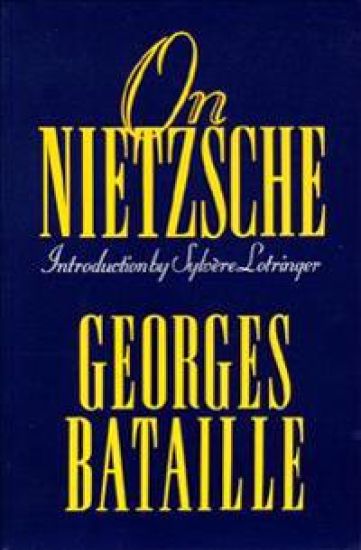
On Nietzsche

On Nietzsche

Georges Bataille

Continuum International Publishing Group Ltd.
2004
pokkari
Takes up Nietzschean thought where Nietzsche left off - with the death of God. Written against the backdrop of Germany under the Third Reich the book explores the possibility of a spiritual life outside religion. In so doing it weaves an astonishing tapestry of confession, theology, philosophy, myth and eroticism.
Story of the Eye

Story of the Eye

Georges Bataille

Penguin Classics
2001
pokkari
A masterpiece of transgressive, surrealist erotica, George Bataille's Story of the Eye was the Fifty Shades of Grey of its era. This Penguin Modern Classics edition is translated by Joachim Neugroschal, and published with essays by Susan Sontag and Roland Barthes.Bataille's first novel, published under the pseudonym 'Lord Auch', is still his most notorious work. In this explicit pornographic fantasy, the young male narrator and his lovers Simone and Marcelle embark on a sexual quest involving sadism, torture, orgies, madness and defilement, culminating in a final act of transgression. Shocking and sacrilegious, Story of the Eye is the fullest expression of Bataille's obsession with the closeness of sex, violence and death. Yet it is also hallucinogenic in its power, and is one of the erotic classics of the twentieth century.This edition also includes Susan Sontag's superb study of pornography as art, 'The Pornographic Imagination', as well as Roland Barthes' essay 'The Metaphor of the Eye'.Georges Bataille (1897-1962), French essayist and novelist, was born in Billom, France. He converted to Catholicism, then later to Marxism, and was interested in psychoanalysis and mysticism, forming a secret society dedicated to glorifying human sacrifice. Leading a simple life as the curator of a municipal library, Bataille was involved on the fringes of Surrealism, founding the Surrealist magazine Documents in 1929, and editing the literary review Critique from 1946 until his death. Among his other works are the novels Blue of Noon (1957) and My Mother (1966), and the essays Eroticism (1957) and Literature and Evil (1957).If you enjoyed Story of the Eye, you might like Anaïs Nin's Delta of Venus, also available in Penguin Modern Classics.'His black masterpiece ... [a] brilliant, exquisitely fetishistic tale of sexual agitaion'New Statesman
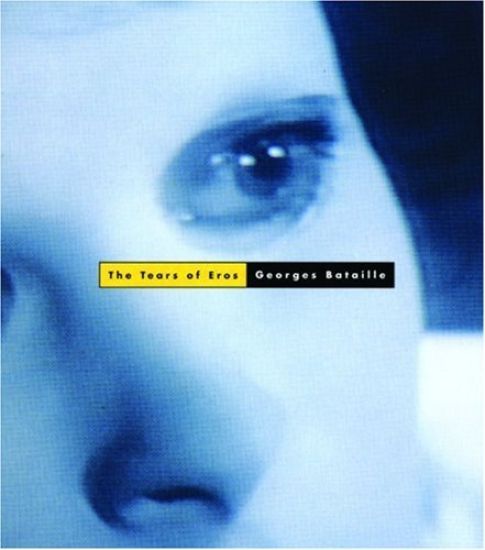
The Tears of Eros

The Tears of Eros

Georges Bataille

City Lights Books
2001
pokkari
Tears of Eros is the culmination of Georges Bataille's inquiries into the relationship between violence and the sacred. Taking up such figures as Giles de Rais, Erzebet Bathory, the Marquis de Sade, El Greco, Gustave Moreau, Andre Breton, Voodoo practitioners, and Chinese torture victims, Bataille reveals their common obsession: death. This essay, illustrated with artwork from every era, was developed out of ideas explored in Erotism: Death and Sexuality and Prehistoric Painting: Lascaux or the Birth of Art. In it Bataille examines death--the "little death" that follows sexual climax, the proximate death in sadomasochistic practices, and death as part of religious ritual and sacrifice. "Bataille is one of the most important writers of the century."-- Michel Foucault Georges Bataille was born in Billom, France, in 1897. He was a librarian by profession. Also a philosopher, novelist, and critic he was founder of the College of Sociology. In 1959, Bataille began Tears of Eros, and it was completed in 1961, his final work. City Lights published two of his other works: Story of the Eye and The Impossible. Bataille died in 1962.
On Nietzsche

On Nietzsche

Georges Bataille

Paragon House Publishers
1998
nidottu
Hailed by Martin Heidegger as "one of France's best minds," Georges Bataille has become increasingly recognized and respected in the realm of academic and popular intellectual thought. Although Bataille died in 1962, interest in his life and writings have never been as strong as they are today--Barthes, Foucault, Derrida, and Kristeva have all acknowledged their debt to him. In his book, On Nietzsche, as translated by Bruce Boone, Bataille comes as close as he would ever come to formulating his own unique system of philosophy. One could say that reading Nietzsche was something of a revelation to Bataille, and profoundly affected his life. In 1915, in a crisis of guilt after leaving his blind father in the hands of the Germans, Bataille converted to Catholicism. It was Nietzsche's work that lead him to abandon traditional religion for an idiosyncratic form of godless mysticism. In this volume, Bataille becomes, and goes beyond, Nietzsche, assuming Nietzsche's thought where he left off--with God's death. At the heart of this work is Bataille's exploration of how one can have a spiritual life outside religion. On Nietzsche is essentially a journal that brilliantly mixes observations with ruminations in fragments, aphorisms, poems, myths, quotations, and images against the background of World War II and the German occupation. Bataille has a unique way of moving breezily from abstraction to confession, and from theology to eroticism. He skillfully weaves together his own internal experience of anguish with the war and destruction raging outside with arguments against fascist interpretations of Nietzsche and praise for the philosopher as a prophet foretelling "the crude German fate." With an introduction, "Furiously Nietzschean," by Sylvere Lotringer, an Appendix in which Bataille defends himself against Sartre, and an Index, this volume reconfirms Michel Foucault's assertion that Bataille, "broke with traditional narrative to tell us what has never been told before."
Theorie der Religion

Theorie der Religion

Georges Bataille

Matthes Seitz Verlag
1997
sidottu
Religion in dieser von der Religion nicht mehr besorgten Welt? Es ist nicht leicht, über Religion zu sprechen - nach den leergepredigten Kirchen, nach den perfekten Höllen von Auschwitz und Hiroshima ... Wo ist Gott? Georges Bataille versucht den Ursinn der Religion im Hier und Jetzt wiederherzustellen: eine Religion der Weltimmanenz.
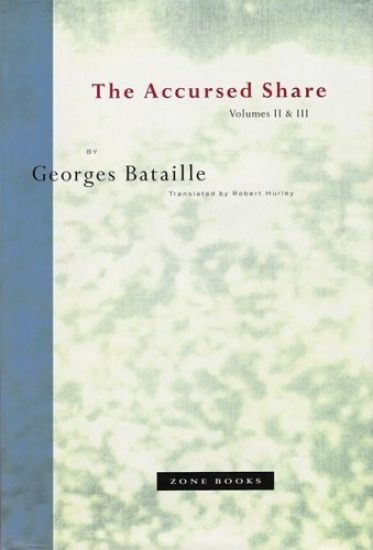
The Accursed Share

The Accursed Share

Georges Bataille

Zone Books
1993
pokkari
The three volumes of The Accursed Share address what Georges Bataille sees as the paradox of utility: namely, if being useful means serving a further end, then the ultimate end of utility can only be uselessness. The first volume of The Accursed Share, the only one published before Bataille's death, treated this paradox in economic terms, showing that "it is not necessity but its contrary, luxury, that presents living matter and mankind with their fundamental problems." This Zone edition includes in a single volume a reconstruction, based on the versions published in Bataille's posthumous collected works, of his intended continuation of The Accursed Share.In the second and third volumes, The History of Eroticism and Sovereignty, Bataille explores the same paradox of utility, respectively from an anthropological and an ethical perspective. He first analyzes the fears and fascination, the prohibitions and the transgressions attached to the realm of eroticism as so many expressions of the "uselessness" of erotic life. It is just this expenditure of excess energy that demarcates the realm of human autonomy, of independence relative to "useful" ends. The study of eroticism therefore leads naturally to the examination of human sovereignty, in which Bataille defines the sovereign individual as one who consumes and does not labor, creating a life beyond the realm of utility.Georges Bataille, a philosopher and novelist sui generis, died in 1962.
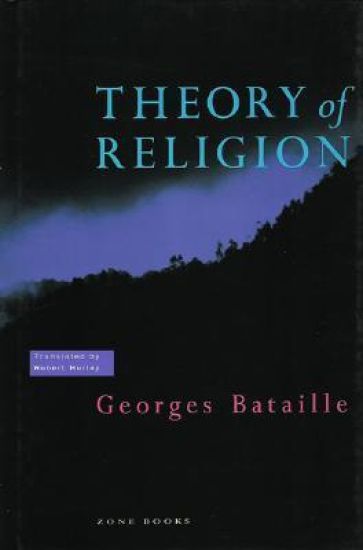
Theory of Religion

Theory of Religion

Georges Bataille

Zone Books
1992
pokkari
Theory of Religion brings to philosophy what Bataille's earlier book, The Accursed Share, brought to anthropology and history; namely, an analysis based on notions of excess and expenditure. Bataille brilliantly defines religion as so many different attempts to respond to the universe's relentless generosity. Framed within his original theory of generalized economics and based on his masterly reading of archaic religious activity, Theory of Religion constitutes, along with The Accursed Share, the most important articulation of Bataille's work.Georges Bataille (1897-1962), founder of the French review Critique, wrote fiction and essays on a wide range of topics. His books in English translation include Story of the Eye, Blue of Noon, Literature and Evil, Manet and Erotism.Robert Hurley is the translator of The History of Sexuality by Michel Foucault and cotranslator of Anti Oedipus by Gilles Deleuze and Felix Guattari. Distributed for Zone Books.