Kirjailija
Georges Didi-Huberman
Kirjat ja teokset yhdessä paikassa: 31 kirjaa, julkaisuja vuosilta 1999-2026, suosituimpien joukossa Gruvgas. Vertaile teosten hintoja ja tarkista saatavuus suomalaisista kirjakaupoista.
Mukana myös kirjoitusasut: Georges Didi–huberman, Georges Didi- Huberman
31 kirjaa
Kirjojen julkaisuhaarukka 1999-2026.
The Surviving Image, originally published in French in 2002, is the result of Georges Didi-Huberman’s extensive research into the life and work of foundational art historian Aby Warburg. Warburg envisioned an art history that engaged with anthropology, psychoanalysis, and philosophy in order to understand the “life” of images. Drawing on a wide range of Warburg’s unpublished letters and diaries, Didi-Huberman demonstrates unequivocally the complexity and importance of Warburg’s ideas and the ways in which his legacy was both distorted and diffused as art history became a “humanistic” discipline. The Surviving Image takes Warburg as its main subject but also addresses broader questions regarding art historians’ conceptions of time, memory, and symbols and the relationship between art and the rational and irrational forces of the psyche.Faithfully and thoughtfully translated by Harvey Mendelsohn, this first English-language edition of Didi-Huberman’s masterful study of Warburg is a stirring and significant treatise on the philosophical nature of art history.
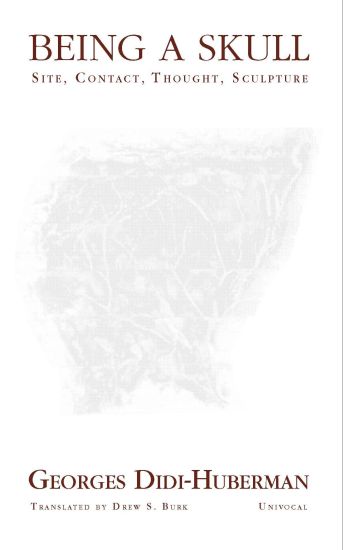
What would a sculpture look like that has as its task to touch thought? For the French philosopher and Art Historian, Georges Didi-Huberman, this is the central question that permeates throughout the work of Italian artist Giuseppe Penone. Through a careful study of Penones work regarding a sculptural and haptic process of contact with place, thought, and artistic practice, Didi-Huberman takes the reader on a journey through various modes of thinking by way of being. Taking Penones artwork Being the riveras a thematic starting point, Didi-Huberman sketches a sweeping view of how artists through the centuries have worked with conceptions of the skull, that is, the mind, and ruminates on where thought is indeed located. From Leonardo da Vinci to Albrecht Dfcrer, Didi-Huberman guides us to the work of Penone and from there, into the attempts of a sculptor whose works strives to touch thought. What we uncover is a sculptor whose work becomes a series of traces of the site of thought. Attempting to trace, by way of a series of frottages, reports, and developments, this imperceptible zone of contact. The result is a kind of fossil of the brain: the site of thought, namely, the site for getting lost and for disproving space. Sculpting at the same time what inhabits as well as what incorporates us.
What Is a People?
Alain Badiou; Judith Butler; Georges Didi-Huberman; Sadri Khiari; Jacques Rancière; Pierre Bourdieu; Kevin Olson
Columbia University Press
2016
sidottu
What Is a People? seeks to reclaim "people" as an effective political concept by revisiting its uses and abuses over time. Alain Badiou surveys the idea of a people as a productive force of solidarity and emancipation and as a negative tool of categorization and suppression. Pierre Bourdieu follows with a sociolinguistic analysis of "popular" and its transformation of democracy, beliefs, songs, and even soups into phenomena with outsized importance. Judith Butler calls out those who use freedom of assembly to create an exclusionary "we," while Georges Didi-Huberman addresses the problem of summing up a people with totalizing narratives. Sadri Khiari applies an activist's perspective to the racial hierarchies inherent in ethnic and national categories, and Jacques Ranciere comments on the futility of isolating theories of populism when, as these thinkers have shown, the idea of a "people" is too diffuse to support them. By engaging this topic linguistically, ethnically, culturally, and ontologically, the voices in this volume help separate "people" from its fraught associations to pursue more vital formulations. Together with Democracy in What State?, in which Giorgio Agamben, Alain Badiou, Daniel Bensaid, Wendy Brown, Jean-Luc Nancy, Jacques Ranciere, Kristin Ross, and Slavoj Zizek discuss the nature and purpose of democracy today, What Is a People? expands an essential exploration of political action and being in our time.
Following two precious volumes of writings from the 1970s-90s Canadian magazine Parachute-- Museums, Art History, and Theory and Performance & Performativity--the essays collected in this third volume focus on photography, film, video and new media. These genres were discussed in some of the earliest volumes of Parachute. Photography received particular attention in the early 1980s, film and video later in that decade and through the beginning of the 1990s. Discussing what were then still relatively new and overlooked artistic fields, these texts are particularly useful as signposts to how these new media and works were approached. The essays discuss works by artists such as Eija-Liisa Ahtila, James Coleman, Nan Goldin, Bill Viola and Rodney Graham. The texts by Georges Didi-Huberman, Douglas Crimp and Laura Mulvey, written in the early 1980s, are among their most seminal.
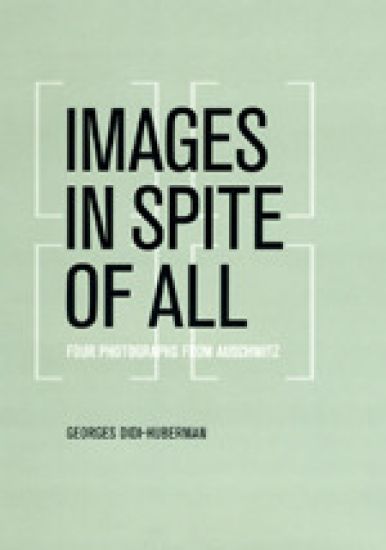
Of one-and-a-half million surviving photographs related to Nazi concentration camps, only four depict the actual process of mass killing perpetrated at the gas chambers. Images in "Spite of All" reveals that these rare photos of Auschwitz, taken clandestinely by one of the Jewish prisoners forced to help carry out the atrocities there, were made as a potent act of resistance. Available today because they were smuggled out of the camp and into the hands of Polish resistance fighters, the photographs show a group of naked women being herded into the gas chambers and the cremation of corpses that have just been pulled out. Georges Didi-Huberman's relentless consideration of these harrowing scenes demonstrates how Holocaust testimony can shift from texts and imaginations to irrefutable images that attempt to speak the unspeakable. Including a powerful response to those who have criticized his interest in these images as voyeuristic, Didi-Huberman's eloquent reflections constitute an invaluable contribution to debates over the representability of the Holocaust and the status of archival photographs in an image-saturated world.
Ersatz Essay 002 »Venus födelse« av renässansmästaren Botticelli är ett givet exempel på idealiseringen av den »rena skönheten« i den västerländska konsthistorien. Den franske idéhistorikern Georges Didi-Huberman vänder sig emot den »frigidiserande« synen på Venus och nakenhet överhuvudtaget i Botticellis verk och gör iakttagelser som leder till oväntade resultat, bland annat med hjälp av Freud, Bataille och de Sade. Georges Didi-Huberman är född 1953 i Saint-Étienne i Frankrike. Filosof, konst- och idéhistoriker, sedan 1990 verksam vid École des hautes études en sciences social i Paris.
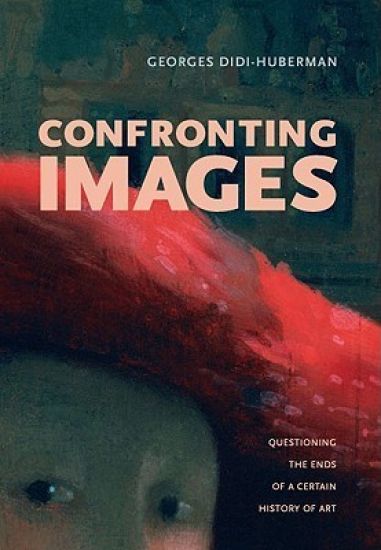
When the French edition of Confronting Images appeared in 1990, it won immediate acclaim because of its far-reaching arguments about the structure of images and the histories ascribed to them by scholars and critics working in the tradition of Vasari and Panofsky. According to Didi-Huberman, visual representation has an “underside” in which seemingly intelligible forms lose their clarity and defy rational understanding. Art historians, he goes on to contend, have failed to engage this underside, where images harbor limits and contradictions, because their discipline is based upon the assumption that visual representation is made up of legible signs and lends itself to rational scholarly cognition epitomized in the “science of iconology.” To escape from this cul-de-sac, Didi-Huberman suggests that art historians look to Freud’s concept of the “dreamwork,” not for a code of interpretation, but rather to begin to think of representation as a mobile process that often involves substitution and contradiction. Confronting Images also offers brilliant, historically grounded readings of images ranging from the Shroud of Turin to Vermeer’s Lacemaker.
Im August 1944 gelang zwei Häftlingen des Konzentrationslagers Auschwitz eine Serie fotografischer Aufnahmen der Exekutionen. Während einer der beiden Häftlinge die Wachmänner der SS im Auge hielt, machte ein Mitgefangener vier Aufnahmen, die das Gelände um das Krematorium V zeigen. Georges Didi-Huberman widmet sich in seinem neuen Buch der Paradoxie dieser Bilder: daß sie so gut wie nichts zu sehen geben, aber gleichwohl unersetzliche Überreste sind. Diese Fotografien sind, so der Titel des Bandes, "Bilder trotz allem", "images malgr? tout". "Berufen wir uns nicht auf das Unvorstellbare" - mit dieser Aufforderung beginnt Didi-Huberman. Damit ist von Anfang an die Skepsis gegenüber der These formuliert, die in den Lagern begangenen Morde seien Fälle des Unvorstellbaren schlechthin. Neben vielen anderen hat der französische Psychoanalytiker G?rard Wajcman diese Auffassung wiederholt vertreten. Die Geschehnisse in den Lagern, so Wajcman, seien für immer bilderlos, ohne eine Spur des Vorstellbaren, eine "Zerstörung ohne Ruine". Didi-Huberman geht es keineswegs darum, diese These einfach umzukehren, in den fraglichen Aufnahmen also Zeugnisse zu sehen, die das Geschehen in den Lagern begreifbar machen würden. Zwei Weisen gebe es, diese Bilder nicht zu sehen: die eine mache aus ihnen Ikonen des Horrors, in denen man - auch um den Preis von Detailvergrößerung und Retusche - "alles" erkennen wolle. Die andere versuche, die Bilder auf den Status von Dokumenten zu reduzieren und dabei alles Nicht-Informative aus dem Bildraum auszuschließen. Es ist das Wagnis dieses Buchs, jenen schmalen Grat zu beschreiten, der sich zwischen diesen Positionen auftut.
The first English-language publication of a classic French book on the relationship between the development of photography and of the medical category of hysteria.In this classic of French cultural studies, Georges Didi-Huberman traces the intimate and reciprocal relationship between the disciplines of psychiatry and photography in the late nineteenth century. Focusing on the immense photographic output of the Salpetriere hospital, the notorious Parisian asylum for insane and incurable women, Didi-Huberman shows the crucial role played by photography in the invention of the category of hysteria. Under the direction of the medical teacher and clinician Jean-Martin Charcot, the inmates of Salpetriere identified as hysterics were methodically photographed, providing skeptical colleagues with visual proof of hysteria's specific form. These images, many of which appear in this book, provided the materials for the multivolume album Iconographie photographique de la Salpetriere.As Didi-Huberman shows, these photographs were far from simply objective documentation. The subjects were required to portray their hysterical "type"-they performed their own hysteria. Bribed by the special status they enjoyed in the purgatory of experimentation and threatened with transfer back to the inferno of the incurables, the women patiently posed for the photographs and submitted to presentations of hysterical attacks before the crowds that gathered for Charcot's "Tuesday Lectures."Charcot did not stop at voyeuristic observation. Through techniques such as hypnosis, electroshock therapy, and genital manipulation, he instigated the hysterical symptoms in his patients, eventually giving rise to hatred and resistance on their part. Didi-Huberman follows this path from complicity to antipathy in one of Charcot's favorite "cases," that of Augustine, whose image crops up again and again in the Iconographie. Augustine's virtuosic performance of hysteria ultimately became one of self-sacrifice, seen in pictures of ecstasy, crucifixion, and silent cries.
Aby Warburg and the Image in Motion
Philippe-Alain Michaud; Georges Didi-Huberman
Zone Books
2004
sidottu
The purposeful discontinuities and juxtapositions of Aby Warburg's iconography and how they can be used to analyze other imagery. Aby Warburg (1866-1929) is best known as the originator of the discipline of iconology and as the founder of the institute that bears his name. His followers included such celebrated art historians of the twentieth century as Erwin Panofsky, Edgar Wind, and Fritz Saxl. But his heirs developed, for the most part, a domesticated iconology based on the interpretation of symbolic material. As Phillippe-Alain Michaud shows in this important book, Warburg's own project was remote from any positivist or neo-Kantian ambitions. Nourished on the work of Nietzsche and Burckhardt, Warburg fashioned a "critical iconology" to reveal the irrationality of the image in Western culture. Opposing the grand teleological narratives of art inaugurated by Vasari, Warburg's method operated through historical anachronisms and discontinuities. Using "montage-collision" to create textless collections of images, he brought together pagan artifacts and masterpieces of Florentine Renaissance art, ancient Near East astrology and the Lutheran Reformation, Mannerist festivals and the sacred dances of Native Americans. Michaud insists that for Warburg, the practice of art history was the discovery within the art work itself of fracture, contradictions, tensions, and the energies of magic, empathy, totemism, and animism. Challenging normative accounts of Western European classicism, Warburg located the real sources of the Renaissance in the Dionysian spirit, in the expression of movement and dance, in the experience of trance personified in the frenzied nymph or ecstatic maenad.Aby Warburg and the Image in Motion is not only a book about Warburg but a book written with him; Michaud uses Warburg's intuitions and discoveries to analyze other categories of imagery, including the daguerreotype, the chronophotography of Etienne-Jules Marey, early cinema, and the dances of Loie Fuller. It will be essential reading for anyone concerned with the origins of modern art history and the visual culture of modernity.
Wie kann man sehen, ohne das Sichtbare dem Glauben zu opfern? Und wie können wir umgekehrt der Versuchung widerstehen, das Sichtbare tautologisch auf sich selbst zu reduzieren? Zwischen zwei ? Joyce und Kafka entliehenen ? Parabeln soll vor dem einfachsten Bild, das eine Skulptur uns bieten kann, nach einer Antwort auf diese Fragen gesucht werden. Ein Kubus, ein großer schwarzer Kubus des Bildhauers Tony Smith, wird uns dabei Stück für Stück seine dunkle Faszinationskraft, seine Intensität und Unheimlichkeit enthüllen. Damit dies gelingt, wird es zuvor nötig sein, über Benjamins Begriffe ?Aura? und ?dialektisches Bild? nachzudenken und sich mit ihrer Hilfe klarzumachen, warum das, was wir vor uns sehen, stets in uns widerhallt, uns anblickt und betrifft. Das Ziel dieser Überlegungen: eine Anthropologie der Form, eine Metapsychologie des Bildes.