Kirjojen hintavertailu. Mukana 12 378 526 kirjaa ja 12 kauppaa.

Kirjailija

Georges Duby

Kirjat ja teokset yhdessä paikassa: 30 kirjaa, julkaisuja vuosilta 1978-2022, suosituimpien joukossa Kunst und Gesellschaft im Mittelalter. Vertaile teosten hintoja ja tarkista saatavuus suomalaisista kirjakaupoista.

30 kirjaa

Kirjojen julkaisuhaarukka 1978-2022.

Istorija chastnoj zhizni. Tom 2. Evropa ot feodalizma do Renessansa

Istorija chastnoj zhizni. Tom 2. Evropa ot feodalizma do Renessansa

Daniel Rene-Boler; Dominique Barthelemy; Philippe Braunstein; Philippe Contamine; Georges Duby

Novoe literaturnoe obozrenie
2022
sidottu
Pjatitomnaja "Istorija chastnoj zhizni" - vseobemljuschee issledovanie, sozdannoe v 1980-e gody gruppoj frantsuzskikh, britanskikh i amerikanskikh uchenykh pod rukovodstvom proslavlennykh istorikov iz Shkoly "Annalov" - Filippa Aresa i Zhorzha Djubi. Pjatitomnik okhvatyvaet vsju istoriju Zapada s Antichnosti do kontsa XX veka. Vo vtorom tome - chastnaja zhizn Evropy vremen Vysokogo Srednevekovja. Avtory knigi rasskazyvajut, kak izmenilis semejnyj byt i obschestvennyj uklad po sravneniju s Antichnostju i nachalom Srednikh vekov, kak slozhnye juridicheskie ustanovlenija sootnosilis s povsednevnostju, kak rodilsja na svet evropejskij individ i kak zhizn chastnogo cheloveka otobrazhalas v literature.4-e izdanie.Perevodchik: Reshetnikova E., Kashtanov PavelRedaktor: Djubi Zhorzh, Ares Filipp
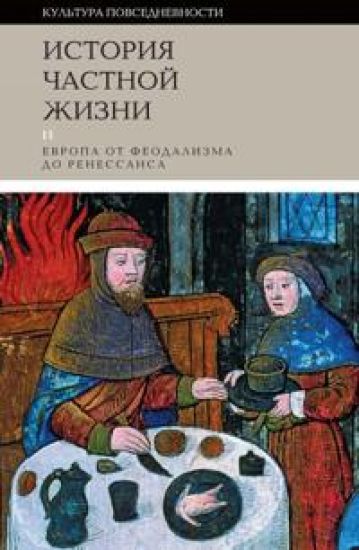
Istorija chastnoj zhizni. Tom 2. Evropa ot feodalizma do Renessansa

Istorija chastnoj zhizni. Tom 2. Evropa ot feodalizma do Renessansa

Philippe Braunstein; Dominik Bartelemi; Georges Duby

Novoe literaturnoe obozrenie
2019
sidottu
Pjatitomnaja "Istorija chastnoj zhizni" - vseobemljuschee issledovanie, sozdannoe v 1980-e gody gruppoj frantsuzskikh, britanskikh i amerikanskikh uchenykh pod rukovodstvom proslavlennykh istorikov iz Shkoly "Annalov" - Filippa Aresa i Zhorzha Djubi. Pjatitomnik okhvatyvaet vsju istoriju Zapada s Antichnosti do kontsa XX veka. Vo vtorom tome - chastnaja zhizn Evropy vremen Vysokogo Srednevekovja. Avtory knigi rasskazyvajut, kak izmenilis semejnyj byt i obschestvennyj uklad po sravneniju s Antichnostju i nachalom Srednikh vekov, kak slozhnye juridicheskie ustanovlenija sootnosilis s povsednevnostju, kak rodilsja na svet evropejskij individ, i kak zhizn chastnogo cheloveka otobrazhalas v literature.
History of Paris in Painting

History of Paris in Painting

Georges Duby

Abbeville Press Inc.,U.S.
2009
sidottu
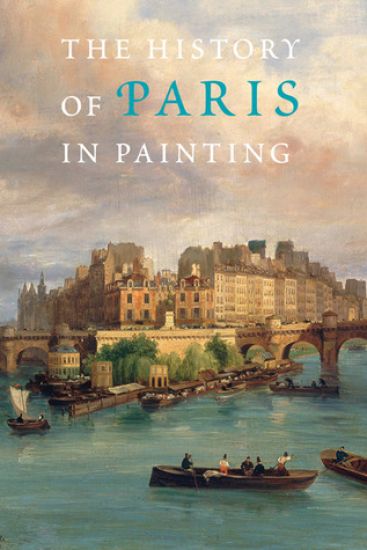
"Paris is a moveable feast," Ernest Hemingway once proclaimed. The city of light, or the city of love, Paris is indeed a feast for the senses. Paris's rich history has been justly captured by the many artists sheltered by its garrets and supported by its patrons for centuries. Finally the story and grandeur of this beautiful city are revealed in this luxurious slipcased volume. The over 300 full-colour illustrations, including four breathtaking gatefolds, present Paris from its days as a medieval city on the Ile de la Cité, in the middle of the Seine River, through the tumultuous days of the French Revolution, to the Haussmannization of Paris, when much of the city was razed to make way for broad boulevards emanating from the Arc de Triomphe. The rich heritage of painting in Paris is broadly represented in this collection. Home of the Académie des Beaux-Arts, Paris nurtured generations of French artists and displayed their work in the Salon. As the Impressionists broke with the authoritarian standards of the Academy, Parisian art became even more diverse and increasingly abstract-a trend that continued through the 20th century. The History of Paris in Painting honours this celebrated city and its famous monuments by presenting readers with an artistic feast that will make anyone fall in love with Paris again and again.
The History of Venice in Painting

The History of Venice in Painting

Georges Duby; Guy Lobrichon; Daniel Russo; Terisio Pignatti; Michel Hochmann; Adriana van de Lindt-Russo; Pierre Vaisse; Geneviève Nevejan

Abbeville Press Inc.,U.S.
2007
sidottu
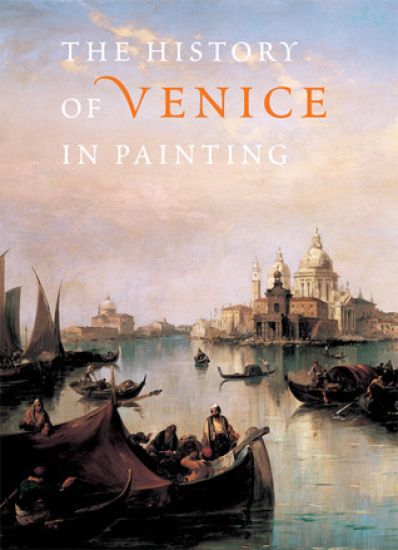
Venice is a magical city. For centuries, Venice has enchanted visitors with its magnificent architecture and romantic canals. As a lone republic amid mostly monarchical Europe, Venice equally amazed philosophers and poets, leading Wordsworth to hail this floating city of more than one hundred islands as “the oldest Child of Liberty.” Yet it is the imprint Venice left in the realm of painting, not only as a subject that inspired visiting artists from Europe and beyond, but more importantly as the seat of a new school of painting, for which Venice should best be remembered. The Venetian School of painting was developed during the Renaissance, featuring such celebrated painters as Bellini, Mantegna, Giorgione, and Titian. Emphasizing Venice’s pervasive sunlight and glowing color in their works, these painters influenced centuries of painters to come. The authors of The History of Venice in Painting explain how the Venetian School, in addition to other attractions like Carnival, attracted legions of tourists to Venice, making it an obligatory stop on the “Grand Tour” that should complete any eighteenth-century gentleman’s cultural education. Visitors also came to Venice to paint the city’s famous light for themselves, most notably J.M.W. Turner and Claude Monet. Sun-soaked Venice, with light reflecting off the waters of its many canals, was indeed an Impressionist’s dream. This vibrantly illustrated text traces the history of the Republic of Venice through its artistic heritage, from medieval mosaics to twentieth-century Futurist paintings. Including 350 full-color images, as well as 4 breathtaking gatefolds, The History of Venice in Painting is a treasure-trove of art, history, and culture. Here such panoramas as religious processions and gondolas criss-crossing the Grand Canal are displayed in a size befitting the subject’s grandeur. Protected in a silkbound slipcase, this gorgeous tribute captures the history and indelible legacy of Venice.
Die Welt des Mittelmeeres

Die Welt des Mittelmeeres

Fernand Braudel; Georges Duby; Maurice Aymard

S. Fischer Verlag
2006
pokkari
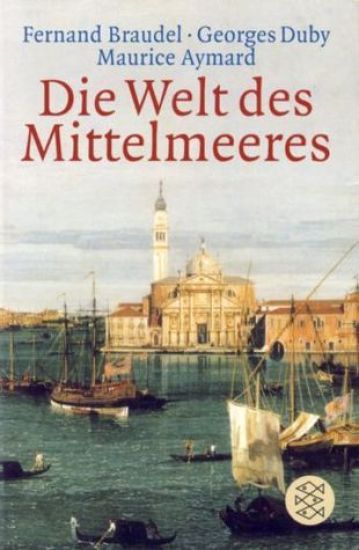
Mit guten Gründen hat man den Mittelmeer-Raum die "Wiege Europas" genannt. Die Geschichte des Abendlandes hat von dort ihren Ausgang genommen. Zugleich liegen dort die Anfänge eines vielfältigen, spannungsvollen Austausches zwischen großen Kulturen. Die mediterrane Welt zeigt (geopraphisch, gesellschaftlich, ideengeschichtlich und politisch) nicht nur ein 'westliches' Gesicht, sondern auch ein 'östliches' und ein 'afrikanisches'; sie war und ist das Laboratorium nicht einer einzigen, sondern mehrerer Zivilisationen. Eben darin steckt ihre anhaltende Faszionationskraft, die den Reisenden genau so wie den Historiker lockt. Sie führt den anschaulichen Beweis für die Vielsprachigkeit der Lebensformen, für den Bildungsprozess kultureller Identität durch Widerspiel und Nachbarschaft, Öffnung und Selbstbehauptung. Davo handelt das vorliegende Buch, zu dem sich unter der Herausgeberschaft von Fernand Braudel drei hochrenommierte Autoren zusammengefunden haben. Deren Kennerschaft ist unangefochten wie deren überzeugende schriftstellerische Fähigkeiten. Das Ergebis dieser "geographischen, geschichtlichen und kulturellen Erkundungsreise", wie Braudel es nennt, ist ein ebenso übersichtliches wie bestechendes Bildnis der mediterranen Regionen und Lebensweisen.
Women of the Twelfth Century

Women of the Twelfth Century

Georges Duby

University of Chicago Press
1998
nidottu
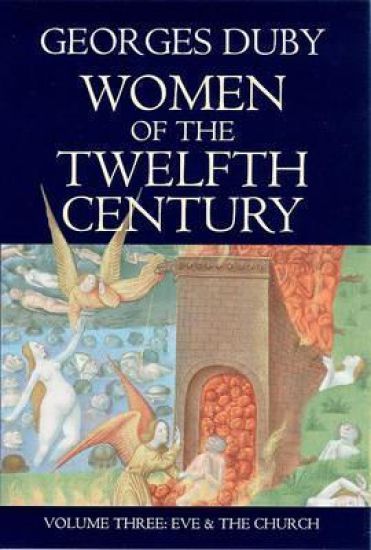
This volume studies the relationship between the Church and women in 12th century Europe, by which time the Church had begun to see the evolving roles and expectations of women as serious matters, resulting in a wide range of clerical writings. From drawing on these writings the text describes how women were thought to embody particular sins such as sorcery, disobedience and licentiousness. It analyzes Eve's role in man's fall from grace and the reasoning behind the view that women are unstable, curious, frivolous creatures. It is also noted how these charges are levelled against women even as praise is heaped upon them for the conventional virtues they exhibit in their roles as wives and mothers.
Women of the Twelfth Century, Eve and the Church
In Women of the Twelfth Century: Eve and the Church, Georges Duby concerns himself with the relationship between women and the church, examining the ways in which women were viewed from a Christian point of view. By the twelfth century, the Church had begun to take the role and expectations of women seriously, and the clerical writings discussed in this work address the particular issues that emerged from this development. In the first chapter, "The Sins of Women", Duby concentrates on the sins deemed to be particular to women (amongst others these include sorcery, disobedience, and licentiousness) and focuses especially on the male fear of female sexuality and magic. The second chapter is based on twelfth-century commentaries on the chapters in Genesis dealing with Eve's role in the fall from grace in the Garden of Eden. Interpreting these writings, and the earlier writings upon which they were based, Duby shows how they reflect the reasoning behind the view held of women as unstable, curious, and frivolous creatures. The third section is based on letters written by clerics to women of noble status and nuns. Here, while the charges of instability and frivolousness are once again levelled at women, their praise is also sung for their marital and motherly values. The final section concentrates solely on the most famous text of this period by Andreas Capellanus (De Amore), and sets it within the context of the supposed twelfth-century discovery of love and the courtly love tradition. As the third and last part of Duby's three-volume study of the lives of French noblewomen of the twelfth century, this book confirms the author as one of the greatest historians of the Middle Ages. It will be of great interest to students and researchers of medieval history and women's history, as well as anyone interested in the historical relationship between women and the Church.
Women of the Twelfth Century, Eve and the Church
In Women of the Twelfth Century: Eve and the Church, Georges Duby concerns himself with the relationship between women and the church, examining the ways in which women were viewed from a Christian point of view. By the twelfth century, the Church had begun to take the role and expectations of women seriously, and the clerical writings discussed in this work address the particular issues that emerged from this development. In the first chapter, "The Sins of Women", Duby concentrates on the sins deemed to be particular to women (amongst others these include sorcery, disobedience, and licentiousness) and focuses especially on the male fear of female sexuality and magic. The second chapter is based on twelfth-century commentaries on the chapters in Genesis dealing with Eve's role in the fall from grace in the Garden of Eden. Interpreting these writings, and the earlier writings upon which they were based, Duby shows how they reflect the reasoning behind the view held of women as unstable, curious, and frivolous creatures. The third section is based on letters written by clerics to women of noble status and nuns. Here, while the charges of instability and frivolousness are once again levelled at women, their praise is also sung for their marital and motherly values. The final section concentrates solely on the most famous text of this period by Andreas Capellanus (De Amore), and sets it within the context of the supposed twelfth-century discovery of love and the courtly love tradition. As the third and last part of Duby's three-volume study of the lives of French noblewomen of the twelfth century, this book confirms the author as one of the greatest historians of the Middle Ages. It will be of great interest to students and researchers of medieval history and women's history, as well as anyone interested in the historical relationship between women and the Church.
Women of the Twelfth Century

Women of the Twelfth Century

Georges Duby

University of Chicago Press
1998
nidottu
Georges Duby's account of 12th-century women is based on the genre that commemorated the virtues of noblewomen who had died and the role they came to play in the history of their lineage. From these genealogical works a picture emerges of the lives these women led, the values they held, and the way in which they were viewed by the ecclesiastical and chivalric writers who immortalized them. The first section of the text outlines the ways in which the dead - in both memory and legend - served to bond noble society in the 12th century, Drawing on the "Gesta" by Dudo of Saint Quentin, the second section reflects on the roles that wives, concubines, and other women played during times of war and in the great exchanges of power that established the grand lineages of the Middle Ages. The final part of the book reconstructs women as wives, mothers and widows through the work of Lambert, Priest of Ardres.
Rural Economy and Country Life in the Medieval West

Rural Economy and Country Life in the Medieval West

Georges Duby; Paul H. Freedman

University of Pennsylvania Press
1998
nidottu
In 1961 Georges Duby wrote what is still the best overview of European medieval rural history to date. Originally published in French and first translated into English in 1968, Rural Economy and Country Life in the Medieval West brings together local research on the countryside and its economic life and distills from it lessons that apply much more widely. With this edition, the University of Pennsylvania Press brings this modern classic back into print.
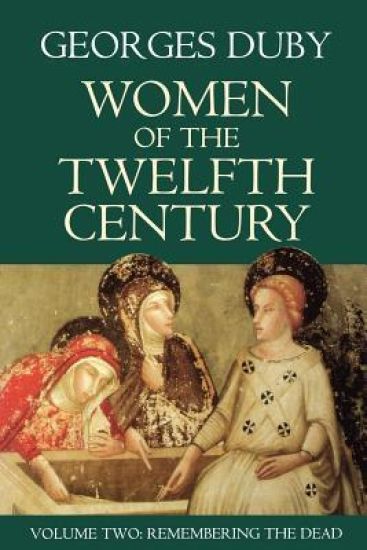
Women of the Twelfth Century, Remembering the Dead
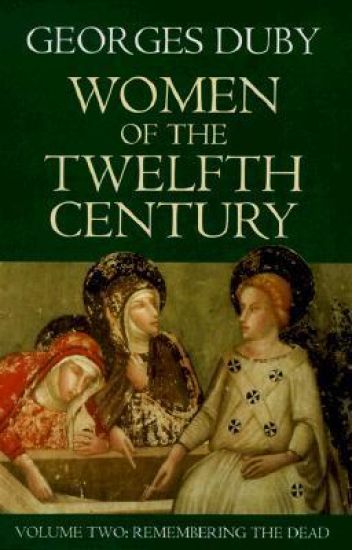
In this volume, one of the greatest medieval historians of our time continues his rich and illuminating enquiry into the lives of twelfth-century women. Georges Duby bases his account here on a twelfth-century genre which commemorated the virtues of noblewomen who had died, and the roles they had played in the history of their lineage. From these genealogical works a vivid picture emerges of the lives these women led, the values they held, and the way in which they were viewed by the priest and knights who wrote about them. The first section outlines the way in which the dead, and the memory and tales of the dead, served to bond noble society in the twelfth century. The second draws on the Gesta, written by Dudo of Saint Quentin, and reflects on what it tells us about the roles ascribed to wives and concubines and women, in war and in power. The third and final section reconstructs women as wives, mothers and widows through the work of Lambert, Priest of Ardres. This book is part of a three-volume work on women in the Middle Ages. It will be of great interest to students and researchers in medieval history, social history and women's history.
Women of the Twelfth Century, Remembering the Dead
In this volume, one of the greatest medieval historians of our time continues his rich and illuminating enquiry into the lives of twelfth-century women. Georges Duby bases his account here on a twelfth-century genre which commemorated the virtues of noblewomen who had died, and the roles they had played in the history of their lineage. From these genealogical works a vivid picture emerges of the lives these women led, the values they held, and the way in which they were viewed by the priest and knights who wrote about them. The first section outlines the way in which the dead, and the memory and tales of the dead, served to bond noble society in the twelfth century. The second draws on the Gesta, written by Dudo of Saint Quentin, and reflects on what it tells us about the roles ascribed to wives and concubines and women, in war and in power. The third and final section reconstructs women as wives, mothers and widows through the work of Lambert, Priest of Ardres. This book is part of a three-volume work on women in the Middle Ages. It will be of great interest to students and researchers in medieval history, social history and women's history.
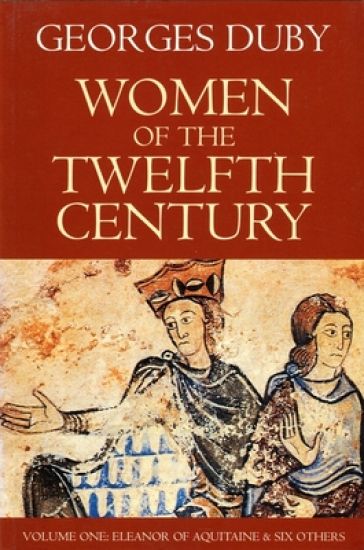
Women of the Twelfth Century, Eleanor of Aquitaine and Six Others
This is an engaging account of the lives of high-born women in the Middle Ages, by one of the foremost historians in Europe. Focusing on France in the twelfth century, Duby recreates the image of women that the men of high society made for themselves. Using written evidence from the period - official texts written by men, all intended for public consumption and reading aloud - he tells the story of six very different women. These women - fictional and real, religious and secular - range from famous historical figures such as Eleanor of Aquitaine and H&eacutelo&iumlse, through Mary Magdalen, whose cult grew throughout the twelfth century, to Soredamors and Fenice, the heroines of Clig&egraves, the romance of Chr&eacutetien de Troyes. Duby sets all of these women within their historical context, using their personalities to explore the characteristics of female existence during this period. He discusses relations between the sexes, including marriage and different types of love, and shows how women were feared, mistrusted and, sometimes, admired by men. He vividly reconstructs the French nobility's system of values, examining the place assigned to women within this system. He argues that men's attitudes to women began to change in the twelfth century and that women began imperceptibly to extricate themselves from masculine power. This important book - the first of three volumes on women in the Middle Ages - will be of interest to a wide readership.
Women of the Twelfth Century, Eleanor of Aquitaine and Six Others
This is an engaging account of the lives of high-born women in the Middle Ages, by one of the foremost historians in Europe. Focusing on France in the twelfth century, Duby recreates the image of women that the men of high society made for themselves. Using written evidence from the period - official texts written by men, all intended for public consumption and reading aloud - he tells the story of six very different women. These women - fictional and real, religious and secular - range from famous historical figures such as Eleanor of Aquitaine and H&eacutelo&iumlse, through Mary Magdalen, whose cult grew throughout the twelfth century, to Soredamors and Fenice, the heroines of Clig&egraves, the romance of Chr&eacutetien de Troyes. Duby sets all of these women within their historical context, using their personalities to explore the characteristics of female existence during this period. He discusses relations between the sexes, including marriage and different types of love, and shows how women were feared, mistrusted and, sometimes, admired by men. He vividly reconstructs the French nobility's system of values, examining the place assigned to women within this system. He argues that men's attitudes to women began to change in the twelfth century and that women began imperceptibly to extricate themselves from masculine power. This important book - the first of three volumes on women in the Middle Ages - will be of interest to a wide readership.
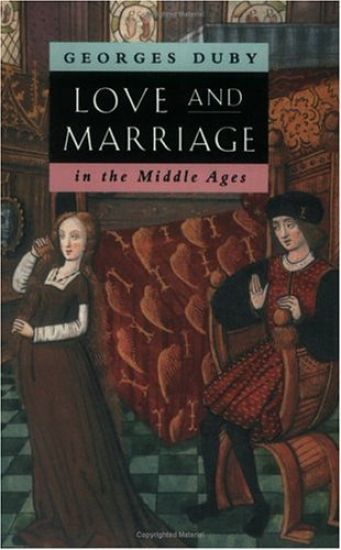
Love and Marriage in the Middle Ages

Love and Marriage in the Middle Ages

Georges Duby

University of Chicago Press
1996
nidottu
Preeminent medieval scholar Georges Duby argues that the structure of sexual relationships took its cue from the family and from feudalism-both bastions of masculinity-as he reveals the role of women, what they represented, and what they were in the Middle Ages. Beautifully written in Duby's characteristically nuanced and powerful style, this collection is an ideal entree into Duby's thinking about marriage and the diversities of love, spousal decorum, family structure, and their cultural context in bodily and spiritual values. Love and Marriage in the Middle Ages will be of great interest to students in social and cultural history, medieval and early modern history, and women's studies, as well as those interested in the nature of social life in the Middle Ages. Georges Duby (1919-1996) was a member of the Acad mie fran aise and for many years held the distinguished chair in medieval history at the Coll ge de France. His books include The Three Orders; The Age of Cathedrals; The Knight, the Lady, and the Priest; Love and Marriage in the Middle Ages; and History Continues, all published by the University of Chicago Press.