Kirjojen hintavertailu. Mukana 12 595 353 kirjaa ja 12 kauppaa.

Kirjailija

Georgina Ferry

Kirjat ja teokset yhdessä paikassa: 5 kirjaa, julkaisuja vuosilta 2004-2019, suosituimpien joukossa The Scientists. Vertaile teosten hintoja ja tarkista saatavuus suomalaisista kirjakaupoista.

5 kirjaa

Kirjojen julkaisuhaarukka 2004-2019.

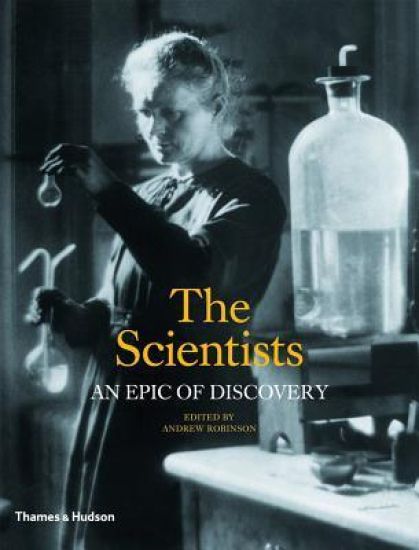
The Scientists

The Scientists

Naomi Pasachoff; Jay Pasachoff; Robert Iliffe; Frank A.J.L. James; Jordi Cat; Patrick Moore; Martin Rudwick; Laura Dassow Walls; Roger McCoy; Michael Hunter; Jean-Pierre Poirier; Alan Rocke; Nathan Brooks; Georgina Ferry; Virendra Singh; Frank Close; Andrew Whitaker; Robert Paradowski

Thames Hudson Ltd
2012
sidottu
This book tells the remarkable lives of the pioneers of science – from Galileo and Newton, Faraday and Darwin, Pasteur and Marie Curie, to Einstein, Freud, Turing, and Crick and Watson. A series of seventy articles, written by an international team of distinguished scientists, historians of science and science writers, provides an unrivalled account of the lives and personalities behind the greatest scientific breakthroughs of all time. Organized thematically, starting at the ‘Universe’, and moving smaller through the ‘Earth’ and ‘Molecules and Matter’ to ‘Inside the Atom’, with the final two sections looking at ‘Life’ and ‘Body and Mind’, it covers all the major scientific disciplines, including astronomy, biology, biochemistry, chemistry, computing, ecology, geology, medicine, neurology, physics and psychology, as well as mathematics. The Scientists will intrigue budding scientists, those fascinated by the lives of great individuals, and anyone curious to know how over the centuries we came to understand the physical world around us and inside us.
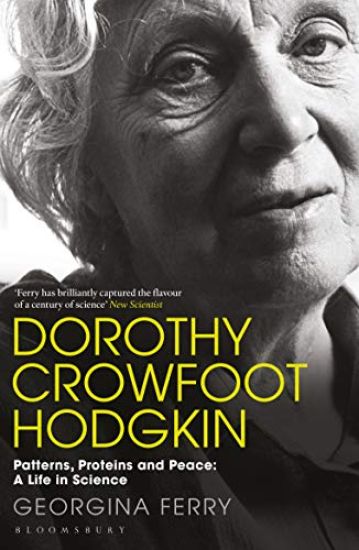
Dorothy Crowfoot Hodgkin

Dorothy Crowfoot Hodgkin

Georgina Ferry

Bloomsbury Reader
2019
nidottu
*Shortlisted for the Duff Cooper Prize and the Marsh Biography Award*The definitive biography of chemist Dorothy Crowfoot Hodgkin, the only British woman to win a Nobel prize in the sciences to date. Dorothy Crowfoot Hodgkin (1910–1994) was passionate in her quest to understand the molecules of the living body. She won the Nobel Prize for Chemistry in 1964 for her work on penicillin and Vitamin B12, and her study of insulin made her a pioneer in protein crystallography. Fully engaged with the political and social currents of her time, Hodgkin experienced radical change in women’s education, the globalisation of science, relationships between East and West, and international initiatives for peace. Georgina Ferry's definitive biography of Britain’s first female Nobel prizewinning scientist was shortlisted for the Duff Cooper Prize and the Marsh Biography Award. This revised and updated edition includes a new preface from the author.
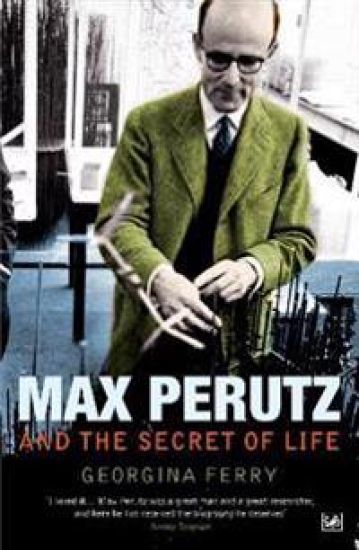
Max Perutz And The Secret Of Life

Max Perutz And The Secret Of Life

Georgina Ferry

Vintage Publishing
2014
pokkari
Max Perutz himself explored the protein haemoglobin and his work, which won him a shared Nobel Prize in 1962, launched a new era of medicine, heralding today's astonishing advances in the genetic basis of disease. Max Perutz's story, wonderfully told by Georgina Ferry, brims with life;
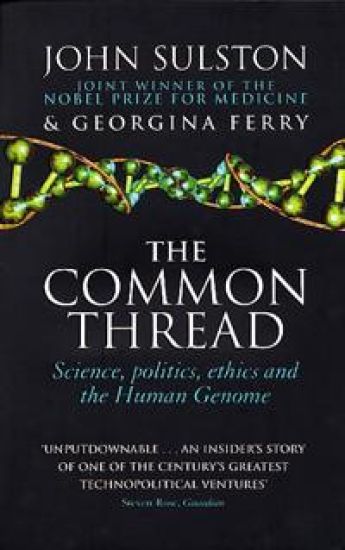
Common Thread

Common Thread

Georgina Ferry; John Sulston

TRANSWORLD PUBLISHERS LTD
2009
pokkari
And as a pragmatist he reveals his hopes and concerns as to how the information unlocked by the Human Genome Project will affect people's lives in the future. The Common Thread is at once a compelling history of this most exciting of scientific breakthroughs and also an impassioned call for ethical responsibility in scientific research.
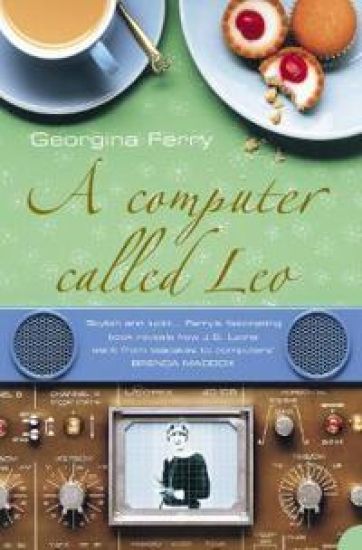
A Computer Called LEO

A Computer Called LEO

Georgina Ferry

HarperPerennial
2004
nidottu
The eccentric story of one of the most bizarre marriages in the history of British business: the invention of the world's first office computer and the Lyons Teashop. The Lyons teashops were one of the great British institutions, providing a cup of tea and a penny bun through the depression and the war, though to the 1970s. Yet Lyons also has a more surprising claim to history. In the 1930s John Simmons, a young maths graduate in charge of the clerks' offices, had a dream: to build a machine that would automate the millions of tedious transactions and process them in as little time as possible. Simmons' quest for the first office computer – the Lyons Electronic Office – would take 20 years and involve some of the most brilliant young minds in Britain. Interwoven with the story of creating LEO is the story of early computing, from the Difference Engine of Charles Babbage to the codecracking computers at Bletchley Park and the instantly obsolescent ENIAC in the US. It is also the story of post war British computer business: why did it lose the initiative? Why did the US succeed while British design was often superior?