Kirjojen hintavertailu. Mukana 12 567 844 kirjaa ja 12 kauppaa.

Kirjailija

Gerald F. Gaus

Kirjat ja teokset yhdessä paikassa: 7 kirjaa, julkaisuja vuosilta 1990-2021, suosituimpien joukossa Social Philosophy. Vertaile teosten hintoja ja tarkista saatavuus suomalaisista kirjakaupoista.

Mukana myös kirjoitusasut: Gerald F Gaus

7 kirjaa

Kirjojen julkaisuhaarukka 1990-2021.

The Modern Liberal Theory of Man

The Modern Liberal Theory of Man

Gerald F. Gaus

Routledge
2021
nidottu
First published in 1983. The primary argument of this book is that there is a coherent tradition of liberal thinking that extends from L. S. Mill, through liberals like T. H. Green, Bernard Bosanquet, L. T. Hobhouse and John Dewey to John Rawls. The author places Rawls within a longstanding tradition of liberal thinking, while also arguing that Green and Hobhouse are not simply of historical interest but represent genuine and interesting attempts to develop a modern liberal theory. It is argued that modern liberal theory centres on a conception of human nature; that modern liberals have sought to harmonise the pursuit of individuality with participation in social and communal life. Although the book focuses on six modern liberals, the discussion proceeds topically rather than according to author, thus highlighting similarities and disagreements and providing a comprehensive study of modern liberalism.
The Modern Liberal Theory of Man

The Modern Liberal Theory of Man

Gerald F. Gaus

Routledge
2019
sidottu
First published in 1983. The primary argument of this book is that there is a coherent tradition of liberal thinking that extends from L. S. Mill, through liberals like T. H. Green, Bernard Bosanquet, L. T. Hobhouse and John Dewey to John Rawls. The author places Rawls within a longstanding tradition of liberal thinking, while also arguing that Green and Hobhouse are not simply of historical interest but represent genuine and interesting attempts to develop a modern liberal theory. It is argued that modern liberal theory centres on a conception of human nature; that modern liberals have sought to harmonise the pursuit of individuality with participation in social and communal life. Although the book focuses on six modern liberals, the discussion proceeds topically rather than according to author, thus highlighting similarities and disagreements and providing a comprehensive study of modern liberalism.
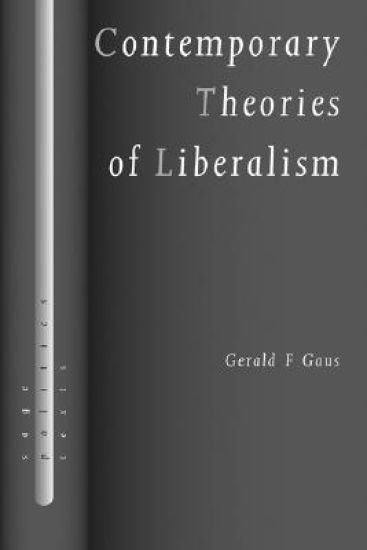
Contemporary Theories of Liberalism

Contemporary Theories of Liberalism

Gerald F Gaus

SAGE Publications Inc
2003
nidottu
`The author has provided us with a masterful overview and critique of liberal theorizing of the past quarter-century. While dealing exhaustively and fairly with each of a variety of broadly liberal approaches, Gaus also presents a compelling argument for his own preferred "justificatory" approach. His analyses range across familiar territory - Berlin, Gauthier, Baier, Habermas, social choice theory, Rawls, and so on - and are always illuminating and, taken together, provide both the newcomer and the old-hand much to ponder' - Fred D'Agostino, University of New England, Armidale `[A]ll that man is and all that raises him above animals he owes to his reason' - Ludwig von Mises Contemporary Theories of Liberalism provides students with a comprehensive overview of the key tenets of liberalism developed through Hobbes, Locke, Kant and Rawls to present day theories and debates. Central to recent debate has been the idea of public reason. The text introduces and explores seven dominant theories of public reason, namely, pluralism, Neo-Hobbesianism, pragmatism, deliberative democracy, political democracy, Rawlsian political liberalism and justificatory liberalism. As a proponent of justificatory liberalism, Gaus presents an accessible and critical analysis of all contempoary liberal political theory and powerfully illustrates the distinct and importsant contribution of justificatory liberalism. Contemporary Theories of Liberalism is essential reading for students and academics seeking a deeper understanding of liberal political theory today.
Contemporary Theories of Liberalism

Contemporary Theories of Liberalism

Gerald F Gaus

SAGE Publications Inc
2003
sidottu
`The author has provided us with a masterful overview and critique of liberal theorizing of the past quarter-century. While dealing exhaustively and fairly with each of a variety of broadly liberal approaches, Gaus also presents a compelling argument for his own preferred "justificatory" approach. His analyses range across familiar territory - Berlin, Gauthier, Baier, Habermas, social choice theory, Rawls, and so on - and are always illuminating and, taken together, provide both the newcomer and the old-hand much to ponder' - Fred D'Agostino, University of New England, Armidale `[A]ll that man is and all that raises him above animals he owes to his reason' - Ludwig von Mises Contemporary Theories of Liberalism provides students with a comprehensive overview of the key tenets of liberalism developed through Hobbes, Locke, Kant and Rawls to present day theories and debates. Central to recent debate has been the idea of public reason. The text introduces and explores seven dominant theories of public reason, namely, pluralism, Neo-Hobbesianism, pragmatism, deliberative democracy, political democracy, Rawlsian political liberalism and justificatory liberalism. As a proponent of justificatory liberalism, Gaus presents an accessible and critical analysis of all contempoary liberal political theory and powerfully illustrates the distinct and importsant contribution of justificatory liberalism. Contemporary Theories of Liberalism is essential reading for students and academics seeking a deeper understanding of liberal political theory today.
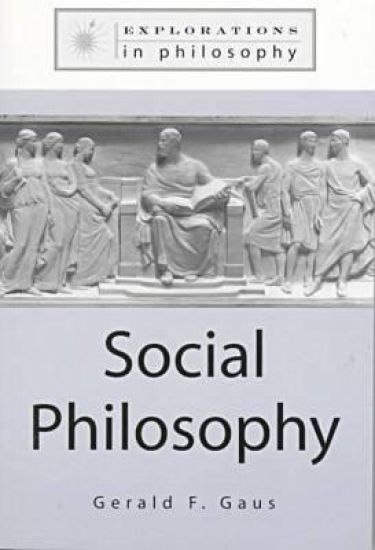
Social Philosophy

Social Philosophy

Gerald F. Gaus

M.E. Sharpe
1998
nidottu
This accessible introductory text discusses how people in a pluralistic society such as ours can accept a common social ethic - a publicly justified morality. It presents analyses of the basic concepts, including justifications of liberty, harm to others, private property rights, distributive justice, environmental harms, help to others and offensive behaviour. Gaus acquaints the reader with the major figures in social philosophy - John Stuart Mill, Jeremy Bentham, Thomas Hobbes, John Locke, David Hume, John Rawls, David Gauthier, and Joel Feinberg - as well as recent communitarian philosophers. The basic technical aspects of social philosophy are also introduced: game theory, social choice theory, the ideas rational action, rational bargaining, and public goods. Throughout, helpful short examples and stories are used to illustrate the material.
Social Philosophy

Social Philosophy

Gerald F. Gaus

M.E. Sharpe
1998
sidottu
This accessible introductory text discusses how people in a pluralistic society such as ours can accept a common social ethic - a publicly justified morality. It presents analyses of the basic concepts, including justifications of liberty, harm to others, private property rights, distributive justice, environmental harms, help to others and offensive behaviour. Gaus acquaints the reader with the major figures in social philosophy - John Stuart Mill, Jeremy Bentham, Thomas Hobbes, John Locke, David Hume, John Rawls, David Gauthier, and Joel Feinberg - as well as recent communitarian philosophers. The basic technical aspects of social philosophy are also introduced: game theory, social choice theory, the ideas rational action, rational bargaining, and public goods. Throughout, helpful short examples and stories are used to illustrate the material.
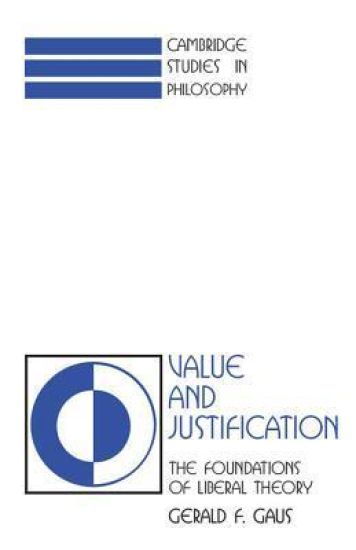
Value and Justification

Value and Justification

Gerald F. Gaus

Cambridge University Press
1990
pokkari
This important new book takes as its points of departure two questions: What is the nature of valuing? and What morality can be justified in a society that deeply disagrees on what is truly valuable? In Part One, the author develops a theory of value that attempts to reconcile reason with passions. Part Two explores how this theory of value grounds our commitment to moral action. The author argues that rational moral action can neither be seen as a way of simply maximising one’s own values, nor derived from reason independent of one’s values. Rather, our commitment to the moral point of view is presupposed by our value systems. The book concludes with a defense of liberal political morality.