
Kirjojen hintavertailu. Mukana 12 595 353 kirjaa ja 12 kauppaa.

Kirjailija

Gerald Holtham

Kirjat ja teokset yhdessä paikassa: 3 kirjaa, julkaisuja vuosilta 1989-2013, suosituimpien joukossa Can Nations Agree?. Vertaile teosten hintoja ja tarkista saatavuus suomalaisista kirjakaupoista.

3 kirjaa

Kirjojen julkaisuhaarukka 1989-2013.

Aid and Inequality in Kenya

Aid and Inequality in Kenya

Gerald Holtham; Arthur Hazelwood

Routledge
2013
nidottu
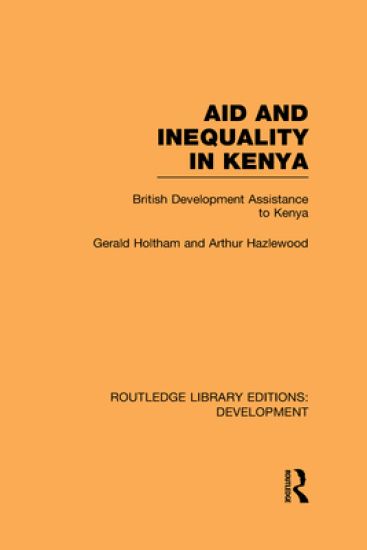
This reissue, first published in 1976, considers the rapid rate of economic growth in Kenya, combined with its apparent political stability, to determine whether or not this is indeed a case of ‘growth without development’ and, if so, where the responsibility for aid lies in this situation.The book concludes that while Kenyan growth has not been to an ideal pattern, accompanied by an increase in inequality, there is little or no reason to believe that living standards have not improved. It examines the impact of aid on Kenya’s progress at both the microeconomic and macroeconomic level and provides an institutional study of the impact of aid on Kenyan Government policy formation and administration and a discussion of British aid’s political purposes and influence in Kenya. The authors conclude that some of the effects predicted by the critics of aid are visible, but that the net effect on general living standards has been strongly positive, concluding that the problems constitute a case for improving aid procedures, but not against aid itself.
Aid and Inequality in Kenya

Aid and Inequality in Kenya

Gerald Holtham; Arthur Hazelwood

Routledge
2010
sidottu
This reissue, first published in 1976, considers the rapid rate of economic growth in Kenya, combined with its apparent political stability, to determine whether or not this is indeed a case of ‘growth without development’ and, if so, where the responsibility for aid lies in this situation.The book concludes that while Kenyan growth has not been to an ideal pattern, accompanied by an increase in inequality, there is little or no reason to believe that living standards have not improved. It examines the impact of aid on Kenya’s progress at both the microeconomic and macroeconomic level and provides an institutional study of the impact of aid on Kenyan Government policy formation and administration and a discussion of British aid’s political purposes and influence in Kenya. The authors conclude that some of the effects predicted by the critics of aid are visible, but that the net effect on general living standards has been strongly positive, concluding that the problems constitute a case for improving aid procedures, but not against aid itself.
Can Nations Agree?

Can Nations Agree?

Richard N. Cooper; Barry Eichengreen; Gerald Holtham; Robert D. Putnam; C. Randall Henning

Brookings Institution
1989
nidottu
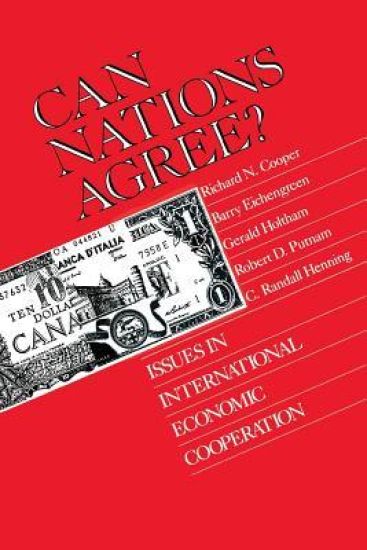
In the age of Three Mile Island and Chernobyl, a new international trade in industrial and human waste, the depletion of the ozone layer, and the greenhouse effect, the importance of international cooperation is supremely evident. In the economic arena, such problems include speculative instability in financial and primary commodities markets, competition in tax regimes, and the greatly enhanced scope for tax evasion. Can Nations Agree? examines the crucial issues surrounding international cooperation-conditions that foster cooperation toward common goals; ways to handle the friction arising from conflicting goals; and the structures that best promote cooperation. Although nations recognize the value of cooperation in an independent world, a variety of conditions inhibit the process. In recent decades the number of independent nations has risen rapidly, and so has the variety of decisionmakers and national interests to be reconciled. At the same time, the economic power of the United States has declined in relation to other successful capitalist countries. In the chapters on the 1978 Bonn economic summit, German macroeconomic policy, international cooperation on public health issues, and hegemony and stability, the scholars contributing to this volume analyze the history and process of international cooperation to offer fresh insight for future efforts.