Kirjojen hintavertailu. Mukana 12 595 353 kirjaa ja 12 kauppaa.

Kirjailija

Gerald Holton

Kirjat ja teokset yhdessä paikassa: 16 kirjaa, julkaisuja vuosilta 1984-2013, suosituimpien joukossa Understanding Physics. Vertaile teosten hintoja ja tarkista saatavuus suomalaisista kirjakaupoista.

16 kirjaa

Kirjojen julkaisuhaarukka 1984-2013.

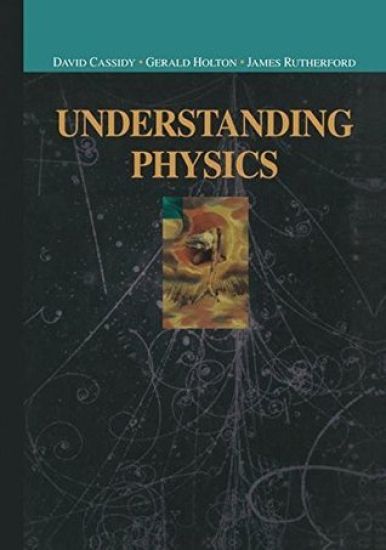
Understanding Physics

Understanding Physics

David Cassidy; Gerald Holton; James Rutherford

Springer-Verlag New York Inc.
2002
nidottu
This book, a companion to the textbook, Understanding Physics, is your guide to observations and explorations in the world of physics. Prepare for ch- lenging work, fun, and some surprises. One of the best ways to learn physics is by doing physics, in the laboratory and everywhere. One cannot rely on reading and class work alone. The explorations in this book are your - portunity to gain some actual, hands-on experience with physics. Many of these explorations will assist you to design your own experiments and to discover many of the important ideas of science yourself. As you will see from the Contents, this Student Guide provides a variety of potentially helpful materials. Following the Introduction is a review of units, mathematics, and scientific notation, and a list of suggested further reading and Web Sites. However, a large portion of the Student Guide c- tains further materials relating to many of the textbook chapters, as well as to laboratory explorations. In the section containing “Further Chapter - terials” you will find elaborations on topics in many of the chapters, as well as derivations of important equations. A complete list of the suggested mi- and major-laboratory explorations is also given in the Contents. Each - ploration is keyed to specific portions of the textbook, and lists are also provided of the explorations pertaining to each part of the text.
Einstein, die Geschichte und andere Leidenschaften

Einstein, die Geschichte und andere Leidenschaften

Gerald Holton

Vieweg+teubner Verlag
2013
nidottu
Gerald Holton warnt mit Hilfe eines der größten Wissenschaftler unseres Jahrhunderts - Albert Einstein - vor der heutigen "Romantischen Rebellion", die für alle Fehler unserer heutigen Gesellschaft die Wissenschaft verantwortlich machen will und ein neues Denken propagiert. Dadurch, daß er die Einsteinsche Gedankenwelt sorgfältig durchleuchtet, zeigt er, daß die Spitzenergebnisse der Wissenschaft auf sehr viel Intuition beruhen und daß die moderne Wissenschaft in der Tat ein kreativer Ausdruck der westlichen Zivilisation ist.
Understanding Physics

Understanding Physics

David C. Cassidy; Gerald Holton; F. James Rutherford

Springer-Verlag New York Inc.
2013
nidottu
Understanding Physics provides a thorough grounding in contemporary physics while placing physics into its social and historical context. Based in large part on the highly respected Project Physics Course developed by two of the authors, it also integrates the results of recent pedagogical research. The text thus: - teaches about the basic phenomena in the physical world and the concepts developed to explain them - shows that science is a rational human endeavor with a long and continuing tradition, involving many different cultures and people - develops facility in critical thinking, reasoned argumentation, evaluation of evidence, mathematical modeling, and ethical values The treatment emphasizes not only what we know but also how we know it, why we believe it, and what effects that knowledge has: - Why do we believe the Earth and planets revolve around the Sun? - Why do we believe that matter is made of atoms? - How do relativity theory and quantum mechanics alter our conception of Nature and in what ways do they leave the classical concepts unchanged? - What impact does the knowledge of finite energy resources have on our society? - How have applications of fundamental science (such as the steam engine, the laser, the electric generator, the transistor) affected our lives? - How does the evidence for non-scientific ideas, such as UFOs, ESP, and the like, differ from the evidence for accepted scientific results?
The Historical Development of Mythology: Daedalus, V88, No 2, Spring, 1959

The Historical Development of Mythology: Daedalus, V88, No 2, Spring, 1959

Joseph Campbell; Gerald Holton; Katherine Strelsky

Literary Licensing, LLC
2011
sidottu
""The Historical Development of Mythology: Daedalus, V88, No 2, Spring, 1959"" is a book written by Joseph Campbell that explores the evolution of mythology throughout history. The book delves into the origins of mythology, tracing its roots back to ancient civilizations and examining how it has evolved and changed over time. Campbell explores the role of myth in society, and how it has been used to explain the mysteries of the universe, as well as to provide moral guidance and cultural identity. The book also examines the influence of mythology on literature, art, and popular culture, and how it continues to shape our understanding of the world today. Overall, ""The Historical Development of Mythology"" is a comprehensive exploration of the history and significance of mythology, written by one of the foremost scholars in the field.This scarce antiquarian book is a facsimile reprint of the old original and may contain some imperfections such as library marks and notations. Because we believe this work is culturally important, we have made it available as part of our commitment for protecting, preserving, and promoting the world's literature in affordable, high quality, modern editions, that are true to their original work.
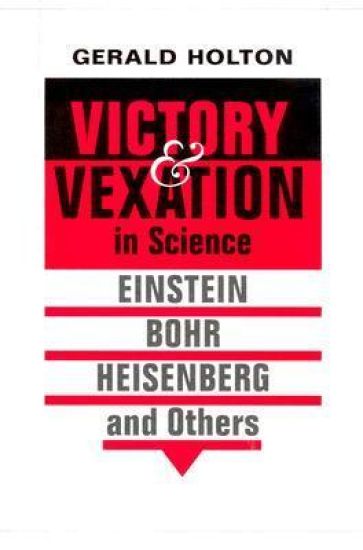
Victory and Vexation in Science

Victory and Vexation in Science

Gerald Holton

Harvard University Press
2005
sidottu
Never has the power of scientific research to solve existing problems and uncover new ones been more evident than it is today. Yet there exists widespread ignorance about the larger contexts within which scientific research is carried out. For example, the point of view some scientists adopt in their work or in their social commitments may become clearer if considered in light of the opposing views held by other scientists.This is a theme Gerald Holton addresses in his new collection. Whether considering conflicts between Heisenberg and Einstein, Bohr and Einstein, or P. W. Bridgman and B. F. Skinner; tracing I. I. Rabi's shift of attention from superb science to education and scientific statesmanship; or examining the emergence, in the last few decades, of the need to connect scientific research to societal needs--in each case, Holton demonstrates a masterly understanding of modern science and how it influences our world.The author shows why, at any given time--even in the mature phase of science--there exists no single "paradigm," but rather a spectrum of competing perspectives; and why so much good science has been based, from antiquity to today, on a relatively small number of presuppositions.
Understanding Physics

Understanding Physics

David C. Cassidy; Gerald Holton; F. James Rutherford

Springer-Verlag New York Inc.
2002
sidottu
Understanding Physics provides a thorough grounding in contemporary physics while placing physics into its social and historical context. Based in large part on the highly respected Project Physics Course developed by two of the authors, it also integrates the results of recent pedagogical research. The text thus: - teaches about the basic phenomena in the physical world and the concepts developed to explain them - shows that science is a rational human endeavor with a long and continuing tradition, involving many different cultures and people - develops facility in critical thinking, reasoned argumentation, evaluation of evidence, mathematical modeling, and ethical values The treatment emphasizes not only what we know but also how we know it, why we believe it, and what effects that knowledge has: - Why do we believe the Earth and planets revolve around the Sun? - Why do we believe that matter is made of atoms? - How do relativity theory and quantum mechanics alter our conception of Nature and in what ways do they leave the classical concepts unchanged? - What impact does the knowledge of finite energy resources have on our society? - How have applications of fundamental science (such as the steam engine, the laser, the electric generator, the transistor) affected our lives? - How does the evidence for non-scientific ideas, such as UFOs, ESP, and the like, differ from the evidence for accepted scientific results?
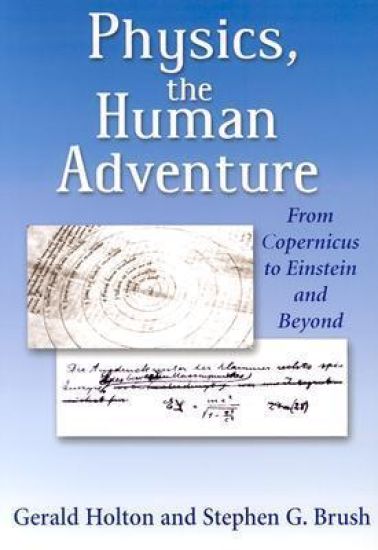
Physics, the Human Adventure

Physics, the Human Adventure

Stephen G. Brush; Gerald Holton

Rutgers University Press
2001
nidottu
Winner of the 2001 Joseph Hazen Education Prize of the History of Science Society?Physics, the Human Adventure is the third edition of the classic text Introduction to Concepts and Theories in Physical Science. Authored by Gerald Holton, the text was a landmark in science education. It was the first modern textbook in physics (or in any other science) to make full and effective use of the history and philosophy of science in presenting for both the general and the science-oriented student an account of the nature of physical science. A second edition, prepared by Stephen G. Brush, brought the book up to date by increasing the coverage of topics in modern physics and by taking account of recent scholarly research in the history of science. In the new book Physics, The Human Adventure, each of the chapters has been reworked to further clarify the physics concepts and to incorporate recent physical advances and research. The book shows the unifying power of science by bringing in connections to chemistry, astronomy, and geoscience. In short, the aid of the new edition is to teach good physics while presenting physical science as a human adventure that has become a major force in our civilization. New chapters discuss theories of the origin of the solar system and the expanding universe; fission, fusion, and the Big Bang–Steady State Controversy; and thematic elements and styles in scientific thought. New topics include:• Theories of vision: does the eye send out rays or receive them?• Distances in the solar system• The prediction of the return of Halley’s comet and analysis of deviations from Kepler’s laws• Angular momentum conservation and Laplace’s nebular hypothesis• Relation between symmetries and conservation laws: Emmy Noether’s theorem• First estimates of atomic sizes• Consequences of the indistinguishability of elementary particles of the same kind• Applications of quantum mechanics to many-particle systems• Dirac’s prediction of anti-matter• The anthropic principle and other controversial issues on the frontiers of research
Einstein, History, and Other Passions

Einstein, History, and Other Passions

Gerald Holton

Harvard University Press
2000
nidottu
“[The] book makes a wonderfully cohesive whole. It is rich in ideas, elegantly expressed. I highly recommend it to any serious student of science and culture.”—Lucy Horwitz, Boston Book Review“An important and lasting contribution to a more profound understanding of the place of science in our culture.”—Hans C. von Baeyer, Boston Sunday Globe“[Holton’s] themes are central to an understanding of the nature of science, and Holton does an excellent job of identifying and explaining key features of the scientific enterprise, both in the historical sense and in modern science…I know of no better informed scientist who has studied the nature of science for half a century.”—Ron Good, Science and EducationThrough his rich exploration of Einstein’s thought, Gerald Holton shows how the best science depends on great intuitive leaps of imagination, and how science is indeed the creative expression of the traditions of Western civilization.
Wissenschaft und Anti-Wissenschaft

Wissenschaft und Anti-Wissenschaft

Gerald Holton

Springer Verlag GmbH
2000
nidottu
Was ist gute Wissenschaft? Welches Ziel ist das richtige Ziel jeder wissenschaftlichen Tatigkeit? Gibt es eine rechtfertigende Autoritat, auf die sich Wissenschaftler berufen konnen? Fur diese heute wieder heftig diskutierten Fragen muss jede wissenschaftliche Ara ihre eigenen Losungen finden. Gerald Holton, Professor fur Physik und Wissenschaftsgeschichte an der Harvard Universitat, analysiert die lange konfliktreiche Beziehung zwischen wissenschaftlicher Weltsicht und ihren anti-wissenschaftlichen Kritikern - nicht im abstrakten Sinn, sondern im Rahmen konkreter historischer Falle. Er zeigt, dass die Empiriker des neunzehnten Jahrhunderts, vor allem Ernst Mach, die Wissenschaftler und Philosophen des zwanzigsten Jahrhunderts massgeblich beeinflusst haben. Die Konfliktgeschichte uber richtige Ziele und Legitimation der Wissenschaft wird in den Haltungen unterschiedlicher Wissenschaftler wie z.B. Albert Einstein, Max Planck oder Niels Bohr sichtbar. "Das ist ein aussergewohnlich durchdachtes, scharfsinniges und kluges Werk fur jeden, der sich mit der Zukunft der Wissenschaften befasst." John Ziman in Nature
The Advancement of Science, and Its Burdens

The Advancement of Science, and Its Burdens

Gerald Holton

Harvard University Press
1998
nidottu
How did Albert Einstein's ideas shape the imaginations of twentieth-century artists and writers? Are there national differences between styles of scientific research? By what mechanisms is progress in science achieved despite the enormous diversity of individual, often conflicting, efforts?These are just a few of the questions posed in The Advancement of Science, and Its Burdens. Gerald Holton, one of the century's leading historians of science, continues his analysis of how modern science works and how it influences our world, with particular emphasis on the role of the thematic elements--those often unconscious presuppositions that guide scientific work to success or failure. Many of the conclusions emerge from the author's extensive study of the contributions of Albert Einstein. Indeed, Holton's new introduction for this edition, "Einstein and the Cultural Roots of Modern Science," demonstrates that Einstein's daring main pursuit, the discovery of unity among seemingly disparate aspects of physics, was psychologically supported by a surprising ally: the high literary works in which he immersed himself, above all Goethe's. This case study alone may well be a classic example for studying the interaction of science and culture.
The Scientific Imagination

The Scientific Imagination

Gerald Holton

Harvard University Press
1998
nidottu
New scientific ideas are subjected to an extensive process of evaluation and validation by the scientific community. Until the early 1980s, this process of validation was thought to be governed by objective criteria, whereas the process by which individual scientists gave birth to new scientific ideas was regarded as inaccessible to rational study. In this book Gerald Holton takes an opposing view, illuminating the ways in which the imagination of the scientist functions early in the formation of a new insight or theory. In certain crucial instances, a scientist adopts an explicit or implicit presupposition, or thema, that guides his work to success or failure and helps determine whether the new idea will draw acclaim or controversy. Using firsthand accounts gleaned from notebooks, interviews, and correspondence of such twentieth-century scientists as Einstein, Fermi, and Millikan, Holton shows how the idea of the scientific imagination has practical implications for the history and philosophy of science and the larger understanding of the place of science in our culture. The new introduction, "How a Scientific Discovery Is Made: The Case of High-Temperature Superconductivity," reveals the scientific imagination at work in current science, by disclosing the role of personal motivations that are usually hidden from scientific publications, and the lessons of the case for science policy today.
Science and Anti-Science

Science and Anti-Science

Gerald Holton

Harvard University Press
1998
nidottu
What is good science? What goal--if any--is the proper end of scientific activity? Is there a legitimating authority that scientists mayclaim? Howserious athreat are the anti-science movements? These questions have long been debated but, as Gerald Holton points out, every era must offer its own responses. This book examines these questions not in the abstract but shows their historic roots and the answers emerging from the scientific and political controversies of this century.Employing the case-study method and the concept of scientific thematathat he has pioneered, Holton displays the broad scope of his insight into the workings of science: from the influence of Ernst Mach on twentiethcentury physicists, biologists, psychologists, and other thinkers to the rhetorical strategies used in the work of Albert Einstein, Niels Bohr, and others; from the bickering between Thomas Jefferson and the U.S. Congress over the proper form of federal sponsorship of scientific research to philosophical debates since Oswald Spengier over whether our scientific knowledge will ever be "complete." In a masterful final chapter, Holton scrutinizes the "anti-science phenomenon," the increasingly common opposition to science as practiced today. He approaches this contentious issue by examining the world views and political ambitions of the proponents of science as well as those of its opponents-the critics of "establishment science" (including even those who fear that science threatens to overwhelm the individual in the postmodern world) and the adherents of "alternative science" (Creationists, New Age "healers," astrologers). Through it all runs the thread of the author's deep historical knowledge and his humanistic understanding of science in modern culture.Science and Anti-Science will be of great interest not only to scientists and scholars in the field of science studies but also to educators, policymalcers, and all those who wish to gain a fuller understanding of challenges to and doubts about the role of science in our lives today.
Who Succeeds in Science?

Who Succeeds in Science?

Gerhard Sonnert; Gerald Holton

Rutgers University Press
1995
nidottu
Why don’t more women become scientists? And why do those who do become scientists often face more difficulties than their male counterparts? Every year, about a quarter of a million young men and women in the United States receive their first academic degree in science, mathematics, or engineering. A small fraction will eventually become research scientists. But many who start out with that goal fail to reach it––for reasons that may have less to do with their scientific ability than with their gender. Drawing on a wealth of information (699 questionnaires and 200 interviews) from men and women who gave every promise of scientific achievement, Gerhard Sonnert and Gerald Holton illuminate the partly gender-driven dynamics of “the leaky scientific pipeline.” At the heart of this book are gripping personal life stories of ten women and ten men: half became highly successful scientists, the rest left research science. In their own voices, they talk candidly about their career paths, the obstacles and assists they encountered, the difficulties and rewards of attempting to combine a family life with a science career. This highly readable analysis of the gender dimension in scientific careers––and its clear-headed advice––will be of great interest to everyone considering a career in science as well as to teachers, parents, and active scientists. Academics in sociology of science and gender studies as well as decision-makers in the areas of human resources and science policy will also welcome its discussions of general issues and policy recommendations.
Thematic Origins of Scientific Thought

Thematic Origins of Scientific Thought

Gerald Holton

Harvard University Press
1988
nidottu
The highly acclaimed first edition of this major work convincingly established Gerald Holton’s analysis of the ways scientific ideas evolve. His concept of “themata,” induced from case studies with special attention to the work of Einstein, has become one of the chief tools for understanding scientific progress. It is now one of the main approaches in the study of the initiation and acceptance of individual scientific insights.Three principal consequences of this perspective extend beyond the study of the history of science itself. It provides philosophers of science with the kind of raw material on which some of the best work in their field is based. It helps intellectual historians to redefine the place of modern science in contemporary culture by identifying influences on the scientific imagination. And it prompts educators to reexamine the conventional concepts of education in science.In this new edition, Holton has masterfully reshaped the contents and widened the coverage. Significant new material has been added, including a penetrating account of the advent of quantum physics in the United States, and a broad consideration of the integrity of science, as exemplified in the work of Niels Bohr. In addition, a revised introduction and a new postscript provide an updated perspective on the role of themata. The result of this thoroughgoing revision is an indispensable volume for scholars and students of scientific thought and intellectual history.
Themata zur Ideengeschichte der Physik

Themata zur Ideengeschichte der Physik

Gerald Holton

Springer Vieweg
1984
nidottu
In den letzten Jahren ist eine neue Betrachtungsweise in der Wissen- schaftsgeschichte entstanden - eine Betrachtungsweise, die ihre fruchtbaren Ideen aus weit auseinanderliegenden Gebieten sucht, die von Wissenschafts- philosophie und -_Jziologie bis hin zur Psychologie und AEsthetik reichen. Viel- leicht wird bald ein neuer Name fur dieses erweiterte Forschungsgebiet erfor- derlich sein; noch wesentlicher sind jedoch seine neuen Fragestellungen, Be- griffe und Modelle. Anhand spezifischer Fallstudien aus der Physik soll in diesem Buch ge- zeigt werden, in welcher Beziehung die traditionellen Ansichten uber die Denkweise von Wissenschaftlern revisionsbedurftig sind.! Dazu musste ich einige neue Begriffe einfuhren, wie beispielsweise den Begriff "thematischer Inhalt" der Wissenschaft. Der thematische Inhalt steht gewissermassen ortho- gonal zu den empirischen oder analytischen Inhalten der Wissenschaft. Ich werde zeigen, dass Themata eine dominante Rolle in der Entstehung, Durch- setzung oder Ablehnung wissenschaftlicher Ergebnisse spielen. Zahlreiche unpublizierte Dokumente aus dem wissenschaftlichen Nachlass Albert Ein- steins erlauben es, dies besonders am Beispiel der Entstehung der speziellen Relativitatstheorie im Detail nachzuweisen.