Kirjojen hintavertailu. Mukana 12 595 353 kirjaa ja 12 kauppaa.
Kirjailija
Gerald Horne
Kirjat ja teokset yhdessä paikassa: 58 kirjaa, julkaisuja vuosilta 1997-2025, suosituimpien joukossa W.E.B. Du Bois. Vertaile teosten hintoja ja tarkista saatavuus suomalaisista kirjakaupoista.
This book provides a new interpretation of the life of W.E.B. Du Bois, one of the most important African American scholars and thinkers of the 20th century.This revealing biography captures the full life of W.E.B. Du Bois—historian, sociologist, author, editor, and a leader in the fight to bring African Americans more fully into the American landscape as well as a forceful proponent of their leaving America altogether and returning to Africa. Drawing on extensive research and including new primary documents, sidebars, and analysis, Gerald Horne and Charisse Burden-Stelly offer a portrait of this remarkable man, paying special attention to the often-overlooked radical decades at the end of Du Bois's life. The book also highlights Du Bois's relationships with and influence on civil rights activists, intellectuals, and freedom fighters, among them Booker T. Washington, Marcus Garvey, Shirley Graham Du Bois, Louise Thompson Patterson, William Alphaeus Hunton, and Martin Luther King, Jr. The biography includes a selection of primary source documents, including personal letters, speeches, poems, and newspaper articles, that provide insight into Du Bois's life based on his own words and analysis.
China is the 21st century's greatest success story, rising from poverty to become a leading force for change in the world. In these essays, learn how China is transforming social and economic life. China's Targeted Poverty Alleviation program has helped 800 million of its people out of extreme poverty. China is rapidly producing solar panels, wind turbines and hydro power, replacing fossil fuels and leading the world in efforts to save the planet from climate change disaster. Electric cars, high-speed rail, clean and quiet metro subways in all major Chinese cities are setting an example for the world. China's Belt and Road Initiative (BRI) is extending its own infrastructure revolution to friends in the Global South: ports, highways, schools, hospitals, power grids, communication, and industrialization, instead of debt traps and neocolonial dependency. China is playing a role of mediator and peacemaker: it recently achieved rapprochement between Iran and Saudi Arabia, and helped mediate ceasefire between Pakistan and India. Contributors include Gerald Horne, Jacqueline Luqman, Margaret Kimberley, K.J. Noh, Pawel Wargan, Kenneth Hammond, Radhika Desai, Megan Russell, Danny Haiphong, and other Friends of Socialist China.
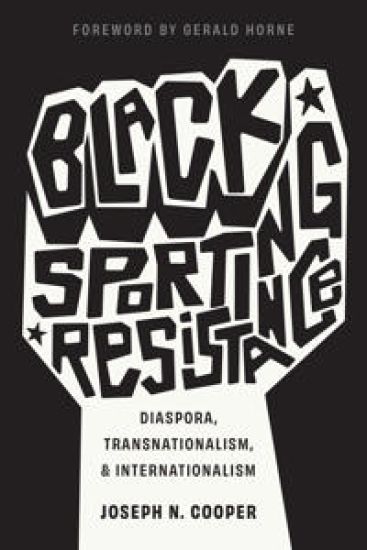
In recent years, there has been increased attention towards activism in sporting spaces. A vast majority of these contributions have focused on intra-nation tensions and impact. Yet, there is a dearth of scholarship that has engaged in a theoretically grounded analysis of how Black sportspersons have exhibited resistance in and through sport across national borders across time, space, and context. In this text, Joseph N. Cooper introduces the Black Sporting Resistance Framework (BSRF) as an analytic lens to examine how resistance actions in and through sport have contributed to the advancement of local and global racial justice efforts. Key concepts such as African (Black) diaspora, transnationalism, internationalism, sporting resistance typology, and sport activism typology are incorporated throughout the book. Black sporting resistance is also analyzed alongside broader social movements such as the Black Liberation Struggle, Black Nationalism, Pan-Africanism, and Black Radicalism. Insights on the ways in which sport can be used to advance social justice in the future are presented.
In recent years, there has been increased attention towards activism in sporting spaces. A vast majority of these contributions have focused on intra-nation tensions and impact. Yet, there is a dearth of scholarship that has engaged in a theoretically grounded analysis of how Black sportspersons have exhibited resistance in and through sport across national borders across time, space, and context. In this text, Joseph N. Cooper introduces the Black Sporting Resistance Framework (BSRF) as an analytic lens to examine how resistance actions in and through sport have contributed to the advancement of local and global racial justice efforts. Key concepts such as African (Black) diaspora, transnationalism, internationalism, sporting resistance typology, and sport activism typology are incorporated throughout the book. Black sporting resistance is also analyzed alongside broader social movements such as the Black Liberation Struggle, Black Nationalism, Pan-Africanism, and Black Radicalism. Insights on the ways in which sport can be used to advance social justice in the future are presented.
State of the Union 1994 assesses the Clinton administration's first year in office and lays out progressive policy alternatives in the realms of foreign and domestic affairs. It charts the course of the nation in fourteen critical areas, giving readers a solid basis of information on which to compare trends historically and internationally and to m
I Dare Say: A Gerald Horne Reader is a timely and essential collection of the many works of Professor Gerald Horne—a historian who has made an indelible impact on the study of US and international history. Horne approaches his study of history as a deeply politically engaged scholar, with an insightful and necessarily partisan stance, critiquing the lasting reverberations of white supremacy and all its bedfellows—imperialism, colonialism, fascism and racism—which continue to wreak havoc in the United States and abroad to this day. Drawing on a career that spans more than four decades, The Gerald Horne Reader will showcase the many highlights of Horne’s writings, delving into discussions of the United States and its place on the global stage, the curation of mythology surrounding titans of 20th Century African American history like Malcolm X, and Horne’s thoughts on pressing international crises of the 21st Century including the war in Afghanistan during the early 2000s, and the war in Ukraine which erupted in February 2022. As we continue to observe the chaos of our current times, I Dare Say: A Gerald Horne Reader foregrounds a firmly rooted, consistent analysis of what has come to pass—and provides illuminating insight that better informs where we may be headed, and outlines what needs to be done to stem the tide of growing fascism across the Western world.
In this collection of conversations, Dr. Horne confronts the history of settler colonialism and fighting fascism while giving dazzling insights on Jazz, Claude Barnett, Paul Robeson, W.E.B. Du Bois, and Shirley Graham Du Bois, while delivering deeper insights into the histories of Kenya, Zimbabwe, and South Africa. Chris Steele's curiosity as an interviewer creates dialogues where Dr. Horne often braids his journeys into the archives with his scholarship often opening up into his own personal narrative. Part history, part radical memoir, Acknowledging Radical Histories displays the power of conversation, solidarity, and coming together for a better future.
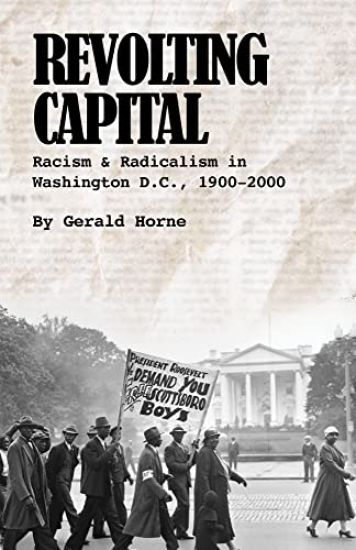
There is a fundamental contradiction in U.S. Imperialism: the capital of this empire for decades has had a majority Black population, which-in turn-has created favorable conditions not only for the erosion of the pestilence that is racism but the flourishing of the antidote that is radicalism. In this sweeping history, Gerald Horne traces this phenomenon over a century, in a book which should be understood and studied by all anti-imperialist and progressive forces. This relatively small metropolis also has influenced profoundly its neighbors in Maryland and Virginia, especially in the potent area of labor organizing.
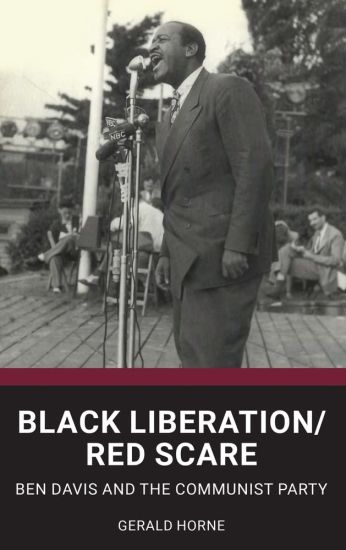
Black Liberation/Red Scare is a study of an African American Communist leader, Ben Davis, Jr. (1904-64). Though it examines the numerous grassroots campaigns that he was involved in, it is first and foremost a study of the man and secondarily a study of the Communist party from the 1930s to the 1960s. By examining the public life of an important party leader, Gerald Horne uniquely approaches the story of how and why the party rose and fell. Ben Davis, Jr., was the son of a prominent Atlanta publisher and businessman who was also the top African American leader of the Republican party until the onset of the Great Depression. Davis was trained for the black elite at Morehouse, Amherst, and Harvard Law School. After graduating from Harvard, he joined the Communist party, where he remained as one of its most visible leaders for thirty years. In 1943, after being endorsed by his predecessor, Adam Clayton Powell, Jr., he was elected to the New York City Council from Harlem and subsequently reelected by a larger margin in 1945. Davis received support from such community figures as NAACP leader Roy Wilkins, boxer Joe Louis, and musician Duke Ellington. While on the council Davis fought for rent control and progressive taxation and struggled against transit fare hikes and police brutality. With the onset of the Red Scare and the Cold War, Davis-like the Communist party itselfwas marginalized. The Cold War made it difficult for the U.S. to compete with Moscow forthe hearts and minds of African Americans while they were subjected to third-classcitizenship at home. Yet in return for civil rights concessions, African American organizationssuch as the NAACP were forced to distance themselves from figures such as Ben Davis. In1949 he was ousted unceremoniously (and perhaps illegally from the City Council. He wasput on trial, jailed in 1951, and not released until 1956, when the civil rights movement wasgathering momentum. His friendship with the King family, based upon family ties in Atlanta, was the ostensible cause for the FBI surveillance of Dr. Martin Luther King, Jr.COINTEL-PRO, the counterintelligence program of the FBI, which was aimed initially atthe CPUSA, made sure to keep a close eye on Davis as well. But when the civil rightsmovement reached full strength in the 1960s Davis's controversial appearances at collegecampuses helped to set the stage for a new era of activism at universities.Davis died in 1964. According to Horne, the time has now come when he, along with his good friend Paul Robeson and W. E. B. DuBois, should be regarded as a premier leader of African- Americans and the U.S. Left during the twentieth century.
Black Liberation/Red Scare is a study of an African American Communist leader, Ben Davis, Jr. (1904-64). Though it examines the numerous grassroots campaigns that he was involved in, it is first and foremost a study of the man and secondarily a study of the Communist party from the 1930s to the 1960s. By examining the public life of an important party leader, Gerald Horne uniquely approaches the story of how and why the party rose and fell. Ben Davis, Jr., was the son of a prominent Atlanta publisher and businessman who was also the top African American leader of the Republican party until the onset of the Great Depression. Davis was trained for the black elite at Morehouse, Amherst, and Harvard Law School. After graduating from Harvard, he joined the Communist party, where he remained as one of its most visible leaders for thirty years. In 1943, after being endorsed by his predecessor, Adam Clayton Powell, Jr., he was elected to the New York City Council from Harlem and subsequently reelected by a larger margin in 1945. Davis received support from such community figures as NAACP leader Roy Wilkins, boxer Joe Louis, and musician Duke Ellington. While on the council Davis fought for rent control and progressive taxation and struggled against transit fare hikes and police brutality. With the onset of the Red Scare and the Cold War, Davis-like the Communist party itselfwas marginalized. The Cold War made it difficult for the U.S. to compete with Moscow forthe hearts and minds of African Americans while they were subjected to third-classcitizenship at home. Yet in return for civil rights concessions, African American organizationssuch as the NAACP were forced to distance themselves from figures such as Ben Davis. In1949 he was ousted unceremoniously (and perhaps illegally from the City Council. He wasput on trial, jailed in 1951, and not released until 1956, when the civil rights movement wasgathering momentum. His friendship with the King family, based upon family ties in Atlanta, was the ostensible cause for the FBI surveillance of Dr. Martin Luther King, Jr.COINTEL-PRO, the counterintelligence program of the FBI, which was aimed initially atthe CPUSA, made sure to keep a close eye on Davis as well. But when the civil rightsmovement reached full strength in the 1960s Davis's controversial appearances at collegecampuses helped to set the stage for a new era of activism at universities.Davis died in 1964. According to Horne, the time has now come when he, along with his good friend Paul Robeson and W. E. B. DuBois, should be regarded as a premier leader of African- Americans and the U.S. Left during the twentieth century.
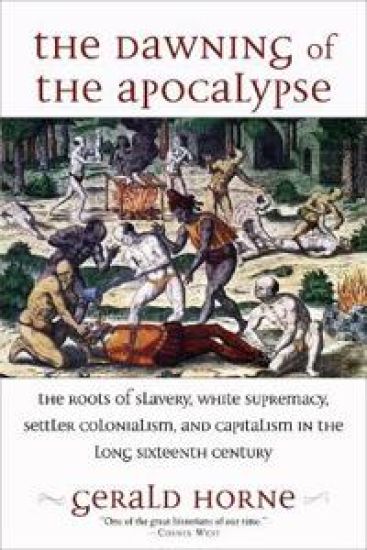
August 2019 saw numerous commemorations of the year 1619, when what was said to be the first arrival of enslaved Africans occurred in North America. Yet in the 1520s, the Spanish, from their imperial perch in Santo Domingo, had already brought enslaved Africans to what was to become South Carolina. The enslaved people quickly defected to local Indigenous populations, and compelled their captors to flee. Deploying such illuminating research, The Dawning of the Apocalypse is a riveting revision of the “creation myth” of settler colonialism and how the United States was formed. Here, Gerald Horne argues forcefully that, in order to understand the arrival of colonists from the British Isles in the early seventeenth century, one must first understand the “long sixteenth century”—from 1492 until the arrival of settlers in Virginia in 1607. During this prolonged century, Horne contends, “whiteness” morphed into “white supremacy,” and allowed England to co-opt not only religious minorities but also various nationalities throughout Europe, thus forging a muscular bloc that was needed to confront rambunctious Indigenes and Africans. In retelling the bloodthirsty story of the invasion of the Americas, Horne recounts how the fierce resistance by Africans and their Indigenous allies weakened Spain and enabled London to dispatch settlers to Virginia in 1607. These settlers laid the groundwork for the British Empire and what became the United States of America.
August 2019 saw numerous commemorations of the year 1619, when what was said to be the first arrival of enslaved Africans occurred in North America. Yet in the 1520s, the Spanish, from their imperial perch in Santo Domingo, had already brought enslaved Africans to what was to become South Carolina. The enslaved people quickly defected to local Indigenous populations, and compelled their captors to flee. Deploying such illuminating research, The Dawning of the Apocalypse is a riveting revision of the “creation myth” of settler colonialism and how the United States was formed. Here, Gerald Horne argues forcefully that, in order to understand the arrival of colonists from the British Isles in the early seventeenth century, one must first understand the “long sixteenth century”—from 1492 until the arrival of settlers in Virginia in 1607. During this prolonged century, Horne contends, “whiteness” morphed into “white supremacy,” and allowed England to co-opt not only religious minorities but also various nationalities throughout Europe, thus forging a muscular bloc that was needed to confront rambunctious Indigenes and Africans. In retelling the bloodthirsty story of the invasion of the Americas, Horne recounts how the fierce resistance by Africans and their Indigenous allies weakened Spain and enabled London to dispatch settlers to Virginia in 1607. These settlers laid the groundwork for the British Empire and what became the United States of America.
Let Them Tremble: Biographical Interventions Marking 100 Years of the Communist Party, USA is a collection of six biographies exploring unique and often neglected aspects of the Communist Party, USA (CPUSA).
Clinton rode into office on the promise of "change." It was a safe, content- free slogan. After all, in recent years, the most radical proposals for change have come not from the Democrats but from the Republican right. "Change" could mean the further downsizing of government and neglect of social problems, or, of course, the reversal of these trends. When they went to the polls in 1992, however, most Americans had a good idea of what kind of change they wanted.
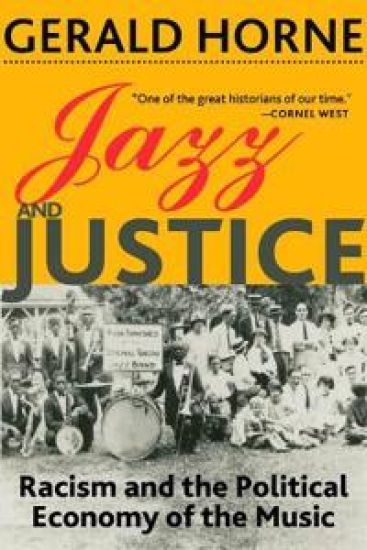
A galvanizing history of how jazz and jazz musicians flourished despite rampant cultural exploitation The music we call "jazz" arose in late nineteenth century North America--most likely in New Orleans--based on the musical traditions of Africans, newly freed from slavery. Grounded in the music known as the "blues," which expressed the pain, sufferings, and hopes of Black folk then pulverized by Jim Crow, this new music entered the world via the instruments that had been abandoned by departing military bands after the Civil War. Jazz and Justice examines the economic, social, and political forces that shaped this music into a phenomenal US--and Black American--contribution to global arts and culture. Horne assembles a galvanic story depicting what may have been the era's most virulent economic--and racist--exploitation, as jazz musicians battled organized crime, the Ku Klux Klan, and other variously malignant forces dominating the nightclub scene where jazz became known. Horne pays particular attention to women artists, such as pianist Mary Lou Williams and trombonist Melba Liston, and limns the contributions of musicians with Native American roots. This is the story of a beautiful lotus, growing from the filth of the crassest form of human immiseration.
A galvanizing history of how jazz and jazz musicians flourished despite rampant cultural exploitation The music we call "jazz" arose in late nineteenth century North America--most likely in New Orleans--based on the musical traditions of Africans, newly freed from slavery. Grounded in the music known as the "blues," which expressed the pain, sufferings, and hopes of Black folk then pulverized by Jim Crow, this new music entered the world via the instruments that had been abandoned by departing military bands after the Civil War. Jazz and Justice examines the economic, social, and political forces that shaped this music into a phenomenal US--and Black American--contribution to global arts and culture. Horne assembles a galvanic story depicting what may have been the era's most virulent economic--and racist--exploitation, as jazz musicians battled organized crime, the Ku Klux Klan, and other variously malignant forces dominating the nightclub scene where jazz became known. Horne pays particular attention to women artists, such as pianist Mary Lou Williams and trombonist Melba Liston, and limns the contributions of musicians with Native American roots. This is the story of a beautiful lotus, growing from the filth of the crassest form of human immiseration.