Kirjojen hintavertailu. Mukana 12 657 676 kirjaa ja 12 kauppaa.

Kirjailija

Gerald Stern

Kirjat ja teokset yhdessä paikassa: 25 kirjaa, julkaisuja vuosilta 1993-2023, suosituimpien joukossa Rose. Vertaile teosten hintoja ja tarkista saatavuus suomalaisista kirjakaupoista.

25 kirjaa

Kirjojen julkaisuhaarukka 1993-2023.

Rose

Rose

Li-Young Lee; Gerald Stern

BOA Editions, Limited
1993
pokkari
Table of ContentsI.EpistleThe GiftPersimmonsThe Weight Of SweetnessFrom BlossomsDreaming Of HairEarly In The MorningWaterFalling: The CodeNocturneMy IndigoIrisesEating AloneII.Always A RoseIII.Eating TogetherI Ask My Mother To SingAsh, Snow, Or MoonlightThe LifeThe WeepersBraidingRain DiaryMy Sleeping Loved OnesMnemonicBetween SeasonsVisions And Interpretations
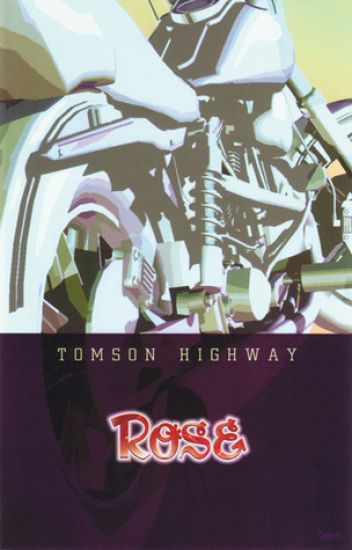
Rose

Rose

Li-Young Lee; Gerald Stern

Talonbooks
2003
pokkari
Rose is the eagerly awaited third installment in Tomson Highway's "rez" cycle--a large-cast musical set on the Wasaychigan Hill Reserve in 1992, reintroducing many of the characters from the first two plays, The Rez Sisters and Dry Lips Oughta Move to Kapuskasing. The play features, as the title suggests, Roses. One Rose has recently become chief of the reserve, a woman who must fight constantly to keep her position and maintain the integrity of her native culture. Another Rose died seven years earlier in the saddle of her Harley while on her glorious, but grievous journey to women's liberation. The third Rose never even had a chance to be born. Emily Dictionary and some of her female biker pals take centre stage when Big Joey enlists the Sudbury Mafia to help with his plans to open a multi-million dollar dream casino in the women's cherished Community Hall on the Rez. Bob Rae, Premier of Ontario at the time, makes an appearance in a land claims negotiation to sign the first Indian treaty in a hundred years with Chief Big Rose. Violence against women is once again a powerful issue in the play as the battle for the future of the community builds to its shattering climax.Cast of 10 women and 7 men.
I.

I.

Gerald Stern; Ross Gay; Alicia Ostriker

INDEPENDENT PUBLISHER
2023
pokkari
A masterful long poem from one of our great American poets. Gerald Stern's long poem I. is an extraordinary and wild compilation of poetic modes, moods, and registers--meandering and focused, hallucinatory and concrete, deranged and deeply ecstatic. Inspired by the sight of a derelict synagogue on the Lower East Side, I. is an intrinsically New York poem, concerned with shifting structures of place and identity in the face of time and rapid change. Though first written in the late aughts, Stern's brazen, mischievous politicality and blasphemous spirituality, refracted through the biblical book and prophetic character of Isaiah, feel particularly relevant to the present moment. Intertextual, critical, at times jubilant and derisive, I. brims with Stern's idiosyncratic mix of high intellect and chthonic populism. The book features Stern's original introduction, as well as a foreword and afterword written by poet-luminaries Ross Gay and Alicia Ostriker.
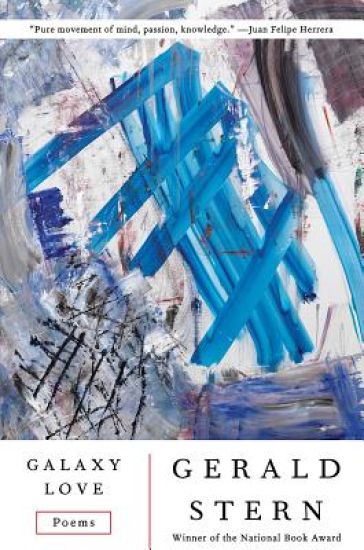
Galaxy Love

Galaxy Love

Gerald Stern

WW Norton Co
2017
sidottu
The poems in this new volume by the winner of the National Book Award span countries and centuries, reflecting on memory, aging, history, and mortality. “Hamlet Naked” traverses Manhattan in the 1960s from a Shakespeare play on 47th Street to the cellar of a Ukrainian restaurant in the East Village; “Thieves and Murderers” encompasses musings of the medieval French poet François Villon and Dwight Eisenhower; “Orson” recounts a meeting of the poet and Orson Welles, exiled in Paris. Gerald Stern recalls old cars he used to drive—“the 1950 Buick / with the small steering wheel / and the cigar lighter in the back seat”—as well as intimate portraits of his daily life “and the mussel-pooled and the heron-priested shore” of Florida. These are wistful, generous, lively love poems and elegies that capture the passage of time, the joys of a sensual life, and remembrances of the past.
Last Blue

Last Blue

Gerald Stern

WW Norton Co
2001
nidottu
Following his National Book Award winner, This Time, Gerald Stern further explores history and memory, the casual miracles of relationships, and his irrevocable connection to the natural world. The weight of history and the bouyance of memory, the casual miracles of relationships, and his irrevocable connection to the natural world are some of Gerald Stern's ongoing themes in this new book. The poems in Last Blue range in tone from the joyously unrestrained to the quietly somber. A Stern poem can begin with the majestic cadences of an Old Testament psalm, turn on an almost invisible hinge, and bring into focus the smallest detail. Here is a radiant collection from an essential voice in American poetry.
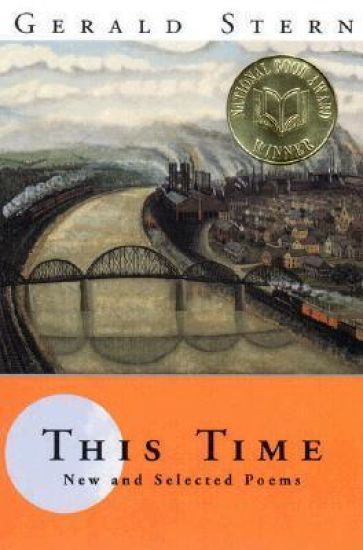
This Time

This Time

Gerald Stern

WW Norton Co
1999
nidottu
"This healthy collection of new poems and selections from seven previous volumes is remarkable for its generosity of spirit, manifested in a warm surrealism that is often turned with humor toward his own past as a way of understanding the recurrent questions of growing old: 'Why did it take so long / for me to get lenient? What does it mean one life / only?' " — Publishers Weekly (starred review) "Gerald Stern's achievement is immense. In this beautiful gathering . . . one encounters a poet who praises and mourns in turn and even at once." — Grace Schulman, The Nation "Stern is one of those rare poetic souls who makes it almost impossible to remember what our world was like before his poetry came to exalt it." — C. K. Williams
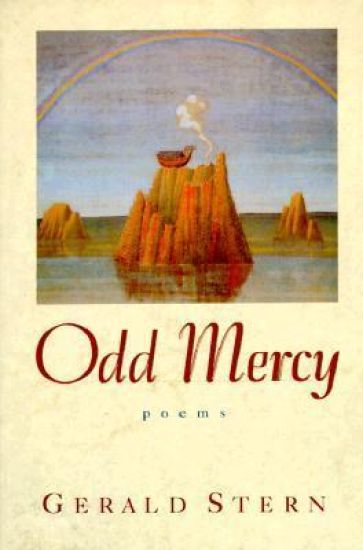
Odd Mercy

Odd Mercy

Gerald Stern

WW Norton Co
1997
nidottu
The centerpiece of Gerald Stern's ninth collection is a long poem titled "Hot Dog," named for a beautiful street woman who lives in and around Tompkins Square Park. Other characters in this poem are St. Augustine, Walt Whitman, Noah, Gerald Stern himself, and a ninety-year-old black preacher from the Midwest. In "Hot Dog," and throughout, Stern wrestles with the issues—hope, memory, faith—that have always occupied him.
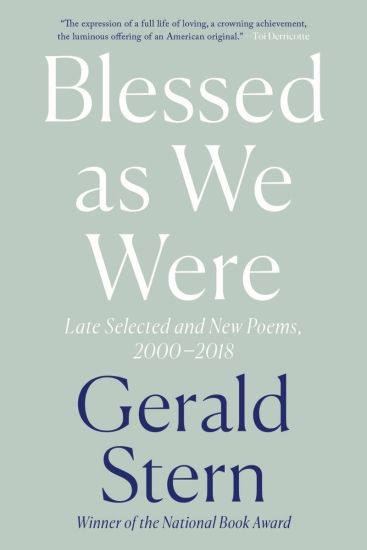
Blessed as We Were

Blessed as We Were

Gerald Stern

WW NORTON CO
2023
nidottu
For five decades, Gerald Stern has been writing his own brand of expansive, deep-down American poetry. Now in his nineties, this “sometimes comic, sometimes tragic visionary” (Edward Hirsch) engages a lifetime of memories in his poems, blending philosophical, wide-ranging intellect with boisterous wit. Memory unites the poems in Blessed as We Were, which reach back through seven collections written over almost two decades. Stern explores casual miracles, relationships and the natural world in Last Blue (2000); offers a satirical and redemptive vision in Everything Is Burning (2005) and Save the Last Dance (2008); meditates on the metamorphosis of ageing in In Beauty Bright (2012); and captures the sensual joys of life—even when they are far in the past—in the wistful love poems and elegies of Galaxy Love (2017). The volume concludes with over two dozen new poems that combine the metaphysical with the domestic, from the passage of time and the cost of love to the profound banality of cardboard and its uses. With his characteristic exuberant, oracular voice animating every line, Stern reminds us why he is one of the great American poets, one who has long “been telling us that the best way to live is not so much for poetry, but through poetry” (New York Times Book Review).
Blessed as We Were

Blessed as We Were

Gerald Stern

WW Norton Co
2021
sidottu
For five decades, Gerald Stern has been writing his own brand of expansive, deep-down American poetry. Now in his nineties, this “sometimes comic, sometimes tragic visionary” (Edward Hirsch) engages a lifetime of memories in his poems, blending philosophical, wide-ranging intellect with boisterous wit. Memory unites the poems in Blessed as We Were, which reach back through seven collections written over almost two decades. Stern explores casual miracles, relationships, and the natural world in Last Blue (2000); offers a satirical and redemptive vision in Everything Is Burning (2005) and Save the Last Dance (2008); meditates on the metamorphosis of aging in In Beauty Bright (2012); and captures the sensual joys of life—even when they are far in the past—in the wistful love poems and elegies of Galaxy Love (2017). The volume concludes with over two dozen new poems that combine the metaphysical with the domestic, from the passage of time and the cost of love to the profound banality of cardboard and its uses. With his characteristic exuberant, oracular voice animating every line, Stern reminds us why he is one of the great American poets, one who has long “been telling us that the best way to live is not so much for poetry, but through poetry” (New York Times Book Review).
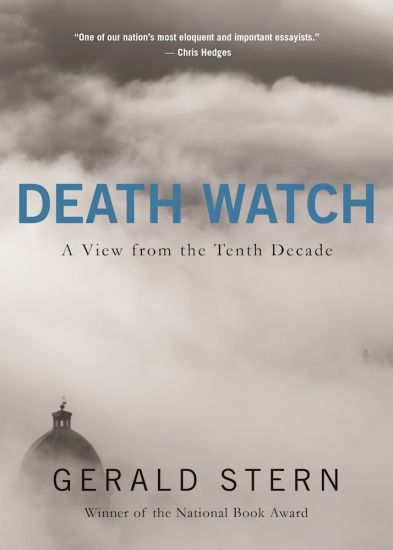
Death Watch

Death Watch

Gerald Stern

Trinity University Press,U.S.
2017
pokkari
In Death Watch, the National Book Award-winning poet Gerald Stern uses powerful prose to sift through personal and prophetic history and contemplate his own mortality. Characteristically audacious, uncompromising, funny, and iconoclastic, Stern looks back at his life and forward in time to how his story will play out. Wrestling with his identity in Judaism, he explores how his name was uprooted from its origins, as so much of his life will be willfully disrupted from the expectations of his parents and the norms of a predictable path. Stern recounts his life, itself "a grand digression," which takes him from Pittsburgh, to the Army, to Paris on the GI Bill, and back to the United States, where he immerses himself in the literary culture around him. Stern's early and traumatic loss of his older sister provides the occasion to imagine what her life might have been, and he revels in his past love affairs, the many women beloved in his life. He recollects books that occupy his recent reading--the work of W.G. Sebald, Blaise Cendrars, and Louis-Ferdinand Celine--and how memory is always at the heart of literary accomplishment and what creates the staying power of great literature. Death Watch is as an account of a beloved poet's final journey; a vivid, passionate, and, at times, whimsical look at the gamble of living life to its fullest, choosing the life of a poet, philosopher, prophet, lover, radical, and perpetual troublemaker.
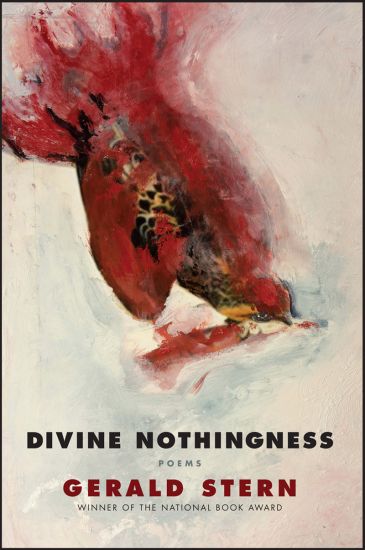
Divine Nothingness

Divine Nothingness

Gerald Stern

WW Norton Co
2016
nidottu
Divine Nothingness is a meditative reflection on the poet’s past and an elegy to love and the experience of the senses in the face of mortality. From the Jersey side of the Delaware River in Lambertville, Gerald Stern explores questions about who and why we are, locating nothingness in the divine and the divine in nothingness.
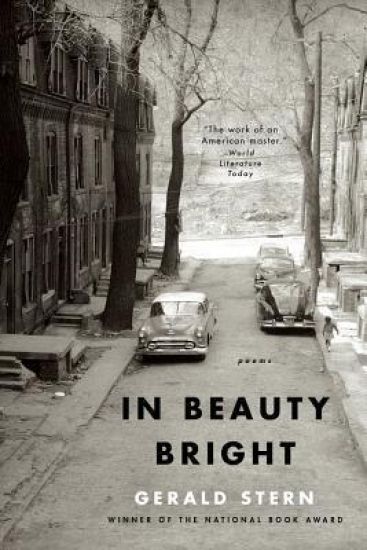
In Beauty Bright

In Beauty Bright

Gerald Stern

WW Norton Co
2014
nidottu
The lyric poems of In Beauty Bright, although marked by the same passion and swiftness as Gerald Stern’s previous work, move into an area of knowledge—even wisdom—that reflects a long life of writing, teaching, and activism. They are poems of grief and anger, but the music is delicate and moving. from "In Beauty Bright": In beauty-bright and such it was like Blake’s lily and though an angel he looked absurd dragging a lily out of a beauty-bright store wrapped in tissue with a petal drooping, nor was it useless—you who know it know how useful it is—and how he would be dead in a minute if he were to lose it though how do you lose a lily?
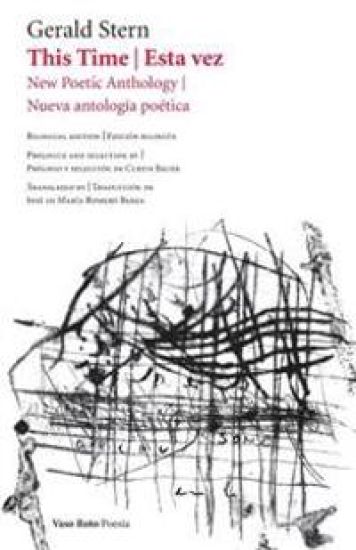
This Time / Esta vez: New Poetic Anthology / Nueva antología poética
"It isn't often you come across poetry that makes you want to turn to the stranger next to you on the bus, grab him by the collar, and say, 'You have to read this ' Stern's encompassing embrace allows us to step into his delirium and experience both." Deborah Garrison (The New Yorker) No es frecuente encontrarse con poes a que haga que quieras volverte hacia un desconocido en el autob s, agarrarlo por la solapa y decirle: "Tienes que leer esto". La profundidad del abrazo po tico de Stern nos permite sumergirnos tanto en su delirio como en su sabidur a. Deborah Garrison (The New Yorker)
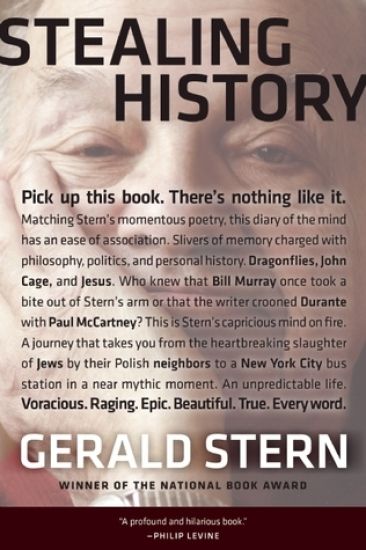
Stealing History

Stealing History

Gerald Stern

Trinity University Press,U.S.
2012
pokkari
In the tradition of essayists like Montaigne and Emerson, Gerald Stern reflects with wit, pathos, rage, and tenderness on 85 years of life. In 70 short, intermingling essays Stern moves nimbly between the past and the present, the personal and the philosophical. Creating the immediacy of dailiness, he writes with entertaining engagement about what he's reading, be it Spinoza, Maimonides, John Cage, Etheridge Knight, James Schuyler, or Lucille Clifton, and then he seamlessly turns to memories of his student years in Europe on the GI Bill, or his political and social action. Interwoven with his formidable recollections are passionate discussions of lifelong obsessions: his conflicted identity as a secular Jew opposed to Israel's Palestine policy; the idea of neighbors in various forms, from the women of Gee's Bend, who together made beautiful quilts, to the inhabitants of Jedwabne, who on a single day in 1941 slaughtered 300 Jews; and issues of justice.
Early Collected Poems

Early Collected Poems

Gerald Stern

WW Norton Co
2010
sidottu
Early Collected Poems gathers the poems from the first six books of Gerald Stern’s body of work. A master poet, Stern has sought new language for the overlooked, neglected, and unseen facets of human experience. Whether writing about modern poets, Hebrew prophets, death, war, or love, “Stern’s literary songs are sharp, surprising, and unerring in their delivery” (Ploughshares, Editor’s Choice). from “The Red Coal” The coal has taken over, the red coal is burning between us and we are at its mercy— as if a power is finally dominating the two of us; as if we’re huddled up watching the black smoke and the ashes; as if knowledge is what we needed and now we have that knowledge. Now we have that knowledge.
Save the Last Dance

Save the Last Dance

Gerald Stern

WW Norton Co
2010
nidottu
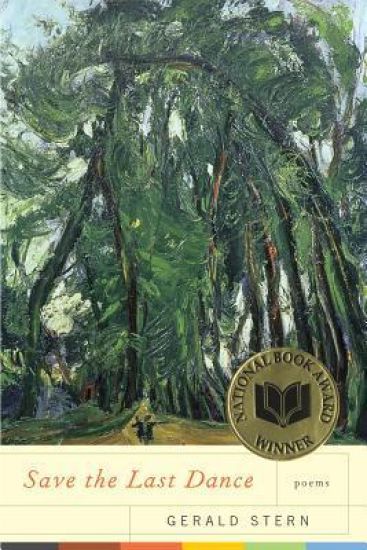
In Save the Last Dance, Gerald Stern gives us a stunning collection of his intimately personal—yet always universal, and always surprising—poems, rich with humor and insight. Shorter lyric poems in the first two parts continue the satirical and often redemptive vision of his last collection, Everything Is Burning, while never failing to carve out new emotional territory. In the third part, a long poem called "The Preacher," Stern takes the book of Ecclesiastes as a starting point for a meditation on loss, futility, and emptiness, represented here by the concept of a "hole" that resurfaces throughout.
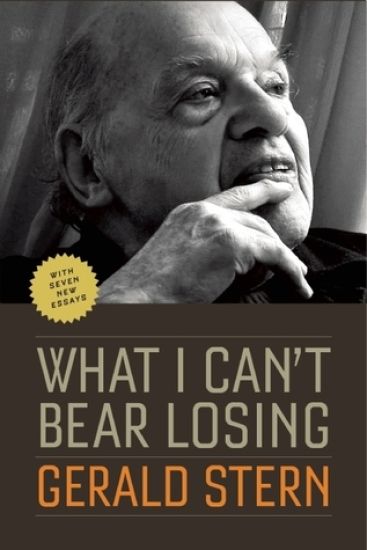
What I Can't Bear Losing

What I Can't Bear Losing

Gerald Stern

Trinity University Press,U.S.
2009
pokkari
Gerald Stern's poetry has been variously praised for its visionary quality, its scope and passion, but most especially for its wholehearted embrace of life. Stern's special manner of joie de vivre is immediately evident in his prose pieces as well. In this collection of personal essays, Stern speaks to the reader on subjects closest to his heart -- family, justice, Jewishness, ecstasy, loss, and love, as well as Andy Warhol, Paris, and getting shot in the neck. He ranges from passionate literary discussions to buoyant anecdotes about "borrowing" William Carlos Williams' hat from the writer's historic home. With seven new pieces, What I Can't Bear Losing celebrates a writer passionately engaged with life in America after World War II and gives a glimpse of the poetic processes of one of today's most beloved literary voices.
The Preacher

The Preacher

Gerald Stern

Sarabande Books, Incorporated
2007
pokkari
“The Preacher’s a poem with polyphonic voices, enormous range, and many of Stern’s familiar icons: his animism, his city grit, his philosophical fragments, his irony and justice quest, his reaching for the strain of memory.”—Ira Sadoff Gerald Stern is the author of fourteen poetry books, including This Time: New and Selected Poems, which won the 1998 National Book Award. He taught at the Iowa Writers’ Workshop for fifteen years, and he is the recipient of many awards, including the Lamont Poetry Prize, the Ruth Lilly Prize, the Wallace Stevens Award, and the National Jewish Book Award for poetry.
Long Live a Hunger to Feed Each Other

Long Live a Hunger to Feed Each Other

Jerome Badanes; Gerald Stern

Open City Books
2007
pokkari
The author of the cult novel, The Final Opus of Leon Solomon, makes a posthumous appearance with this powerful poetry manuscript. Written at the height of the anti-war movement, these poems bring together disparate threads of different historical epochs?World War II, the rhythms of the post-Beat era, and the atmosphere in America during the Vietnam war?historical periods that Badanes’ poems make fresh and which feel highly relevant to today's culture and political climate. Featuring insightful commentary by National Book Award winner Gerald Stern and Nancy Willard, this volume gives us another chance to experience the work of a master novelist, poet, and filmmaker.