Kirjojen hintavertailu. Mukana 12 595 353 kirjaa ja 12 kauppaa.

Kirjailija

Gerard Conway

Kirjat ja teokset yhdessä paikassa: 6 kirjaa, julkaisuja vuosilta 2012-2024, suosituimpien joukossa European Union Law in Context. Vertaile teosten hintoja ja tarkista saatavuus suomalaisista kirjakaupoista.

6 kirjaa

Kirjojen julkaisuhaarukka 2012-2024.

Threads of Destiny

Threads of Destiny

Gerard Conway

Maple Publishers
2024
pokkari
"Threads of Destiny: Embracing Responsibility with Compassion" takes readers on a heartfelt journey through the life of Gerard Conway, a man shaped by his life's experiences. What unfolds is a compelling story that extends beyond the individual journey to touch the universal aspects of the human experience. Gerard, with a profound understanding of the intricacies of life, invites readers to embark on a reflective journey through his own life story, which illustrates the interconnectedness of our shared existence.In the pages of "Threads of Destiny," Gerard shares his personal triumphs and tribulations, offering a window into the complexities of his experiences. His story is not just a chronicle of events but a demonstration to the power of empathy and compassion. As readers navigate through the chapters, they find themselves drawn into the emotional landscape of Gerard's life, discovering the threads that connect us all.The title, "Threads of Destiny," suggests a deeper exploration of the closely connected nature of our lives, highlighting the invisible ties that bind us together. Gerard's story becomes a metaphorical loom, weaving together the fabric of his life.Through his words, he implores readers to recognise the impact of their own actions on the greater tapestry of humanity."Embracing Responsibility with Compassion" emerges as a central theme, guiding readers to contemplate the significance of shouldering responsibilities with a compassionate heart. Gerard's journey becomes a beacon of inspiration for those facing their own trials and tribulations. The story does not shy away from the challenges he encountered but instead emphasises a resilient spirit-a "never give up" attitude that becomes a rallying cry for those navigating their own paths.
European Union Law in Context

European Union Law in Context

Ester Herlin-Karnell; Gerard Conway; Aravind Ganesh

Hart Publishing
2021
nidottu
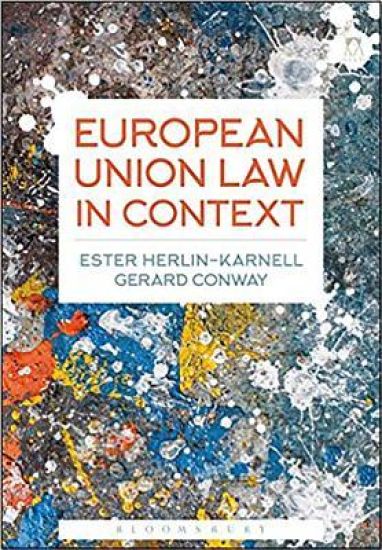
This textbook provides an explanatory and contextual view of EU law and its impact in a simple and easily accessible yet analytical manner. It illustrates the power struggles behind a given EU law act, to allow for full understanding of how it developed. This allows the student to understand EU law as a force in the increasingly globalized world, rather than as technical and doctrinal subject.The textbook begins by setting the scene of EU integration, how we got there and why it is important. Thereafter it explores the constitutional framework for understanding EU law in context and by discussing inter alia, division of competences, accountability, legitimacy, enforcement, human rights, participation rights and so on as well as the general principles of the EU and citizenship rights. Subsequently the textbook explores the essentials of the internal market as well as the principles of competition law. It also discusses free movement rights and links to the growing “Area of Freedom, Security and Justice”. Finally the textbook offers fresh insights on the external dimension of EU law and the role of the EU in the world today before concluding with an outlook on the future of EU law including the consequences of events such as Brexit.
EU Law

EU Law

Gerard Conway

Routledge
2015
sidottu
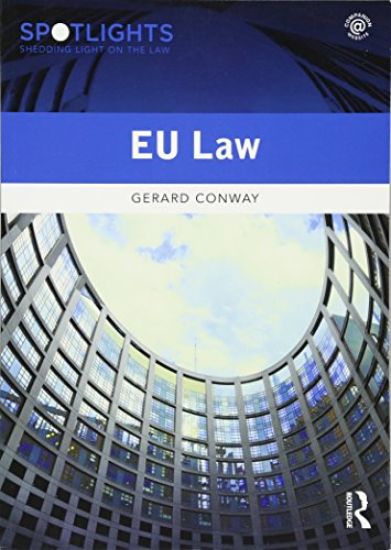
EU Law provides a comprehensive examination of the law of the European Union in two distinct parts, covering the institutions, structure and processes of the EU as well as the substantive law, as enacted by the Lisbon Treaty. Beginning by examining its origins, Conway locates EU Law within both an international and a domestic legal context. He then explores the evolution of EU Law before providing a clear and accessible account of the structure and internal and international workings of the EU and the special role of the European Court of Justice. The second half of the book explores the Four Freedoms (of Goods, Workers, Capital and Movement) and provides a detailed account of Competition Law and the Economic and Social contexts.The Routledge Spotlights series brings a modern, contemporary approach to the core curriculum for the LLB and GDL which will help students Move beyond an understanding of the law Refine and develop the key skills of problem-solving, evaluation and critical reasoning which are essential to exam success Discover sources and suggestions for taking your study furtherBy focusing on recent case law and real-world examples, Routledge Spotlights will help you shed light on the law, understand how it operates in practice and gain a unique appreciation of the contemporary context of the subject. Companion WebsiteThis book is supported by a range of online resources developed to support your learning, keep you up-to-date and to help you prepare for assessments, including: Key Case Flashcards to aid with recall Quizzes and practice questions
EU Law

EU Law

Gerard Conway

Routledge
2015
nidottu
EU Law provides a comprehensive examination of the law of the European Union in two distinct parts, covering the institutions, structure and processes of the EU as well as the substantive law, as enacted by the Lisbon Treaty. Beginning by examining its origins, Conway locates EU Law within both an international and a domestic legal context. He then explores the evolution of EU Law before providing a clear and accessible account of the structure and internal and international workings of the EU and the special role of the European Court of Justice. The second half of the book explores the Four Freedoms (of Goods, Workers, Capital and Movement) and provides a detailed account of Competition Law and the Economic and Social contexts.The Routledge Spotlights series brings a modern, contemporary approach to the core curriculum for the LLB and GDL which will help students Move beyond an understanding of the law Refine and develop the key skills of problem-solving, evaluation and critical reasoning which are essential to exam success Discover sources and suggestions for taking your study furtherBy focusing on recent case law and real-world examples, Routledge Spotlights will help you shed light on the law, understand how it operates in practice and gain a unique appreciation of the contemporary context of the subject. Companion WebsiteThis book is supported by a range of online resources developed to support your learning, keep you up-to-date and to help you prepare for assessments, including: Key Case Flashcards to aid with recall Quizzes and practice questions
The Limits of Legal Reasoning and the European Court of Justice
The European Court of Justice is widely acknowledged to have played a fundamental role in developing the constitutional law of the EU, having been the first to establish such key doctrines as direct effect, supremacy and parallelism in external relations. Traditionally, EU scholarship has praised the role of the ECJ, with more critical perspectives being given little voice in mainstream EU studies. From the standpoint of legal reasoning, Gerard Conway offers the first sustained critical assessment of how the ECJ engages in its function and offers a new argument as to how it should engage in legal reasoning. He also explains how different approaches to legal reasoning can fundamentally change the outcome of case law and how the constitutional values of the EU justify a different approach to the dominant method of the ECJ.
The Limits of Legal Reasoning and the European Court of Justice
The European Court of Justice is widely acknowledged to have played a fundamental role in developing the constitutional law of the EU, having been the first to establish such key doctrines as direct effect, supremacy and parallelism in external relations. Traditionally, EU scholarship has praised the role of the ECJ, with more critical perspectives being given little voice in mainstream EU studies. From the standpoint of legal reasoning, Gerard Conway offers the first sustained critical assessment of how the ECJ engages in its function and offers a new argument as to how it should engage in legal reasoning. He also explains how different approaches to legal reasoning can fundamentally change the outcome of case law and how the constitutional values of the EU justify a different approach to the dominant method of the ECJ.