Kirjojen hintavertailu. Mukana 12 657 676 kirjaa ja 12 kauppaa.

Kirjailija

Gerard Delanty

Kirjat ja teokset yhdessä paikassa: 25 kirjaa, julkaisuja vuosilta 1997-2024, suosituimpien joukossa Senses of the Future. Vertaile teosten hintoja ja tarkista saatavuus suomalaisista kirjakaupoista.

25 kirjaa

Kirjojen julkaisuhaarukka 1997-2024.

Senses of the Future

Senses of the Future

Gerard Delanty

De Gruyter
2024
sidottu
The future has become a problem for the present. Almost every critical issue is now understood and experienced through the prism of the future since this is the primary focus for the playing out of crises. Senses of the Future offers a wide-ranging discussion of theories of the future. It covers the main ideas of the future in modern thought and explores how we should view the future today in light of a plurality of very different and conflicting visions. The key contribution of this book is to bring together the different approaches with an account that is grounded in sociological and philosophical analysis as opposed to visions of the future that are inspired by extreme visions of catastrophe or approaches that see the future as only the continuation of the present. Given a revival of apocalyptical visions of the ‘end times’ and dystopian views of the future of human societies, there is urgent need for a new approach on how we should imagine the future. The author explores the future as a field of tensions that is revealed in narratives, utopian desires, hope, imaginaries, and social struggles concerning the potential possibilities of the present: the future does not just arrive; it has to be fought for. This book is an important contribution to a critical sociology of the future. It is both a work of reconstruction and critique grounded in a historical and philosophical hermeneutics of the future.
Senses of the Future

Senses of the Future

Gerard Delanty

De Gruyter
2024
isokokoinen pokkari
The future has become a problem for the present. Almost every critical issue is now understood and experienced through the prism of the future since this is the primary focus for the playing out of crises. Senses of the Future offers a wide-ranging discussion of theories of the future. It covers the main ideas of the future in modern thought and explores how we should view the future today in light of a plurality of very different and conflicting visions. The key contribution of this book is to bring together the different approaches with an account that is grounded in sociological and philosophical analysis as opposed to visions of the future that are inspired by extreme visions of catastrophe or approaches that see the future as only the continuation of the present. Given a revival of apocalyptical visions of the ‘end times’ and dystopian views of the future of human societies, there is urgent need for a new approach on how we should imagine the future. The author explores the future as a field of tensions that is revealed in narratives, utopian desires, hope, imaginaries, and social struggles concerning the potential possibilities of the present: the future does not just arrive; it has to be fought for. This book is an important contribution to a critical sociology of the future. It is both a work of reconstruction and critique grounded in a historical and philosophical hermeneutics of the future.

Capitalism and its Critics

Capitalism and its Critics

Gerard Delanty; Neal Harris

TAYLOR FRANCIS LTD
2022
nidottu
Capitalism and its Critics offers an accessible account of major theories of capitalism from the industrial revolution to the present day. The book provides a comprehensive account of the economic and social thought of key theorists from Adam Smith and Karl Marx to David Harvey and Thomas Piketty.Capitalism has long been the subject of passionate debate, and today such contestations are perhaps more timely than ever. For its advocates, capitalism brings democracy and freedom and is the cornerstone of modernity and of progress. For its critics, capitalism is based on the exploitation of labour and is responsible for the destruction of the environment as well as colonialism. Whether capitalism survives the century, or whether an alternative social system emerges, may very well determine the fate of humanity. Capitalism and its Critics gives a comprehensive critical analysis of the most important theorists of capitalism, including Adam Smith, Karl Marx, Max Weber, Joseph Schumpeter, Karl Polanyi, F.A. Hayek, J.M. Keynes, David Harvey, and Thomas Piketty. The book discusses some of the main debates about capitalism and considers alternatives in the twenty-first century. The 12 chapters are loosely chronologically organised around the main approaches and historical phases in the history of capitalism. Central themes of the book are the ideas of capitalist crisis and of tensions between democracy and capitalism in the making of modernity.A highly readable, informative and engaging text, Capitalism and its Critics is essential reading for anyone interested in understanding capitalism and its alternatives.
Capitalism and its Critics

Capitalism and its Critics

Gerard Delanty; Neal Harris

TAYLOR FRANCIS LTD
2022
sidottu
Capitalism and its Critics offers an accessible account of major theories of capitalism from the industrial revolution to the present day. The book provides a comprehensive account of the economic and social thought of key theorists from Adam Smith and Karl Marx to David Harvey and Thomas Piketty.Capitalism has long been the subject of passionate debate, and today such contestations are perhaps more timely than ever. For its advocates, capitalism brings democracy and freedom and is the cornerstone of modernity and of progress. For its critics, capitalism is based on the exploitation of labour and is responsible for the destruction of the environment as well as colonialism. Whether capitalism survives the century, or whether an alternative social system emerges, may very well determine the fate of humanity. Capitalism and its Critics gives a comprehensive critical analysis of the most important theorists of capitalism, including Adam Smith, Karl Marx, Max Weber, Joseph Schumpeter, Karl Polanyi, F.A. Hayek, J.M. Keynes, David Harvey, and Thomas Piketty. The book discusses some of the main debates about capitalism and considers alternatives in the twenty-first century. The 12 chapters are loosely chronologically organised around the main approaches and historical phases in the history of capitalism. Central themes of the book are the ideas of capitalist crisis and of tensions between democracy and capitalism in the making of modernity.A highly readable, informative and engaging text, Capitalism and its Critics is essential reading for anyone interested in understanding capitalism and its alternatives.
Critical Theory and Social Transformation
Critical Theory and Social Transformation provides an exploration of the major themes in critical social theory of recent years. Delanty argues that a critical theory perspective can offer much-needed insights into the pressing socio-political challenges of our time. In this volume, he advances the need to reconnect social theory and social research and to return to the foundational concerns of critical social theory. Delanty engages with the key topics facing critical social theorists: capitalism, cosmopolitanism, modernity, the Anthropocene, and legacies of history. The connecting thread is that the topics are all contemporary challenges for critical theory and relate to major social transformations. The notions of critique, crisis, and social transformation are central to the book. Critical Theory and Social Transformation will be of interest to the broad readership in social and political theory. It will appeal to those working in sociology, political sociology, politics, and international studies and to anyone with an interest in any of the chapter-specific topics, such as public space, memory, and neo-authoritarianism.
Critical Theory and Social Transformation
Critical Theory and Social Transformation provides an exploration of the major themes in critical social theory of recent years. Delanty argues that a critical theory perspective can offer much-needed insights into the pressing socio-political challenges of our time. In this volume, he advances the need to reconnect social theory and social research and to return to the foundational concerns of critical social theory. Delanty engages with the key topics facing critical social theorists: capitalism, cosmopolitanism, modernity, the Anthropocene, and legacies of history. The connecting thread is that the topics are all contemporary challenges for critical theory and relate to major social transformations. The notions of critique, crisis, and social transformation are central to the book. Critical Theory and Social Transformation will be of interest to the broad readership in social and political theory. It will appeal to those working in sociology, political sociology, politics, and international studies and to anyone with an interest in any of the chapter-specific topics, such as public space, memory, and neo-authoritarianism.
Formations of European Modernity

Formations of European Modernity

Gerard Delanty

Springer International Publishing AG
2018
nidottu
This book presents a historical and political sociology of European history and society. It offers a critical interpretation of the course of European history looking at the emergence of the idea of Europe and the formation of modernity. Now fully updated, Delanty's second edition features commentary on Brexit, populism, the refugee crisis, and secessionism, as well as additional coverage of colonialism and the wider global context. The book will be in an invaluable resource for advanced undergraduates and postgraduate students of historical sociology, the history of Europe, nations and modernity, political sociology, and political and social theory.
Community

Community

Gerard Delanty

Routledge
2018
nidottu
The increasing atomization of modern society has been accompanied by an enduring nostalgia for the idea of community as a source of security and belonging in an increasingly insecure world. Far from disappearing, community has been revived by transnationalism and by new kinds of individualism. Gerard Delanty begins this stimulating critical introduction to the concept with an analysis of the origins of the idea of community in Western utopian thought, and as a theme in classical sociology and anthropology. He goes on to chart the resurgence of the idea within communitarian thought and postmodern philosophies, the complications and critiques of multiculturalism, and new manifestations of community within a society where changing modes of communication produce both fragmentation and possibilities of new social bonds. Contemporary community, he argues, is essentially a communication community based on belonging and sharing, and can be a powerful voice of political opposition. The communities of today are less spatially bounded than those of the past, but they cannot dispense with the need for a sense of belonging. The communicative ties and cultural structures of contemporary societies have opened up numerous possibilities for belonging based on religion, nationalism, ethnicity, lifestyle and gender.
Community

Community

Gerard Delanty

Routledge
2018
sidottu
The increasing atomization of modern society has been accompanied by an enduring nostalgia for the idea of community as a source of security and belonging in an increasingly insecure world. Far from disappearing, community has been revived by transnationalism and by new kinds of individualism. Gerard Delanty begins this stimulating critical introduction to the concept with an analysis of the origins of the idea of community in Western utopian thought, and as a theme in classical sociology and anthropology. He goes on to chart the resurgence of the idea within communitarian thought and postmodern philosophies, the complications and critiques of multiculturalism, and new manifestations of community within a society where changing modes of communication produce both fragmentation and possibilities of new social bonds. Contemporary community, he argues, is essentially a communication community based on belonging and sharing, and can be a powerful voice of political opposition. The communities of today are less spatially bounded than those of the past, but they cannot dispense with the need for a sense of belonging. The communicative ties and cultural structures of contemporary societies have opened up numerous possibilities for belonging based on religion, nationalism, ethnicity, lifestyle and gender.
The European Heritage

The European Heritage

Gerard Delanty

Routledge
2017
sidottu
Gerard Delanty offers a critical interpretation of the European heritage today in light of recent developments in the human and social sciences, and in view of a mood of crisis in Europe that compels us to re-think the European past. One of the main insights informing this book is that a transnational and global perspective on European history can reorient the European heritage in a direction that offers a more viable way for contemporary Europe to articulate an intercultural identity in keeping with the emerging shape of Europe, and with its own often acknowledged past. He argues that the European heritage is based less on a universalistic conception of culture than on a plurality of interconnecting narratives. Such a perspective opens up new directions for scholarship and public debate on heritage that are guided by critical cosmopolitan considerations that highlight contention, resistances, competition, and dissonance. He argues that the specificity of the European dimension of culture is in the entanglement of many cultures rather than in an original culture. The cultures of Europe are not separated but have been shaped in close interaction with each other and with the non-European world. Nations are not therefore unique, exceptional, or fundamentally different from each other. The outcome of such intermingling is a multiplicity of ideas of Europe that serve as shared cultural reference points.
The European Heritage

The European Heritage

Gerard Delanty

Routledge
2017
nidottu
Gerard Delanty offers a critical interpretation of the European heritage today in light of recent developments in the human and social sciences, and in view of a mood of crisis in Europe that compels us to re-think the European past. One of the main insights informing this book is that a transnational and global perspective on European history can reorient the European heritage in a direction that offers a more viable way for contemporary Europe to articulate an intercultural identity in keeping with the emerging shape of Europe, and with its own often acknowledged past. He argues that the European heritage is based less on a universalistic conception of culture than on a plurality of interconnecting narratives. Such a perspective opens up new directions for scholarship and public debate on heritage that are guided by critical cosmopolitan considerations that highlight contention, resistances, competition, and dissonance. He argues that the specificity of the European dimension of culture is in the entanglement of many cultures rather than in an original culture. The cultures of Europe are not separated but have been shaped in close interaction with each other and with the non-European world. Nations are not therefore unique, exceptional, or fundamentally different from each other. The outcome of such intermingling is a multiplicity of ideas of Europe that serve as shared cultural reference points.
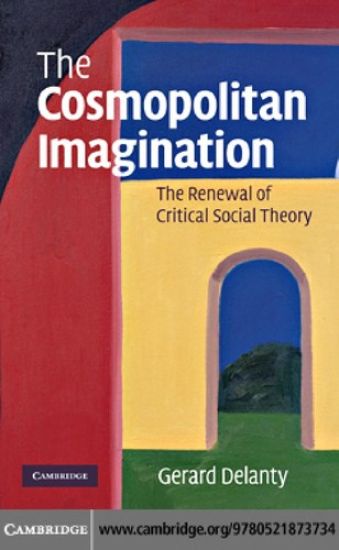
The Cosmopolitan Imagination

The Cosmopolitan Imagination

Gerard Delanty

Cambridge University Press
2009
pokkari
Gerard Delanty provides a comprehensive assessment of the idea of cosmopolitanism in social and political thought which links cosmopolitan theory with critical social theory. He argues that cosmopolitanism has a critical dimension which offers a solution to one of the weaknesses in the critical theory tradition: failure to respond to the challenges of globalization and intercultural communication. Critical cosmopolitanism, he proposes, is an approach that is not only relevant to social scientific analysis but also normatively grounded in a critical attitude. Delanty's argument for a critical, sociologically oriented cosmopolitanism aims to avoid, on the one hand, purely normative conceptions of cosmopolitanism and, on the other, approaches that reduce cosmopolitanism to the empirical expression of diversity. He attempts to take cosmopolitan theory beyond the largely Western context with which it has generally been associated, claiming that cosmopolitan analysis must now take into account non-Western expressions of cosmopolitanism.
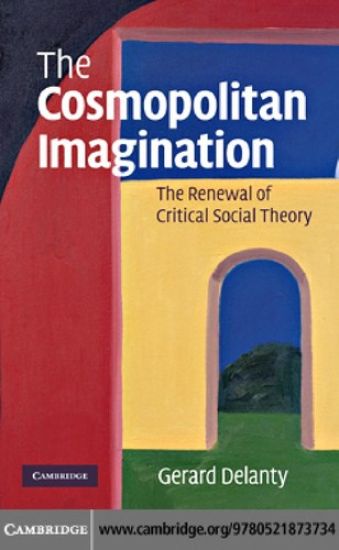
The Cosmopolitan Imagination

The Cosmopolitan Imagination

Gerard Delanty

Cambridge University Press
2009
sidottu
Gerard Delanty provides a comprehensive assessment of the idea of cosmopolitanism in social and political thought which links cosmopolitan theory with critical social theory. He argues that cosmopolitanism has a critical dimension which offers a solution to one of the weaknesses in the critical theory tradition: failure to respond to the challenges of globalization and intercultural communication. Critical cosmopolitanism, he proposes, is an approach that is not only relevant to social scientific analysis but also normatively grounded in a critical attitude. Delanty's argument for a critical, sociologically oriented cosmopolitanism aims to avoid, on the one hand, purely normative conceptions of cosmopolitanism and, on the other, approaches that reduce cosmopolitanism to the empirical expression of diversity. He attempts to take cosmopolitan theory beyond the largely Western context with which it has generally been associated, claiming that cosmopolitan analysis must now take into account non-Western expressions of cosmopolitanism.
Rethinking Europe

Rethinking Europe

Gerard Delanty; Chris Rumford

Routledge
2005
sidottu
Dominant approaches to the transformation of Europe ignore contemporary social theory interpretations of the nature and dynamics of social change. Here, Delanty and Rumford argue that we need a theory of society in order to understand Europeanization. This book advances the case that Europeanization should be theorized in terms of:globalization major social transformations that are not exclusively spear-headed by the EU the wider context of the transformation of modernity. This fascinating book broadens the terms of the debate on Europeanization, conventionally limited to the supersession of the nation-state by a supra-national authority and the changes within member states consequent upon EU membership.Demonstrating the relevance of social theory to contemporary issues and with a focus on European transformation rather than simplistic notions of Europe-building, this truly multidisciplinary volume will appeal to readers from a range of social science disciplines, including sociology, geography, political science and European studies.
Rethinking Europe

Rethinking Europe

Gerard Delanty; Chris Rumford

Routledge
2005
nidottu
Dominant approaches to the transformation of Europe ignore contemporary social theory interpretations of the nature and dynamics of social change. Here, Delanty and Rumford argue that we need a theory of society in order to understand Europeanization. This book advances the case that Europeanization should be theorized in terms of:globalization major social transformations that are not exclusively spear-headed by the EU the wider context of the transformation of modernity. This fascinating book broadens the terms of the debate on Europeanization, conventionally limited to the supersession of the nation-state by a supra-national authority and the changes within member states consequent upon EU membership.Demonstrating the relevance of social theory to contemporary issues and with a focus on European transformation rather than simplistic notions of Europe-building, this truly multidisciplinary volume will appeal to readers from a range of social science disciplines, including sociology, geography, political science and European studies.
Social Science

Social Science

Gerard Delanty

Open University Press
2005
nidottu
What is social science?Does social scientific knowledge differ from other kinds of knowledge, such as the natural sciences and common sense?What is the relation between method and knowledge?This concise and accessible book provides a critical discussion and comprehensive overview of the major philosophical debates on the methodological foundations of the social sciences. From its origins in the sixteenth century when a new system of knowledge was created around the idea of modernity, the author shows how the philosophy of social science developed as a reflection on some of the central questions in modernity. Visions of modernity have been reflected in the self-understanding of the social sciences. From the positivist dispute on explanation vs. understanding to controversies about standpoint to debates about constructivism and realism, Delanty outlines the major shifts in the philosophy of social science. He argues that social science is an intellectual framework for the transformation of the social world.The new edition is updated and expanded throughout with the latest developments in the field, including a new chapter on feminist standpoint epistemology, and additional material on neo-positivism, pragmatism, and reflexivity. This is one of the most ambitious and wide-ranging texts in recent years on debates on method and the contemporary situation of social science. It is of interest to undergraduate students and postgraduates as well as to professional researchers with an interest in the philosophy of the social sciences and social theory.
PHILOSOPHIES OF SOCIAL SCIENCE

PHILOSOPHIES OF SOCIAL SCIENCE

Gerard Delanty; Piet Strydom

Open University Press
2003
nidottu
“This book will certainly prove to be a useful resource and reference point … a good addition to anyone’s bookshelf.” Network"This is a superb collection, expertly presented. The overall conception seems splendid, giving an excellent sense of the issues... The selection and length of the readings is admirably judged, with both the classic texts and the few unpublished pieces making just the right points." William Outhwaite, Professor of Sociology, University of Sussex"... an indispensable book for all of us in philosophy and the social sciences who teach and care about the shape of social knowledge in the future." Steven Seidman, Professor of Sociology, State University of New York Albany"For a comprehensive account of the ways in which world transformations affect claims to social scientific knowledge, one need look no further than Gerard Delanty and Piet Strydom's Philosophies of Social Science. ...this collection captures nicely the increasingly engaged political nature of the philosophy of social science. Debates about pragmatism, feminism and postmodernism are particularly well represented" The AustralianWhat is social science? How does it differ from the other sciences?What is the meaning of method in social science?What is the nature and limits of scientific knowledge?This collection of over sixty extracts from classic works on the philosophy of social science provides an essential textbook and a landmark reference in the field. It highlights the work of some of the most influential authors who have shaped social science.The texts explore the question of truth, the meaning of scientific knowledge, the nature of methodology and the relation of science to society, including edited extracts from both classic and contemporary works by authors such as Emile Durkheim, Georg Simmel, Max Weber, Alfred Schutz, Max Horkheimer, Jurgen Habermas, Alvin Gouldner, Karl-Otto Apel, Michel Foucault, Pierre Bourdieu, Anthony Giddens, Dorothy Smith, Donna Haraway, Sigmund Freud, Jacques Derrida and Claude Levi-Strauss.The readings are representative of the major schools of thought, including European and American trends in particular as well as approaches that are often excluded from mainstream traditions. From a teaching and learning perspective the volume is strengthened by extensive introductions to each of the six sections, as well as a general introduction to the reader as a whole. These introductions contextualise the readings and offer succinct summaries of them.This volume is the definitive companion to the study of the philosophy of social science, taught within undergraduate or postgraduate courses in sociology and the social sciences.
Nationalism and Social Theory

Nationalism and Social Theory

Gerard Delanty; Patrick O'Mahony

SAGE Publications Inc
2002
sidottu
Why has nationalism proved so durable? What are the roots of its appeal? This sharp and accessible book slices through the myths surrounding nationalism and provides an important new perspective on this perennial subject. The book argues that: nationalism is persistent, not merely because of its specific ideological appeal, but because it expresses some of the major conflicts in modernity; nationalism reflects and reinforces four key trends in western social development: state formation, democratization, capitalism and the rationalization of culture; the forms of nationalism can be organized into a comprehensive typology which is outlined in the course of this study; post-nationalism and cosmopolitanism are significant innovations in the debate about nation-states and nationalism; and that the new radical nationalisms have become powerful new movements in the global age.
Nationalism and Social Theory

Nationalism and Social Theory

Gerard Delanty; Patrick O'Mahony

SAGE Publications Inc
2002
nidottu
Why has nationalism proved so durable? What are the roots of its appeal? This sharp and accessible book slices through the myths surrounding nationalism and provides an important new perspective on this perennial subject. The book argues that: nationalism is persistent, not merely because of its specific ideological appeal, but because it expresses some of the major conflicts in modernity; nationalism reflects and reinforces four key trends in western social development: state formation, democratization, capitalism and the rationalization of culture; the forms of nationalism can be organized into a comprehensive typology which is outlined in the course of this study; post-nationalism and cosmopolitanism are significant innovations in the debate about nation-states and nationalism; and that the new radical nationalisms have become powerful new movements in the global age.
Modernity and Postmodernity

Modernity and Postmodernity

Gerard Delanty

SAGE Publications Inc
2000
sidottu
This accessible and comprehensive overview of the main issues on the modernity-postmodernity controversy is the first clear-sighted book on the subject. It surveys modern social theory, from Kant to Weber with economy and masterly precision. And evaluates the work of the Frankfurt School, Arendy, Strauss, Luhmann, Habermas, Heller, Castoriadis and Touraine, before moving on to consider the approaches of the leading writers on postmodenrity: Lyotard, Vattimo, Derrida, Foucault and Jameson. The result is a new way of conceptualizing the modernity-postmodernity debate, and an exciting new approach to the roots of contemporary social theory.