Kirjojen hintavertailu. Mukana 12 390 323 kirjaa ja 12 kauppaa.

Kirjailija

Gerard Mannion

Kirjat ja teokset yhdessä paikassa: 9 kirjaa, julkaisuja vuosilta 2003-2020, suosituimpien joukossa Ecclesiology in the Trenches. Vertaile teosten hintoja ja tarkista saatavuus suomalaisista kirjakaupoista.

9 kirjaa

Kirjojen julkaisuhaarukka 2003-2020.

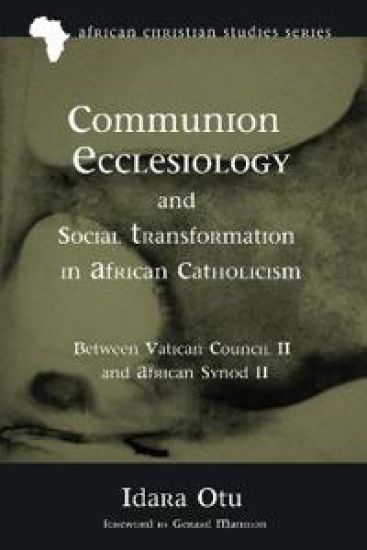
Communion Ecclesiology and Social Transformation in African Catholicism
In this book, Idara Otu, one of the new theological voices from Africa, rethinks ecclesiology in the changing context of a wounded and broken world. What does the Catholic Church in Africa look like post-Vatican II? This book creatively illuminates the intrinsic connections between ecclesial communion and social mission in the changing face of the church in Africa. The multiple levels of dialogue in African Catholicism, especially in the reception and contextualization of conciliar teachings, is redefining world Christianity. The author explores how dialogue, synodality, inculturation, leadership, human security, social issues, and social transformation are shaping the identity and mission of the church in Africa. This book also engages recent magisterial teachings and diverse theological voices in developing the praxis for the emergence of particular churches in Africa that are defined by the joys and sorrows of God's people. The book calls for a Triple-C church, revitalized through Conversion, Communality, and Conversation, as well as fostering integral and sustainable social transformation in Africa's contested march toward modernity.
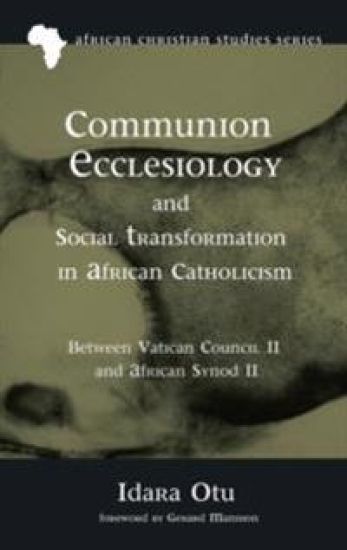
Communion Ecclesiology and Social Transformation in African Catholicism
In this book, Idara Otu, one of the new theological voices from Africa, rethinks ecclesiology in the changing context of a wounded and broken world. What does the Catholic Church in Africa look like post-Vatican II? This book creatively illuminates the intrinsic connections between ecclesial communion and social mission in the changing face of the church in Africa. The multiple levels of dialogue in African Catholicism, especially in the reception and contextualization of conciliar teachings, is redefining world Christianity. The author explores how dialogue, synodality, inculturation, leadership, human security, social issues, and social transformation are shaping the identity and mission of the church in Africa. This book also engages recent magisterial teachings and diverse theological voices in developing the praxis for the emergence of particular churches in Africa that are defined by the joys and sorrows of God's people. The book calls for a Triple-C church, revitalized through Conversion, Communality, and Conversation, as well as fostering integral and sustainable social transformation in Africa's contested march toward modernity.
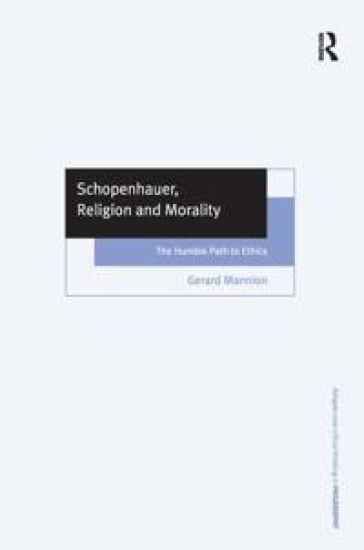
Schopenhauer, Religion and Morality

Schopenhauer, Religion and Morality

Gerard Mannion

Routledge
2016
nidottu
This work challenges the textbook assessment of Schopenhauer as militant atheist and absolute pessimist. In examining Schopenhauer's grappling with religion, theology and Kant's moral philosophy, Mannion suggests we can actually discern a 'religious' humility in method in Schopenhauer's work, seen most clearly in his ethics of compassion and his doctrine of salvation. Given Schopenhauer’s opinion of religion as the ’metaphysics of the people’, his utilisation of and affinity with many religious ideas and doctrines, and the culmination of his philosophy in a doctrine of salvation that ends in the ’mystical’, Mannion suggests that Schopenhauer’s philosophy is an explanatory hypothesis which functionally resembles religious belief systems in many ways. Mannion further argues that Schopenhauer cannot claim to have gone any further than such religious systems in discerning the 'true' nature of ultimate reality, for he admits that they also end in the ’mystical’, beyond which we must remain silent. Indeed, Schopenhauer offers an interpretation, as opposed to outright rejection of religion and his system gains the coherence that it does through being parasitic upon religious thought itself. Given current debates between theologians and philosophers in relation to 'postmodernity' and 'postmodern thought', this book illustrates that Schopenhauer should be a key figure in such debates.
John Calvin's Ecclesiology

John Calvin's Ecclesiology

Gerard Mannion; Eduardus Van der Borght

T. T.Clark Ltd
2012
nidottu
Many events were staged and a plethora of new books appeared to mark the quincentenary of the birth of John Calvin, in 2009. But one area received considerably less attention in that anniversary year - namely, Calvin's ecclesiology. This study explores the development and fundamental legacy of Calvin's perspectives on and relationship with the church. Contributions are included which explore the later development and 'denominational variations' of Calvin's ecclesiology, along with ecumenical discussions/responses to and implications of Calvin's understanding of the church. There are further chapters which focus on particular aspects such as Calvin's ecclesiological method, understanding of ministry, the 'sacramental' principle, the 'invisible church' etc. Contributions on the use of Calvin's ecclesiology by later and modern/contemporary ecclesiologists also feature. This is a volume that brings together leading and emerging theological voices from Europe, North America and Latino America and from across the different theological sub-disciplines. Significantly, the book has a decidedly ecumenical perspective, with writers from several different denominational traditions contributing.
John Calvin's Ecclesiology

John Calvin's Ecclesiology

Gerard Mannion; Eduardus Van der Borght

T. T.Clark Ltd
2011
sidottu
Many events were staged and a plethora of new books appeared to mark the quincentenary of the birth of John Calvin, in 2009. But one area received considerably less attention in that anniversary year - namely, Calvin's ecclesiology. This study explores the development and fundamental legacy of Calvin's perspectives on and relationship with the church. Contributions are included which explore the later development and denominational variations' of Calvin's ecclesiology, along with ecumenical discussions/responses to and implications of Calvin's understanding of the church. There are further chapters which focus on particular aspects such as Calvin's ecclesiological method, understanding of ministry, the sacramental' principle, the invisible church' etc. Contributions on the use of Calvin's ecclesiology by later and modern/contemporary ecclesiologists also feature. This is a volume that brings together leading and emerging theological voices from Europe, North America and Latino America and from across the different theological sub-disciplines. Significantly, it also a book from genuinely ecumenical perspectives, with writers from several different denominational traditions contributing.
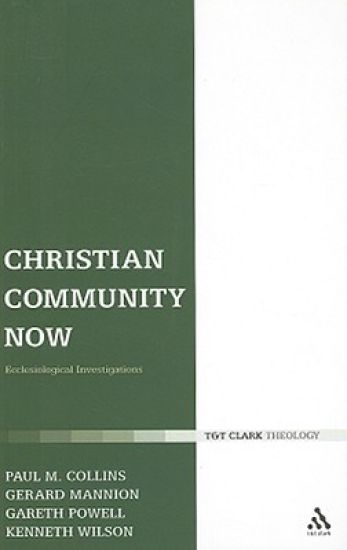
Christian Community Now

Christian Community Now

Gerard Mannion; Paul M. Collins; Gareth Powell; Kenneth Wilson

T. T.Clark Ltd
2008
sidottu
This co-authored volume is the outcome of an ecumenical speaking and listening that has involved a continuing conversation between four theologians over a period of more than two years. The scholars are active members of the mainline churches in the UK, Anglican, Methodist and Roman Catholic. They propose that the Church will live as it grows in self-understanding, in the light of the claim that her purpose is to focus attention on God, Creator, Redeemer, and Living Presence. In so doing they address key debates in the US and European contexts, as well as dealing with matters of pressing concern in the wider global church. What does it mean to say that the Church in herself and on behalf of the world bears witness to and celebrates the presence of God in contemporary ethics, worship, governance and mission? The authors have sought to bridge the gap between theoretical and practical theology, and ecclesiology. Key features are accessibility, the highly pertinent nature of the themes it covers, its academic purpose and its awareness of the parish and ministerial contexts.
Schopenhauer, Religion and Morality

Schopenhauer, Religion and Morality

Gerard Mannion

Ashgate Publishing Limited
2003
sidottu
This work challenges the textbook assessment of Schopenhauer as militant atheist and absolute pessimist. In examining Schopenhauer's grappling with religion, theology and Kant's moral philosophy, Mannion suggests we can actually discern a 'religious' humility in method in Schopenhauer's work, seen most clearly in his ethics of compassion and his doctrine of salvation. Given Schopenhauer’s opinion of religion as the ’metaphysics of the people’, his utilisation of and affinity with many religious ideas and doctrines, and the culmination of his philosophy in a doctrine of salvation that ends in the ’mystical’, Mannion suggests that Schopenhauer’s philosophy is an explanatory hypothesis which functionally resembles religious belief systems in many ways. Mannion further argues that Schopenhauer cannot claim to have gone any further than such religious systems in discerning the 'true' nature of ultimate reality, for he admits that they also end in the ’mystical’, beyond which we must remain silent. Indeed, Schopenhauer offers an interpretation, as opposed to outright rejection of religion and his system gains the coherence that it does through being parasitic upon religious thought itself. Given current debates between theologians and philosophers in relation to 'postmodernity' and 'postmodern thought', this book illustrates that Schopenhauer should be a key figure in such debates.