Kirjojen hintavertailu. Mukana 12 390 323 kirjaa ja 12 kauppaa.

Kirjailija

Gerd Van Riel

Kirjat ja teokset yhdessä paikassa: 8 kirjaa, julkaisuja vuosilta 2010-2024, suosituimpien joukossa European Philosophy. Vertaile teosten hintoja ja tarkista saatavuus suomalaisista kirjakaupoista.

8 kirjaa

Kirjojen julkaisuhaarukka 2010-2024.

European Philosophy

European Philosophy

Gerd Van Riel; Guy Claessens

Leuven University Press
2024
pokkari
Analysis of the main thinkers who shaped European philosophy, in their historical contextPhilosophy is essentially historical. The element of wonder that drives philosophical inquiry, as well as the timeless nature of questions about humanity and the world, are both intertwined with their specific contexts of origin. The answers to these questions are historically situated interpretations of reality.Moreover, historicity itself is part of philosophical reflection. Any engagement with history (including this book) is inherently situated within a historical framework. A comprehensive understanding of the history of philosophy is, therefore, indispensable if one wishes to function as a philosopher.This historical introduction to European philosophy addresses the historicity of philosophy in its twofold sense. The first part provides insight into the vicissitudes of philosophical rationality from antiquity to the present day, with an emphasis on the relation between philosophical reflection and other domains of European intellectual history, such as science, politics, art, and literature. The second part deals with philosophy as a “historical-hermeneutical” discipline.The book functions both as a handbook for introductory philosophy courses and as a monograph on European philosophy and intellectual history for a non-specialist audience.
Proclus: Commentary on Timaeus, Book 2 (Procli Diadochi, In Platonis Timaeum Commentaria Librum Primum)
Oxford Classical Texts, also known as Scriptorum Classicorum Bibliotheca Oxoniensis, provide authoritative, clear, and reliable editions of ancient texts, with apparatus criticus on each page. This five volume work is a new critical text edition of the only surviving ancient commentary on Plato's Timaeus, in which Proclus encompasses seven centuries of philosophical reflection on Plato's cosmology. For many authors belonging to the Platonic tradition, Proclus' commentary is the only extant source. For late Neoplatonic authors such as Proclus, writing commentaries on works by Plato and others was in fact a way to present their own highly original philosophical doctrines. Apart from being an important source text for the historiography of philosophy, this commentary on the Timaeus thus also provides a unique access way to Proclus' own Neoplatonic views on cosmology, theology, physics, and metaphysics. This new edition is based on a thorough re-examination of the entire manuscript tradition, which has led to a complete understanding of the relation between all extant manuscripts, including the Paris palimpsest BNF Supplément grec 921, belonging to the so-called 'collection philosophique' (9th century). On the basis of digitally enhanced UV photos, the scriptio inferior of this palimpsest (containing parts of books IV and V) was made nearly fully accessible. The study of the manuscript tradition and the apparatus fontium take stock of more than 100 years of study of this circumstantial text. The edition of the text is preceded by a substantial introduction, and followed, for each book, by the edition of the scholia to the text. The final volume also comprises an edition of the remaining fragments of the lost part of the text, including an Arabic fragment, edited by Rüdiger Arnzen.
Proclus: Commentary on Timaeus, Book 3 (Procli Diadochi, In Platonis Timaeum Commentaria)
Oxford Classical Texts, also known as Scriptorum Classicorum Bibliotheca Oxoniensis, provide authoritative, clear, and reliable editions of ancient texts, with apparatus criticus on each page. This five volume work is a new critical text edition of the only surviving ancient commentary on Plato's Timaeus, in which Proclus encompasses seven centuries of philosophical reflection on Plato's cosmology. For many authors belonging to the Platonic tradition, Proclus' commentary is the only extant source. For late Neoplatonic authors such as Proclus, writing commentaries on works by Plato and others was in fact a way to present their own highly original philosophical doctrines. Apart from being an important source text for the historiography of philosophy, this commentary on the Timaeus thus also provides a unique access way to Proclus' own Neoplatonic views on cosmology, theology, physics, and metaphysics. This new edition is based on a thorough re-examination of the entire manuscript tradition, which has led to a complete understanding of the relation between all extant manuscripts, including the Paris palimpsest BNF Supplément grec 921, belonging to the so-called 'collection philosophique' (9th century). On the basis of digitally enhanced UV photos, the scriptio inferior of this palimpsest (containing parts of books IV and V) was made nearly fully accessible. The study of the manuscript tradition and the apparatus fontium take stock of more than 100 years of study of this circumstantial text. The edition of the text is preceded by a substantial introduction, and followed, for each book, by the edition of the scholia to the text. The final volume also comprises an edition of the remaining fragments of the lost part of the text, including an Arabic fragment, edited by Rüdiger Arnzen.
Proclus: Commentary on Timaeus, Book 5 (Procli Diadochi, In Platonis Timaeum Commentaria)
Oxford Classical Texts, also known as Scriptorum Classicorum Bibliotheca Oxoniensis, provide authoritative, clear, and reliable editions of ancient texts, with apparatus criticus on each page. This five volume work is a new critical text edition of the only surviving ancient commentary on Plato's Timaeus, in which Proclus encompasses seven centuries of philosophical reflection on Plato's cosmology. For many authors belonging to the Platonic tradition, Proclus' commentary is the only extant source. For late Neoplatonic authors such as Proclus, writing commentaries on works by Plato and others was in fact a way to present their own highly original philosophical doctrines. Apart from being an important source text for the historiography of philosophy, this commentary on the Timaeus thus also provides a unique access way to Proclus' own Neoplatonic views on cosmology, theology, physics, and metaphysics. This new edition is based on a thorough re-examination of the entire manuscript tradition, which has led to a complete understanding of the relation between all extant manuscripts, including the Paris palimpsest BNF Supplément grec 921, belonging to the so-called 'collection philosophique' (9th century). On the basis of digitally enhanced UV photos, the scriptio inferior of this palimpsest (containing parts of books IV and V) was made nearly fully accessible. The study of the manuscript tradition and the apparatus fontium take stock of more than 100 years of study of this circumstantial text. The edition of the text is preceded by a substantial introduction, and followed, for each book, by the edition of the scholia to the text. The final volume also comprises an edition of the remaining fragments of the lost part of the text, including an Arabic fragment, edited by Rüdiger Arnzen.
Proclus: Commentary on Timaeus, Book 4 (Procli Diadochi, In Platonis Timaeum Commentaria Librum Primum)
Oxford Classical Texts, also known as Scriptorum Classicorum Bibliotheca Oxoniensis, provide authoritative, clear, and reliable editions of ancient texts, with apparatus criticus on each page. This five volume work is a new critical text edition of the only surviving ancient commentary on Plato's Timaeus, in which Proclus encompasses seven centuries of philosophical reflection on Plato's cosmology. For many authors belonging to the Platonic tradition, Proclus' commentary is the only extant source. For late Neoplatonic authors such as Proclus, writing commentaries on works by Plato and others was in fact a way to present their own highly original philosophical doctrines. Apart from being an important source text for the historiography of philosophy, this commentary on the Timaeus thus also provides a unique access way to Proclus' own Neoplatonic views on cosmology, theology, physics, and metaphysics. This new edition is based on a thorough re-examination of the entire manuscript tradition, which has led to a complete understanding of the relation between all extant manuscripts, including the Paris palimpsest BNF Supplément grec 921, belonging to the so-called 'collection philosophique' (9th century). On the basis of digitally enhanced UV photos, the scriptio inferior of this palimpsest (containing parts of books IV and V) was made nearly fully accessible. The study of the manuscript tradition and the apparatus fontium take stock of more than 100 years of study of this circumstantial text. The edition of the text is preceded by a substantial introduction, and followed, for each book, by the edition of the scholia to the text. The final volume also comprises an edition of the remaining fragments of the lost part of the text, including an Arabic fragment, edited by Rüdiger Arnzen.
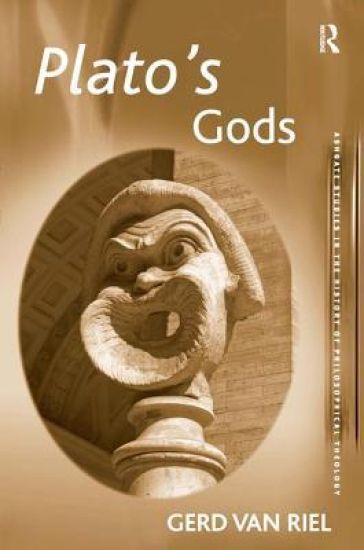
Plato's Gods

Plato's Gods

Gerd Van Riel

Ashgate Publishing Limited
2013
nidottu
This book presents a comprehensive study into Plato's theological doctrines, offering an important re-valuation of the status of Plato's gods and the relation between metaphysics and theology according to Plato. Starting from an examination of Plato's views of religion and the relation between religion and morality, Gerd Van Riel investigates Plato's innovative ways of speaking about the gods. This theology displays a number of diverging tendencies - viewing the gods as perfect moral actors, as cosmological principles or as celestial bodies whilst remaining true to traditional anthropomorphic representations. Plato's views are shown to be unified by the emphasis on the goodness of the gods in both their cosmological and their moral functions. Van Riel shows that recent interpretations of Plato's theology are thoroughly metaphysical, starting from aristotelian patterns. A new reading of the basic texts leads to the conclusion that in Plato the gods aren't metaphysical principles but souls who transmit the metaphysical order to sensible reality. The metaphysical principles play the role of a fated order to which the gods have to comply. This book will be invaluable to readers interested in philosophical theology and intellectual history.
Plato's Gods

Plato's Gods

Gerd Van Riel

Ashgate Publishing Limited
2013
sidottu
This book presents a comprehensive study into Plato's theological doctrines, offering an important re-valuation of the status of Plato's gods and the relation between metaphysics and theology according to Plato. Starting from an examination of Plato's views of religion and the relation between religion and morality, Gerd Van Riel investigates Plato's innovative ways of speaking about the gods. This theology displays a number of diverging tendencies - viewing the gods as perfect moral actors, as cosmological principles or as celestial bodies whilst remaining true to traditional anthropomorphic representations. Plato's views are shown to be unified by the emphasis on the goodness of the gods in both their cosmological and their moral functions. Van Riel shows that recent interpretations of Plato's theology are thoroughly metaphysical, starting from aristotelian patterns. A new reading of the basic texts leads to the conclusion that in Plato the gods aren't metaphysical principles but souls who transmit the metaphysical order to sensible reality. The metaphysical principles play the role of a fated order to which the gods have to comply. This book will be invaluable to readers interested in philosophical theology and intellectual history.
Ancient Perspectives on Aristotle's "De Anima"

Ancient Perspectives on Aristotle's "De Anima"

Gerd Van Riel; Pierre Destrée

Leuven University Press
2010
sidottu
Aristotle's treatise On the Soul figures among the most influential texts in the intellectual history of the West. It is the first systematic treatise on the nature and functioning of the human soul, presenting Aristotle's authoritative analyses of, among others, sense perception, imagination, memory, and intellect. The ongoing debates on this difficult work continue the commentary tradition that dates back to antiquity. This volume offers a selection of essays by distinguished scholars, exploring the ancient perspectives on Aristotle's De anima, from Aristotle's earliest successors through the Aristotelian Commentators at the end of Antiquity.