Kirjojen hintavertailu. Mukana 12 514 530 kirjaa ja 12 kauppaa.

Kirjailija

Gerhard Joseph

Kirjat ja teokset yhdessä paikassa: 3 kirjaa, julkaisuja vuosilta 1969-2005, suosituimpien joukossa Tennyson and the Text. Vertaile teosten hintoja ja tarkista saatavuus suomalaisista kirjakaupoista.

3 kirjaa

Kirjojen julkaisuhaarukka 1969-2005.

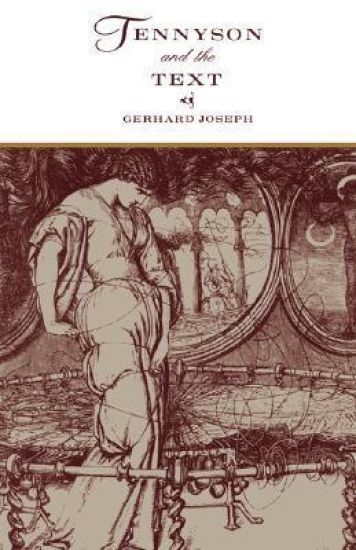
Tennyson and the Text

Tennyson and the Text

Gerhard Joseph

Cambridge University Press
2005
pokkari
This 1992 study of Tennyson evolves its themes from the weaving figure of The Lady of Shalott, which becomes a kind of parable for the author and his texts. Taking its derivation from the Latin texere, 'to weave', Professor Joseph's focus on poetic texture and a sense of textuality leads to a consciousness of his own critical and interpretative weaving, while revealing a pattern in the fabric of Tennyson's work. This procedure brings together a theory of perception, developed in the first part of this study, with an analysis of the gendering of Tennyson's characters in the second part, and engages with the methodologies of deconstruction, psychoanalysis, and gender theory. The weaving metaphor also opens up a key theoretical issue regarding Tennyson's poetics: is the textual shuttle managed by the controlling hand of a historically definable author, or is the poetic weaver 'cursed' like the Lady of Shalott to suffer a mystifying doom at the 'unseen hand' of an all-pervasive textuality that occludes authorial intention?
Tennyson and the Text

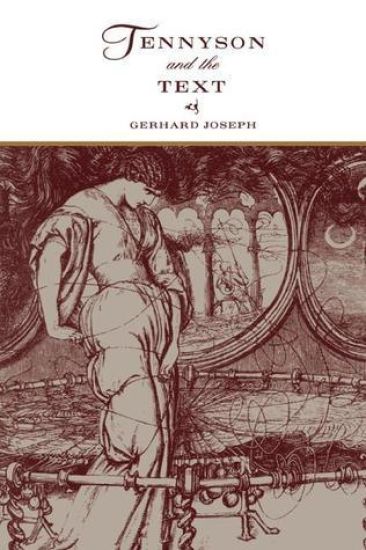
Tennyson and the Text

Gerhard Joseph

Cambridge University Press
1992
sidottu
This 1992 study of Tennyson evolves its themes from the weaving figure of The Lady of Shalott, which becomes a kind of parable for the author and his texts. Taking its derivation from the Latin texere, 'to weave', Professor Joseph's focus on poetic texture and a sense of textuality leads to a consciousness of his own critical and interpretative weaving, while revealing a pattern in the fabric of Tennyson's work. This procedure brings together a theory of perception, developed in the first part of this study, with an analysis of the gendering of Tennyson's characters in the second part, and engages with the methodologies of deconstruction, psychoanalysis, and gender theory. The weaving metaphor also opens up a key theoretical issue regarding Tennyson's poetics: is the textual shuttle managed by the controlling hand of a historically definable author, or is the poetic weaver 'cursed' like the Lady of Shalott to suffer a mystifying doom at the 'unseen hand' of an all-pervasive textuality that occludes authorial intention?
Tennysonian Love

Tennysonian Love

Gerhard Joseph

University of Minnesota Press
1969
nidottu
Tennysonian Love was first published in 1969. Minnesota Archive Editions uses digital technology to make long-unavailable books once again accessible, and are published unaltered from the original University of Minnesota Press editions.In the century or so since Alfred Tennyson's poetry reached the height of its popularity and critical acclaim, the pendulum of criticism has swung wide in opposite directions. From the earlier idolatry to the later ridicule, that pendulum has now settled into a position of qualified and selective praise from which a more thoughtful consideration of the poet is possible. Consequently, as this critical study suggests, new values and dimensions are recognizable in his work.Professor Joseph, concentrating on the theme of love but involving in his argument other facets of Tennyson's achievement, demonstrates the thesis that the poet moved as in a "strange diagonal." This phrase used as the subtitle of the book comes from Tennyson's poem The Princess in which the narrator "moved as in a strange diagonal / And maybe neither pleased myself nor them."As the author shows, Tennyson throughout his work moved between a Platonic conception of love in which the highest kind of spiritual love has disencumbered itself of sense and a Neoplatonic ("Dantesque") one in which sense and soul tend to merge. In coming to terms with the nineteenth-century form of this divided Western heritage, the pietism of the evangelical revival on the one hand and the idealized eroticism of his Romantic predecessors on the other, Tennyson became the exemplary poet of Victorian love. No other Victorian poet, Professor Joseph concludes, exhibits quite his representative and successful blending of these clashing strains. For while moving between the alternate traditions of Western love, Tennyson was able to forge a large body of highly disciplined, beautifully wrought, and far-ranging verse.