Kirjojen hintavertailu. Mukana 12 152 606 kirjaa ja 12 kauppaa.

Kirjailija

Gerhard L. Weinberg

Kirjat ja teokset yhdessä paikassa: 14 kirjaa, julkaisuja vuosilta 1981-2016, suosituimpien joukossa World War II. Vertaile teosten hintoja ja tarkista saatavuus suomalaisista kirjakaupoista.

Mukana myös kirjoitusasut: Gerhard L Weinberg

14 kirjaa

Kirjojen julkaisuhaarukka 1981-2016.

World War II

World War II

Gerhard L. Weinberg

ABC-CLIO
2016
muu
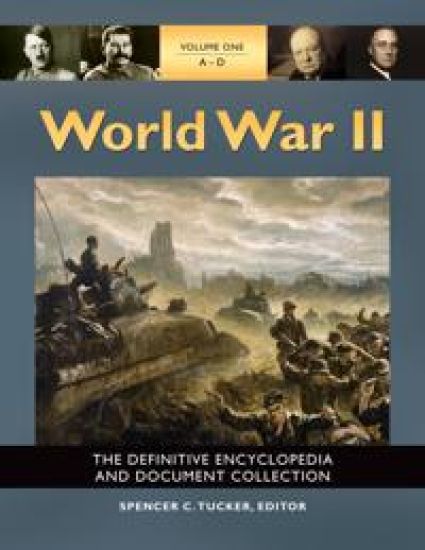
With more than 1,700 cross-referenced entries covering every aspect of World War II, the events and developments of the era, and myriad related subjects as well as a documents volume, this is the most comprehensive reference work available on the war. This encyclopedia represents a single source of authoritative information on World War II that provides accessible coverage of the causes, course, and consequences of the war. Its introductory overview essays and cross-referenced A–Z entries explain how various sources of friction culminated in a second worldwide conflict, document the events of the war and why individual battles were won and lost, and identify numerous ways the war has permanently changed the world. The coverage addresses the individuals, campaigns, battles, key weapons systems, strategic decisions, and technological developments of the conflict, as well as the diplomatic, economic, and cultural aspects of World War II. The five-volume set provides comprehensive information that gives readers insight into the reasons for the war's direction and outcome. Readers will understand the motivations behind Japan's decision to attack the United States, appreciate how the concentration of German military resources on the Eastern Front affected the war's outcome, understand the major strategic decisions of the war and the factors behind them, grasp how the Second Sino-Japanese War contributed to the start of World War II, and see the direct impact of new military technology on the outcomes of the battles during the conflict. The lengthy documents volume represents a valuable repository of additional information for student research.

World War II

World War II

Gerhard L. Weinberg

Oxford University Press
2014
nidottu
The enormous loss of life and physical destruction caused by the First World War led people to hope that there would never be another such catastrophe. How then did it come about that there was a Second World War causing twice the 30 million deaths and many times more destruction as had been caused in the previous conflict? In this Very Short Introduction, Gerhard L. Weinberg provides an introduction to the origins, course, and impact of the war on those who fought and the ordinary citizens who lived through it. Starting by looking at the inter-war years and the German invasion of Poland in September 1939, he examines how the war progressed by examining a number of key events, including the war in the West in 1940, Barbarossa, The German Invasion of the Soviet Union, the expansion of Japan's war with China, developments on the home front, and the Allied victory from 1944-45. Exploring the costs and effects of the war, Weinberg concludes by considering the long-lasting mark World War II has left on society today. ABOUT THE SERIES: The Very Short Introductions series from Oxford University Press contains hundreds of titles in almost every subject area. These pocket-sized books are the perfect way to get ahead in a new subject quickly. Our expert authors combine facts, analysis, perspective, new ideas, and enthusiasm to make interesting and challenging topics highly readable.
Supplement to the Guide to Captured German Documents

Supplement to the Guide to Captured German Documents

Gerhard L. Weinberg

Literary Licensing, LLC
2013
sidottu
The book ""Supplement to the Guide to Captured German Documents"" is written by Gerhard L. Weinberg. It is a comprehensive guide to the documents captured during the Second World War by the Allies from the Germans. The book is a supplement to the original guide written by Weinberg and contains additional information and updates to the original publication.The book provides a detailed overview of the captured German documents, including their historical significance, the methods used to capture them, and their contents. The documents cover a wide range of topics, including military operations, politics, economics, and technology.The author provides an in-depth analysis of the documents, highlighting their importance and relevance to the study of the Second World War. He also discusses the challenges faced by the Allies in capturing and interpreting the documents, as well as the impact they had on the war and its aftermath.The book is a valuable resource for historians, researchers, and anyone interested in the history of the Second World War. It provides a unique insight into the German perspective of the war, as well as the strategies and tactics used by the Allies to defeat them. Overall, the ""Supplement to the Guide to Captured German Documents"" is an essential addition to any library on the Second World War.This scarce antiquarian book is a facsimile reprint of the old original and may contain some imperfections such as library marks and notations. Because we believe this work is culturally important, we have made it available as part of our commitment for protecting, preserving, and promoting the world's literature in affordable, high quality, modern editions, that are true to their original work.
Guide to Captured German Documents: War Documentation Project, Study No. 1
The book ""Guide to Captured German Documents: War Documentation Project, Study No. 1"" is written by Gerhard L. Weinberg. This book is a comprehensive guide to the captured German documents during World War II. The author has used his expertise and knowledge of the German language and history to provide a detailed study of these documents. The book is divided into three parts. The first part provides an introduction to the War Documentation Project and the importance of the captured German documents. The second part of the book is a guide to the documents themselves. The author has provided a detailed description of each document, including its origin, purpose, and significance. The third part of the book is a guide to the archives that hold the captured German documents. The book is an essential resource for historians, researchers, and anyone interested in the history of World War II. It provides a unique insight into the German war machine and the mindset of the German leadership during the war. The book is well-researched and provides a wealth of information that is not available elsewhere. Overall, ""Guide to Captured German Documents: War Documentation Project, Study No. 1"" is an important contribution to the study of World War II and the history of Germany. The author's expertise and knowledge of the subject matter make this book an invaluable resource for anyone interested in this period of history.Research Memorandum, No. 2, V1.This scarce antiquarian book is a facsimile reprint of the old original and may contain some imperfections such as library marks and notations. Because we believe this work is culturally important, we have made it available as part of our commitment for protecting, preserving, and promoting the world's literature in affordable, high quality, modern editions, that are true to their original work.
Visions of Victory

Visions of Victory

Gerhard L. Weinberg

Cambridge University Press
2007
pokkari
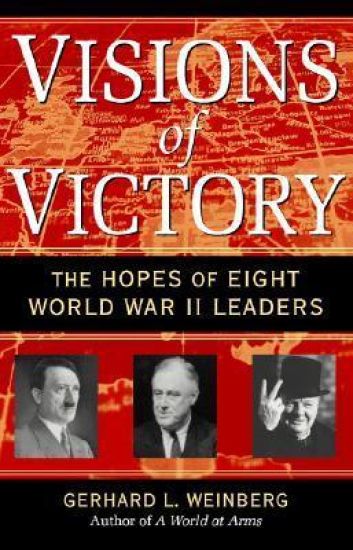
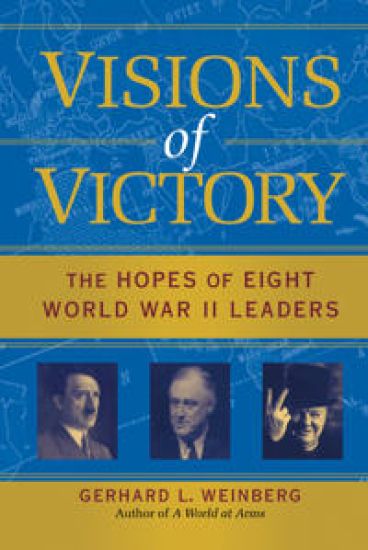
Visions of Victory, first published in 2005, explores the views of eight leaders of the major powers of World War II - Hitler, Mussolini, Tojo, Chiang Kai-shek, Stalin, Churchill, de Gaulle, and Roosevelt. He compares their visions of the future in the event of victory. While the leaders primarily focused on fighting and winning the war, their decisions were often shaped by their aspirations for the future. What emerges is a startling picture of postwar worlds. After exterminating the Jews, Hitler intended for all Slavs to die so Germans could inhabit Eastern Europe. Mussolini and Hitler wanted extensive colonies in Africa. Churchill hoped for the re-emergence of British and French empires. De Gaulle wanted to annex the northwest corner of Italy. Stalin wanted to control Eastern Europe. Roosevelt's vision included establishing the United Nations. Weinberg's comparison of the individual portraits of the war-time leaders is a highly original and compelling study of history that might have been.
Visions of Victory

Visions of Victory

Gerhard L. Weinberg

Cambridge University Press
2005
sidottu
Visions of Victory, first published in 2005, explores the views of eight leaders of the major powers of World War II - Hitler, Mussolini, Tojo, Chiang Kai-shek, Stalin, Churchill, de Gaulle, and Roosevelt. He compares their visions of the future in the event of victory. While the leaders primarily focused on fighting and winning the war, their decisions were often shaped by their aspirations for the future. What emerges is a startling picture of postwar worlds. After exterminating the Jews, Hitler intended for all Slavs to die so Germans could inhabit Eastern Europe. Mussolini and Hitler wanted extensive colonies in Africa. Churchill hoped for the re-emergence of British and French empires. De Gaulle wanted to annex the northwest corner of Italy. Stalin wanted to control Eastern Europe. Roosevelt's vision included establishing the United Nations. Weinberg's comparison of the individual portraits of the war-time leaders is a highly original and compelling study of history that might have been.
A World at Arms

A World at Arms

Gerhard L. Weinberg

Cambridge University Press
2005
pokkari
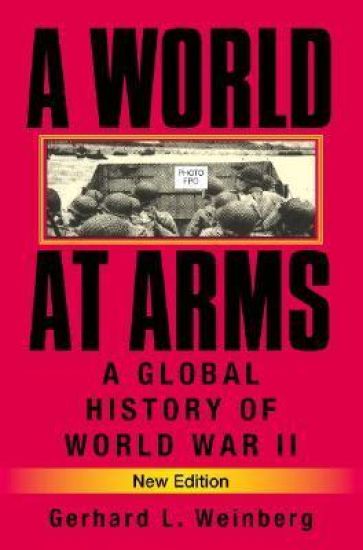
Widely hailed as a masterpiece, this is the first history of World War II to provide a truly global account of the war that encompassed six continents. Starting with the changes that restructured Europe and her colonies following the First World War, Gerhard Weinberg sheds new light on every aspect of World War II. Actions of the Axis, the Allies, and the Neutrals are covered in every theater of the war. More importantly, the global nature of the war is examined, with new insights into how events in one corner of the world helped affect events in other distant parts. In a new edition, with a new preface, A World at Arms remains a classic of global history.
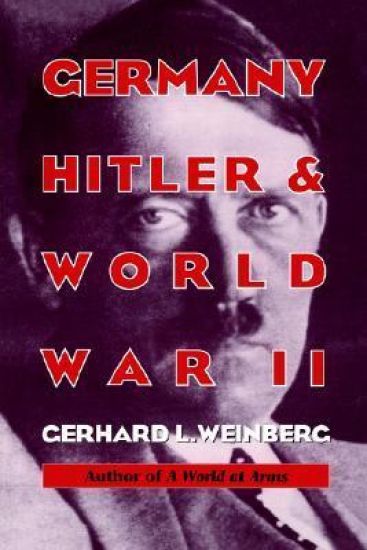
Germany, Hitler, and World War II

Germany, Hitler, and World War II

Gerhard L. Weinberg

Cambridge University Press
1996
pokkari
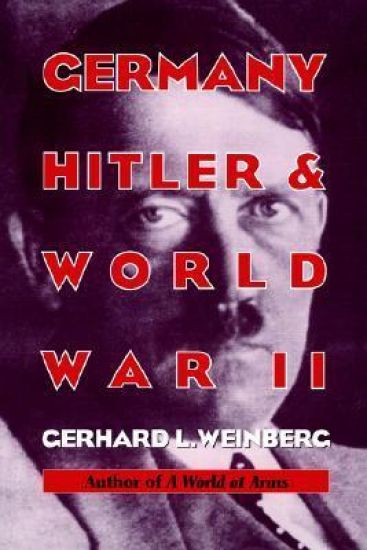
Reflecting on the greatest war in human history, one cannot help but think about the terrible conflict as a whole, its leaders, its peoples, and the puzzles still open about its conduct. Leaders on both sides realised that at stake from the very beginning was a complete restructuring of the world order. More than a conflict of imperial aggression, World War II was about who would live and command the globe’s resources and which peoples would disappear entirely because they were believed to be inferior or undesirable by the victor. This collection of special studies in twentieth-century German and world history illuminates the nature of the Nazi system and its impact on Germany and the world. Bringing together essays now widely scattered and several never previously published in English, this volume examines the Holocaust, the connections between the European and Pacific theatres of war, as well as the effects, leaders, and research problems of World War II. By examining the effects of World War II, its leaders, its problems, and the Holocaust, this volume provides an illuminating study of the nature of the Nazi system and its impact on Germany and the world.
Germany, Hitler, and World War II

Germany, Hitler, and World War II

Gerhard L. Weinberg

Cambridge University Press
1995
sidottu
Reflecting on the greatest war in human history, one cannot help but think about the terrible conflict as a whole, its leaders, its peoples, and the puzzles still open about its conduct. Leaders on both sides realised that at stake from the very beginning was a complete restructuring of the world order. More than a conflict of imperial aggression, World War II was about who would live and command the globe’s resources and which peoples would disappear entirely because they were believed to be inferior or undesirable by the victor. This collection of special studies in twentieth-century German and world history illuminates the nature of the Nazi system and its impact on Germany and the world. Bringing together essays now widely scattered and several never previously published in English, this volume examines the Holocaust, the connections between the European and Pacific theatres of war, as well as the effects, leaders, and research problems of World War II. By examining the effects of World War II, its leaders, its problems, and the Holocaust, this volume provides an illuminating study of the nature of the Nazi system and its impact on Germany and the world.
The Foreign Policy of Hitler's Germany

The Foreign Policy of Hitler's Germany

Gerhard L. Weinberg

Humanity Books
1994
nidottu
These two volumes are designed to explain the origins of World Way II by focusing on the role of German foreign policy under Hitler. New light is shed on German rearmament, on the efforts of Britain and France to avert war, on the annexation of Austria, on the Munich Agreement, and on the final steps to war in 1939. Both specialists and general readers will find much of interest in these two volumes. The German foreign policy, as determined by Adolf Hitler, is analyzed on the basis of comprehensive research in German, British, and American archives. The published documents of France, Italy, Russia, and numerous other countries as well as the extensive literature on the subject and the papers of many participants have been researched to present what still remains the only comprehensive study in any language of the road to way in 1939. This edition adds a new preface relating these volumes to the evidence, the controversies, and the literature of the years since they were first written.
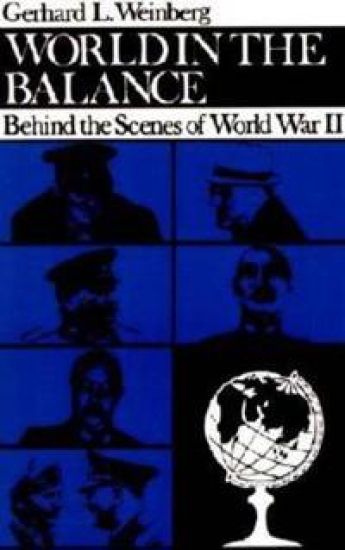
World in the Balance

World in the Balance

Gerhard L. Weinberg

Dartmouth College Press
1981
nidottu
The purpose of Weinberg's text is to suggest a way in which the dramatic events of World War II may be seen. Weinberg argues that the war must be seen as a whole, and that the presentation of it in discrete segments covering the European and Pacific portions separately distorts reality and obscures important aspects of the war on both sides of the world. In addition, any understanding of the great struggle requires a mental self-liberation from the certain knowledge of its outcome. In desperate struggles millions fought and died, hopeful or fearful--or both--but without awareness of the end.