Kirjojen hintavertailu. Mukana 12 390 323 kirjaa ja 12 kauppaa.

Kirjailija

Gerhard Richter

Kirjat ja teokset yhdessä paikassa: 29 kirjaa, julkaisuja vuosilta 2002-2024, suosituimpien joukossa December. Vertaile teosten hintoja ja tarkista saatavuus suomalaisista kirjakaupoista.

29 kirjaa

Kirjojen julkaisuhaarukka 2002-2024.

December

December

Alexander Kluge; Gerhard Richter

Seagull Books London Ltd
2021
nidottu
In the historic tradition of calendar stories and calendar illustrations, author and film director Alexander Kluge and celebrated visual artist Gerhard Richter have composed December, a collection of thirty-nine stories and thirty-nine snow-swept photographs for the darkest month of the year.In stories drawn from modern history and the contemporary moment, from mythology, and even from meteorology, Kluge toys as readily with time and space as he does with his characters. In the narrative entry for December 1931, Adolf Hitler avoids a car crash by inches. In another, we relive Greek financial crises. There are stories where time accelerates, and others in which it seems to slow to the pace of falling snow. In Kluge’s work, power seems only to erode and decay, never grow, and circumstances always seem to elude human control. When a German commander outside Moscow in December of 1941 remarks, “We don’t need weapons to fight the Russians but a weapon to fight the weather,” the futility of his struggle is painfully present. Accompanied by the ghostly and wintry forest scenes captured in Gerhard Richter's photographs, these stories have an alarming density, one that gives way at unexpected moments to open vistas and narrative clarity. Within these pages, the lessons are perhaps not as comforting as in the old calendar stories, but the subversive moralities are always instructive and perfectly executed.Praise for Alexander Kluge“More than a few of Kluge's many books are essential, brilliant achievements. None are without great interest.”—Susan Sontag “Alexander Kluge, that most enlightened of writers.”—W.G. Sebald
December

December

Alexander Kluge; Gerhard Richter

Seagull Books London Ltd
2017
nidottu
In the historic tradition of calendar stories and calendar illustrations, author and film director Alexander Kluge and celebrated visual artist Gerhard Richter have composed December, a collection of thirty-nine stories and thirty-nine snow-swept photographs for the darkest month of the year.
Gerhard Richter Patterns

Gerhard Richter Patterns

Gerhard Richter

Thames Hudson Ltd
2012
sidottu
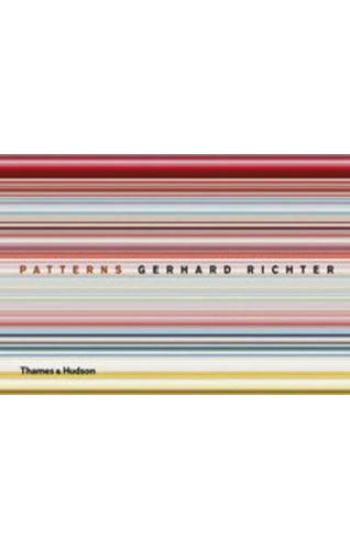
Documents the author's experiment of taking an image of an original abstract painting and dividing it vertically into two. In this book, each divided part is divided again, mirrored and repeated, producing ever narrower strips, which results in patterns. It includes a total of 238 selected patterns.
Gerhard Richter: FORICANO, 26 Drawings

Gerhard Richter: FORICANO, 26 Drawings

Gerhard Richter

David Zwirner
2024
sidottu
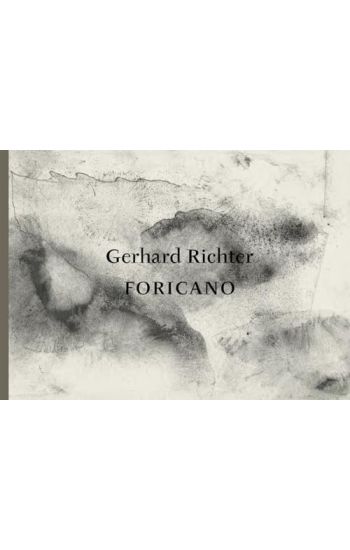
Gerhard Richter’s newest facsimile-like artist’s book is focused on a single work comprising twenty-six drawings in pencil and ink.“[Richter’s drawings] are of stringent individuality and recognizably by Richter’s hand, not based on their signature style but rather because they make their theme the act of drawing itself, gauging the conditions of drawing.” —Dieter SchwarzIn this new body of work, Richter combines various elements from a limited set of forms and techniques—including meandering lines, broad tonal planes applied with angled strokes of graphite, and passages of smudging, hatching, and erasure—thereby uniting choice and chance through this infinitely generative process. The resulting works on paper serve as condensed expressions, encapsulating and refining the fundamental principles that have consistently defined Richter's artistic journey. Reproduced at actual size, the drawings encourage in-depth observation as well as inspire compelling reimagining of abstraction.
Gerhard Richter: 100 Abstract Pictures

Gerhard Richter: 100 Abstract Pictures

Gerhard Richter

David Zwirner
2023
sidottu
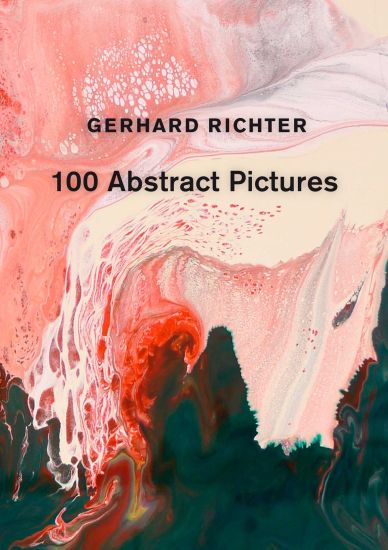
With a career spanning more than sixty years, the renowned painter Gerhard Richter is one of the greatest artists of the twentieth and twenty-first centuries. This book celebrates the artist’s continued dedication to experimentation and innovation.The Abstract Pictures were created when Richter, a few years ago, poured colored enamel paints onto a glass plate and allowed them to flow into one another in order to take shapes. He then captured these ephemeral moments with his camera and selected 100 of these “pictures” for inclusion in the book alongside equally abstract texts formed by randomly generated letter combinations.An artwork of its own, this intimate volume inspires both close looking and a beautiful interpretation of abstraction.
This Great Allegory

This Great Allegory

Gerhard Richter

MIT PRESS LTD
2022
nidottu
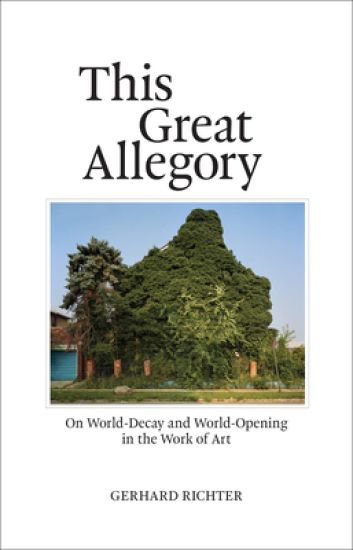
An engagement with the relation between the world in which an artwork is created--a world that perishes or decays over time--and the new world that the artwork opens up. Gerhard Richter explores the relation between two worlds: the world in which an artwork is created, that is, a world that over time perishes or decays beyond interpretive understanding, and the new world that the artwork opens up. The multiple relations between these worlds are examined in a number of central thinkers and in various modes of aesthetic production, including poetry, painting, music, film, literature, and photography. It is precisely in and through the work of art, Richter shows, that central elements of the thinking of world as world are negotiated in the most essential and moving ways. Exploring the relationship between these worlds through art and European philosophy, Richter offers bold new interpretations of Karl Marx, Friedrich Nietzsche, Martin Heidegger, Maurice Blanchot, Georges Bataille, Emmanuel Levinas, Theodor W. Adorno, Walter Benjamin, and Jacques Derrida. The book also provides stimulating new insights into the works of heterogeneous artists such as Paul Celan, Friedrich H lderlin, Werner Herzog, Arnold Sch nberg, Franz Kafka, Herman Melville, Andrew Moore, Botho Strau , Didier Eribon, and even prehistoric cave painters. In each case, Richter's readings are guided by a consideration of the conceptual constraints and singular interpretive demands imposed by the specific genre and medium.
Uncontainable Legacies

Uncontainable Legacies

Gerhard Richter

Edinburgh University Press
2021
nidottu
How do our ceaseless conversations with what has passed and with those who have passed something on to us propel us into a precarious future? In a series of evocatively titled theses, including 'Wrinkles', 'Inheriting a Feeling', 'Weight of the World' and 'Making Treasures Speak', Gerhard Richter engages the quintessentially human dilemma of how to receive an intellectual, cultural or political inheritance. In dialogue with philosophers including Heraclitus, Arendt and Derrida; writers such as Montaigne, Holderlin, Kafka and Knausgaard; artists such as Michelangelo, Picasso, Anselm Kiefer and Art Spiegelman; filmmakers such as Jean-Marie Straub; scholars and scientists Freud and Einstein; and pop-cultural phenomena the rock band The Who and the Broadway play The Inheritance, Richter contemplates the problem of interpreting an inheritance that resists full transparency. Richter argues that inheriting is not the same as yearning for a former presence or nostalgically striving to preserve an identity. At once philosophical and poetic, his aphoristic theses illuminate how the constantly shifting nature of our relationship to what we inherit from others makes us who we are.
Uncontainable Legacies

Uncontainable Legacies

Gerhard Richter

Edinburgh University Press
2021
sidottu
How do our ceaseless conversations with what has passed and with those who have passed something on to us propel us into a precarious future? In a series of evocatively titled theses, including 'Wrinkles', 'Inheriting a Feeling', 'Weight of the World' and 'Making Treasures Speak', Gerhard Richter engages the quintessentially human dilemma of how to receive an intellectual, cultural or political inheritance. In dialogue with philosophers including Heraclitus, Arendt and Derrida; writers such as Montaigne, Holderlin, Kafka and Knausgaard; artists such as Michelangelo, Picasso, Anselm Kiefer and Art Spiegelman; filmmakers such as Jean-Marie Straub; scholars and scientists Freud and Einstein; and pop-cultural phenomena the rock band The Who and the Broadway play The Inheritance, Richter contemplates the problem of interpreting an inheritance that resists full transparency. Richter argues that inheriting is not the same as yearning for a former presence or nostalgically striving to preserve an identity. At once philosophical and poetic, his aphoristic theses illuminate how the constantly shifting nature of our relationship to what we inherit from others makes us who we are.
Dispatches from Moments of Calm

Dispatches from Moments of Calm

Alexander Kluge; Gerhard Richter

Seagull Books London Ltd
2019
nidottu
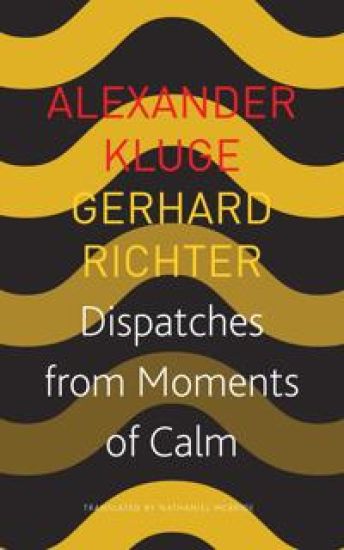
On October 5, 2012, the German national newspaper Die Welt published its daily issue - but things looked . . . different. Quieter. The sensations of the day, forgotten as soon as they're read, were missing, replaced with an unprecedented calm, extracted with care from the chaos of the contemporary.That calm was the work of Gerhard Richter, who had been granted control over Die Welt for that single day, taking over and imprinting all 30 pages of the newspaper with his personal stamp: images from quiet moments amid unquiet times, the demotion of politics from its primary position, the privileging of the private and personal over the public, and, above all, artful, moving contrasts between sharpness and softness. He had created an unprecedented work of mass art.Among the many people to praise the work was writer Alexander Kluge, who instantly began writing stories to accompany Richter's images. This book, the second collaboration between Kluge and Richter, brings their stories and images together, along with new words and artworks created specifically for this volume. The result, Dispatches from Moments of Calm, is a beautiful, meditative interval in the otherwise unremitting press of everyday life, a masterpiece by two acclaimed artists working at the height of their powers.
Gerhard Richter: Catalogue Raisonn , Volume 5
The second installment in Dietmar Elger's ambitious six-volume Gerhard Richter publishing project The oeuvre of Gerhard Richter (born 1932) embraces in excess of 3,000 individual works. Over a period of five decades he has created a stylistically heterogeneous, complex body of work that testifies to his status as the most important living artist of our time. Dietmar Elger, director of the Gerhard Richter Archive at the Staatliche Kunstsammlungen Dresden, has spent years researching and preparing the six-volume catalogue raisonn' that will be published through 2020. This second volume encompasses the works that Richter assigned numbers 199 to 388, covering the years 1968 to 1976. A total of over 500 paintings and sculptures are listed. Aside from the richly colored illustrations (many of them full-page), it includes full technical details, information about the artist's handwritten notes and the provenance, bibliography and exhibitions of each individual work. This information is supplemented by commentary, quotes and comparison images.
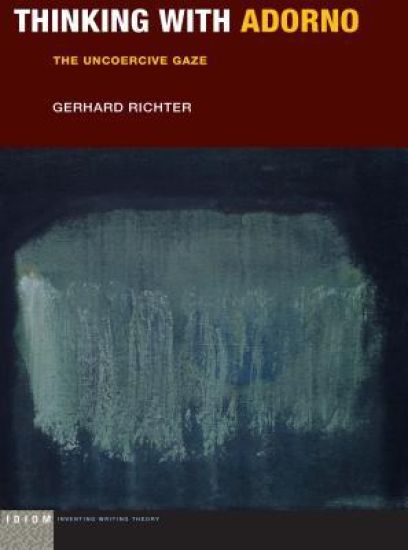
Thinking with Adorno

Thinking with Adorno

Gerhard Richter

Fordham University Press
2019
pokkari
What Theodor W. Adorno says cannot be separated from how he says it. By the same token, what he thinks cannot be isolated from how he thinks it. The central aim of Richter's book is to examine how these basic yet far-reaching assumptions teach us to think with Adorno—both alongside him and in relation to his diverse contexts and constellations. These contexts and constellations range from aesthetic theory to political critique, from the problem of judgment to the difficulty of inheriting a tradition, from the primacy of the object to the question of how to lead a right life within a wrong one. Richter vividly shows how Adorno's highly suggestive—yet often overlooked—concept of the "uncoercive gaze" designates a specific kind of comportment in relation to an object of critical analysis: It moves close to the object and tarries with it while struggling to decipher the singularities and non-identities that are lodged within it, whether the object is an idea, a thought, a concept, a text, a work of art, an experience, or a problem of political or sociological theory. Thinking with Adorno's uncoercive gaze not only means following the fascinating paths of his own work; it also means extending hospitality to the ghostly voices of others. As this book shows, Adorno is best understood as a thinker in dialogue, whether with long-deceased predecessors in the German tradition such as Kant and Hegel, with writers such as Kafka, with contemporaries such as Benjamin and Arendt, or with philosophical voices that succeeded him, such as those of Derrida and Agamben.
Thinking with Adorno

Thinking with Adorno

Gerhard Richter

Fordham University Press
2019
sidottu
What Theodor W. Adorno says cannot be separated from how he says it. By the same token, what he thinks cannot be isolated from how he thinks it. The central aim of Richter's book is to examine how these basic yet far-reaching assumptions teach us to think with Adorno—both alongside him and in relation to his diverse contexts and constellations. These contexts and constellations range from aesthetic theory to political critique, from the problem of judgment to the difficulty of inheriting a tradition, from the primacy of the object to the question of how to lead a right life within a wrong one. Richter vividly shows how Adorno's highly suggestive—yet often overlooked—concept of the "uncoercive gaze" designates a specific kind of comportment in relation to an object of critical analysis: It moves close to the object and tarries with it while struggling to decipher the singularities and non-identities that are lodged within it, whether the object is an idea, a thought, a concept, a text, a work of art, an experience, or a problem of political or sociological theory. Thinking with Adorno's uncoercive gaze not only means following the fascinating paths of his own work; it also means extending hospitality to the ghostly voices of others. As this book shows, Adorno is best understood as a thinker in dialogue, whether with long-deceased predecessors in the German tradition such as Kant and Hegel, with writers such as Kafka, with contemporaries such as Benjamin and Arendt, or with philosophical voices that succeeded him, such as those of Derrida and Agamben.
Dispatches from Moments of Calm

Dispatches from Moments of Calm

Alexander Kluge; Gerhard Richter

Seagull Books London Ltd
2016
sidottu
On October 5, 2012, the German national newspaper Die Welt published its daily issue—but things looked . . . different. Quieter. The sensations of the day, forgotten as soon as they’re read, were missing, replaced with an unprecedented calm, extracted with care from the chaos of the contemporary. That calm was the work of Gerhard Richter, who had been granted control over Die Welt for that single day, taking over and imprinting all thirty pages of the newspaper with his personal stamp: images from quiet moments amid unquiet times, the demotion of politics from its primary position, the privileging of the private and personal over the public, and, above all, artful, moving contrasts between sharpness and softness. He had created an unprecedented work of mass art. Among the many people to praise the work was writer Alexander Kluge, who instantly began writing stories to accompany Richter’s images. This book, the second collaboration between Kluge and Richter, brings their stories and images together, along with new words and artworks created specifically for this volume. The result, Dispatches from Moments of Calm, is a beautiful, meditative interval in the otherwise unremitting press of everyday life, a masterpiece by two acclaimed artists working at the height of their powers.
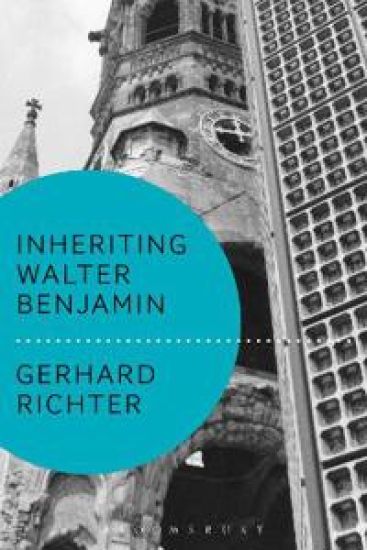
Inheriting Walter Benjamin

Inheriting Walter Benjamin

Gerhard Richter

Bloomsbury Academic
2016
sidottu
Gerhard Richter examines, in the work of Walter Benjamin, one of the central problems of modernity: the question of how to receive an intellectual inheritance. Covering aspects of Benjamin’s complex relationship to the legacies of such writers as Kant, Nietzsche, Kafka, Heidegger, and Derrida, each chapter attends to a key concern in Benjamin’s writing, while reflecting on the challenges that this issue presents for the question of inheritability and transmissibility. Both reading Benjamin and watching himself reading Benjamin, Richter participates in the act of inheriting while also inquiring into the conditions of possibility for inheriting Benjamin’s corpus today.