Kirjojen hintavertailu. Mukana 12 657 676 kirjaa ja 12 kauppaa.

Kirjailija

Gerry Rubin

Kirjat ja teokset yhdessä paikassa: 3 kirjaa, julkaisuja vuosilta 1987-2026, suosituimpien joukossa My Harem. Vertaile teosten hintoja ja tarkista saatavuus suomalaisista kirjakaupoista.

3 kirjaa

Kirjojen julkaisuhaarukka 1987-2026.

Processing Criminal Justice Between the Wars

Processing Criminal Justice Between the Wars

Gerry Rubin; Colin Moore

Routledge
2026
sidottu
How did the institutions of the criminal justice system deal with the challenges and practical problems in its processes, both new and rediscovered, during the inter-war years? This book explores a relatively neglected but significant area of modern crime and criminal justice history: one beset by a range of issues such as police corruption, new scientific techniques, racecourse gangs, and public order disturbance such as street gambling and youth crime.This book examines various aspects of the inter-war criminal justice system, including how the courts overcome practical, evidential and procedural problems; tensions between the police and the Director for Public Prosecution, how the police responded to scandal and controversy and the challenges presented by gang and public order offences. This book will be of interest to all those interested in the development of the criminal justice system, as well as the history of courts and policing.
My Harem

My Harem

Gerry Rubin; Tony Millan

Mango Books
2021
sidottu
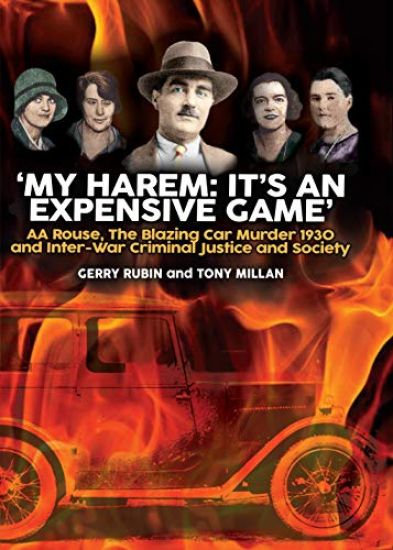
How had it come to this? How was it that Alfred Arthur Rouse, a handsome and smartly-dressed resident of suburban Friern Barnet, was walking along a moonlit Northamptonshire country lane in the early hours of Bonfire Night, looking dishevelled and panic-stricken? How was it that he now found himself in the most dangerous and frightening situation he had ever known since his time in the First World War trenches? Then, he had witnessed an aeroplane, hit by gunfire and bursting into flames, crash near him on the Western Front. Now he had seen his own car devoured in a blaze, with flames shooting fifteen feet into the night sky, turning his world upside down. He was hurrying away from that inferno. Trying to put some distance between himself and the burning car. Trying to find time to think. 'MY HAREM: IT'S AN EXPENSIVE GAME' is not a standard 'true crime' story about a famous murder. It does not confine itself to a narrative of murderous events and their denouement. This account of the Rouse case dares to pose deeper questions regarding the executed man as a product of his time. Certainly, the life-story of 36-year-old Arthur Rouse, a commercial traveller and uninhibited sexual adventurer who ended his days on the gallows at Bedford Prison in March 1931 for the murder of an unknown man in a sensational case known ever since as the 'Blazing Car Murder' is necessarily part of our account. However, our aim is also to locate Rouse's life within the broader patterns of social, economic and cultural change occurring between the wars in order to portray him as a template, or trope, or even as a metaphor for the ambiguities surrounding those changes; the tensions between sexual respectability and hypocrisy; the conflicts between the pursuit of consumerism and the danger of financial indebtedness.
War, Law, and Labour

War, Law, and Labour

Gerry Rubin

Clarendon Press
1987
sidottu
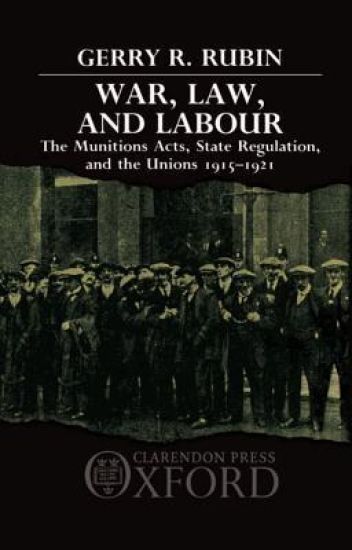
This book examines the working of the Munition of War Acts 1915-1917, during the First World War. The munitions code, parts of which remained in force until 1921, appeared at first to constitute a radical break with the pre-war voluntarist system of industrial relations. It aimed to prevent strikes by law, it imposed wage controls and tighter factory discipline and discouraged munitions workers from leaving their jobs. Munitions tribunals were established to enforce the law. Using, among other sources, the evidence offered by the tribunal proceedings under the Acts, the author suggests that a policy of strict enforcement of the law was transformed to one of sensitive conflict management, involving trade unionists, employers, and the tribunal judges. The identification of complex working-class attitudes to the wartime state accounts largely for the creation of this modus vivendi, despite the controversial nature of the legislation. This book, though dealing with events which arose during wartime in an atmosphere of militarism, radicalism as well as patriotism, inflation and full employment, may nevertheless offer glimpses of insight to analysts of modern industrial relations.