

Kirjailija
Gew Intelligence Unit
Kirjat ja teokset yhdessä paikassa: 16 kirjaa, julkaisuja vuosilta 2023-2026, suosituimpien joukossa Caught In The Crossfire. Vertaile teosten hintoja ja tarkista saatavuus suomalaisista kirjakaupoista.
16 kirjaa
Kirjojen julkaisuhaarukka 2023-2026.

Energy Politics In The Middle East: Navigating The Global Transition
Gew Intelligence Unit
Global East-West (London)
2026
nidottu

La fin de l'Europe d'après-guerre? L'OTAN, la puissance et le retour de la sécurité dure
Gew Intelligence Unit
Global East-West LTD
2025
pokkari

"The Thucydides Trap And US-China Rivalry" profoundly explores how an emerging power inevitably clashes with existing power, often defying rationality and logic in its quest for balance. It delves into the intense rivalry between the United States and China, dissecting the events that led to it, the policy decisions involved, and the potential future outcomes.The Thucydides Trap anchors itself in fundamental history. In the case of this book, the Peloponnesian War, Sparta's fearful outlook towards Athens prompted them to cause widespread destruction. Not to forget the Anglo-German naval race preceding World War I. They are all examples of how undue confrontation and competition birth to heightened destruction. Yet, not every form is violent in nature. The US and UK's transitionist tendencies to cooperate, along with the profound pound post World War two and the peaceful evolution of India, exhibit that policy initiatives make a difference.US-China Rivalry: The culmination of the Thucydides Trap theory is located in the US-China rivalry. China is a growing competitor in economics, military, and almost all technology-driven sub-sectors. The US, being the spearhead, exerts its transactional might to gain in trade, security, and technology while helping Soviet Funds bought by the US turn into Government Grabs. Fragile zeniths of cooperation are raised when fostering global and climate health, although both countries can do far more.Leaders And Their Policies: The observed trends reveal that there is no fixed set of rules that govern relations and cooperation. Instead, these are heavily influenced by the perspectives and policies of leaders and governing bodies, underscoring the weight of their decisions.The US-UK transition after WWII and post-Cold War US-Soviet relations show how diplomacy and cooperation can prevent conflict. On the other hand, a lack of such initiatives, as in pre-WWI Europe, fosters escalation. Therefore, the decision to circumvent the Thucydides Trap rests entirely with policymakers.The book concludes with Future Scenarios: 1. Conflict Scenario: Failure to engage diplomatically while continuing competition. 2. Cooperative Scenario: Focus on non-adversarial shared interests and conversations. 3. Mixed Scenario: A blend of hostile competition and collaboration.This Essay is not just essential reading for academics, policy advisors, diplomats, business leaders, and university students. It is a call to action. By understanding the lessons of history and the implications of the Thucydides Trap theory, you, the reader, can play a vital role in shaping the future of international relations.




From Partners to Rivals? The Evolving Dynamics Of America And Europe
Gew Intelligence Unit
Global East-West LTD
2025
pokkari
This book provides a comprehensive analysis of the USA-EU relationship, exploring its evolution, challenges, and future prospects in a rapidly changing world. Pros and ConsThe USA-EU relationship has been a cornerstone of global stability, fostering economic growth, technological innovation, and democratic governance. The transatlantic trade and investment partnership remains one of the world's largest, benefiting both economies. However, the relationship has also faced challenges, including policy divergences on issues like data privacy, taxation, and regulation. The EU's pursuit of strategic autonomy, particularly in defence and technology, has sometimes clashed with US interests. ChallengesKey challenges include managing economic competition, particularly in technology and green energy, addressing China's growing influence, and navigating crises like the war in Ukraine. Divergences over climate policy, trade, and NATO burden-sharing have also tested the relationship. Additionally, domestic political shifts in both the USA and Europe, such as the rise of populism and scepticism toward globalisation, have complicated cooperation. Republican vs. Democratic ApproachesRepublican administrations, particularly under Trump, have tended to prioritise unilateralism and economic nationalism, often clashing with the EU's multilateral approach. In contrast, Democratic administrations, like Obama's and Biden's, have emphasised diplomacy, multilateralism, and shared values, aligning more closely with European priorities. These differences are evident in areas like climate policy, trade agreements, and international institutions. Current TensionsUnder a second Trump administration, tensions are escalating over trade, NATO, and climate policy. The EU's push for strategic autonomy and its reliance on US security guarantees create a delicate balancing act. Divergences over China, energy exports, and digital regulation could further strain ties.

Weapons, Technology and Policy in the GCC States
Gew Intelligence Unit
Global East-West (London)
2024
pokkari
This book aims to provide a comprehensive exploration of the strategic significance of the GCC states' defense industry, offering critical insights into its implications for regional security, economic development, and geopolitical dynamics. By examining the drivers and challenges surrounding the localization of the defense industry in these states, it seeks to unravel the complex processes and factors that shape this evolving sector.An in-depth analysis of the economic implications of localization constitutes another significant aspect of this book. As the defense industry becomes increasingly localized, it holds the potential to generate substantial economic growth, create high-skilled job opportunities, and foster technological innovation. Scrutinizing the economic dynamics and potential benefits of the defense industry in the GCC states offers valuable insights into their broader efforts towards economic diversification and reducing dependence on hydrocarbon revenues, ultimately facilitating the transition towards knowledge-based economies.Aside from economic considerations, this book also explores the security implications of local defense industry development. As the GCC states endeavor to achieve defense localization, there is potential for enhancing their military capabilities, reducing vulnerabilities, and strengthening their national security posture. Understanding the impact of these developments on regional security dynamics, military strategies, and collaborative defense initiatives is crucial for policymakers, security analysts, and defense officials.

In "Saudi Arabia and Israel: The Sinful Proximity," the GEW Intelligence Unit delves into the intricate relationship between two states that have long been viewed as geopolitical adversaries. This meticulously researched book, edited by Hichem Karoui and published by Global East-West (London), comprehensively analyses the evolving dynamics between Saudi Arabia and Israel, exploring their challenges, strategic interests, and covert interaction. The book aims to provide insights into the complexities, motivations, and implications of their interactions throughout history, shedding light on the potential and consequences for open diplomatic relations, challenges, societal impacts, and human rights considerations. The book also aims to extract key lessons and findings in case the covered ties evolve into an open diplomatic relationship in a context full of tensions due to the current plight of the Palestinian people under the Zionist occupation.Through a blend of insightful commentary and in-depth research, this authoritative work sheds light on the complex web of political, economic, and security considerations that shape the interactions between these two Middle Eastern powers. It is a timely and thought-provoking read for scholars, policymakers, and anyone interested in understanding the shifting alliances in the region.
"Guardians of the Gulf: A Deep Dive into the GCC Defence Industry" provides a comprehensive analysis of the evolution of the defence industry in the Gulf Cooperation Council (GCC) countries. This meticulously researched book explores the transition from heavy reliance on imports to the development of robust domestic defence capabilities, shedding light on the geopolitical and strategic implications for the region and beyond. With a focus on key players such as Saudi Arabia, UAE, and Qatar, it delves into the complex interplay between military modernisation, technological advancements, and regional security dynamics. Through meticulous examination and insightful commentary, this book offers a compelling analysis of how these nations have transformed into guardians of their security, shaping the defence landscape in the Gulf and beyond. Guardians of the Gulf is essential for policymakers, scholars, and anyone seeking a deep understanding of contemporary defence developments in this critical region.Key TakeawaysThe GCC states heavily relied on arms imports initially due to limited domestic industrial capabilities and evolving security threats.The United States played a significant role as a primary arms supplier to the GCC states during their early development stages.Over time, concerns about supply chain vulnerabilities and over-dependence on foreign powers led to a strategic shift towards developing indigenous defence industries.The book explores the economic implications of the local defence industry, emphasising its potential to drive economic growth, create job opportunities, and foster technological innovation.It also delves into the security implications of defence industry development, focusing on enhancing military capabilities and strengthening national security.The book's methodology adopts a multidisciplinary approach, integrating historical, economic, geopolitical, and security perspectives through primary and secondary research.The book's structure follows a logical flow, exploring the drivers and challenges of defence indigenisation, economic diversification, technology transfer, and their impact on regional security cooperation.
The book highlights the evolution of the defence industry in the Gulf Cooperation Council (GCC) states, emphasising its historical reliance on arms imports, the shift towards domestic defence capabilities, and the implications for regional security and economic development.Key TakeawaysThe GCC states heavily relied on arms imports initially due to limited domestic industrial capabilities and evolving security threats.The United States played a significant role as a primary arms supplier to the GCC states during their early development stages.Over time, concerns about supply chain vulnerabilities and over-dependence on foreign powers led to a strategic shift towards developing indigenous defence industries.The book explores the economic implications of the local defence industry, emphasising its potential to drive economic growth, create job opportunities, and foster technological innovation.It also delves into the security implications of defence industry development, focusing on enhancing military capabilities and strengthening national security.The book's methodology adopts a multidisciplinary approach, integrating historical, economic, geopolitical, and security perspectives through primary and secondary research.The book's structure follows a logical flow, exploring the drivers and challenges of defence indigenisation, economic diversification, technology transfer, and their impact on regional security cooperation. Guardians of the Gulf is essential for policymakers, scholars, and anyone seeking a deep understanding of contemporary defence developments in this critical region.

In contrast to the West, the BRICS+ consortium (Argentina, Brazil, China, Egypt, Ethiopia, India, Iran, Russia, Saudi Arabia, South Africa, and the United Arab Emirates) is widely acknowledged as an embodiment of the broader phenomenon known as the "Rise of the Rest." This occurrence, which is representative of modern-day global affairs, signifies the progressive development of the economic, political, and military capabilities of specific nations and their coalitions. As a result, the Western powers' formerly hegemonic dominance has notably diminished. Simultaneously, the Gulf Cooperation Council (GCC) has conventionally been regarded as an alliance that emerged during a period when cooperation between the West and countries that produced energy was crucial. However, improved connectivity between the BRICS+ and the GCC (Saudi Arabia, UAE, Qatar, Kuwait, Bahrain, and Oman) is possible, especially with Saudi Arabia and the United Arab Emirates as members, due to their complementary natures and ability to reconcile divergences. The aforementioned potential is founded upon the BRICS nations' ascent to a crucial position in global cooperation and development, in contrast to the GCC countries' ongoing dominance as primary providers of energy on an international scale. The potential exists for these blocs to strengthen their individual positions on the international stage through the amalgamation. This dynamic environment presents a thought-provoking subject for analysis, in which the interplay between GCC and BRICS dynamics takes place while the United States maintains its prominent position as a global actor. Amid the persistent power struggles and significant geopolitical realignments, there is a possibility that strategic and economic convergences will arise between the GCC and BRICS, thereby exerting additional influence on the global geopolitical arena. The objective of this book is to comprehensively examine the evolving dynamics between the GCC and the BRICS consortium from a variety of vantage points. Enriching and contributing to a nuanced and well-informed discourse on the evolving relationship between the GCC and the BRICS+ should be contingent on the outcome that ensues. Practical insights and actionable recommendations are prioritised in order to provide stakeholders with the necessary tools to navigate the intricate geopolitical landscape undergoing a significant transformation.
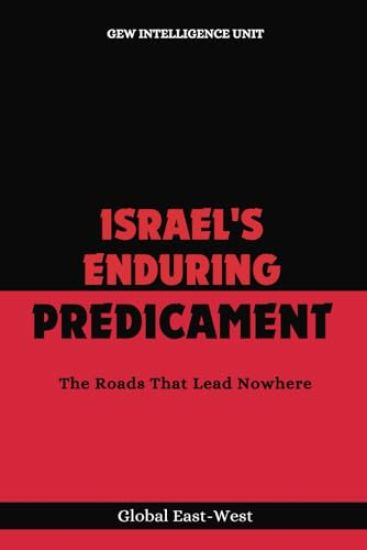
Israel's Enduring Predicament
Gew Intelligence Unit
Global East-West for Studies and Publishing
2023
pokkari
The Israeli-Palestinian conflict is a protracted and multi-layered struggle deeply rooted in historical grievances, political aspirations and competing claims to land, resources and sovereignty. In this comprehensive guide by the GEW Intelligence Unit, readers will gain an in-depth understanding of the complex dynamics shaping this enduring conflict. Through meticulous research and analysis, the book delves into the historical, cultural, and geopolitical factors that have contributed to the ongoing tensions between Israelis and Palestinians. With a serious and objective tone, this guide provides a nuanced exploration of the conflicting narratives, power struggles, and international interventions that continue to shape the region. Essential reading for anyone seeking to grasp the complexities of this enduring dispute, The Israeli-Palestinian Conflict offers a sobering examination of one of the world's most entrenched geopolitical challenges.