Kirjojen hintavertailu. Mukana 12 390 323 kirjaa ja 12 kauppaa.

Kirjailija

Ghena Krayem

Kirjat ja teokset yhdessä paikassa: 6 kirjaa, julkaisuja vuosilta 2014-2022, suosituimpien joukossa ISS 16 Islamic Family Law in Australia. Vertaile teosten hintoja ja tarkista saatavuus suomalaisista kirjakaupoista.

6 kirjaa

Kirjojen julkaisuhaarukka 2014-2022.

Understanding Sharia Processes

Understanding Sharia Processes

Farrah Ahmed; Ghena Krayem

Hart Publishing
2022
nidottu
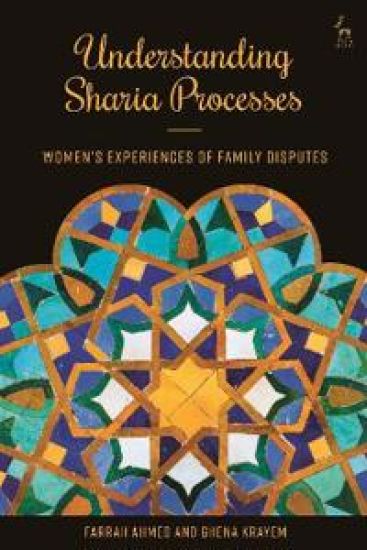
Sharia family law processes have attracted increasing debate and controversy in the United Kingdom, Canada and Australia in recent years. While the reasons for opposition to sharia processes are complex, they often feature the concern that sharia processes disadvantage Muslim women.However, to date there has been inadequate attention to the experiences of participants in sharia processes. This open access book studies women’s experiences with these processes in Australia, with attention to the question of how religious communities and liberal legal systems can best respond to the needs of Muslim women who use these processes. In doing so, the book offers unique evidence to inform future policy developments in Australia that will also have implications for other liberal jurisdictions.In this way, the book makes a significant contribution to the international discussion and response to sharia processes.The ebook editions of this book are available open access on bloomsburycollections.com. Open access was funded by Melbourne Law School.
Understanding Sharia Processes

Understanding Sharia Processes

Farrah Ahmed; Ghena Krayem

Hart Publishing
2021
sidottu
Sharia family law processes have attracted increasing debate and controversy in the United Kingdom, Canada and Australia in recent years. While the reasons for opposition to sharia processes are complex, they often feature the concern that sharia processes disadvantage Muslim women.However, to date there has been inadequate attention to the experiences of participants in sharia processes. This open access book studies women’s experiences with these processes in Australia, with attention to the question of how religious communities and liberal legal systems can best respond to the needs of Muslim women who use these processes. In doing so, the book offers unique evidence to inform future policy developments in Australia that will also have implications for other liberal jurisdictions.In this way, the book makes a significant contribution to the international discussion and response to sharia processes.The ebook editions of this book are available open access on bloomsburycollections.com. Open access was funded by Melbourne Law School.
Accommodating Muslims under Common Law

Accommodating Muslims under Common Law

Salim Farrar; Ghena Krayem

Routledge
2018
nidottu
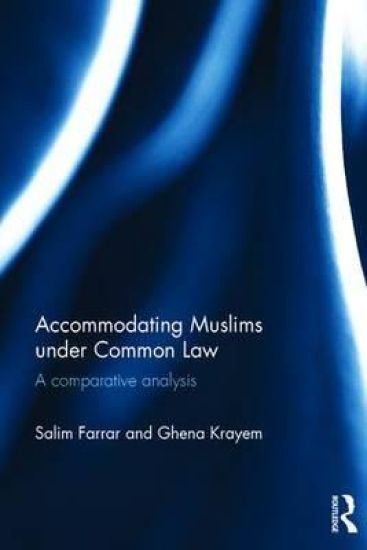
The book explores the relationship between Muslims, the Common Law and Shari?ah post-9/11. The book looks at the accommodation of Shari?ah Law within Western Common Law legal traditions and the role of the judiciary, in particular, in drawing boundaries for secular democratic states with Muslim populations who want resolutions to conflicts that also comply with the dictates of their faith.Salim Farrar and Ghena Krayem consider the question of recognition of Shari?ah by looking at how the flexibilities that exists in both the Common Law and Shari?ah provide unexplored avenues for navigation and accommodation. The issue is explored in a comparative context across several jurisdictions and case law is examined in the contexts of family law, business and crime from selected jurisdictions with significant Muslim minority populations including: Australia, Canada, England and Wales, and the United States. The book examines how Muslims and the broader community have framed their claims for recognition against a backdrop of terrorism fears, and how Common Law judiciaries have responded within their constitutional and statutory confines and also within the contemporary contexts of demands for equality, neutrality and universal human rights. Acknowledging the inherent pragmatism, flexibility and values of the Common Law, the authors argue that the controversial issue of accommodation of Shari?ah is not necessarily one that requires the establishment of a separate and parallel legal system.
Accommodating Muslims under Common Law

Accommodating Muslims under Common Law

Salim Farrar; Ghena Krayem

Routledge
2016
sidottu
The book explores the relationship between Muslims, the Common Law and Shari?ah post-9/11. The book looks at the accommodation of Shari?ah Law within Western Common Law legal traditions and the role of the judiciary, in particular, in drawing boundaries for secular democratic states with Muslim populations who want resolutions to conflicts that also comply with the dictates of their faith.Salim Farrar and Ghena Krayem consider the question of recognition of Shari?ah by looking at how the flexibilities that exists in both the Common Law and Shari?ah provide unexplored avenues for navigation and accommodation. The issue is explored in a comparative context across several jurisdictions and case law is examined in the contexts of family law, business and crime from selected jurisdictions with significant Muslim minority populations including: Australia, Canada, England and Wales, and the United States. The book examines how Muslims and the broader community have framed their claims for recognition against a backdrop of terrorism fears, and how Common Law judiciaries have responded within their constitutional and statutory confines and also within the contemporary contexts of demands for equality, neutrality and universal human rights. Acknowledging the inherent pragmatism, flexibility and values of the Common Law, the authors argue that the controversial issue of accommodation of Shari?ah is not necessarily one that requires the establishment of a separate and parallel legal system.
Islamic Family Law in Australia

Islamic Family Law in Australia

Ghena Krayem

Melbourne University Press
2014
sidottu
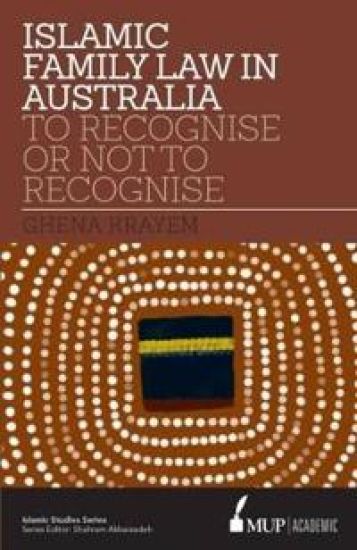
In recent years, all over the western world, a conversation has begun about the role of Islamic law or Shariah in secular liberal democratic states. Often this has focused on the area of family law, including matters of marriage and divorce. Islamic Family Law in Australia considers this often-controversial issue through the lens of multiculturalism and legal pluralism. Primarily, its main objective is to clarify the arguments that have been made recently.In both Australia and overseas, debates have occurred which have been both controversial and divisive, but have rarely been informed by any detailed analysis of how Muslim communities in these countries are actually dealing with family law issues. Islamic Family Law in Australia responds to this need for accurate information by presenting the findings of the first empirical study exploring how Australian Muslims resolve their family law matters. Through the words of religious and community leaders as well as ordinary Australian Muslims, the book questions the assumption that accommodating the needs of Australian Muslims requires the establishment of a separate and parallel legal system.
ISS 16 Islamic Family Law in Australia

ISS 16 Islamic Family Law in Australia

Ghena Krayem

Melbourne University Press
2014
nidottu
In recent years, all over the western world, a conversation has begun about the role of Islamic law or Shariah in secular liberal democratic states. Often this has focused on the area of family law, including matters of marriage and divorce. Islamic Family Law in Australia considers this often-controversial issue through the lens of multiculturalism and legal pluralism. Primarily, its main objective is to clarify the arguments that have been made recently.In both Australia and overseas, debates have occurred which have been both controversial and divisive, but have rarely been informed by any detailed analysis of how Muslim communities in these countries are actually dealing with family law issues. Islamic Family Law in Australia responds to this need for accurate information by presenting the findings of the first empirical study exploring how Australian Muslims resolve their family law matters. Through the words of religious and community leaders as well as ordinary Australian Muslims, the book questions the assumption that accommodating the needs of Australian Muslims requires the establishment of a separate and parallel legal system.