Kirjailija
Giacomo Leopardi
Kirjat ja teokset yhdessä paikassa: 138 kirjaa, julkaisuja vuosilta 1943-2026, suosituimpien joukossa Pompeo in Egitto. Vertaile teosten hintoja ja tarkista saatavuus suomalaisista kirjakaupoista.
138 kirjaa
Kirjojen julkaisuhaarukka 1943-2026.


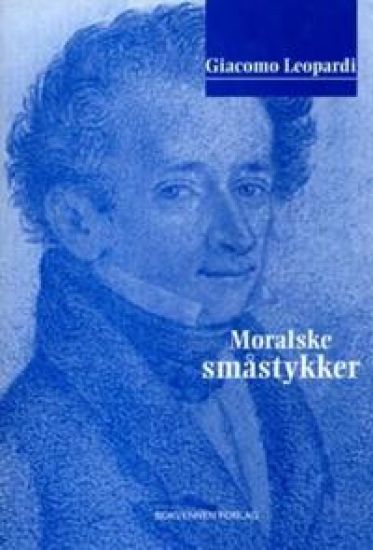
Bokens "moralske småstykker" uttrykker gjennom ironiske dialoger, burleske fortellinger og satiriske portretter en beskrivelse av livsleden som menneskets grunnholdning og egenart.
Discours Sur l'Etat Present Des Moeurs En Italie / Discorso Sopra Lo Stato Presente Dei Costumi Degl'italani
Giacomo Leopardi
Les Belles Lettres
2003
nidottu
Dans cette universelle dissolution des principes sociaux, dans ce chaos qui veritablement epouvante le coeur d'un philosophe - en suscitant chez lui les plus grands doutes sur le destin futur des societes civilisees, et en le jetant dans une incertitude profonde quant aux moyens qu'elles auront de perdurer et de subsister dans l'avenir -, les autres nations civilisees, c'est-a-dire la France, l'Angleterre et l'Allemagne, possedent un principe conservateur de moral et donc de la societe qui, bien qu'il paraisse etroit et presque grossier par rapport aux principes moraux et aux grandes illusions qui se sont perdus, n'en est pas moins d'un grand effet. Ce principe, c'est la societe elle-meme.

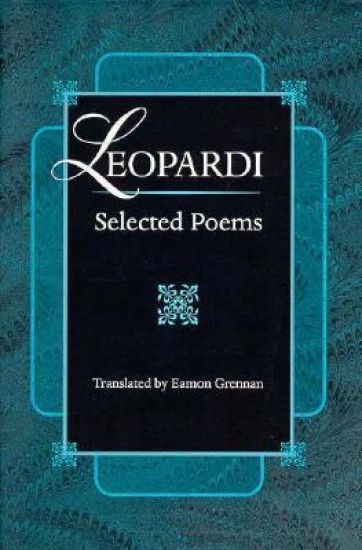
These translations of the major poems of Giacomo Leopardi (1798--1837) render into modern English verse the work of a writer who is widely regarded as the greatest lyric poet in the Italian literary tradition. In spite of this reputation, and in spite of a number of nineteenth-and twentieth-century translations, Leopardi's poems have never "come over" into English in such a way as to guarantee their author a recognition comparable to that of other great European Romantic poets. By catching something of Leopardi's cadences and tonality in a version that still reads as idiomatic modern English (with an occasional Irish or American accent), Leopardi: Selected Poems should win for the Italian poet the wider appreciative audience he deserves. His themes are mutability, landscape, love; his attitude, one of unflinching realism in the face of unavoidable human loss. But the manners of the poems are a unique amalgam of philosophical toughness and the lyrically bittersweet. In a way more pure and distilled than most others in the Western tradition, these poems are truly what Matthew Arnold asked all poetry to be, a "criticism of life." The translator's aim is to convey something of the profundity and something of the sheer poetic achievement of Leopardi's inestimable Canti.
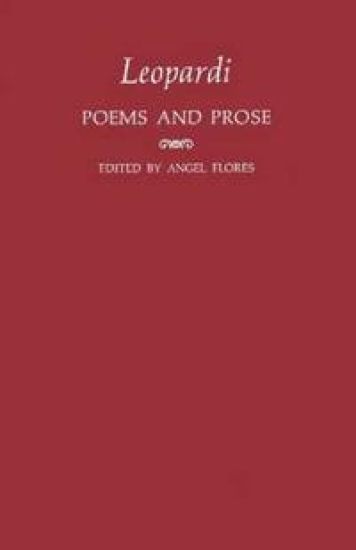
An anthology of the work of one of Italy's finest lyric poets.
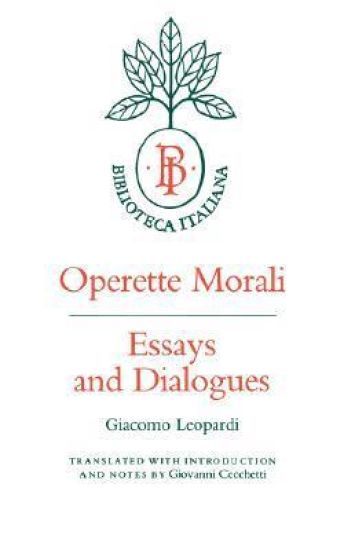
This series is conceived as a library of bilingual editions of works chosen for their importance to Italian literature and to the international tradition of art and thought Italy has nurtured. In each volume an Italian text in an authoritative edition is paired with a new facing-page translation supplemented by explanatory notes and a selected bibliography. An introduction provides a historical and critical interpretation of the work. The scholars preparing these volumes hope through Biblioteca ltaliana to point a straight way to the Italian classics. GENERAL EDITOR: Louise George ClubbEDITORIAL BOARDPaul J. Alpers, Vittore BrancaGene Brucker, Fredi ChiappelliPhillip W. Damon, Robert M. DurlingGianfranco Folena, Lauro MartinesNicolas J. Perella
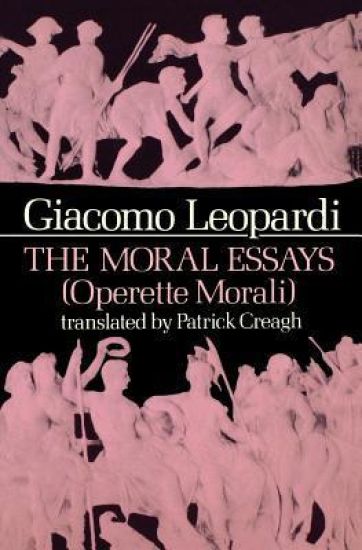
Newly awakened interest in Giacomo Leopardi (1798-1837), arguably the greatest Italian poet since the Renaissance, has resulted in this project to translate a major portion of his works. This volume is the first of four which will encompass the great Canti (in bilingual text), selections from the poet's correspondence, a substantial portion of his enormous intellectual journal, the Zibaldone, and the focus of the present volume, the Operette morali. Originally planned as a set of dialogues in the manner of Lucian, the Operette is a compilation of brief, interrelated works on questions of moral philosphy. By means of numerous characters, and by means of a range of styles, Leopardi grapples with a theory of pleasure, the concepts of fame, the infinite, human happiness, the function of poetry, and other topics. In the poet's own opinion, the Operette represented his major philosophical speculation and ranked just below his Canti.
The War of the Mice and the Crabs
Giacomo Leopardi
The University of North Carolina Press
1976
nidottu
Volume 164 in the North Carolina Studies in the Romance Languages and Literatures series.