Kirjailija
Gianpaolo Baiocchi
Kirjat ja teokset yhdessä paikassa: 11 kirjaa, julkaisuja vuosilta 2005-2026, suosituimpien joukossa Make the City Ours. Vertaile teosten hintoja ja tarkista saatavuus suomalaisista kirjakaupoista.
11 kirjaa
Kirjojen julkaisuhaarukka 2005-2026.
What would it take to decommodify New York City under a Zohran Mamdani mayoralty? This book connects policy, organizing, and collective power to show how cities can be reclaimed from the market. What would it take to build a decommodified city—not only in policy, but in practice, power, and everyday life? Written in the context of a new political moment in New York City, this book argues that transforming the city requires the growth of movement spaces rooted in connection, reciprocity, and collective action—spaces that decommodify not only housing, transit, care, and safety, but our relationships to one another. Balancing bold vision with grounded strategy, the authors move beyond issue-by-issue diagnosis to advance a full-fledged alternative for urban governance. They imagine how a municipal government could actively build a non-market city, while also cultivating the social solidarities and mass participation needed to sustain it over time. The focus is not only on affordability or service delivery, but on power: who governs the city, how decisions are made, and how residents participate as collective agents rather than passive consumers. Focusing on core areas of everyday life—housing, transportation, care work, schooling, and public safety—the book explores how decommodification can be achieved through mass governance strategies. Policy levers and institutional ingenuity can stabilize communities and reduce costs, but municipalist approaches are also designed to deepen democratic participation. They enable people to make greater demands on the city and to take part in running and governing shared systems, rather than simply receiving them. Heavy on vignettes from organizing and campaigns, the book bridges vision, policy, and critique to offer hopeful, movement-centered accounts of urban solidarity. It is attentive to the energy and joy of political campaigns, while insisting that lasting transformation requires forms of organization and governance that can outlast electoral cycles and scale beyond them. Distinctively, the authors show how the intellectual and ethical foundations of the commons can be institutionalized at the scale of a major city—through public ownership, participatory planning, and the democratic administration of housing, education, care, and infrastructure. The result is a movement-grounded blueprint for reclaiming the city as a shared political project.
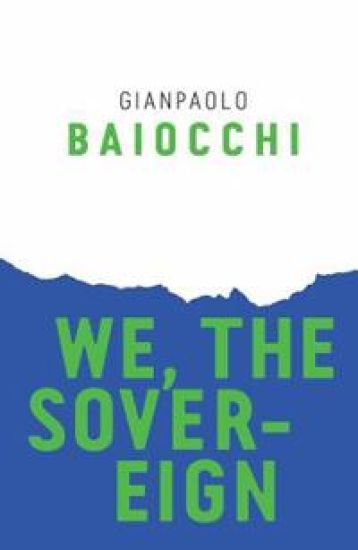
What does it mean for the people to actually rule? Formal democracy is an empty and cynical shell, while the nationalist Right claims to advance its anti-democratic project in the name of ‘the People’. How can the Left respond in a way that is true to both its radical egalitarianism and its desire to transform the real world? In this book, Gianpaolo Baiocchi argues that the only answer is a radical utopia of popular self-rule. This means that the ‘people’ who rule must be understood as a demos that is totally open, inclusive and egalitarian, constantly expanding its boundaries. But it also means that sovereignty must be absolute, possessing total power over all relevant decisions that impact the conditions of life. Only, he argues, by a process of explosive and creative tension between this radical view of the ‘we’ and an absolute idea of the ‘sovereign’ can we transform our approach to political parties and state institutions and make them instruments of total emancipation. Illustrated by the real-life experiences of movements throughout the world, from Latin America to Southern Europe, Baiocchi’s provocative vision will be essential reading for all activists who want to understand the true meaning of radical democracy in the 21st century.
Local participation is the new democratic imperative. In the United States, three-fourths of all cities have developed opportunities for citizen involvement in strategic planning. The World Bank has invested $85 billion over the last decade to support community participation worldwide. But even as these opportunities have become more popular, many contend that they have also become less connected to actual centers of power and the jurisdictions where issues relevant to communities are decided. With this book, Gianpaolo Baiocchi and Ernesto Ganuza consider the opportunities and challenges of democratic participation. Examining how one mechanism of participation has traveled the world—with its inception in Porto Alegre, Brazil, and spread to Europe and North America—they show how participatory instruments have become more focused on the formation of public opinion and are far less attentive to, or able to influence, actual reform. Though the current impact and benefit of participatory forms of government is far more ambiguous than its advocates would suggest, Popular Democracy concludes with suggestions of how participation could better achieve its political ideals.
Civic Imagination
Gianpaolo Baiocchi; Elizabeth A Bennett; Alissa Cordner; Peter Klein; Stephanie Savell
Paradigm
2014
nidottu
The Civic Imagination provides a rich empirical description of civic life and a broader discussion of the future of democracy in contemporary America. Over the course of a year, five researchers observed and participated in 7 civic organisations in a mid-sized US city. They draw on this ethnographic evidence to map the 'civic imaginations' that motivate citizenship engagement in America today. The book unpacks how contemporary Americans think about and act toward positive social and political change while the authors' findings challenge contemporary assertions of American apathy. This will be an important book for students and academics interested in political science and sociology.
Civic Imagination
Gianpaolo Baiocchi; Elizabeth A Bennett; Alissa Cordner; Peter Klein; Stephanie Savell
Paradigm
2013
sidottu
The Civic Imagination provides a rich empirical description of civic life and a broader discussion of the future of democracy in contemporary America. Over the course of a year, five researchers observed and participated in 7 civic organisations in a mid-sized US city. They draw on this ethnographic evidence to map the 'civic imaginations' that motivate citizenship engagement in America today. The book unpacks how contemporary Americans think about and act toward positive social and political change while the authors' findings challenge contemporary assertions of American apathy. This will be an important book for students and academics interested in political science and sociology.
Bootstrapping Democracy
Gianpaolo Baiocchi; Patrick Heller; Marcelo Silva
Stanford University Press
2011
sidottu
Despite increasing interest in how involvement in local government can improve governance and lead to civic renewal, questions remain about participation's real impact. This book investigates participatory budgeting—a mainstay now of World Bank, UNDP, and USAID development programs—to ask whether its reforms truly make a difference in deepening democracy and empowering civil society. Looking closely at eight cities in Brazil, comparing those that carried out participatory budgeting reforms between 1997 and 2000 with those that did not, the authors examine whether and how institutional reforms take effect. Bootstrapping Democracy highlights the importance of local-level innovations and democratic advances, charting a middle path between those who theorize that globalization hollows out democracy and those who celebrate globalization as a means of fostering democratic values. Uncovering the state's role in creating an "associational environment," it reveals the contradictory ways institutional reforms shape the democratic capabilities of civil society and how outcomes are conditioned by relations between the state and civil society.
Bootstrapping Democracy
Gianpaolo Baiocchi; Patrick Heller; Marcelo Silva
Stanford University Press
2011
pokkari
Despite increasing interest in how involvement in local government can improve governance and lead to civic renewal, questions remain about participation's real impact. This book investigates participatory budgeting—a mainstay now of World Bank, UNDP, and USAID development programs—to ask whether its reforms truly make a difference in deepening democracy and empowering civil society. Looking closely at eight cities in Brazil, comparing those that carried out participatory budgeting reforms between 1997 and 2000 with those that did not, the authors examine whether and how institutional reforms take effect. Bootstrapping Democracy highlights the importance of local-level innovations and democratic advances, charting a middle path between those who theorize that globalization hollows out democracy and those who celebrate globalization as a means of fostering democratic values. Uncovering the state's role in creating an "associational environment," it reveals the contradictory ways institutional reforms shape the democratic capabilities of civil society and how outcomes are conditioned by relations between the state and civil society.
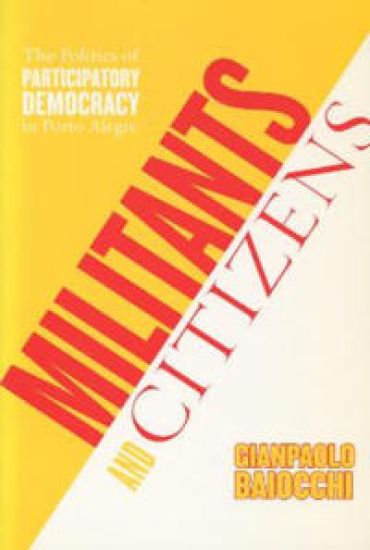
Brazil's democracy has frequently been described as unconsolidated, its citizens as apathetic and uninterested in politics. But in Porto Alegre, a host city to the World Social Forum, thousands of ordinary citizens participate in local governance, making binding decisions on urban policy on a daily basis. While there has been immense attention paid to the practice of participatory democracy in Porto Alegre, this is the first book to examine the politics, culture, and day-to-day activities of its citizens. Drawing on the rich tradition of urban ethnography and political theory, the book argues that Porto Alegre's importance may lie not just with its effective governance, but with its new political logic, namely a greater access to government functions and government officials for traditionally disenfranchised citizens. In an age characterized by seemingly strong voter apathy, this study has global implications. The author shows that in the discussions on the failings of democracy in industrialized countries like the United States, most people may be missing what is central to civic engagement—unimpeded access to government.