

Kirjailija
Gideon Rose
Kirjat ja teokset yhdessä paikassa: 28 kirjaa, julkaisuja vuosilta 2001-2018, suosituimpien joukossa How Did This Happen?. Vertaile teosten hintoja ja tarkista saatavuus suomalaisista kirjakaupoista.
28 kirjaa
Kirjojen julkaisuhaarukka 2001-2018.


Ever since its founding in 1947, India has prompted both lofty expectations and frequent disappointment about its economic potential and international role. But given turbulence around the world, challenges in India's own region, and growth and dynamism within India itself, the question of where the country goes from here has never mattered more than it does now, 70 years after its violent birth. Understanding its course demands analysis of not just the forces of India's present but also the forces of its past. At Foreign Affairs, we have been charting India's successive transformations from the beginning. Give this collection a read to understand how the world's most populous country will impact the future of Asia, geopolitics, and the global economy.

At Foreign Affairs, we've been tracking Korea since before the peninsula was divided, and we've collected these highlights from our coverage to put the current uproar over North Korea's weapons program into proper context. A failure of deterrence would be devastating, so even small changes in the odds are worth watching closely. And new situations may call for new tactics to strengthen deterrence or seize opportunities for diplomatic progress. But as so often in the past when dealing with this problem, wise policymakers today would try to dampen tensions rather than escalate them. To understand why, read the book.


The Fourth Industrial Revolution: A Davos Reader
Gideon Rose
COUNCIL ON FOREIGN RELATIONS
2016
nidottu
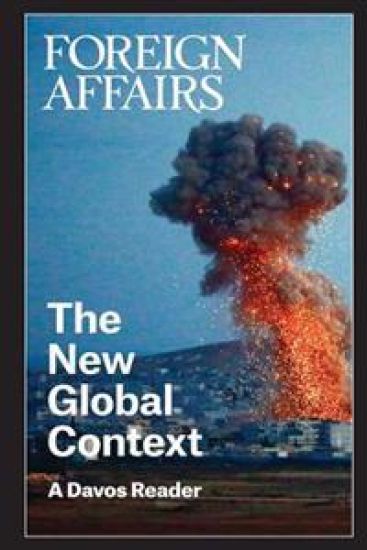
From social media to the Internet of Things, digital fabrication to robotics, virtual reality to synthetic biology, new technologies are racing forward across the board. Together they are ripping up the rule book for people, firms, and governments alike. Mastering this so-called Fourth Industrial Revolution is the theme of the World Economic Forum's 2016 Annual Meeting, for which this special collection serves as background reading. Klaus Schwab kicks things off with an overview of the topic, followed by sections on the technological trends driving the revolution; those trends' economic, social, and political impacts; and the resulting challenges for policy. Drawn from the pages of Foreign Affairs and the pixels of ForeignAffairs.com, the articles feature world-class experts explaining crucial issues clearly, directly, and authoritatively. We hope you enjoy the collection and come back for more.
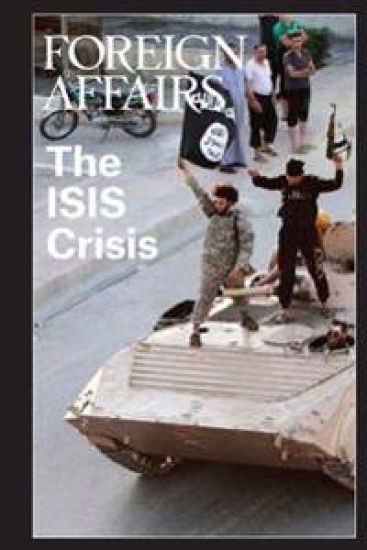
Between our classic print magazine and our award-winning website, we've published more than 500 articles this year-on everything from Vladimir Putin's Russia to the euro crisis to how to deal with the self-proclaimed Islamic State. We're proud of all our content, but every year there are a few pieces that really stand out from the pack. So we've compiled some of our favorites into this anthology for handy reference. Our diverse offerings include Kenan Malik's "The Failure of Multiculturalism," which argues that Europe's integration policies have entrenched divisions rather than erased them, and Ira Trivedi's "When a Bride-to-Be Is a Bride to Buy," an eye-opening piece on India's bride shortage and how it has fueled the trafficking of young women. From Greece's financial problems to the Islamic State's statecraft, the decline of international studies in the American academy to the stagnation of reforms in China, we've covered it all. We hope you enjoy the collection and come back for more in 2016



When the latest round of Middle East peace talks collapsed earlier this year, experienced observers knew that it was only a matter of time before the Israeli-Palestinian conflict blew up once again. And sure enough, a few weeks later, it did-in Gaza. The war has died down since then, but this is a story without a happy ending-another chapter in a never-ending struggle. We've brought together high-level commentary by our authors to provide the context, background, and forward-looking analysis that you need to understand the issues involved. The arguments presented span the political spectrum, and the authors include world-renowned experts from several disciplines, backgrounds, and countries, including Benedetta Berti, Daniel Byman, Thanassis Cambanis, Robert Danin, Zack Gold, Michael Herzog, Hussein Ibish, Martin Indyk, Barak Mendelsohn, Ariel Ilan Roth, Barry Rubin, and Khalil Shikaki. We give you everything you need to understand the world today-not just the news but the context and intellectual tools to interpret it properly.