Kirjojen hintavertailu. Mukana 12 390 323 kirjaa ja 12 kauppaa.

Kirjailija

Gilberto Q. Conchas

Kirjat ja teokset yhdessä paikassa: 6 kirjaa, julkaisuja vuosilta 2012-2024, suosituimpien joukossa The Chicana/o/x Dream. Vertaile teosten hintoja ja tarkista saatavuus suomalaisista kirjakaupoista.

6 kirjaa

Kirjojen julkaisuhaarukka 2012-2024.

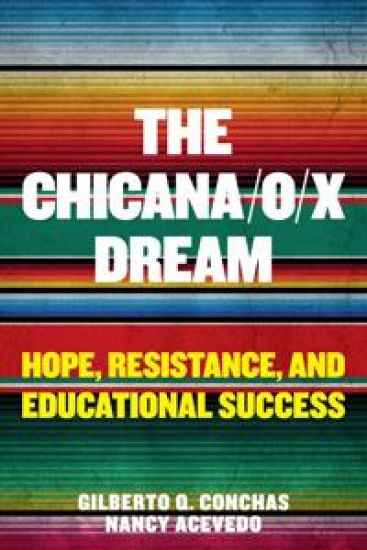
The Chicana/o/x Dream

The Chicana/o/x Dream

Gilberto Q. Conchas; Nancy Acevedo; Dolores Delgado Bernal

Harvard Educational Publishing Group
2020
nidottu
Based on interview data, life testimonios, and Chicana feminist theories, The Chicana/o/x Dream profiles first-generation, Mexican-descent college students who have overcome adversity by utilizing various forms of cultural capital to power their academic success. While college enrollment rates for Chicana/o/x students have steadily increased over the last decade, this cohort still faces significant barriers to academic achievement, including minimal information about college and limited access to the kind of preparation and advising that will help them get there. As a result, Chicana/o/x students maintain stubbornly low four-year completion rates. Against this backdrop, Gilberto Q. Conchas and Nancy Acevedo address the mechanisms that shape the achievement, aspirations, and expectations of Chicana/o/x students who grew up in marginalized communities and unequal school contexts and share success stories about this growing population of students. Conchas and Acevedo elevate the voices of students at a research university and in the community college sector to reveal important issues and factors impacting and shaping the students' academic journeys. The college-age men and women in the narratives evince hope, resistance, and empowerment in the face of marginalization, anti-immigration sentiment, poverty, and an education system that too often reinforces deficit-minded stereotypes. The authors critique the educational policies and practices that systematically fail to champion Chicana/o/x success and examine the use of community cultural wealth that supports US-born and US immigrant students of Mexican descent to make their achievement possible. In so doing, the authors look toward the future by highlighting the actions that Chicana/o/x students take in creating bridges between K–12 to college and between their communities and higher education.The Chicana/o/x Dream helps define the heart and soul of tomorrow's America and elucidates how Chicana/o/x college students maintain hope, enact resistance, and succeed against injustice. The book offers a call to action to K–20 educators and administrators to develop better supports to foster the success of Mexican-descent students.

The Chicana/o/x Dream

The Chicana/o/x Dream

Gilberto Q. Conchas; Nancy Acevedo; Dolores Delgado Bernal

Harvard Educational Publishing Group
2020
sidottu
Based on interview data, life testimonios, and Chicana feminist theories, The Chicana/o/x Dream profiles first-generation, Mexican-descent college students who have overcome adversity by utilizing various forms of cultural capital to power their academic success. While college enrollment rates for Chicana/o/x students have steadily increased over the last decade, this cohort still faces significant barriers to academic achievement, including minimal information about college and limited access to the kind of preparation and advising that will help them get there. As a result, Chicana/o/x students maintain stubbornly low four-year completion rates. Against this backdrop, Gilberto Q. Conchas and Nancy Acevedo address the mechanisms that shape the achievement, aspirations, and expectations of Chicana/o/x students who grew up in marginalized communities and unequal school contexts and share success stories about this growing population of students. Conchas and Acevedo elevate the voices of students at a research university and in the community college sector to reveal important issues and factors impacting and shaping the students' academic journeys. The college-age men and women in the narratives evince hope, resistance, and empowerment in the face of marginalization, anti-immigration sentiment, poverty, and an education system that too often reinforces deficit-minded stereotypes. The authors critique the educational policies and practices that systematically fail to champion Chicana/o/x success and examine the use of community cultural wealth that supports US-born and US immigrant students of Mexican descent to make their achievement possible. In so doing, the authors look toward the future by highlighting the actions that Chicana/o/x students take in creating bridges between K–12 to college and between their communities and higher education.The Chicana/o/x Dream helps define the heart and soul of tomorrow's America and elucidates how Chicana/o/x college students maintain hope, enact resistance, and succeed against injustice. The book offers a call to action to K–20 educators and administrators to develop better supports to foster the success of Mexican-descent students.
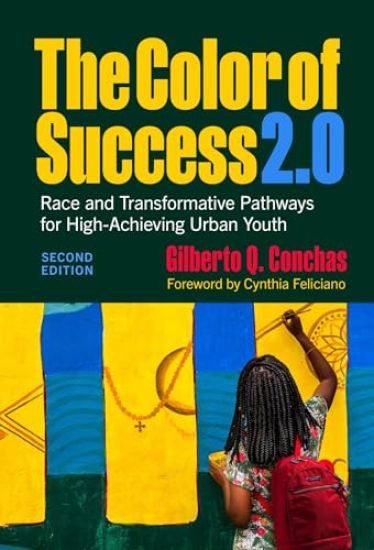
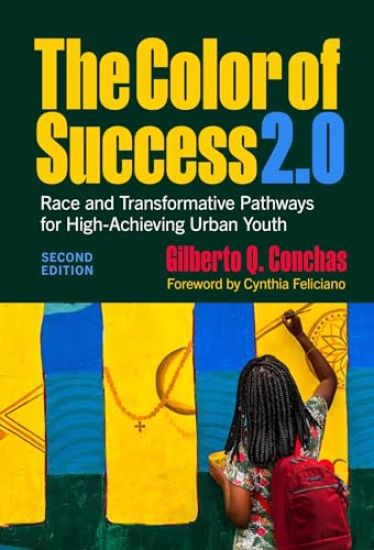
The Color of Success 2.0

The Color of Success 2.0

Gilberto Q. Conchas; Cynthia Feliciano

TEACHERS' COLLEGE PRESS
2024
nidottu
The first edition of The Color of Success was a groundbreaking, asset-based exploration of the educational trajectories of high-achieving, low-income students within urban schools. The author brings his now seminal book up to date with insights based on existing and new research, current policies, and innovative pedagogical approaches. Conchas utilizes a critical lens to examine the intersectional identities of racially minoritized students, the role of existing power hierarchies within schools, and offers specific structural approaches that create educational opportunity. The Color of Success 2.0 amplifies student voice; explores school, family, and community partnerships; promotes culturally relevant pedagogy and teacher preparation; includes a new chapter on Black male optimism after the historic election of President Barack Obama; and offers a thought-provoking additional chapter on the role of educational leaders in promoting successful school pathways; plus, a thoroughly revised quantitative chapter on social capital. With a sense of urgency, readers will gain vital insights for understanding what is needed to create, promote, and expand equitable school environments and transformative pathways for racially minoritized urban youth. Book Features:Takes a rare look at Black, Latinx, and Vietnamese urban school success stories, instead of those depicting failure.Includes narratives and perspectives of students' daily struggles, affirmations, and successes in their quest to navigate school and beyond.Uses mixed-methods research to respond to the challenges of a new post-pandemic political reality of racial unrest and an unequal social landscape.Examines the role of educational leaders' responsibility as change agents to provide equitable and dynamic pathways for success.
The Color of Success 2.0

The Color of Success 2.0

Gilberto Q. Conchas; Cynthia Feliciano

TEACHERS' COLLEGE PRESS
2024
sidottu
The first edition of The Color of Success was a groundbreaking, asset-based exploration of the educational trajectories of high-achieving, low-income students within urban schools. The author brings his now seminal book up to date with insights based on existing and new research, current policies, and innovative pedagogical approaches. Conchas utilizes a critical lens to examine the intersectional identities of racially minoritized students, the role of existing power hierarchies within schools, and offers specific structural approaches that create educational opportunity. The Color of Success 2.0 amplifies student voice; explores school, family, and community partnerships; promotes culturally relevant pedagogy and teacher preparation; includes a new chapter on Black male optimism after the historic election of President Barack Obama; and offers a thought-provoking additional chapter on the role of educational leaders in promoting successful school pathways; plus, a thoroughly revised quantitative chapter on social capital. With a sense of urgency, readers will gain vital insights for understanding what is needed to create, promote, and expand equitable school environments and transformative pathways for racially minoritized urban youth. Book Features:Takes a rare look at Black, Latinx, and Vietnamese urban school success stories, instead of those depicting failure.Includes narratives and perspectives of students' daily struggles, affirmations, and successes in their quest to navigate school and beyond.Uses mixed-methods research to respond to the challenges of a new post-pandemic political reality of racial unrest and an unequal social landscape.Examines the role of educational leaders' responsibility as change agents to provide equitable and dynamic pathways for success.
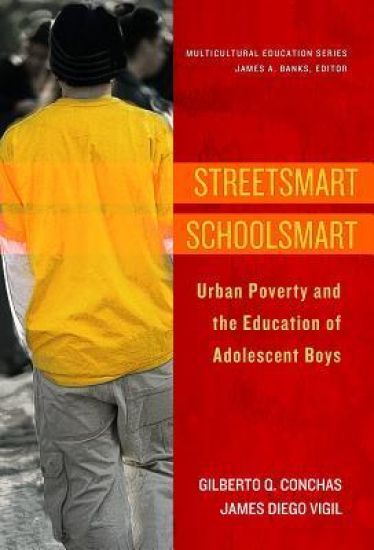
Streetsmart Schoolsmart

Streetsmart Schoolsmart

Gilberto Q. Conchas; James Diego Vigil

Teachers' College Press
2012
sidottu
In Streetsmart Schoolsmart, two respected scholars present original research on youth gangs and school success to explain why some boys become disengaged and join gangs while others do not. Chapters vividly describe how urban boys from different ethnic backgrounds (Asian, African American, and Latino) approach schooling and identify the sociocultural factors that affect their choices. The authors concentrate on three areas: (1) the role of marginalised communities in the formation of urban gang youth, (2) the role of community-based organisations in reengaging urban youth, and (3) the role of schools in creating opportunities for urban boys to succeed despite disparities in their economic and social circumstances. Streetsmart Schoolsmart points the way toward important changes that can break the cycle of poverty in American neighbourhoods and society. It is essential reading for educators and all professionals working with urban youth, and anyone concerned with the success of young boys.
Streetsmart Schoolsmart

Streetsmart Schoolsmart

Gilberto Q. Conchas; James Diego Vigil

Teachers' College Press
2012
nidottu
In Streetsmart Schoolsmart, two respected scholars present original research on youth gangs and school success to explain why some boys become disengaged and join gangs while others do not. Chapters vividly describe how urban boys from different ethnic backgrounds (Asian, African American, and Latino) approach schooling and identify the sociocultural factors that affect their choices. The authors concentrate on three areas: (1) the role of marginalised communities in the formation of urban gang youth, (2) the role of community-based organisations in reengaging urban youth, and (3) the role of schools in creating opportunities for urban boys to succeed despite disparities in their economic and social circumstances. Streetsmart Schoolsmart points the way toward important changes that can break the cycle of poverty in American neighbourhoods and society. It is essential reading for educators and all professionals working with urban youth, and anyone concerned with the success of young boys.