Kirjojen hintavertailu. Mukana 12 657 676 kirjaa ja 12 kauppaa.
Kirjailija
Giliberto Capano
Kirjat ja teokset yhdessä paikassa: 7 kirjaa, julkaisuja vuosilta 2017-2026, suosituimpien joukossa The Politics of Detail. Vertaile teosten hintoja ja tarkista saatavuus suomalaisista kirjakaupoista.
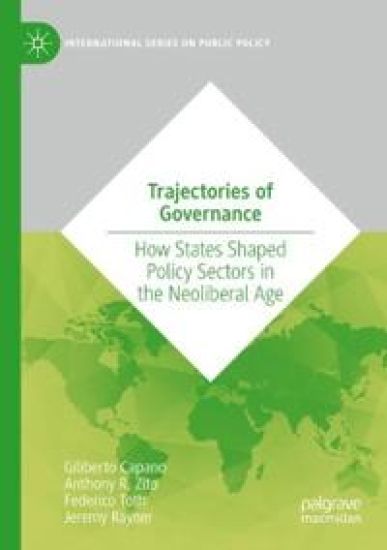
This book assesses how governance has evolved in six nations – England, Australia, Canada, Germany, Italy, and the Netherlands – between 1970 and 2018. More specifically, it examines how the governance approaches and the sets of policy tools used to govern have altered with respect to four public policy sectors that represent core responsibilities of the modern OECD state: education, energy, environment and health. To structure this analytical approach, the book harnesses sociological institutionalism in the area of ‘policy sequencing’ to trace both the motivations and the consequences of policy-makers’ altering governance approaches and the resulting policy tools. Combining a comparative and international focus, this book will appeal to scholars and students of public policy and governance.
This open access book offers a systematic survey of the attitudes and values of European political scientists. It builds a structural interpretation based on empirical data, as well as offering reflections on the future structure of the discipline. In the middle of a delicate phase of changes marked by the effects of pandemic and the war in Ukraine, we need to pay attention to the factors that are affecting not only the ‘objects’ of Political Science as a discipline but also its interactions with the world around it. First, this book asks to what extent the work of European political scientists is impacted by the current change. Second, their attitudes and predisposition about the future goals of the discipline are analysed. In the final chapter, the authors seek to understand to what extent a diffuse but still not completely institutionalized academic discipline will be able to produce a comprehensive impact around the European society, in order to be more visible and effective in policy making and policy processes.
This open access book offers a systematic survey of the attitudes and values of European political scientists. It builds a structural interpretation based on empirical data, as well as offering reflections on the future structure of the discipline. In the middle of a delicate phase of changes marked by the effects of pandemic and the war in Ukraine, we need to pay attention to the factors that are affecting not only the ‘objects’ of Political Science as a discipline but also its interactions with the world around it. First, this book asks to what extent the work of European political scientists is impacted by the current change. Second, their attitudes and predisposition about the future goals of the discipline are analysed. In the final chapter, the authors seek to understand to what extent a diffuse but still not completely institutionalized academic discipline will be able to produce a comprehensive impact around the European society, in order to be more visible and effective in policy making and policy processes.
This book assesses how governance has evolved in six nations – England, Australia, Canada, Germany, Italy, and the Netherlands – between 1970 and 2018. More specifically, it examines how the governance approaches and the sets of policy tools used to govern have altered with respect to four public policy sectors that represent core responsibilities of the modern OECD state: education, energy, environment and health. To structure this analytical approach, the book harnesses sociological institutionalism in the area of ‘policy sequencing’ to trace both the motivations and the consequences of policy-makers’ altering governance approaches and the resulting policy tools. Combining a comparative and international focus, this book will appeal to scholars and students of public policy and governance.
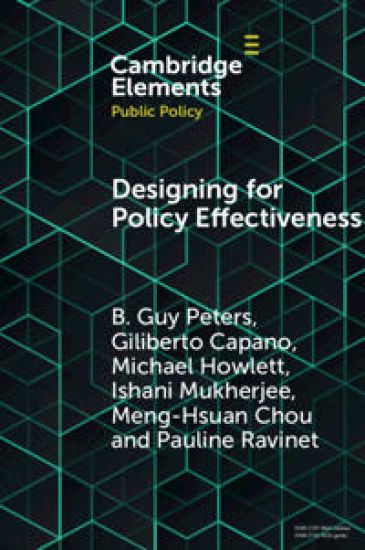
The field of policy studies has always been interested in analyzing and improving the sets of policy tools adopted by governments to correct policy problems, and better understanding and improving processes of policy analysis and policy formulation in order to do so. Past studies have helped clarify the role of historical processes, policy capacities and design intentions in affecting policy formulation processes, and more recently in understanding how the bundling of multiple policy elements together to meet policy goals can be better understood and done. While this work has progressed, however, the discussion of what goals policy designs should serve remains disjointed. Here it is argued that a central goal, in fact, 'the' central goal, of policy design is effectiveness. Effectiveness serves as the basic goal of any design, upon which is built other goals such as efficiency or equity.
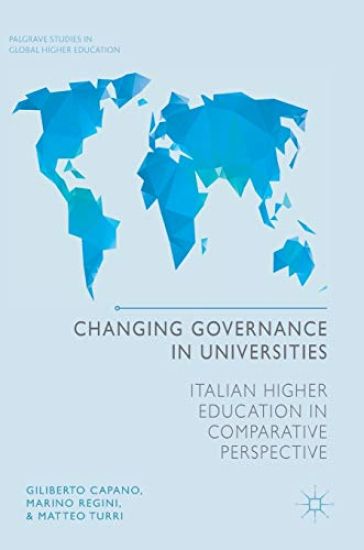
This book critically examines the ramifications of reforms to higher education institutions. All of the higher education system reforms implemented in western countries over the last three decades have had one fundamentally important aim: namely, that of changing the existing institutional and system governance arrangements. This book argues that within this general framework, Italy is a relative latecomer to a scenario where attempts at university reform have been characterized by considerable difficulties, and have been blighted by the arguably poor quality of policy design. By focusing on the Italian reform trajectory as an emblematic case, and providing a comprehensive of the historical evolution of higher education in Italy and further afield, this book adopts a comparative perspective to show how reforms of governance in higher education may achieve different degrees of success depending on the characteristics of their policy design, and why these reforms inevitably lead to a series of unintended consequences. It will be vital reading for those interested in education policy and the history of education.