Kirjojen hintavertailu. Mukana 12 246 888 kirjaa ja 12 kauppaa.
Kirjailija
Gill Valentine
Kirjat ja teokset yhdessä paikassa: 17 kirjaa, julkaisuja vuosilta 1995-2020, suosituimpien joukossa Public Space and the Culture of Childhood. Vertaile teosten hintoja ja tarkista saatavuus suomalaisista kirjakaupoista.
Children are at the heart of popular and public debates in North America and Europe about the culture of public space. On the one hand there is increased anxiety about children's vulnerability to stranger danger, on the other there is a rising tide of fear about out of control and dangerous youth. This book addresses both these debates about children's role in public space, setting them within an academic framework and drawing on a range of interdisciplinary work on childhood, young people and parenting. It is therefore relevant to practitioners and policy makers concerned with the nature and future of public space, and to academics researching or teaching about childhood, family or public space in the disciplines of sociology, social policy and geography.
Drawing together international research from the fields of geography, alcohol studies, sociology, psychology and childhood studies, Jayne and Valentine explore children‘s understandings and experiences of alcohol consumption and the role of alcohol in family life. Chapters address both extra-familialnorms about parenting and drinking cultures which are generated in wider society (through law/regulation, media/advertising and social networks etc.) and intra-familialnorms including the modelling behaviour of family members attitudes to alcohol, drinking habits and practices, rules and guidance, and initiating children to drinking. Based on empirical research undertaken in the UK, and drawing on studies from around the world, Childhood, Family, Alcohol advances theoretical debates and offers insights relevant to policy and practice by: · adopting a cross-generational perspective on drinking cultures · exploring pre-teen children‘s understandings of alcohol · focusing on the significance of the spaces of everyday family life · considering adult alcohol consumption, drinking practices and drunken performativities · reflecting on social/individualized consumption, social reproduction, adult-children interaction and materialities · showing the importance of non-(and more-than) representational understanding of the complexities of childhood, family life and alcohol consumption.
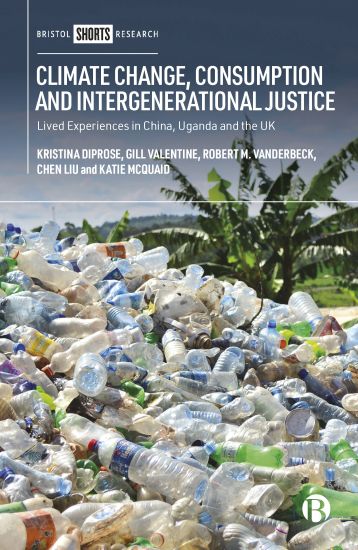
The United Nations 2030 Agenda for Sustainable Development makes climate change and responsible consumption key priorities for both industrialized and emerging economies. Moving beyond the Global North, this book uses innovative cross-national and cross-generational research with urban residents in China and Uganda, as well as the UK, to illuminate international debates about building sustainable societies and to examine how different cultures think about past, present and future responsibility for climate change. The authors explore to what extent different nations see climate change as a domestic issue, whilst looking at local explanatory and blame narratives to consider profound questions of justice between those nations that are more and less responsible for, and vulnerable to, climate change.
Space and Society. This book focuses on eight spatial scales body, home, community, institutions, the street, the city, rural and nation. Each of these spaces represents the intersection of a range of connections, interrelations and movements of different people who have very different ways of participating in, understanding or belonging to them. Each chapter therefore explores how social identities gender, race, class, sexuality and relations are constructed in, and through these spaces, and how the meanings and uses of these spaces are contested by their different occupants. Questions of homogeneity and difference, control and
Drawing together international research from the fields of geography, alcohol studies, sociology, psychology and childhood studies, Jayne and Valentine explore children‘s understandings and experiences of alcohol consumption and the role of alcohol in family life. Chapters address both extra-familialnorms about parenting and drinking cultures which are generated in wider society (through law/regulation, media/advertising and social networks etc.) and intra-familialnorms including the modelling behaviour of family members attitudes to alcohol, drinking habits and practices, rules and guidance, and initiating children to drinking. Based on empirical research undertaken in the UK, and drawing on studies from around the world, Childhood, Family, Alcohol advances theoretical debates and offers insights relevant to policy and practice by: · adopting a cross-generational perspective on drinking cultures · exploring pre-teen children‘s understandings of alcohol · focusing on the significance of the spaces of everyday family life · considering adult alcohol consumption, drinking practices and drunken performativities · reflecting on social/individualized consumption, social reproduction, adult-children interaction and materialities · showing the importance of non-(and more-than) representational understanding of the complexities of childhood, family life and alcohol consumption.
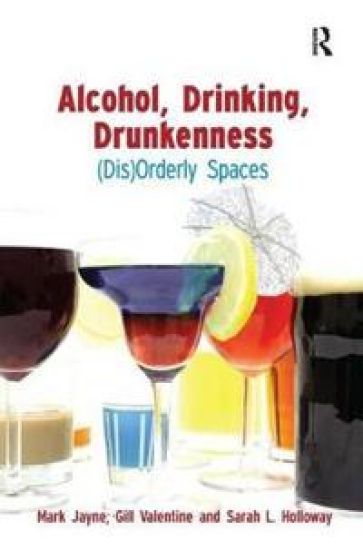
While disciplines such as anthropology, sociology, politics, social policy and the health and medical sciences have a tradition of exploring the centrality of alcohol, drinking and drunkenness to people's lives, geographers have only previously addressed these topics as a peripheral concern. Over the past few years, however, this view has begun to change, accelerated by an upsurge in interest in alcohol consumption relating to political and popular debate in countries throughout the world. This book represents the first systematic overview of geographies of alcohol, drinking and drunkenness. It asks what role alcohol, drinking and drunkenness plays in people's lives and how space and place are key constituents of alcohol consumption. It also examines the economic, political, social, cultural and spatial practices and processes that are bound up with alcohol, drinking and drunkenness. Designed as a reference text, each chapter blends theoretical material with empirical case studies in order to analyse drinking in public and private space, in the city and the countryside, as well as focusing on gender, generations, ethnicity and emotional and embodied geographies.
Most social geography undergraduate textbooks are structured around different social categories, splintering the discussion of gender, class, race and increasingly now sexuality and disability, into separate chapters. This has the effect, firstly, of making social relations rather than space (the raison d'etre of human geography) the focus of undergraduate books; secondly of ignoring the way that social relations are negotiated and contested in different space. Rather than reproducing this conventional social geography format the aim of this proposed text is to make space the focus of analysis. In doing so the intention is to make complex theoretical debates about space more accessible to students and encourage them to look at their own environments in new ways.
While disciplines such as anthropology, sociology, politics, social policy and the health and medical sciences have a tradition of exploring the centrality of alcohol, drinking and drunkenness to people's lives, geographers have only previously addressed these topics as a peripheral concern. Over the past few years, however, this view has begun to change, accelerated by an upsurge in interest in alcohol consumption relating to political and popular debate in countries throughout the world. This book represents the first systematic overview of geographies of alcohol, drinking and drunkenness. It asks what role alcohol, drinking and drunkenness plays in people's lives and how space and place are key constituents of alcohol consumption. It also examines the economic, political, social, cultural and spatial practices and processes that are bound up with alcohol, drinking and drunkenness. Designed as a reference text, each chapter blends theoretical material with empirical case studies in order to analyse drinking in public and private space, in the city and the countryside, as well as focusing on gender, generations, ethnicity and emotional and embodied geographies.
Children are at the heart of popular and public debates in North America and Europe about the culture of public space. On the one hand there is increased anxiety about children's vulnerability to stranger danger, on the other there is a rising tide of fear about out of control and dangerous youth. This book addresses both these debates about children's role in public space, setting them within an academic framework and drawing on a range of interdisciplinary work on childhood, young people and parenting. It is therefore relevant to practitioners and policy makers concerned with the nature and future of public space, and to academics researching or teaching about childhood, family or public space in the disciplines of sociology, social policy and geography.
Draws upon resources in the sociology of childhood and the social aspects of technology to discuss children and their relationships, identities, and friendships as they are impacted by increasingly technological environments.
As Tony Blair has said,"Technology has revolutionised the way we work and is now set to transform education. Children cannot be effective in tomorrow's world if they are trained in yesterday's skills."Cyberkids draws together research in the sociology of childhood and social studies of technology to explore children's experiences in the Information Age. The book addresses key policy debates about social inclusion and exclusion, children's identities and friendships in on-line and off-line worlds and their relationships with families and teachers. It counters contemporary moral panics about children's risk from dangerous strangers on-line, about corruption and lost innocence from adult-centred material on the web and about the addiction to life on the screen. Instead, by showing how children use ICT in balanced and sophisticated ways, the book draws out the importance of everyday uses of technology and the ways in which children's local experiences are embedded within, and in part, constitute the global.
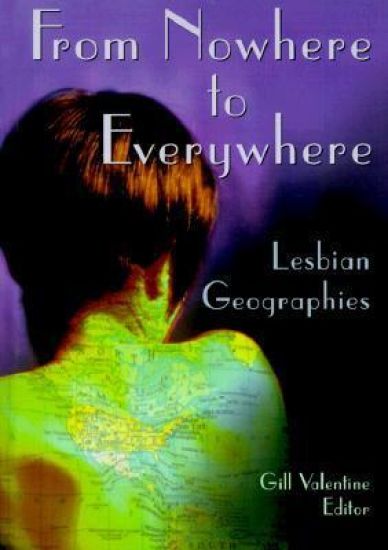
Explore how lesbians have become more visible in our society!This fascinating book traces the development of lesbian geographies throughout history and examines intangible and physical space that is defined by lesbians. Through intellectual and powerful essays and poems, From Nowhere to Everywhere reveals how lesbian identities and lifestyles today are becoming more publicly articulated in the urban and rural landscape.Throughout this valuable reference you will explore visibility and geographical concepts of “public” and “private” space in the workplace, the home, the university, the street, and the neighborhood and how this space is identified by such things as dress, language, music, and many other ways. You will gain an insider's look at the many facets of lesbian homes, communities, and neighborhoods, including:the multiple meanings of lesbian homes, in relation to race, class, religious, or ethnic identity, and as places of liberation and oppression due to harassment opposing views of lesbians and the myths and stereotypes of lesbians in the East-end and West-end of Vancouver how white, feminist anti-violence activism is being used in anti-oppression struggles a personal geography of harassment an exploration of feminist prototypes, (Salamander, Dryad, Soothsayer, and Virgin), and lesbian interpretations of these archetypes social support, coming out, and relationship satisfaction in lesbian couplesFrom Nowhere to Everywhere is a powerful collection of essays that marks a step forward in the transformation in visibility of lesbian geographies and geographers from nowhere and everywhere.
Explore how lesbians have become more visible in our society!This fascinating book traces the development of lesbian geographies throughout history and examines intangible and physical space that is defined by lesbians. Through intellectual and powerful essays and poems, From Nowhere to Everywhere reveals how lesbian identities and lifestyles today are becoming more publicly articulated in the urban and rural landscape.Throughout this valuable reference you will explore visibility and geographical concepts of “public” and “private” space in the workplace, the home, the university, the street, and the neighborhood and how this space is identified by such things as dress, language, music, and many other ways. You will gain an insider's look at the many facets of lesbian homes, communities, and neighborhoods, including:the multiple meanings of lesbian homes, in relation to race, class, religious, or ethnic identity, and as places of liberation and oppression due to harassment opposing views of lesbians and the myths and stereotypes of lesbians in the East-end and West-end of Vancouver how white, feminist anti-violence activism is being used in anti-oppression struggles a personal geography of harassment an exploration of feminist prototypes, (Salamander, Dryad, Soothsayer, and Virgin), and lesbian interpretations of these archetypes social support, coming out, and relationship satisfaction in lesbian couplesFrom Nowhere to Everywhere is a powerful collection of essays that marks a step forward in the transformation in visibility of lesbian geographies and geographers from nowhere and everywhere.
Food occupies a seemingly mundane position in all our lives, yet the ways we think about shopping, cooking and eating are actually intensely reflexive. The daily pick and mix of our eating habits is one way we experience spatial scale. From the relationship of our food intake to our body-shape, to the impact of our tastes upon global food-production regimes, we all read food consumption as a practice which impacts on our sense of place.Drawing on anthropological, sociological and cultural readings of food consumption, as well as empirical material on shopping, cooking, food technology and the food media, this book demonstrates the importance of space and place in identity formation. We all think place (and) identity through food - we are where we eat!
Food occupies a seemingly mundane position in all our lives, yet the ways we think about shopping, cooking and eating are actually intensely reflexive. The daily pick and mix of our eating habits is one way we experience spatial scale. From the relationship of our food intake to our body-shape, to the impact of our tastes upon global food-production regimes, we all read food consumption as a practice which impacts on our sense of place.Drawing on anthropological, sociological and cultural readings of food consumption, as well as empirical material on shopping, cooking, food technology and the food media, this book demonstrates the importance of space and place in identity formation. We all think place (and) identity through food - we are where we eat!
This is the first book to explore sexualities from a geographical perspective. The nature of place and notions of space are of increasing centrality to cultural and social theory. Mapping Desire presents the rich and diverse world of contemporary sexuality, exploring how the heterosexual body has been appropriated and resisted on the individual, community and city scales. The geographies presented here range across Europe, America, Australasia, Africa, the Pacific and the imaginary, cutting across city and country and analysing the positions of gay men, lesbians, bisexuals and heterosexuals. The contributors ring different interests and approaches to bear on theoretical and empirical material from a wide range of sources. The book is divided into four sections: cartographies/identities; sexualised spaces: global/local; sexualised spaces: local/global; sites of resistance. Each section is separately introduced. Beyond the bibliography, an annotated guide to further reading is also provided to help the reader map their own way through the literature.
This is the first book to explore sexualities from a geographical perspective. The nature of place and notions of space are of increasing centrality to cultural and social theory. Mapping Desire presents the rich and diverse world of contemporary sexuality, exploring how the heterosexual body has been appropriated and resisted on the individual, community and city scales. The geographies presented here range across Europe, America, Australasia, Africa, the Pacific and the imaginary, cutting across city and country and analysing the positions of gay men, lesbians, bisexuals and heterosexuals. The contributors ring different interests and approaches to bear on theoretical and empirical material from a wide range of sources. The book is divided into four sections: cartographies/identities; sexualised spaces: global/local; sexualised spaces: local/global; sites of resistance. Each section is separately introduced. Beyond the bibliography, an annotated guide to further reading is also provided to help the reader map their own way through the literature.