
Kirjailija
Gilles Néret
Kirjat ja teokset yhdessä paikassa: 35 kirjaa, julkaisuja vuosilta 2013-2025, suosituimpien joukossa Renoir. 45th Ed.. Vertaile teosten hintoja ja tarkista saatavuus suomalaisista kirjakaupoista.
Mukana myös kirjoitusasut: Gilles Neret
35 kirjaa
Kirjojen julkaisuhaarukka 2013-2025.
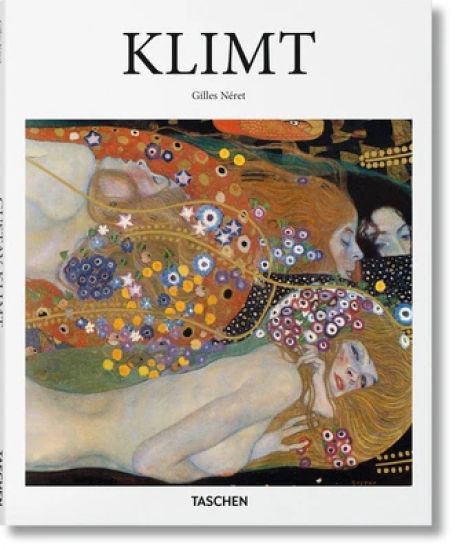
The unfading popularity of Gustav Klimt (1862–1918) attests not only to the particular appeal of his luxuriant painting but also to the universal themes with which he worked: love, feminine beauty, aging, and death.The son of a goldsmith, Klimt created surfaces of ornate and jewel-like luminosity which show the influence of both Egyptian and Japanese art. Through paintings, murals, and friezes, his work is defined by radiant color, fluid lines, floral elements, and mosaic-like patterning.With subjects ranging from sensuality and desire to anxiety and despair, all this iridescence is also suffused with feeling. Klimt’s numerous images of women, characterized by curvaceous forms, tender flesh, red lips, and flushed cheeks, were particularly charged with passion, at a time when such frank eroticism was still taboo in Viennese upper-middle-class society.This book presents a selection of Klimt’s work, introducing his pictorial world of decoration and desire, as well as his influence on artists to come.About the seriesBorn back in 1985, the Basic Art Series has evolved into the best-selling art book collection ever published. Each book in TASCHEN’s Basic Art series features:a detailed chronological summary of the life and oeuvre of the artist, covering his or her cultural and historical importancea concise biographyapproximately 100 illustrations with explanatory captions
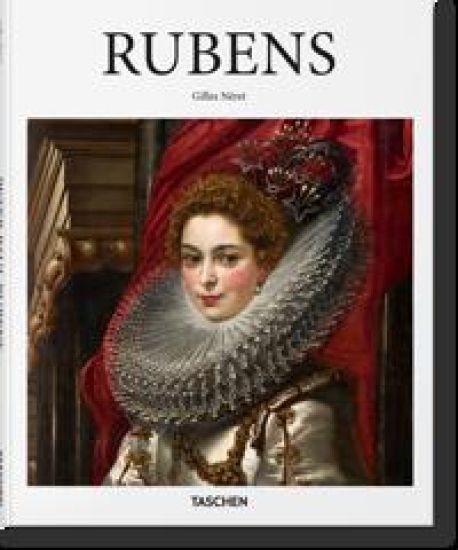
There are over 1,000 catalogued works by Sir Peter Paul Rubens (1577–1640), the 16th-century flag bearer for Baroque drama, movement, and sensuality. This essential introduction takes in the most important works from this astonishingly prolific oeuvre to explore Rubens’s influences and innovations, and his remarkable visual, and art historical, impact.The richly illustrated survey takes in Rubens’s portraits, landscapes, and historical paintings, as well as his famed and bountiful nudes. Along the way, we examine the artist’s astonishing technique and his deft ability to depict narrative in a compelling and legible visual form, whether an erotic mythological scene or a tender biblical story. This remarkable artistic bravura is placed in context both within Rubens’s long art historical legacy through Van Dyck, Velázquez, and beyond, and his other talents as a classical scholar, diplomat, and knight.About the seriesBorn back in 1985, the Basic Art Series has evolved into the best-selling art book collection ever published. Each book in TASCHEN’s Basic Art series features:a detailed chronological summary of the life and oeuvre of the artist, covering his or her cultural and historical importancea concise biographyapproximately 100 illustrations with explanatory captions
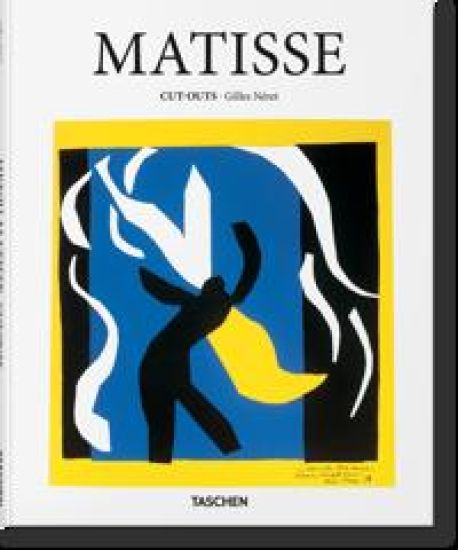
Henri Matisse (1869–1954) was a fighting spirit. Despite a cancer diagnosis in 1941, increasing frailty, and the confines of a wheelchair, the indomitable Frenchman never stopped in his quest to make art. With what he called une seconde vie, a second life, he embarked on a remarkable collage period, cutting and pasting pieces of colored paper into gouaches découpées of birds, plants, flowers, and the female form.Emphasizing color and contrast, the cut-out technique generated both striking lines and vivid juxtapositions. In works such as Icarus (1943), The Blue Nude (1952), The Snail (1953), and The Sheaf (1953), clean forms and elemental structures power a compositional force that belies the work’s decorative appeal, at once tightly organized and infectious with joie de vivre. As his work progressed, Matisse’s excitement with his results fueled ever-larger pieces, advancing from small works to vast wall-sized murals.As his final years approached, Matisse reveled in the simplicity and brilliance of these pieces, avowing, “Only what I created after the illness constitutes my real self: free, liberated…” In this essential introductory book, we revisit this joyful final chapter of Matisse’s long and prodigious career, examining how the cut-outs encapsulated the artist’s many years exploring the possibilities of composition, form, and color.About the seriesBorn back in 1985, the Basic Art Series has evolved into the best-selling art book collection ever published. Each book in TASCHEN’s Basic Art series features:a detailed chronological summary of the life and oeuvre of the artist, covering his or her cultural and historical importancea concise biographyapproximately 100 illustrations with explanatory captions
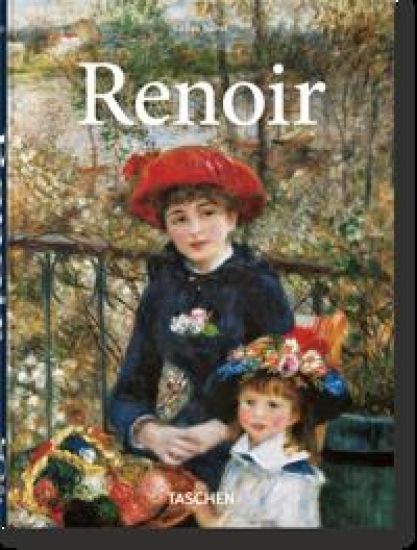
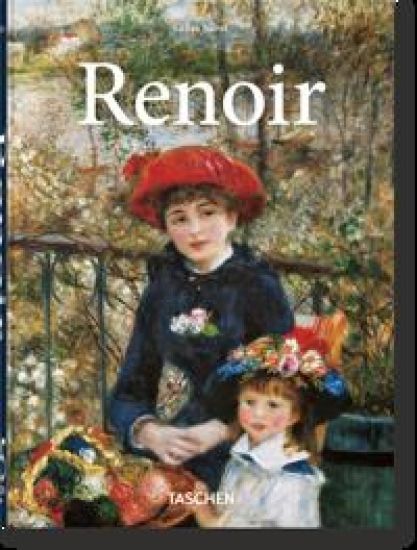
Pierre-Auguste Renoir’s (1841–1919) timelessly charming paintings still reflect our ideals of happiness, love, and beauty. Derived from our large-format volume, the most comprehensive retrospective of his work published to date, this compact edition examines the personal history and motivation behind the legend. Though he began by painting landscapes in the Impressionist style, Renoir found his true affinity in portraits, after which he abandoned the Impressionists altogether. Though often misunderstood, Renoir remains one of history’s most well-loved painters—undoubtedly because his works exude such warmth, tenderness, and good spirit.In an incisive text tracing the artist’s career and stylistic evolution, Gilles Néret shows how Renoir reinvented the painted female form, with his everyday goddesses and their plump contours, rounded hips and breasts. Renoir’s later phase, marked by his return to the simple pleasure of the female nude in his Bathers series, was his most innovative and stylistically influential, and would inspire such masters as Matisse and Picasso.With a complete chronology, bibliography, photos, sketches, and brilliant reproductions, this is the essential work of reference on this enduring master artist.About the seriesTASCHEN is 40! Since we started our work as cultural archaeologists in 1980, TASCHEN has become synonymous with accessible publishing, helping bookworms around the world curate their own library of art, anthropology, and aphrodisia at an unbeatable price. Today we celebrate 40 years of incredible books by staying true to our company credo. The 40 series presents new editions of some of the stars of our program—now more compact, friendly in price, and still realized with the same commitment to impeccable production.
Pierre-Auguste Renoir’s (1841–1919) timelessly charming paintings still reflect our ideals of happiness, love, and beauty. Derived from our large-format volume, the most comprehensive retrospective of his work published to date, this compact edition examines the personal history and motivation behind the legend. Though he began by painting landscapes in the Impressionist style, Renoir found his true affinity in portraits, after which he abandoned the Impressionists altogether. Though often misunderstood, Renoir remains one of history’s most well-loved painters—undoubtedly because his works exude such warmth, tenderness, and good spirit. In an incisive text tracing the artist’s career and stylistic evolution, Gilles Néret shows how Renoir reinvented the painted female form, with his everyday goddesses and their plump contours, rounded hips and breasts. Renoir’s later phase, marked by his return to the simple pleasure of the female nude in his Bathers series, was his most innovative and stylistically influential, and would inspire such masters as Matisse and Picasso. With a complete chronology, bibliography, photos, sketches, and brilliant reproductions, this is the essential work of reference on this enduring master artist.

Pierre-Auguste Renoir’s (1841–1919) timelessly charming paintings still reflect our ideals of happiness, love, and beauty. Derived from our large-format volume, the most comprehensive retrospective of his work published to date, this compact edition examines the personal history and motivation behind the legend. Though he began by painting landscapes in the Impressionist style, Renoir found his true affinity in portraits, after which he abandoned the Impressionists altogether. Though often misunderstood, Renoir remains one of history’s most well-loved painters—undoubtedly because his works exude such warmth, tenderness, and good spirit. In an incisive text tracing the artist’s career and stylistic evolution, Gilles Néret shows how Renoir reinvented the painted female form, with his everyday goddesses and their plump contours, rounded hips and breasts. Renoir’s later phase, marked by his return to the simple pleasure of the female nude in his Bathers series, was his most innovative and stylistically influential, and would inspire such masters as Matisse and Picasso. With a complete chronology, bibliography, photos, sketches, and brilliant reproductions, this is the essential work of reference on this enduring master artist.
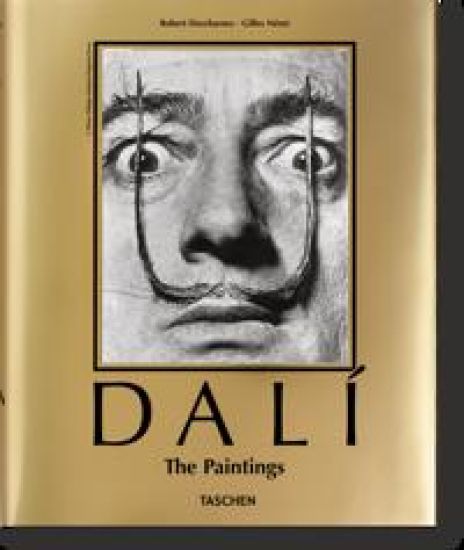
At the age of six, Salvador Dalí (1904–1989) wanted to be a cook. At the age of seven, he wanted to be Napoleon. “Since then,” he later said, “my ambition has steadily grown, and my megalomania with it. Now I want only to be Salvador Dalí, I have no greater wish.” Throughout his life, Dalí was out to become Dalí: that is, one of the most significant artists and eccentrics of the 20th century. This weighty volume is the most complete study of Dalí’s painted works ever published. After years of research, Robert Descharnes and Gilles Néret located painted works by the master that had been inaccessible for years—so many, in fact, that almost half the featured illustrations appear in public for the first time in this book. More than a catalogue raisonné, this book contextualizes Dalí’s oeuvre and its meanings by examining contemporary documents, from writings and drawings to material from other facets of his work, including ballet, cinema, fashion, advertising, and objets d’art. The study is divided into two parts: the first examines Dalí’s beginnings as an unknown artist. We witness how the young Dalí deployed all the isms—Impressionism, Pointillism, Cubism, Fauvism, Purism and Futurism—with playful mastery, and how he would borrow from prevailing trends before ridiculing and abandoning them. The second part unveils the conclusions of Dalí’s lifelong inquiries, as well as the great legacy he left in works such as Tuna Fishing (1966/67) or Hallucinogenic Toreador (1970). It includes previously unpublished homages to Velázquez or Michelangelo, painted to the same end as the variations on past masters done by his contemporary, Picasso. We discover how, motivated by the desire to tease out the secrets of great works and become a Velázquez of the mid-20th century, Dalí became Dalí.
At the age of six, Salvador Dalí (1904–1989) wanted to be a cook. At the age of seven, he wanted to be Napoleon. “Since then,” he later said, “my ambition has steadily grown, and my megalomania with it. Now I want only to be Salvador Dalí, I have no greater wish.” Throughout his life, Dalí was out to become Dalí: that is, one of the most significant artists and eccentrics of the 20th century. This weighty volume is the most complete study of Dalí’s painted works ever published. After years of research, Robert Descharnes and Gilles Néret located painted works by the master that had been inaccessible for years—so many, in fact, that almost half the featured illustrations appear in public for the first time in this book. More than a catalogue raisonné, this book contextualizes Dalí’s oeuvre and its meanings by examining contemporary documents, from writings and drawings to material from other facets of his work, including ballet, cinema, fashion, advertising, and objets d’art. The study is divided into two parts: the first examines Dalí’s beginnings as an unknown artist. We witness how the young Dalí deployed all the isms—Impressionism, Pointillism, Cubism, Fauvism, Purism and Futurism—with playful mastery, and how he would borrow from prevailing trends before ridiculing and abandoning them. The second part unveils the conclusions of Dalí’s lifelong inquiries, as well as the great legacy he left in works such as Tuna Fishing (1966/67) or Hallucinogenic Toreador (1970). It includes previously unpublished homages to Velázquez or Michelangelo, painted to the same end as the variations on past masters done by his contemporary, Picasso. We discover how, motivated by the desire to tease out the secrets of great works and become a Velázquez of the mid-20th century, Dalí became Dalí.
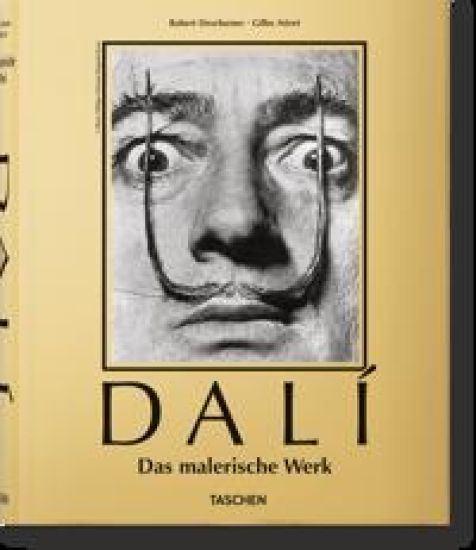
The most complete study of Salvador Dal̉??s painted works yet. After years of research, Robert Descharnes and Gilles N̩ret located previously inaccessible works that epitomize Dal̉??s depictions of the subconscious and its strange workings. Complete with updated captions, this opulent edition contextualizes Dal̉??s paintings with his own writings, drawings, and archival material.
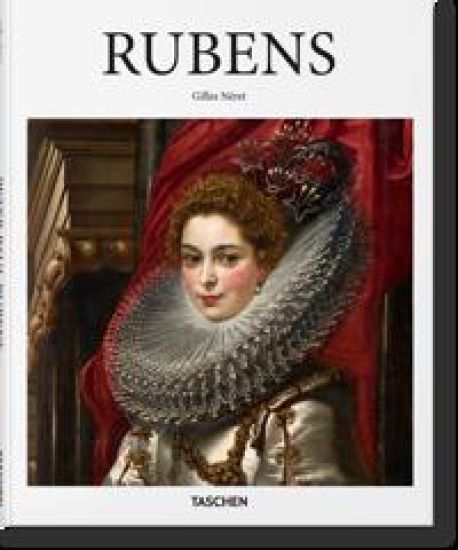
There are over 1,000 catalogued works by Sir Peter Paul Rubens (1577–1640), the 16th-century flag bearer for Baroque drama, movement, and sensuality. This essential introduction takes in the most important works from this astonishingly prolific oeuvre to explore Rubens’s influences and innovations, and his remarkable visual, and art historical, impact. The richly illustrated survey takes in Rubens’s portraits, landscapes, and historical paintings, as well as his famed and bountiful nudes. Along the way, we examine the artist’s astonishing technique and his deft ability to depict narrative in a compelling and legible visual form, whether an erotic mythological scene or a tender biblical story. This remarkable artistic bravura is placed in context both within Rubens’s long art historical legacy through Van Dyck, Velázquez, and beyond, and his other talents as a classical scholar, diplomat, and knight.
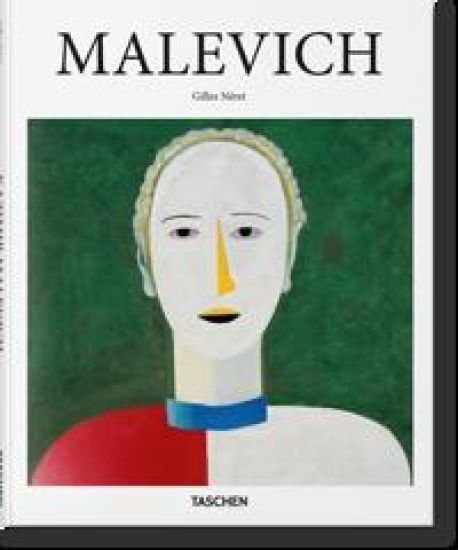
After flirtations with Realism, Impressionism, and Symbolism, Kiev-born Kazimir Malevich (1878–1935) found his métier in dissolving literal, representational figures and landscapes into pure emotionally-charged abstraction. In 1915, he created what is widely lauded as the first and ultimate abstract artwork: Black Square, a black rectangle on a white background, hailed as the “zero point of painting,” a seminal moment for modern and abstract practice. In this book, we follow Malevich’s key innovations and ideas and place his groundbreaking achievements within the context of both the Russian and global avant-garde. Through rich illustrations of his work, we explore the artist’s theory of Suprematism, based on severe geometric abstraction and “the supremacy of pure feeling in creative art”; his leading role in the development of Constructivism; as well as his interests in philosophy, literature, Russian folk art, and the fourth dimension.

Tamara de Lempicka (1898–1980) lived art in the fast lane. With an appetite for glamour and fame as much as Left Bank bohemianism, she fled St. Petersburg after the Bolshevik revolution and set about taking Paris by storm. Her prolific, monumental oeuvre remains one of the most vivid visual documents of 1920s Art Deco. De Lempicka’s style deployed cool colors and tight post-cubist forms into an at once neoclassical and voluptuous figuration. Her subjects are often nude and always sensual, aloof, and powerful. Bedecked in seductive light and textures, they command our attention but typically avert their gaze with an aspect of haughty grandeur. They include both high-society patrons and progressive portraits of emancipated and lesbian women, such as Women Bathing and Portrait of Suzy Solidor. De Lempicka’s notorious Self-Portrait in the Green Bugatti, meanwhile, was commissioned for the cover of German magazine Die Dame and became an icon of speed, sophistication, and female independence. Through some of de Lempicka’s finest, most compelling portraits, this introduction explores the artist’s unique visual language and its privileged place not only in the annals of interwar art but also in the history of female artists and our collective consciousness of the Roaring Twenties.

Henri Matisse (1869–1954) was a fighting spirit. Despite a cancer diagnosis in 1941, increasing frailty, and the confines of a wheelchair, the indomitable Frenchman never stopped in his quest to make art. With what he called une seconde vie, a second life, he embarked on a remarkable collage period, cutting and pasting pieces of colored paper into gouaches découpées of birds, plants, flowers, and the female form. Emphasizing color and contrast, the cut-out technique generated both striking lines and vivid juxtapositions. In works such as Icarus (1943), The Blue Nude (1952), The Snail (1953), and The Sheaf (1953), clean forms and elemental structures power a compositional force that belies the work’s decorative appeal, at once tightly organized and infectious with joie de vivre. As his work progressed, Matisse’s excitement with his results fueled ever-larger pieces, advancing from small works to vast wall-sized murals. As his final years approached, Matisse reveled in the simplicity and brilliance of these pieces, avowing, “Only what I created after the illness constitutes my real self: free, liberated…” In this essential introductory book, we revisit this joyful final chapter of Matisse’s long and prodigious career, examining how the cut-outs encapsulated the artist’s many years exploring the possibilities of composition, form, and color.

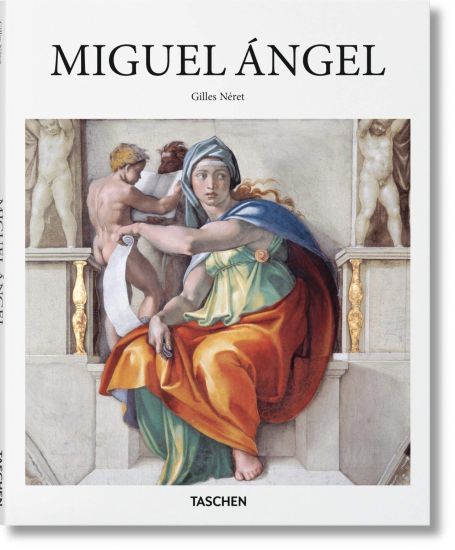
Italian-born Michelangelo di Lodovico Buonarroti Simoni (1475–1564) was a tormented, prodigiously talented, and God-fearing Renaissance man. His manifold achievements in painting, sculpture, architecture, poetry, and engineering combined body, spirit, and God into visionary masterpieces that changed art history forever. Famed biographer Giorgio Vasari considered him the pinnacle of Renaissance achievement. His peers called him simply “Il Divino” (“the divine one”). This book provides the essential introduction to Michelangelo with all the awe-inspiring masterpieces and none of the queues and crowds. With vivid illustration and accessible texts, we explore the artist’s extraordinary figuration and celebrated style of terribilità (momentous grandeur), which allowed human and biblical drama to exist in compelling scale and fervor. Through the power hubs of Renaissance Italy, we take in his major commissions and phenomenal capacity for compositional schemes, whether the famous Medici library in Florence, or the extraordinary 500-square-meter ceiling (1508–1512) in the Vatican’s Sistine Chapel. From the towering David to the aching grief and faith of The Pietà and the vivid drama of the Sistine Chapel’s Last Judgment, this is a succinct, dependable reference to a true giant of art history and to some of the most famous artworks in the world.
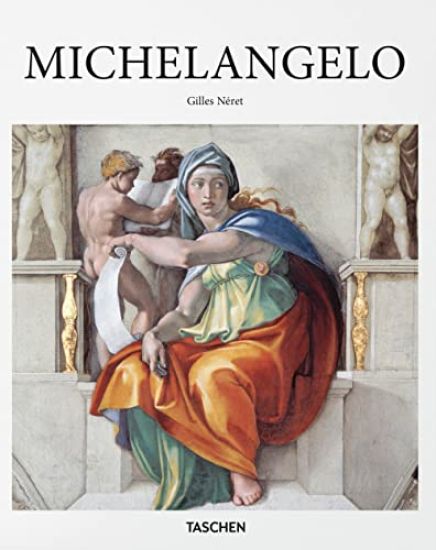
Italian-born Michelangelo di Lodovico Buonarroti Simoni (1475–1564) was a tormented, prodigiously talented, and God-fearing Renaissance man. His manifold achievements in painting, sculpture, architecture, poetry, and engineering combined body, spirit, and God into visionary masterpieces that changed art history forever. Famed biographer Giorgio Vasari considered him the pinnacle of Renaissance achievement. His peers called him simply “Il Divino” (“the divine one”). This book provides the essential introduction to Michelangelo with all the awe-inspiring masterpieces and none of the queues and crowds. With vivid illustration and accessible texts, we explore the artist’s extraordinary figuration and celebrated style of terribilità (momentous grandeur), which allowed human and biblical drama to exist in compelling scale and fervor. Through the power hubs of Renaissance Italy, we take in his major commissions and phenomenal capacity for compositional schemes, whether the famous Medici library in Florence, or the extraordinary 500-square-meter ceiling (1508–1512) in the Vatican’s Sistine Chapel. From the towering David to the aching grief and faith of The Pietà and the vivid drama of the Sistine Chapel’s Last Judgment, this is a succinct, dependable reference to a true giant of art history and to some of the most famous artworks in the world.
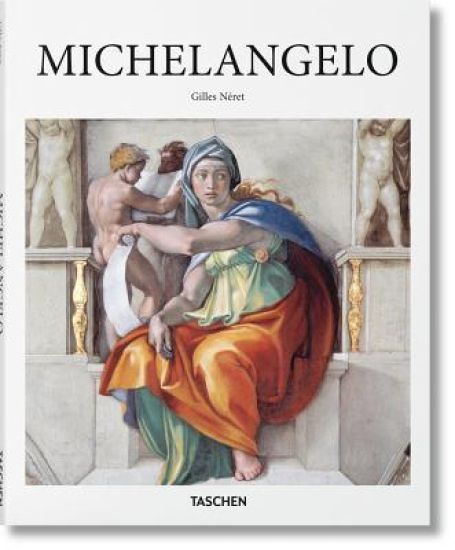
Italian-born Michelangelo di Lodovico Buonarroti Simoni (1475–1564) was a tormented, prodigiously talented, and God-fearing Renaissance man. His manifold achievements in painting, sculpture, architecture, poetry, and engineering combined body, spirit, and God into visionary masterpieces that changed art history forever. Famed biographer Giorgio Vasari considered him the pinnacle of Renaissance achievement. His peers called him simply “Il Divino” (“the divine one”). This book provides the essential introduction to Michelangelo with all the awe-inspiring masterpieces and none of the queues and crowds. With vivid illustration and accessible texts, we explore the artist’s extraordinary figuration and celebrated style of terribilità (momentous grandeur), which allowed human and biblical drama to exist in compelling scale and fervor. Through the power hubs of Renaissance Italy, we take in his major commissions and phenomenal capacity for compositional schemes, whether the famous Medici library in Florence, or the extraordinary 500-square-meter ceiling (1508–1512) in the Vatican’s Sistine Chapel. From the towering David to the aching grief and faith of The Pietà and the vivid drama of the Sistine Chapel’s Last Judgment, this is a succinct, dependable reference to a true giant of art history and to some of the most famous artworks in the world.
Italian-born Michelangelo di Lodovico Buonarroti Simoni (1475–1564) was a tormented, prodigiously talented, and God-fearing Renaissance man. His manifold achievements in painting, sculpture, architecture, poetry, and engineering combined body, spirit, and God into visionary masterpieces that changed art history forever. Famed biographer Giorgio Vasari considered him the pinnacle of Renaissance achievement. His peers called him simply “Il Divino” (“the divine one”). This book provides the essential introduction to Michelangelo with all the awe-inspiring masterpieces and none of the queues and crowds. With vivid illustration and accessible texts, we explore the artist’s extraordinary figuration and celebrated style of terribilità (momentous grandeur), which allowed human and biblical drama to exist in compelling scale and fervor. Through the power hubs of Renaissance Italy, we take in his major commissions and phenomenal capacity for compositional schemes, whether the famous Medici library in Florence, or the extraordinary 500-square-meter ceiling (1508–1512) in the Vatican’s Sistine Chapel. From the towering David to the aching grief and faith of The Pietà and the vivid drama of the Sistine Chapel’s Last Judgment, this is a succinct, dependable reference to a true giant of art history and to some of the most famous artworks in the world.

Lampooned during his lifetime for his style as much as his subject matter, French painter Édouard Manet (1832–1883) is now considered a crucial figure in the history of art, bridging the transition from Realism to Impressionism. Manet’s work combined a painterly technique with strikingly modern images of contemporary life, centered on the urban Paris experience. He recorded the city’s parks, bars, and cabarets, often delighting in the frisson of underground or provocative content. The Paris salon rejected his Déjeuner sur l’herbe with its juxtaposition of fully dressed men and a nude woman, while the steady gaze and unabashed pose of the prostitute Olympia, a very modern reworking of Titian’s Venus of Urbino, caused a society scandal. This richly illustrated book introduces Manet’s work and his uniquely influential combination of Realism, Impressionism, and reworked Old Masters that would become paradigms of a brave new world for generations of modernists to come.